What drivework around Clyde actually costs
Because the money question is usually asked first, here it is in table form. Ranges sit inside our site-wide installed band; steep grades, culverts, and long runs push a job toward its top, never past it.
| Scope | Typical installed range |
|---|---|
| Short, flat drive, one layer of crushed stone, minimal prep | $1,800–$2,800 |
| Standard drive with grading, geotextile, and 4–6 in. of stone | $3,000–$5,500 |
| Steep mountain drive with cut/fill, drainage, and culvert | $8,000–$12,000 |
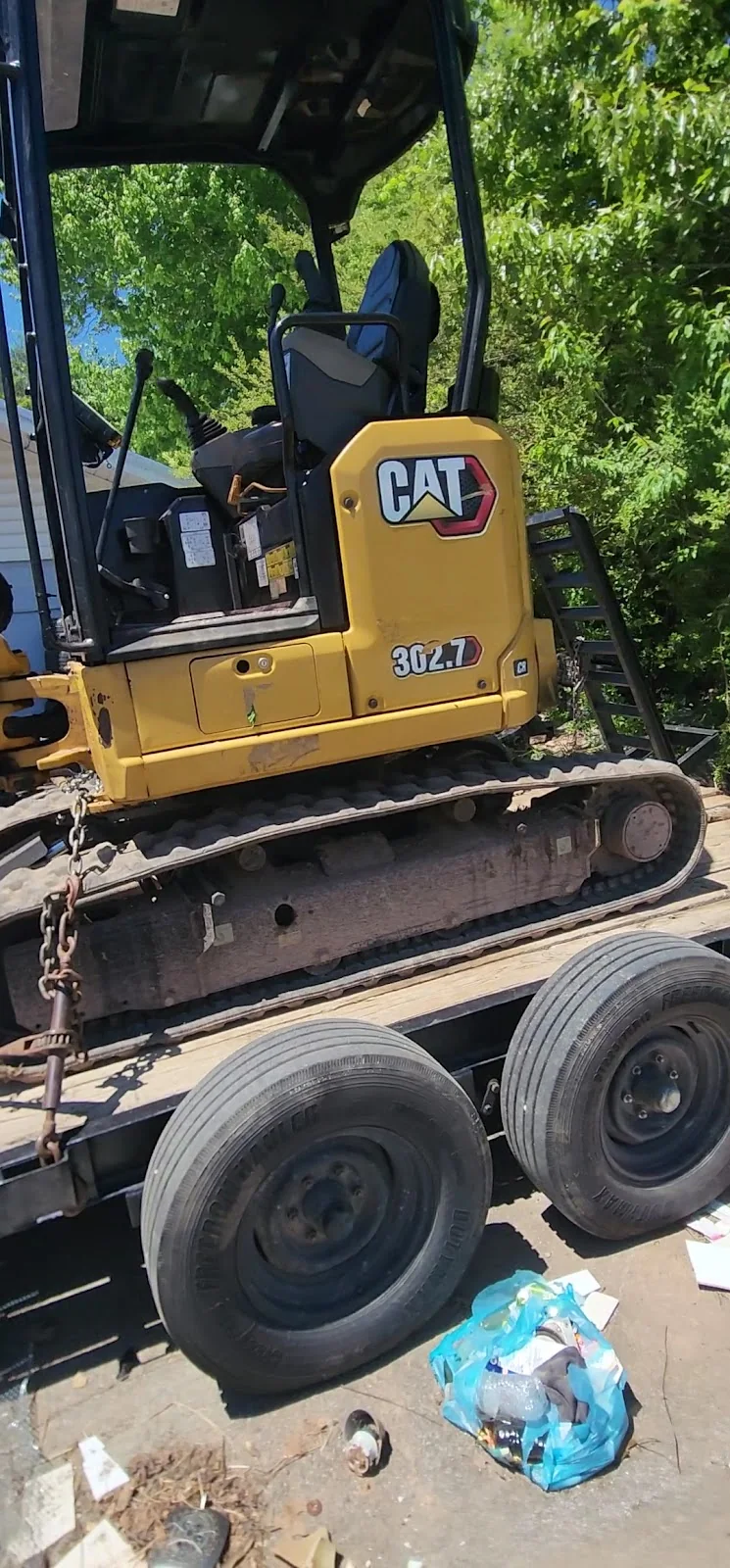
Those numbers include labor, machine time, and stone delivered. They do not include engineering, which most residential drives here don't require — but if retaining walls or significant fill enter the picture, that changes. The Haywood County grading cost breakdown covers the earthwork side line by line.
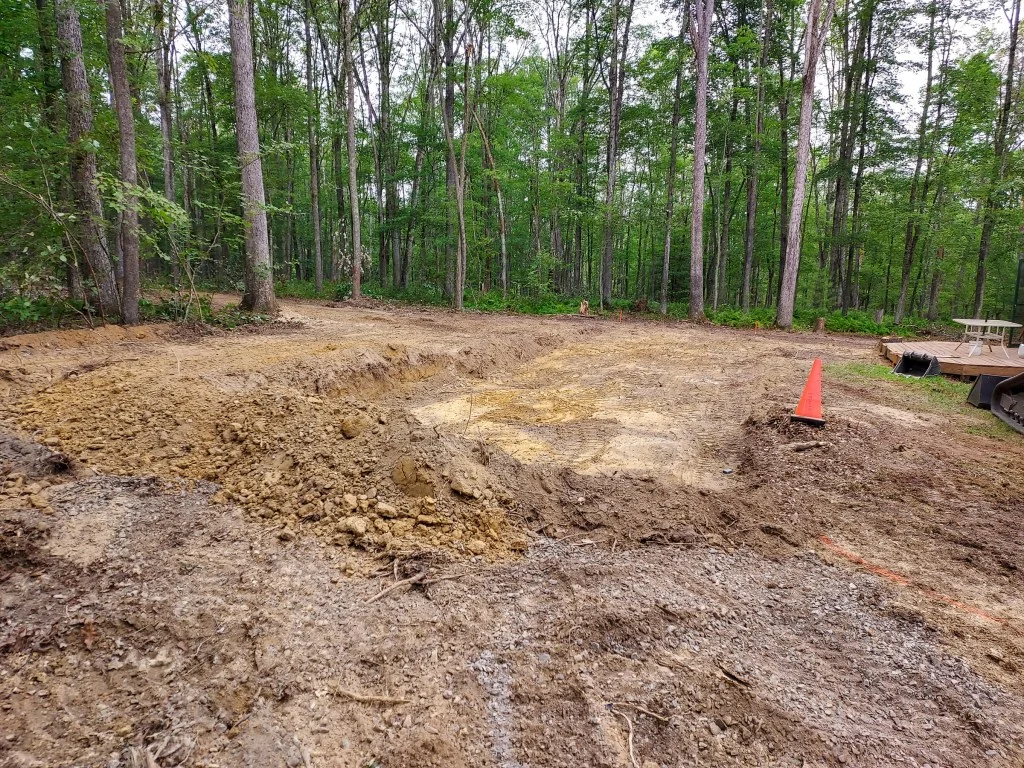
Where a bid lands inside that table comes down to how much dirt has to move. A driveway cut into a slope above the Pigeon River valley may require benching and fill that a flat lot along a Clyde bottom never touches. That earthwork is not glamorous, but it is usually the difference between a $3,000 job and an $11,000 one. Ask a bidder to separate machine time from stone cost and the picture gets honest fast.
Access and haul: the two numbers that set the price
The only way to price a gravel drive honestly is to know three things: how big a truck can actually reach your build, how much dirt leaves the site, and how far the stone travels. Clyde sits in Haywood County, with the county seat in Waynesville about ten minutes west. Quarry rock has to come in by truck, and every mile matters. A load of crushed stone is heavy, and haul cost scales with distance, fuel, and the number of trips. That's why two driveways that look identical on paper can price hundreds of dollars apart — one quarry is closer than another.
The second factor is access. If a tri-axle can back to the build, material lands cheap. If the drive is narrow, hemmed by trees, or climbs at 15 percent, stone may have to be shuttled with a smaller truck — one load becomes two or three. Before a number means anything, someone has to walk the access.
Around Clyde, access quirks show up in predictable places. Lots that front a state-maintained road through the valley tend to have short, straight approaches, and stone lands easily. Properties tucked onto the slopes off the side roads often begin with a steep pitch right at the county road, and the truck has to think about it. Add a tight mailbox cluster, a low-hanging utility line, or a narrow bridge over a branch, and the big truck stops short. Somebody then has to move that stone the last fifty yards with a smaller machine, and that time shows up on the invoice.
Spoil is the third cost. A driveway cut into a slope produces dirt that has to go somewhere. If it stays on your lot in a graded bank, it costs machine time only. If it has to be hauled off, remember that hauling dirt off-site costs about as much as hauling stone in, because the truck runs the same road either way. A bidder who will show you where the spoil is going has thought about your drainage.
Terrain around Clyde shapes the scope
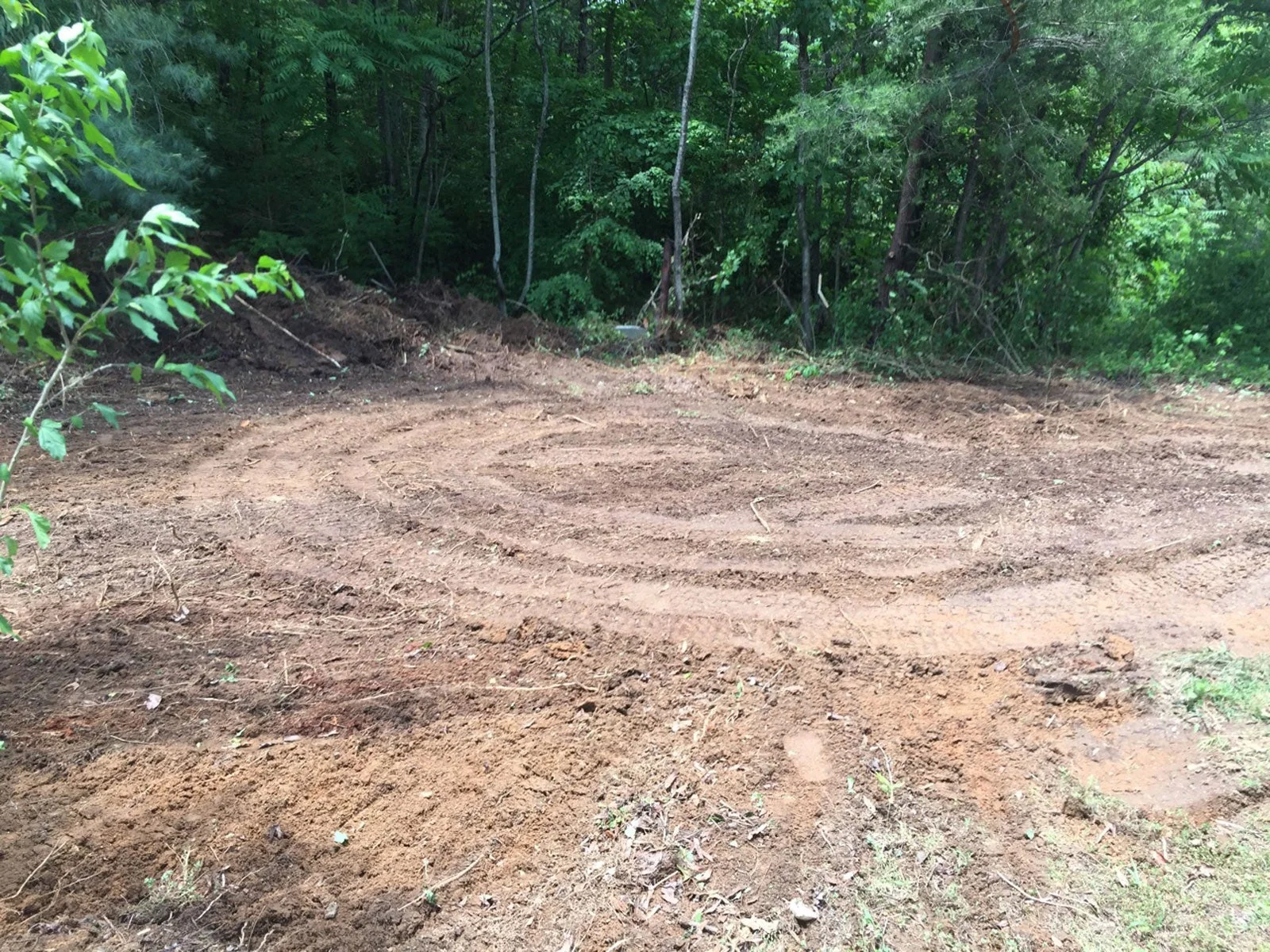
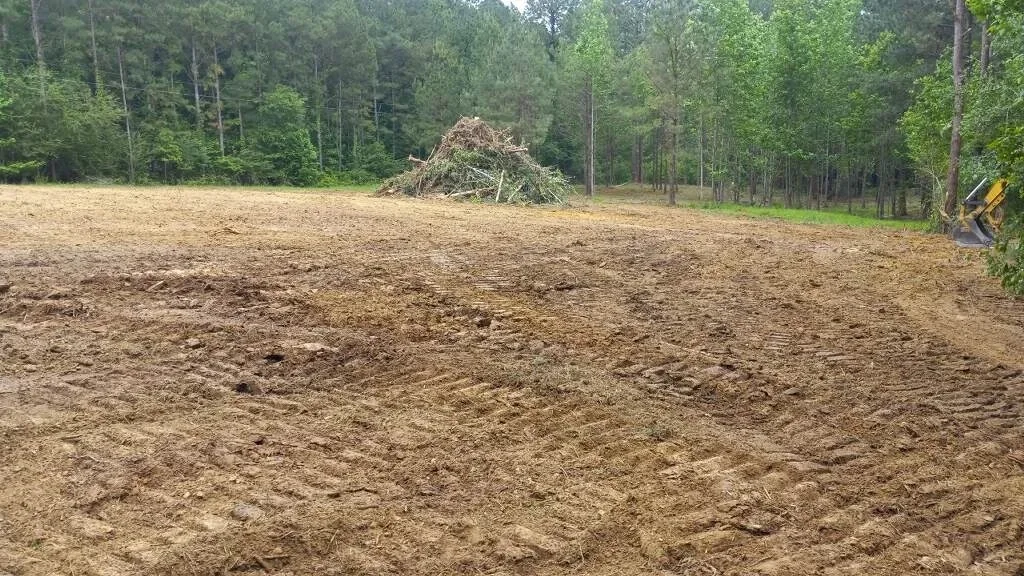
Haywood County ground is mountain ground. Around Clyde that usually means a mix of valley properties along the Pigeon River corridor and slope lots climbing toward the ridges above it. A flat lot near the river builds like a flat lot anywhere — grade, compact, stone, done. A slope lot is a different job: you cut a bench, you manage water, and you may need a culvert where the drive meets the county road. That culvert decision alone can swing a bid by a thousand dollars or more.
Weather is part of that terrain story too. The National Weather Service office covering this region issues flood and flash-flood guidance frequently for the Pigeon River and its tributaries, and the federal disaster record backs it up: 19 declared events have touched this county over 1973-2026, and the pattern is storm and flood. Gravel drives that ignore where water goes during a hard mountain rain will be regraded, not fixed, twelve months later. For the kind of work that keeps a drive in service, see our driveway grading and gravel guide.
One more local pattern: driveways that tee off a road running downhill toward the river often pick up sheet flow from the uphill side of the road itself. A shallow swale or a raised crown at the entrance can send that water past the driveway instead of across it. Small detail, and cheap if it's built in from the start.
Gravel selection and the seasonal grade
Most drives in this area use a base of larger crushed stone topped with a finer surface course; the exact sizes and depths depend on how much traffic the drive carries and how wet the ground stays. Straight-run crusher run compacts hard and is a good base, but it tracks dust and mud; a washed stone top looks better and sheds water faster but needs more frequent touch-up. The reputable local crews will tell you which they prefer for your soil, and won't oversell stone you don't need.
Clay-heavy ground, which shows up in parts of the valley, holds water and heaves in freeze-thaw cycles. On that ground, a geotextile fabric under the base pays for itself by stopping the stone from sinking into the mud. On well-drained sand or gravel soils, the fabric matters less. That soil call is one a contractor makes on-site, not over the phone, and it is part of why a driveway estimate is a range and not a fixed number until the walk-through is done.
One honest note about maintenance: a gravel drive needs re-grading roughly every year or two, and a heavy mountain rain can strip a surface course in an afternoon if the crown and drainage are wrong. This isn't a defect; it's the nature of the surface. If you're pricing work now, the Clyde grading contractors page covers what a good contractor does on the first visit.
The season matters here as well. Late fall and winter freeze-thaw is hard on newly placed stone, and spring is often the muddiest stretch for grading work. Late spring through early fall tends to be the easiest window to place a new drive and have it settle before the ground locks up.
Hiring and verifying in this market
North Carolina sets the bar for licensing. The North Carolina Licensing Board for General Contractors requires a license once a project crosses certain dollar and scope thresholds, and grading and driveway work can fall inside them. Verify before you sign. For anything that touches drainage near a stream or floodplain, the U.S. Environmental Protection Agency maintains the federal rules that can apply; a local contractor should know whether your job is near that line.
Ask any bidder three things: where the stone comes from, where the spoil goes, and how they'll handle stormwater on the finished drive. The contractor who answers all three specifically is the one who prices the job you're actually buying.
Two more questions worth asking around Clyde specifically. First, will the crew do a site walk before pricing, or quote from a satellite image? Slope and access do not read accurately from a photo, and a phone quote on a mountain lot is usually wrong in one direction or the other. Second, what does the finished drive's cross-slope look like? A drive that sheds water to both shoulders, or to a designed ditch, outlasts a flat one by years in this county. A bidder who talks about crown and shoulder without prompting has done this work on this terrain before.