The one-acre line that decides the whole job
Most yard leveling around Arden is a one-day or two-day excavation job. The exception is the lot where the work, plus the driveway, plus the cleared area, crosses one disturbed acre, because that threshold pulls the project into North Carolina's erosion and sedimentation program. On a half-acre suburban lot in Avery Creek or Royal Pines, you will likely never see it. On the acre-plus lots off Long Shoals Road and the wooded ridges toward Elk Mountain, you often will.
What that adds is not exotic. It means a site plan, a sediment basin or silt fence layout, and inspections before and after grading — real money and real time. A rough sense for Arden: permit prep and inspections commonly add $800 to $2,500 to a job that was already going to run several thousand dollars, and the schedule moves from days to weeks. The Buncombe County grading cost breakdown lays out those line items against typical scope.
This is the first question worth asking about your own project: how many square feet of ground will actually be bare at the same time? A crew that answers that with a number, not a shrug, is reading your yard correctly.
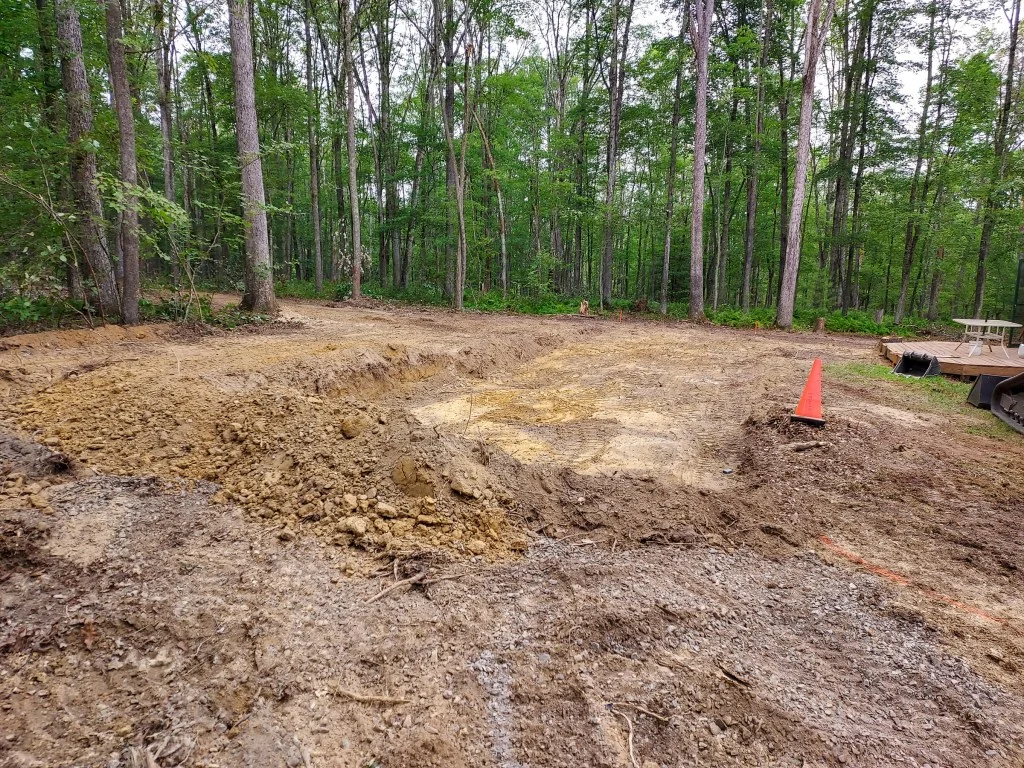
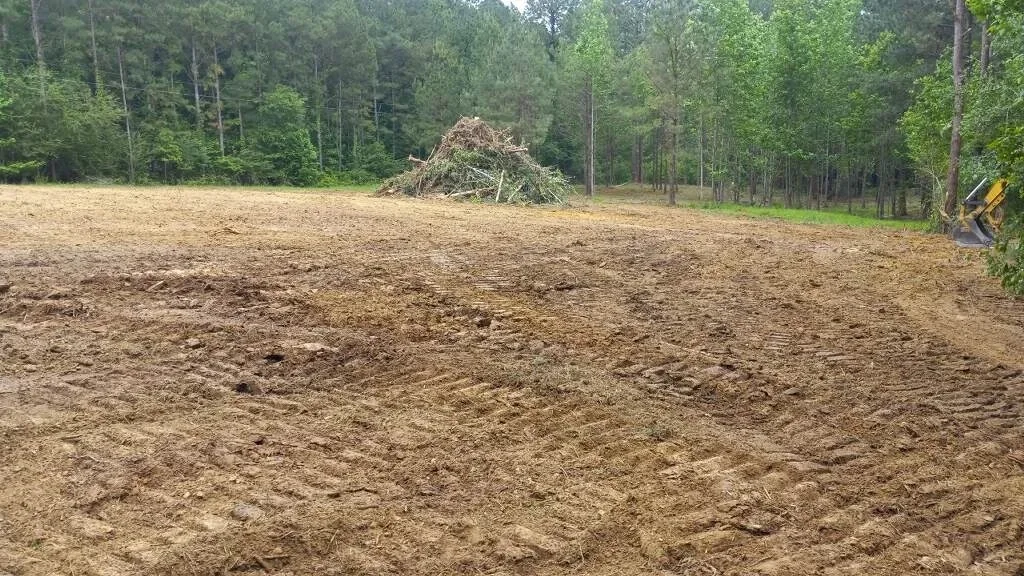
It is worth walking the lot yourself before anyone quotes it. Stand at the back corner and look toward the house. Count what would have to be stripped to reach the low spot: the fence line, the gravel pad where a trailer would sit, the path a machine would take through the side yard. On Arden's narrower valley-floor lots, those access routes are often what push a project over the line, not the graded area itself. A 0.7-acre yard with a 0.4-acre staging and access footprint is a 1.1-acre disturbance, and that is the number the state cares about.
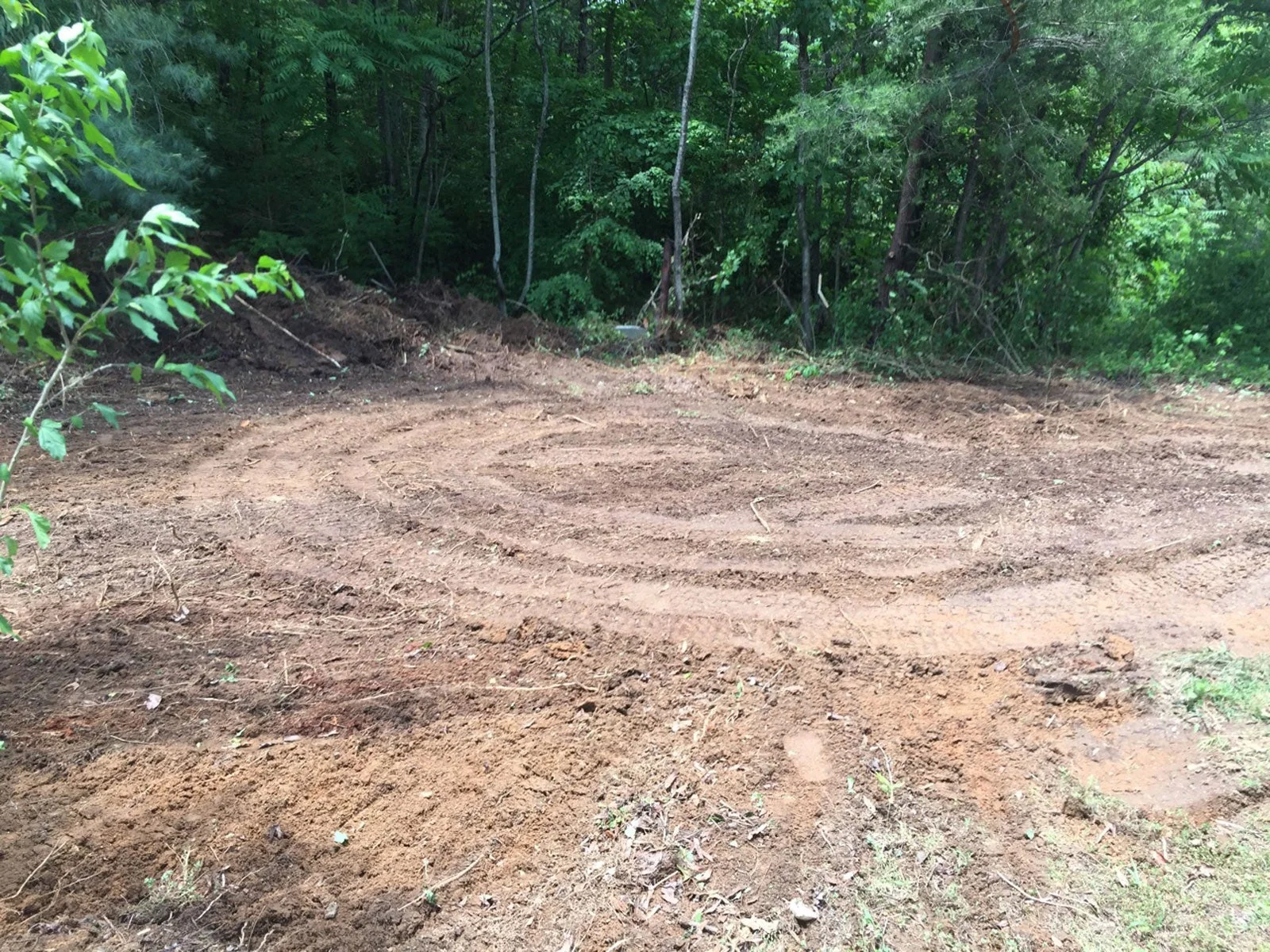
The other half of the one-acre question is timing. Bare ground that is exposed for a short window behaves very differently from bare ground that sits through a wet Appalachian spring. A project that would be a simple permit on a dry September schedule can require a more elaborate control plan if it is scheduled to leave soil exposed through the rainiest months. That is a scheduling decision as much as a permitting one, and it is worth raising before the crew mobilizes.
Clay, slope, and why Arden yard elevations drift
Buncombe County soils are largely clay-heavy, and clay does two things to a level yard. It sheds water slowly, so a lost half-inch of fall is enough to leave standing water after a summer storm, and it heaves seasonally, so the low spot you filled last spring is often back by fall. Arden sits in the French Broad valley with tributary creeks cutting through it, which means most yards here are either gentle valley floor or a slope that starts abruptly at the property line.
That combination is why 'just add dirt' fails so predictably here. Fill placed without compaction settles, and fill that changes the drainage pattern sends water toward the house instead of away from it. A yard that stays level in Arden usually has subgrade preparation and established fall built into it.
The valley-floor lots tell one story and the ridge lots tell another. Down near the river bottoms, the problem is often that the yard was graded flat to begin with, and flat ground on clay does not drain. Water sits until it soaks in or evaporates, and in a wet spring that can be days. Up toward Elk Mountain and the wooded ridges, the problem inverts: the yard has plenty of slope, but the fall runs toward the house or the driveway rather than away, and the fix is not fill but a regrade that turns the water.
There is also the question of what is already underground. Older Arden properties frequently have field lines, cistern remnants, or buried drainage that a machine can find the hard way. Knowing where those run changes where a grader can cut and how deep. On a lot with a septic drainfield, the leveling plan has to keep the field's required cover and setback intact, which sometimes rules out the obvious low spot as a fill location and forces the grade to be built from a different direction. None of this is exotic, but it is the kind of thing a local operator checks before quoting rather than after the first bucket.
What yard leveling actually costs in Arden
Below are working ranges for the scope you are likely to be quoted. These stay inside the site-wide band for leveling and regrading; the Arden-specific mover is slope access and any erosion permitting.
| Scope | Typical cost range | Notes |
|---|---|---|
| Low-spot fill and finish grade (small yard) | $1,800 – $2,900 | Hand or mini-excavator work, sod or seed finish |
| Full-yard regrade with positive drainage away from house | $2,500 – $6,000 | The most common Arden scope; includes swales and downspout extensions |
| Slope lot with grading toward a drainage easement | $4,500 – $8,000 | Terrace cuts, hauled-in fill, erosion controls |
| Acre-plus lot crossing the one-acre disturbance threshold | $6,000 – $9,500 | Adds erosion permit prep, inspections, and longer schedule |
These are local working numbers, not quotes. A real number needs someone standing on the lot with a level and a slope reading, which is exactly what the yard leveling overview walks through before any dirt gets moved.
Two cost drivers deserve a closer look because they surprise people. The first is hauling. A low-spot fill job on a small yard may need a single truckload of screened fill; a full regrade on a slope lot can need many loads, and in Arden the haul distance to a local pit plus the difficulty of backing a loaded truck up a narrow ridge driveway adds real money per load. The second is finish. Seed and straw on a half-acre is one line item; sod is another, and drainage stone, splash blocks, and downspout extensions are small line items that add up. A quote that lists only excavation and grading is usually missing the pieces that determine whether the yard actually drains when the work is done.
It also helps to separate the dirt work from the water work in your own head. Moving earth is what makes the grade; moving water is what makes it stay. On Arden's clay, the second job is not optional, and a quote that prices only the first is likely to leave you with a level yard that still ponds.
Stormwater, creeks, and the rules that govern what leaves your yard
Arden's creek bottoms and the French Broad floodplain mean muddy runoff is not just an aesthetic problem here. Sediment leaving a graded lot is regulated under state erosion rules, and local stormwater rules govern what happens to increased runoff. Practically, that means the plan for where water goes is part of the grading scope, not an afterthought once the dozer is on site.
The National Weather Service's rainfall records for western North Carolina — 19 federal disaster declarations touch this county across 1973-2026, most of them storm and flood events — explain why graders here plan drainage first. See weather.gov for current local flood and rainfall guidance, and the EPA for the federal stormwater framework behind the state rules. If your yard drains toward a creek, say so when you request a quote.
The reason this matters on a residential scale is that western North Carolina rain does not arrive gently. A summer thunderstorm can drop a month's worth of water in an afternoon, and a freshly graded clay lot with no established cover will shed that water loaded with sediment. Silt fence and straw wattles are the usual first line, but they have limits, and a design that relies on them alone through a wet season is a gamble. A grader who has worked this valley knows to build in a settling area or a stabilized outlet rather than trusting a single fence line to hold.
If your property touches a creek or sits in the floodplain, the regulatory picture broadens. Local stormwater rules may apply on top of the state erosion program, and floodplain ordinances can restrict how much fill can be placed and where. This is not a reason to avoid grading; it is a reason to raise the question early, because a plan that respects the creek from the start is far cheaper than one that has to be redesigned after a complaint. When you request a quote, describe the lot's drainage: where the water enters, where it leaves, and whether a creek, ditch, or easement is involved.
Choosing a grader for an Arden lot
Three checks specific to this county. First, ask who handles the erosion permit if you cross one acre: the contractor or you. Second, ask for a slope reading and a plan for where water goes before you see a price. Third, verify licensing on any job that involves moving structural amounts of earth; the North Carolina Licensing Board for General Contractors is the place to check. The Arden grading contractor page covers how to compare scopes side by side, and the NC Office of State Fire Marshal is the right resource for the state code editions that govern grading and drainage details.
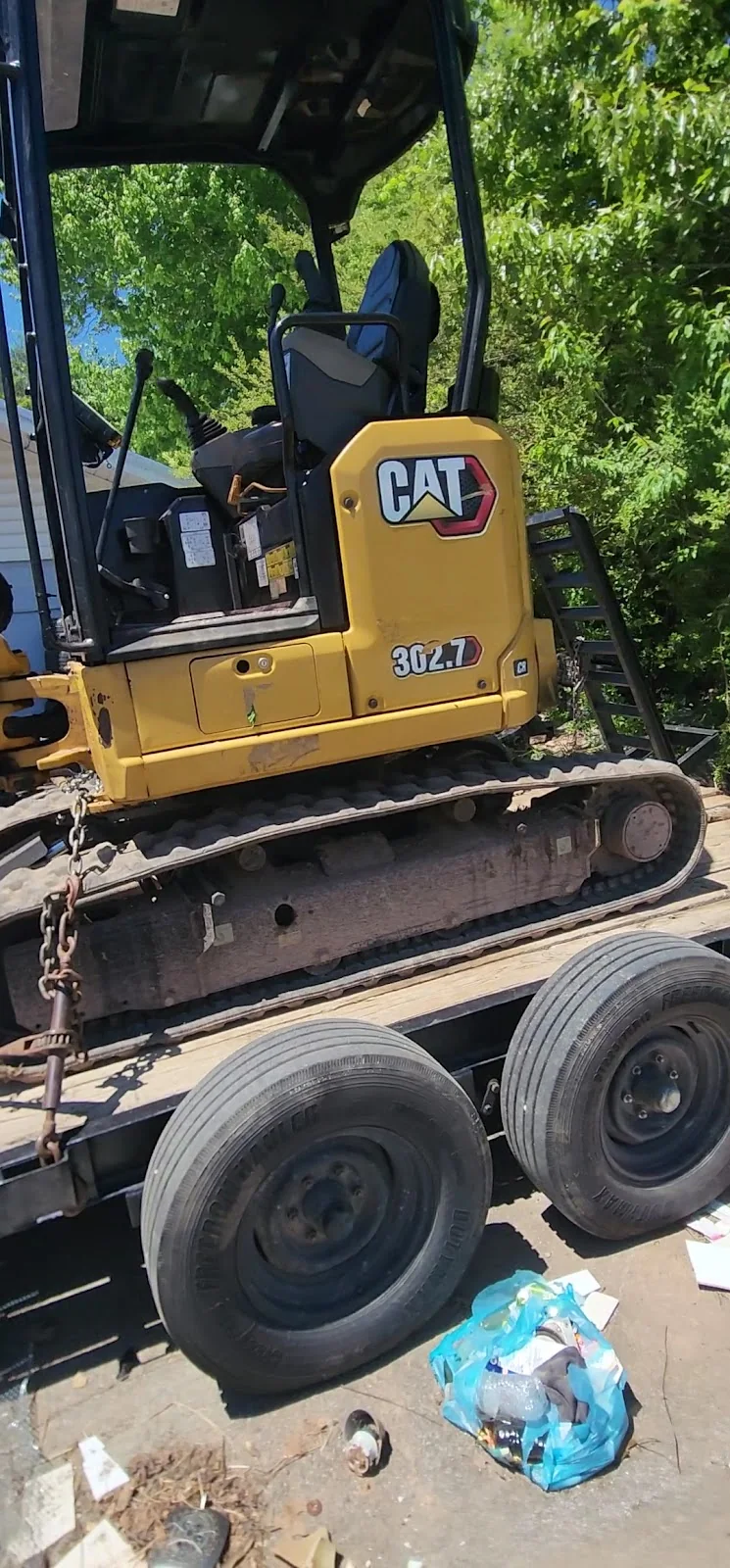
A fourth check is equipment and access, which on Arden lots is often the deciding factor. A full-size excavator cannot fit through every gate or turn around in every backyard, and a crew that shows up with the wrong machine will either damage the yard or quote a smaller, more expensive hand job. Ask what equipment they plan to use and how they will get it in. On the wooded ridge lots, the answer usually involves a mini-excavator and a tracked dump, and that is a reasonable answer.
Finally, ask what the finished grade will look like in six months, not the day they leave. On clay, a yard that looks perfect at handoff can settle after a few wet cycles if the fill was not compacted in lifts. A grader who talks about lift thickness, moisture, and compaction is telling you they expect the yard to stay put. One who promises a quick fix and a low price is telling you something else, and on a slope lot above the French Broad valley, that difference is the whole job.