Getting a machine onto a Mars Hill driveway is half the job
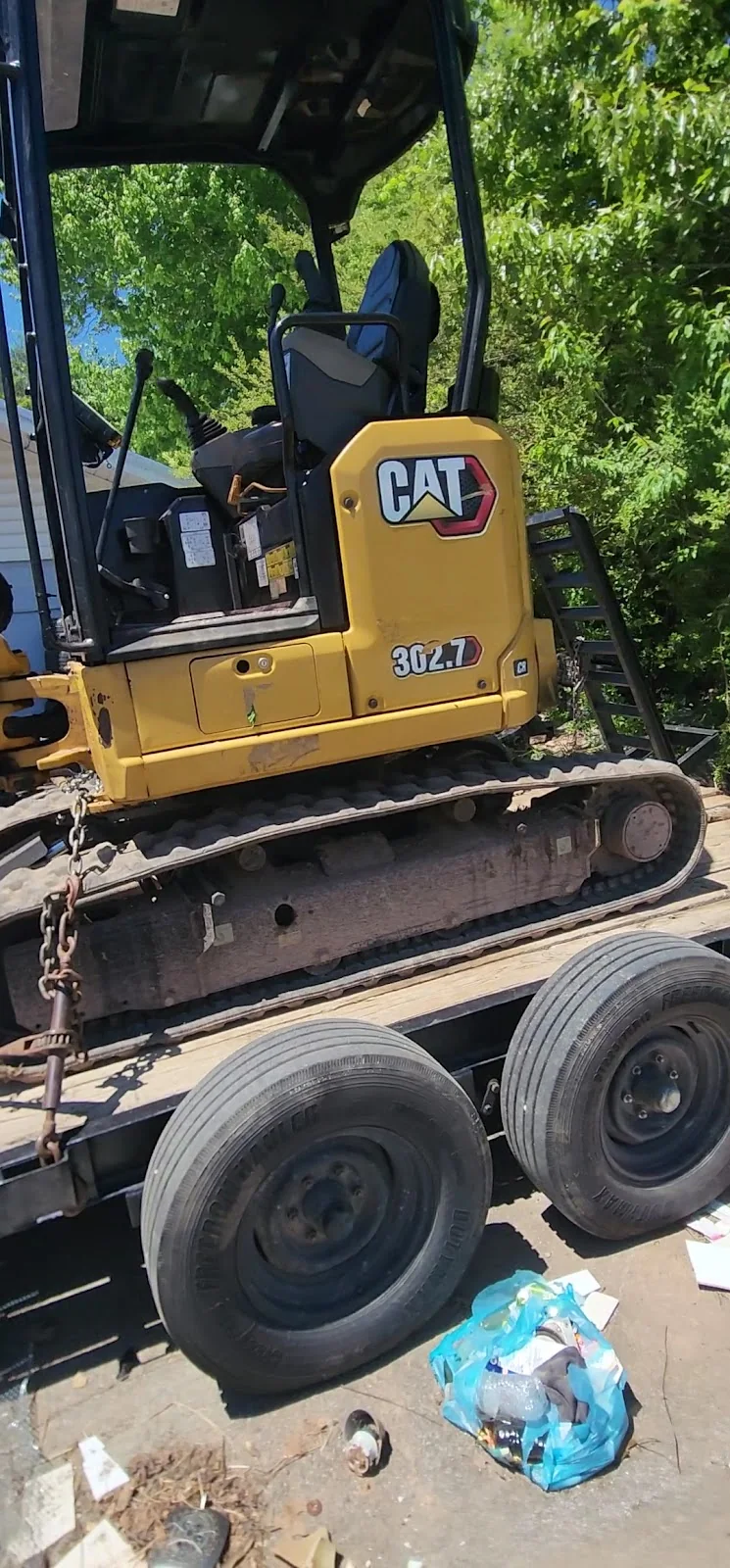
Driveways in this county were laid out for horses, wagons, and then pickup trucks, not for a track hoe on a lowboy. Around Mars Hill proper and out toward the Marshall and Mars Hill town limits, the typical approach climbs a grade, crosses a drainage, and pinches at a mailbox with rhododendron on both sides. Before a single stick of pipe gets set, a contractor is deciding whether the excavator can walk in, whether the spoil pile fits on the shoulder, and whether the dump truck can back out loaded without sliding into the branch.
That access reality is why two bids on the same driveway here can differ by a thousand dollars or more. The pipe is the cheap part. The machine time, the flagging, and the hauling are the job.
If your culvert sits where the driveway meets a county road, the pipe runs under a public right-of-way, and that changes the paperwork and sometimes the spec. The NC Licensing Board for General Contractors sets the dollar threshold at which this kind of work requires a licensed general contractor; smaller residential driveway culverts usually fall under it, but a long run crossing into road work can cross that line.
The quarry distance problem, in plain numbers
There is no quarry in Mars Hill. Every ton of #57 stone, every load of pipe bedding, every yard of crushed base that goes around a culvert has to be trucked in from somewhere down toward the French Broad valley or over the state line. On a steep driveway, the truck that delivers it also has to climb the same grade the excavator is fighting, which adds time and sometimes means splitting a load.
The honest way to read a quote is to ask where the stone comes from and how many loads the job actually needs. A short driveway culvert might take one load of gravel and a couple of pipe sections. A long run with headwalls and riprap can take four or five, and the freight starts to rival the labor line.
What drives the price up or down
The table below is the working picture for residential driveway culverts in this area. Ranges are installed cost, meaning pipe plus bedding, backfill, and a working ditch — not just the pipe dropped at the top of the drive.
| Scope | Typical installed range |
|---|---|
| Short corrugated HDPE driveway culvert, standard diameter, clean ditch, easy machine access | $1,500 – $2,600 |
| Standard driveway culvert with inlet/outlet riprap, steeper grade, moderate haul | $2,600 – $4,500 |
| Long driveway run or concrete pipe, multiple sections, headwalls, heavy haul | $6,000 – $9,500 |
Two things push a Mars Hill job toward the top of the band: a driveway too steep or too narrow to walk the machine in, and a culvert that has to be set deep because the branch it crosses is deep. Both mean more excavator hours and more truck time, and neither shows up in a quote built from a satellite photo.
Sizing and setting the pipe correctly
A culvert that is one size too small will plug on the first big rain and wash out the driveway above it. Sizing comes off the drainage area feeding the crossing, not off what fits in the ditch. The NC Department of Insurance, Office of State Fire Marshal handles code enforcement for much of the state's built environment, and while a private driveway culvert is not a building, the same drainage principles apply: get the water under and past the drive, not into it.
Bedding and backfill matter as much as the pipe. A culvert laid directly on rock will crack or deform under load; one backfilled with the wrong material will migrate and settle, leaving the driveway sagging over the pipe within a season or two. Corrugated HDPE is the common choice for residential drives, and concrete is used where the cover is shallow, the loads are heavy, or the pipe will be crossed by equipment.
The U.S. Environmental Protection Agency maintains the stormwater guidance that governs where a culvert can discharge and how the disturbed ground around it has to be stabilized — worth knowing if your driveway drains toward a stream or wetland, which a lot of them here do.
How to compare bids without getting burned
Ask each contractor four questions. Where does the pipe come from and what is its wall thickness and diameter? How many loads of stone does the quote assume, and where from? What happens to the spoil, and is disposal in the price? And does the quote include ditch cleanup and riprap at both ends, or just the pipe in the ground?
A bid that answers all four is comparable to the next one. A bid that says "one culvert, installed" is not. The full culvert and driveway pipe guide walks through the spec language worth asking for, and the Madison County grading cost breakdown puts this work in context with the dirt work that usually accompanies it. If you are still choosing a crew, the local grading contractor guide covers what to look for here.
When the culvert is the small part of a bigger problem
Federal disaster declarations touch Madison County repeatedly, and the pattern is water: 21 declared events recorded across 1978-2026, overwhelmingly storm and flood family. Culverts that were fine for years fail after one of those events because the upstream channel changed, the gravel bed shifted, or the drainage area grew with a new clearing uphill. If your culvert washed out during a storm rather than simply wearing out, replacing it in the same size and place is a bet that the next storm will behave the same way.
The National Weather Service tracks the rainfall intensities that sizing calculations are built from, and a contractor who knows how to use that data will size the replacement for the storm you actually get, not the one you used to get.