Swannanoa dirt decides the job before the machine arrives
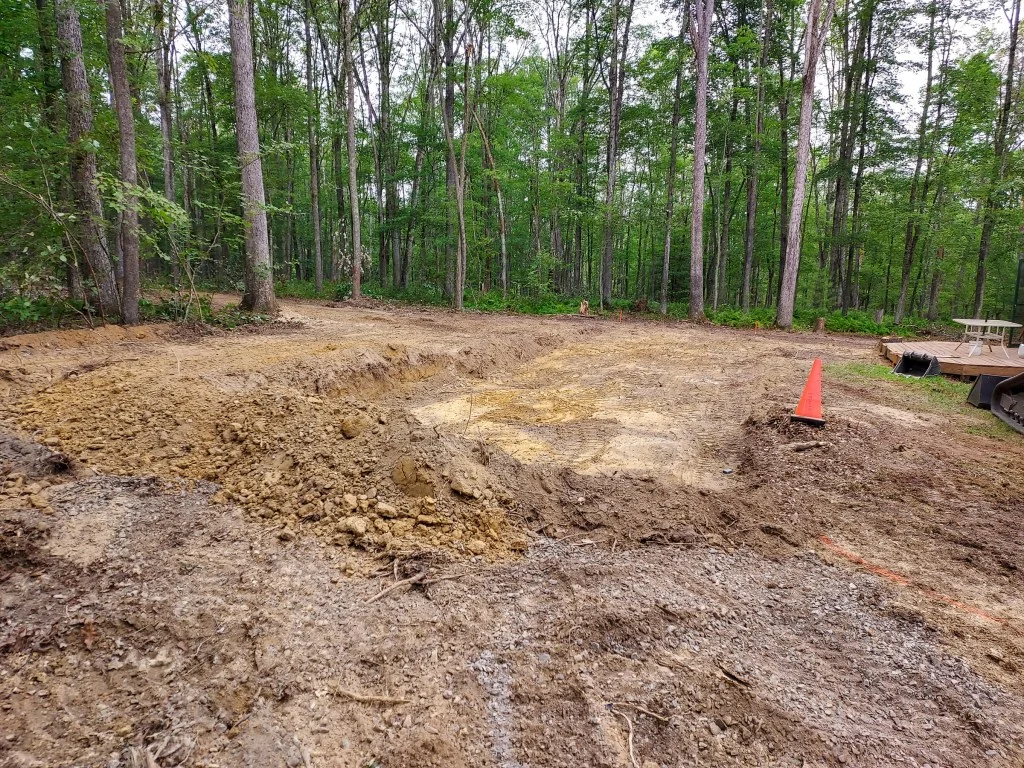
Dig anywhere in the Swannanoa valley and you meet one of three grounds, and each one prices differently. The red clay that dominates yards on the valley floor drains poorly and turns greasy after rain, so a crew has to time work around moisture and haul in select fill for anything that will be built on. Ridge lots climbing toward the Blue Ridge Parkway hit shallow rock, where a root rake and dozer can chatter for an hour on ground a Piedmont crew would clear by lunch. And the flat ground near the river bottoms carries old fill, dumped decades ago, that settles unevenly and hides debris the first pass will turn up.
That mix is why a Swannanoa clearing bid needs eyes on the dirt, not just an acre count. A quarter-acre lot in a low, clay-heavy yard and a quarter-acre lot on a rocky slope are the same size and completely different jobs.
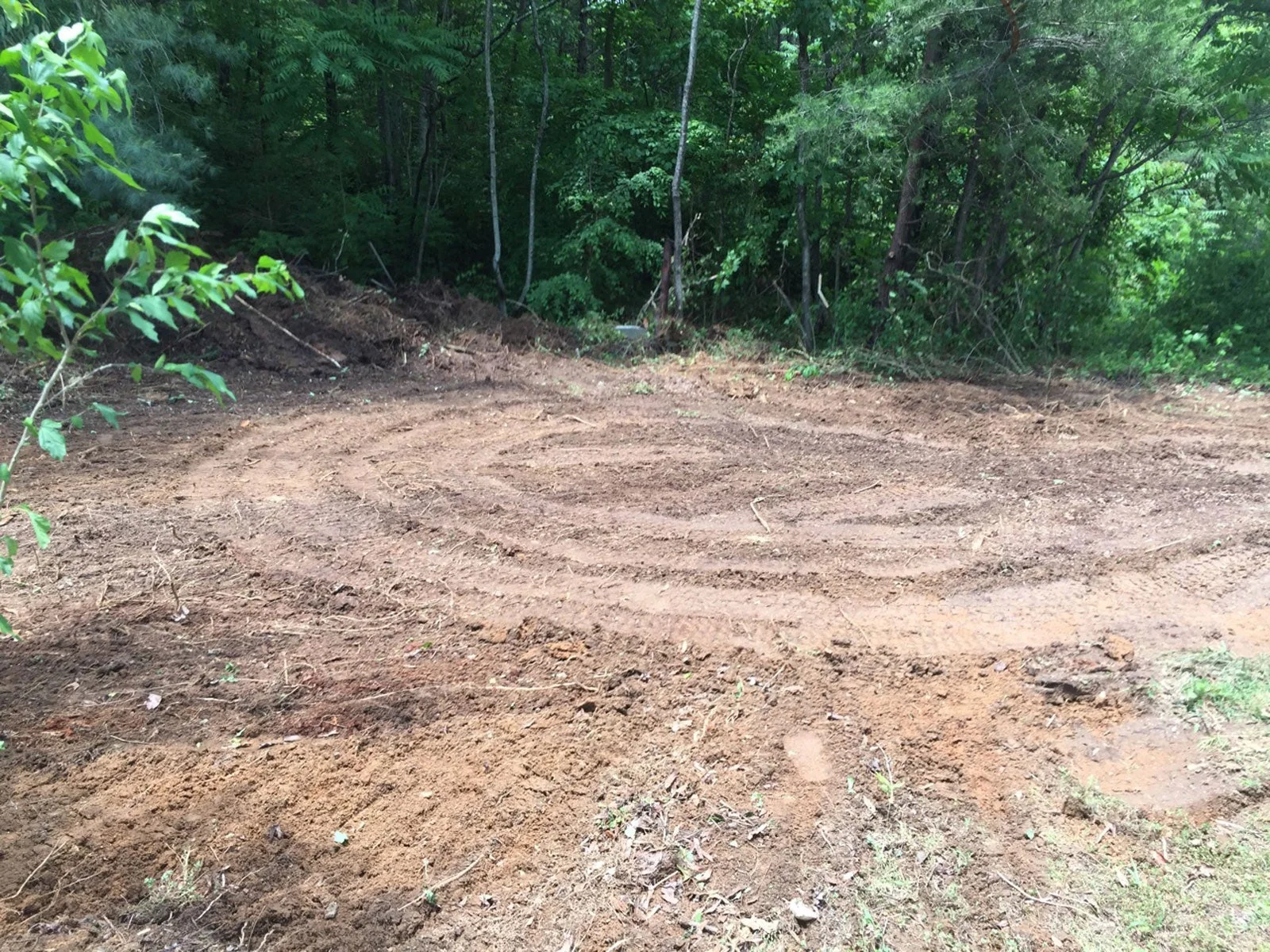
Neighborhood character matters too. Swannanoa is not Asheville — it is a valley town of older mill-era lots, small farms, and a growing number of new builds on subdivided tracts. The older lots often carry a generation of volunteer pines, briars, and dumped debris along the back fence, which is a different clearing scope than a fresh cut on raw land. If a lot sat through even one wet season without being touched, the saplings have already thickened past mowing height and the brush pile in the corner has roots under it.
For current official guidance, see the North Carolina State Board of Examiners of Plumbing, Heating and Fire Sprinkler Contractors. For current official guidance, see the North Carolina Department of Insurance, Office of State Fire Marshal.
What clearing actually costs on Swannanoa lots
Residential clearing here fits the standard band unless the site turns steep and heavily wooded. Stumps are the quiet budget item: grinding is cheaper than pulling, but if you plan to build, the stump and its root ball usually have to come out of the footprint, and that means excavation and haul-off.
| Scope | Typical range |
|---|---|
| Light clearing — brush, saplings, mow-and-pile | $750–$2,000 |
| Wooded lot cleared without stumps | $2,000–$5,000 |
| Clearing with stump removal and rough grading | $1,500–$8,000 |
| Steep, heavily wooded acreage (rock, haul-off) | $10,000+ |
Cut and fill changes the number more than acreage does. On a slope, dirt you push off one side has to go somewhere, and hauling it off-site adds trucking the flatland quotes never mention. The full line-item picture lives in the Buncombe County grading cost breakdown.
Access is the other hidden line. Many Swannanoa lots front a narrow road or a private gravel drive, and a lowboy trailer or dump truck cannot always reach the back of the property. That means either a smaller machine that takes more passes, or a temporary access cut that itself has to be cleared and later repaired. A bid written from a satellite image will miss both.
Time of year moves the quote as well. Late fall and winter are the honest clearing window here — the ground is firmer, the undergrowth has died back, and the crew is not fighting heat and mosquitoes. Spring and summer bids often carry a moisture caveat, and clay-heavy lots may sit idle for days after a storm while the surface dries enough to hold a machine.
Storm water, ditches, and why the county cares
Swannanoa sits in a basin that has seen repeated flood and storm events — 19 federal disaster declarations touch this county across 1973-2026 — and most of them pushed water at ground that was graded for a drier assumption. Clearing strips the vegetation that was slowing runoff, so a bare Swannanoa lot sheds every storm straight downhill, into the next yard or the ditch along the road. Any honest scope answers that before the first tree falls: where the water goes, what silt fence or diversion ditch protects the neighbor, and how the finished grade drains.
The county treats land disturbance and grading as permitting events once a job crosses its thresholds, and the work has to leave the site stable. The NC Licensing Board for General Contractors sets when a project needs a licensed general contractor, which is worth checking before you hire a clearing crew to also grade, haul, and build.
In practice, that means the plan should say what happens to the bare dirt. A silt fence along the downhill property line, a rock check dam in a swale, or a temporary seeding on ground that will sit exposed through winter — these are small line items that keep a clay-heavy Swannanoa lot from washing into a neighbor's driveway after the first big rain. Federal guidance on storm water and erosion is available from the U.S. Environmental Protection Agency.
Because this valley drains toward the Swannanoa River and its tributaries, any clearing near a stream bank carries extra scrutiny. Riparian buffers, disturbance setbacks, and the county's erosion-control expectations all tighten when the work is close to water. A crew that has built in the valley knows this and will walk the creek line with you before quoting.
Burn, haul, or grind: getting rid of what you cut
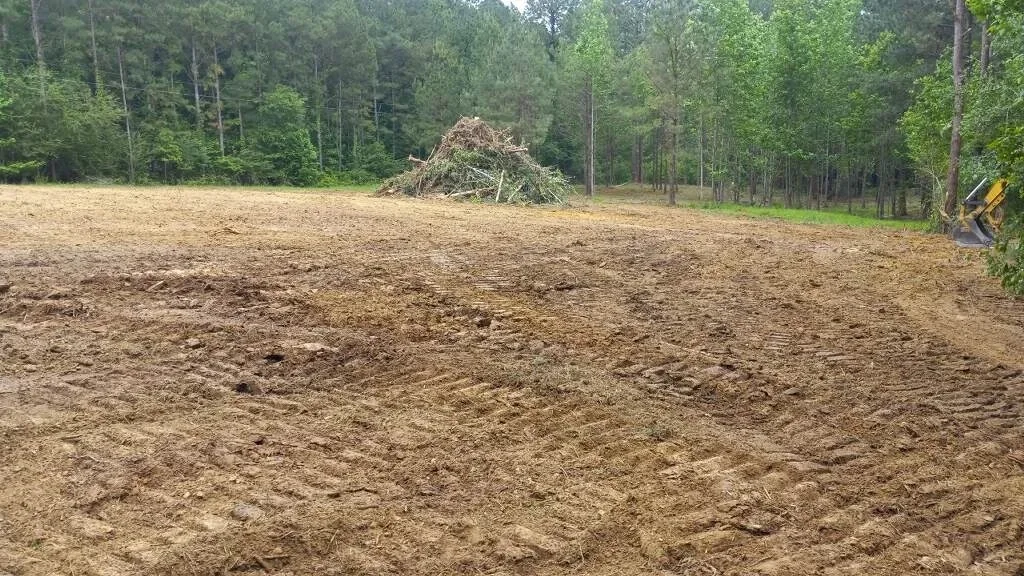
You have three disposal paths in Swannanoa, and each one shows up on the invoice. Chipping and grinding leaves mulch on site, cheapest but only useful if you want the material. Hauling off-site costs by the load and the distance to the dump. Burning needs a permit and dry weather, and Buncombe County restricts it seasonally, so it is the least predictable option. If the lot is steep, hauling means the truck has to reach the pile, which sometimes means clearing a road first — a cost that appears on the bid of a crew that has actually walked the site and not on the one quoting from a phone.
Open burning in North Carolina is regulated by the state forest service and by local ordinance, and the rules tighten in dry stretches. A burn pile also has to be away from structures, power lines, and overhanging branches, which smaller Swannanoa lots do not always allow. In practice, most crews on tight valley lots chip the smaller material and haul the logs, leaving the mulch for the homeowner to spread or stockpile.
Haul-off distance is real here. A job on the east side of the valley may be a much shorter trip to a receiving site than one up a hollow road toward the Parkway, and trucking time loads directly into the quote. Ask how many loads the crew expects and what each costs, rather than accepting a single lump disposal number that can drift if the pile turns out bigger than the first pass suggested.
Matching a crew to Swannanoa ground
The right outfit has worked clay, rock, and fill in the same month. Ask what they will do when the first pass hits rock, ask whether stump removal is included or billed hourly, and ask who handles erosion control and the county paperwork if the job crosses the permit threshold. For crews working the town specifically, the Swannanoa grading contractor guide covers what to verify, and the broader land clearing overview walks through scope and sequencing. The crews worth hiring will talk about your dirt, not just your acreage, and they will put drainage in writing.
A few questions separate a local crew from a truck that drives in from out of county. Do they know which side of your lot is downhill, and what that means for the silt fence? Have they pulled stumps in clay that had been soaked and then dried hard, the pattern this valley produces? Can they explain where the machine will enter and what happens to the yard after the tracks come out? The answers are usually clear enough to tell whether the person quoting has actually stood on the property.
Also check insurance and references for work in the last year or two, not just a portfolio from a decade ago. Clearing techniques, milling equipment, and county expectations have all changed, and a crew that stays current on storm water rules will protect you from a neighbor complaint or a county stop-work order. When in doubt, ask to see a finished job nearby and look at how the finished grade drains after a rain — the best proof in a valley like this is ground that stays firm and dry where it should.