The one-acre line decides how your driveway job starts
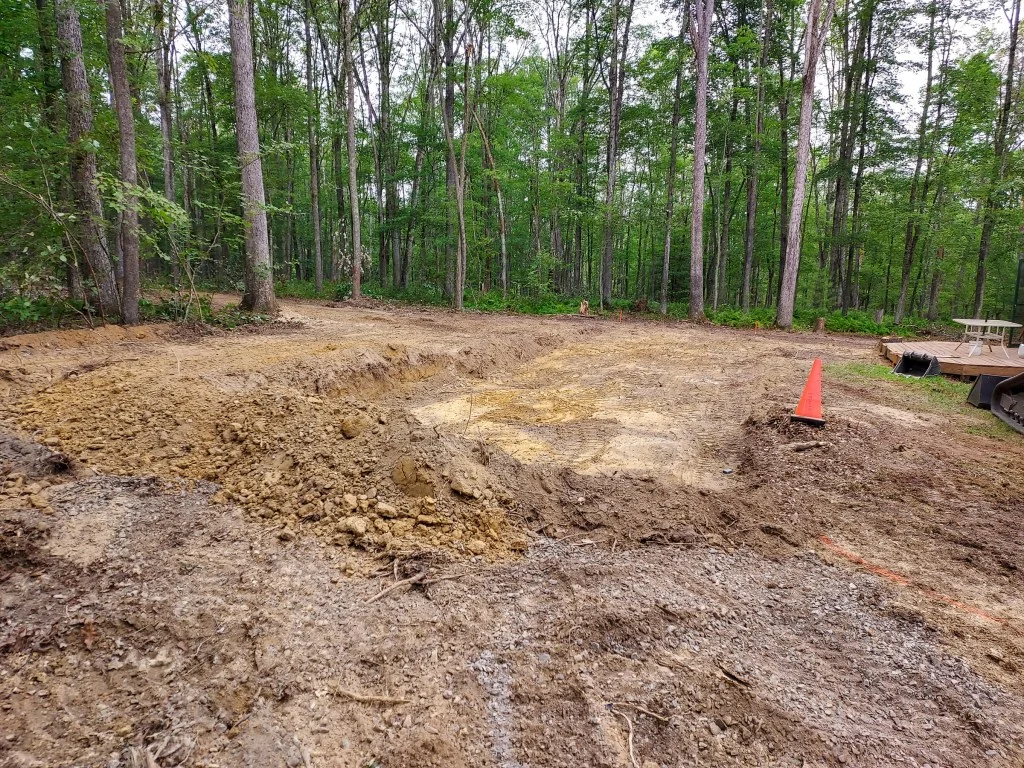
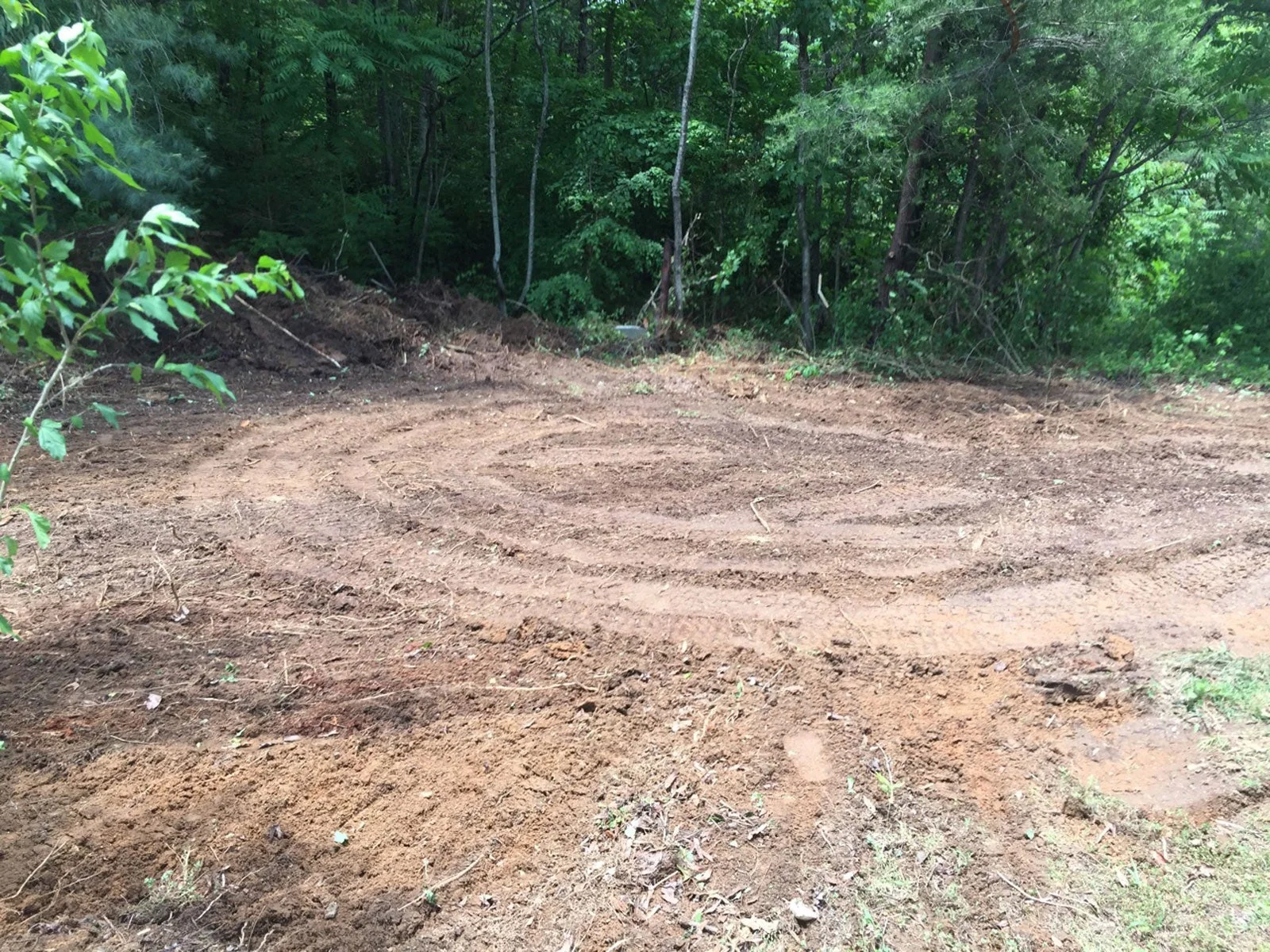
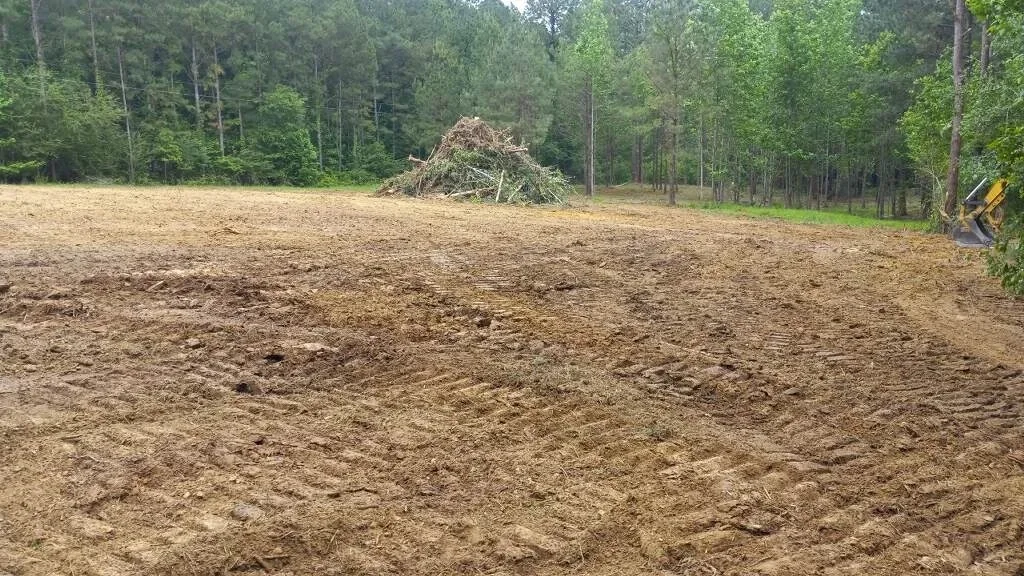
Fairview is unincorporated Buncombe County, and a lot of what looks like a simple gravel driveway here is actually a land-disturbance project. The state's erosion-and-sedimentation rules apply once a project disturbs an acre or more, and on Fairview's wooded ridges and long frontage tracts, carving a driveway, clearing a turnaround pad, and grading the shoulders can approach that acre quickly. When it does, you're not just buying stone — you're buying a plan, a silt fence, a stabilized construction entrance, and inspections. That overhead is real money, and it's why two neighbors on the same road can get quotes that differ by thousands for what sounds like the same driveway.
Fairview sits just east of Asheville, higher up toward the Blue Ridge, with steep wooded slopes, small horse properties, and a mix of older farm lanes and new builds on land that was recently logged or graded. Driveways here fight grade and runoff, not flat-land compaction. If your driveway plan crosses the one-acre threshold, the permitting line items belong in the bid, not in a change order later.
The threshold isn't a technicality you can eyeball. A 300-foot drive cut 12 feet wide, plus the cleared shoulder and turnaround, can push a single-family lot close to the line before you've touched the house pad. Add a barn pad, a horse arena, or a second access point and the disturbed acreage climbs fast. That's the pattern on Fairview's larger tracts along the ridge roads, where the driveway is often the first big earthwork on the property. Contractors who work here regularly know to sketch the disturbed area early, because retrofitting a silt fence and a stabilized entrance mid-job means re-doing work and paying twice.
For homeowners on smaller infill lots nearer the Fairview community center or down toward Cane Creek, the one-acre line is rarely an issue, and the job is a straightforward grade-and-stone scope. The honest first question is which side of that line you're on, and it's the kind of question a local contractor should answer before quoting a single ton of rock.
Where Fairview driveway money actually goes
Use the table as a scope guide, then compare it against the full Buncombe County grading cost breakdown for local line-item ranges. The short version: the stone is rarely the expensive part — access, slope, and drainage are.
| Scope | Typical range |
|---|---|
| Short, flat drive, existing subgrade usable (regrade, fabric, 6 in. of crush-and-run) | $1,800–$3,200 |
| Average residential drive, 150–300 ft, modest slope, culvert and one ditch line | $3,000–$5,500 |
| Long or steep mountain drive, 300+ ft or grades above ~12%, with switchback, water bars, and drainage work | $8,000–$12,000 |
| Erosion-control plan, silt fence, and stabilized entrance where the one-acre line is crossed | Add-on line item, quoted separately |
Two Fairview-specific cost movers: haul distance for stone on narrow mountain roads, and the amount of cut-and-fill needed to get a usable grade. A drive that follows the existing ground costs far less than one that has to cut through a knob or fill a drainage. That relationship is covered in more depth in our driveway grading and gravel guide.
Fairview's red clay is worth calling out specifically. It looks solid when dry and turns greasy and unstable when saturated, so a drive laid straight on the clay without woven geotextile fabric will pump stone down into the subgrade and rut within a couple of wet seasons. Fabric is a modest line item that pays for itself. The same clay, though, holds a cut slope well when it's shaped and seeded correctly, which is why local crews often prefer to grade the cut and let it vegetate rather than haul in riprap everywhere.
Stone selection matters too, and it's tied to slope. Crush-and-run (the graded mix with fines that binds and compacts) is the standard surface for a Fairview drive because it locks together. Washed stone, which drains well but never binds, is a poor choice on a hill because it migrates downhill with the first heavy rain. A contractor who specs washed gravel on a steep Fairview grade is one who either doesn't understand the terrain or is selling you whatever's cheapest to haul. Ask what stone they plan to place and why it fits your slope.
Grade and water are the two things that kill a Fairview drive
A gravel driveway on flat ground in the Piedmont will survive on compaction and a crown. In Fairview, it won't. These hills get serious rainfall, and the federal record reflects it: 19 declared events have touched this county over 1973-2026, most of them storm and flood related. Every one of those storms sends water down a steep drive, and a gravel surface without water bars, a proper crown, and a ditch that actually drains will rut, wash, and lose its stone within a season or two.
Before anyone quotes you on stone, the drainage question needs an answer: where does the uphill water go, where does the culvert discharge, and does the drive shed water to the side or down the middle. The National Weather Service records for the Asheville area show how much of the annual rain arrives in concentrated events, which is exactly the pattern that punishes an un-drained drive.
The mechanics are worth understanding even if you never touch a shovel. Water gains speed and force as it runs downhill, so a long continuous grade concentrates flow into a sheet that carves a channel. Water bars — shallow diagonal ridges that pitch water off to a vegetated shoulder — break that flow into short segments that can't gain enough energy to cut. A crown, which is a slight rounding of the surface so the middle sits a few inches higher than the edges, sheds rain to both sides instead of letting it run down the wheel tracks. Together they're the difference between a surface that holds and one that grooves.
Discharge is the other half, and it's where Fairview jobs often get argued about. A culvert that dumps water directly onto a neighbor's property or onto an erodible fill slope creates a new problem the storm will eventually surface. The right answer sends collected water to a stable vegetated area or a proper outlet, and that sometimes means a short swale or a rock-lined apron rather than just a pipe ending at the lot line. Ask where the water ends up, not just where it goes in.
Hiring: licensing, drainage sequencing, and the right order of work
Driveway work itself often falls below the threshold that requires a general contractor license, but any project that crosses into structural work, retaining walls, or larger grading scopes does — the NC Licensing Board for General Contractors sets those thresholds and publishes them. Ask where your job lands, and ask for the erosion-control responsibility in writing if your project will disturb close to an acre.
The other check is sequencing. The crews that build drives that last do drainage and grading first and stone last. The crews that sell stone first will leave you with a surface that looks finished and fails within a year. When you're comparing bids, ask each contractor what they'll do about the water before they talk about the stone. A good local contractor should be able to show you drives in Fairview they built several seasons ago and still hold up. Our Fairview grading contractors page covers what to look for in a local crew.
Bids in this county rarely arrive as a clean apples-to-apples number, and it pays to normalize them. Ask each contractor to break out clearing, excavation and cut/fill, any culvert or ditch work, fabric, the stone itself, and erosion-control items if they apply. A bid that's a single lump sum hides the very line items that separate a good job from a cheap one. Two quotes can look identical on the bottom line while one includes drainage work and a compacted base and the other is just a spread of rock over whatever's there.
Ask too about compaction and equipment. A drive that's dumped and spread without a plate compactor or roller won't bind, and the fines that make crush-and-run work never lock into place. On Fairview's slopes, an uncompacted lift is the first place the next storm will cut. It's a reasonable question to ask how many inches of stone they'll place and whether they'll compact in lifts, and a straight answer tells you a lot about the crew.
When you don't need a full new driveway
A lot of Fairview gravel driveways don't need to be replaced — they need to be re-graded, re-crowned, and topped off with fresh stone. If the subgrade is still sound and the failures are surface-level ruts or potholes, re-grading and adding a few inches of crush-and-run is a fraction of new construction. That's the honest call to make before anyone quotes a full tear-out, and it's the kind of question a good local contractor should raise themselves. If you're unsure which side of that line you're on, get an on-site look before spending on stone.
The tell is usually in the base, not the surface. If the drive potholes in the same spots after every storm, the water is going somewhere it shouldn't and stone alone won't fix it — the grade and drainage need attention. If the drive only looks tired and loose but drains fine and holds its crown, you're looking at a topping-off job. Repairs that quietly solve the real problem — a new water bar, a re-cut ditch, a re-crowned slope — last far longer than another load of gravel spread over a drainage defect.