The one-acre line that reshapes a Hot Springs drainage bid
On most lots a drainage contractor can quote a French drain by the linear foot and be finished. In Hot Springs that changes fast, because the town clings to the French Broad in Madison County's steep river-cut terrain, and the parcels that drain badly are usually the ones already cleared, graded, and graveled across most of their surface. Once a project disturbs roughly an acre, North Carolina's erosion and sedimentation rules attach, and the bid stops being pipe, gravel, and labor alone.
That is the line a homeowner here needs to understand before signing. A quarter-acre yard with a soggy back corner is a straightforward drainage scope. A one-acre-plus cleared parcel shedding water onto a neighbor, a road, or a stream is an erosion-control scope first, with drainage as one part of it. The two bids look similar on the truck and completely different on paper.
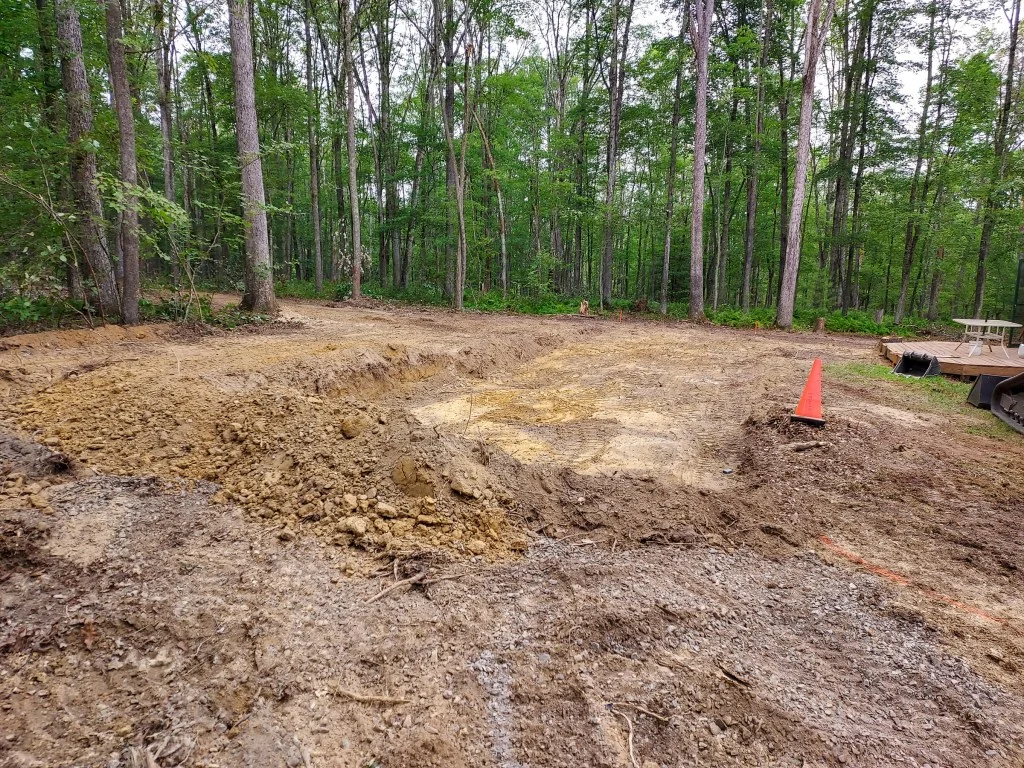
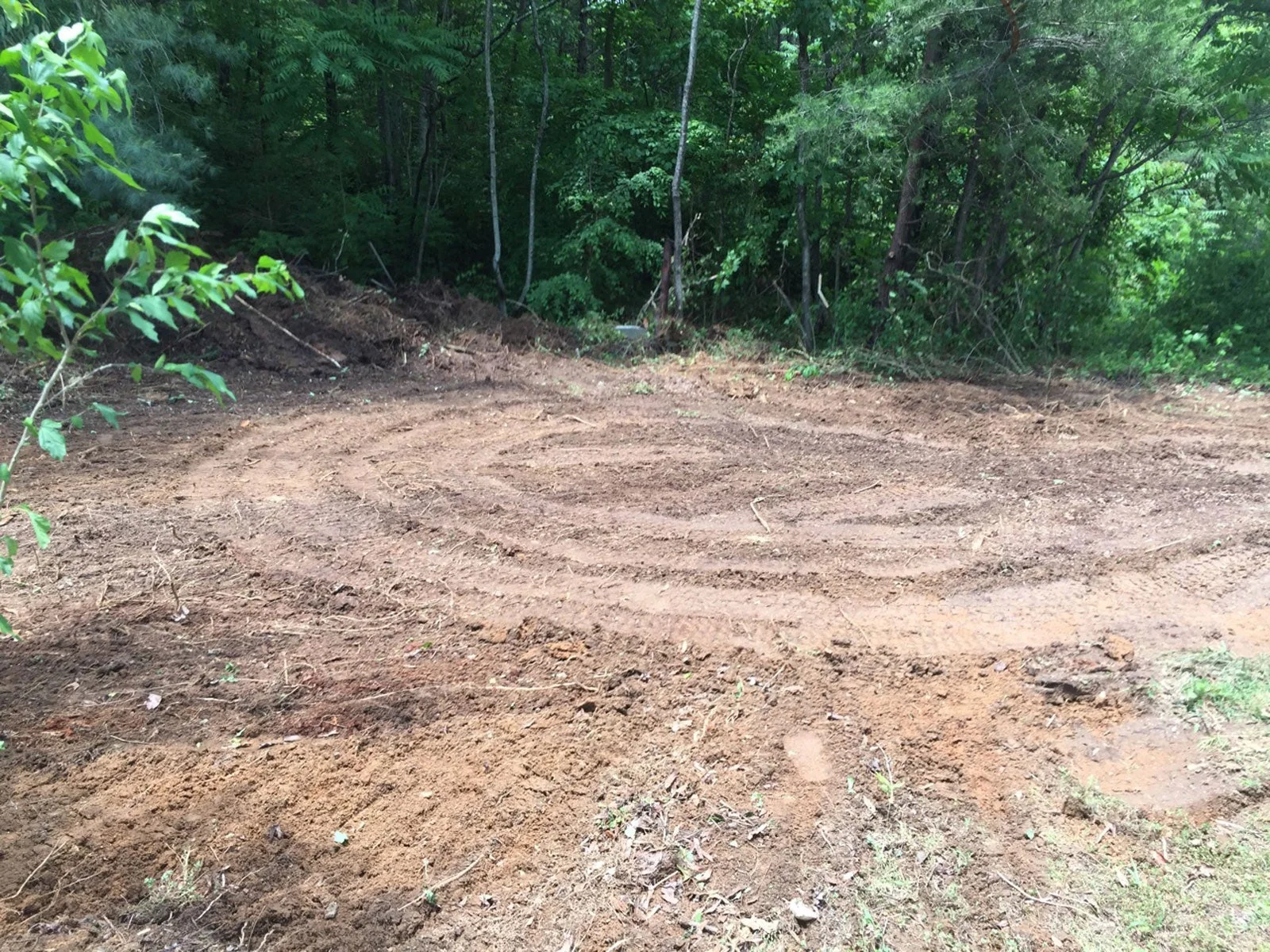
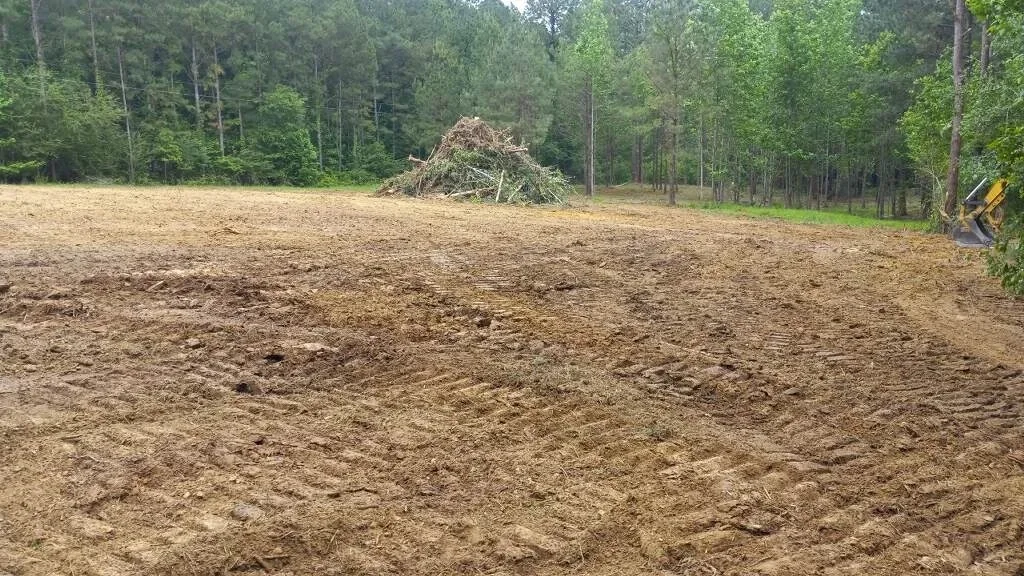
What makes the threshold tricky here is how quickly disturbance adds up. A house site, gravel drive, cleared garden plot, and workshop pad can together brush an acre on a parcel that looks small from the road. Because flat ground is scarce on these slopes, the usable area gets cleared and compacted all at once rather than gradually, which is exactly the condition that sends runoff downhill fast. A contractor reading the site has to estimate total disturbance, not just the trench being dug, before deciding whether this stays a simple yard fix or becomes a permitted job.
Reading the water before quoting the fix
Hot Springs hangs on the French Broad, and the ground reflects it. Slopes drain hard into low corners; low corners collect everything the upslope ten neighbors send down. A yard wet three days after rain is usually a grading problem, not a soil problem. A yard damp in one spot and dry six feet away is a downspout or spring problem. Those are different scopes, and a contractor who quotes both from the truck has not done the inspection.
The right first move is finding the source: roof discharge, uphill sheet flow, a high water table, or a spring. Each takes a different fix, and treating the wrong one means the yard stays wet after the check clears.
Terrain here makes that diagnosis more important than it would be on flat ground. A slope above a house delivers water under pressure, so a buried pipe sized for gentle sheet flow gets overwhelmed by a concentrated gully after a hard rain. In the older river-bottom blocks, where side streets climb quickly away from the water, it is common to find a wet yard caused entirely by an uphill driveway or roofline never tied into a proper outlet. A good walk of the site traces the flow from its highest point to where it actually leaves the property, and that path, not the wet spot, is what the fix must follow.
Springs are the other local wildcard. Where groundwater surfaces partway down a slope, no regrading will dry the ground, because water arrives from below. Those sites call for a curtain drain or collection system that intercepts the flow and carries it away, and pretending it is surface runoff just moves the wet spot around. During heavy regional rain events — Madison County has logged 21 federal disaster declarations over 1978-2026 — the difference between a source fix and a surface patch becomes obvious.
What Hot Springs drainage scopes actually cost
Prices below are realistic regional bands for Madison County terrain and are ranges, not quotes. Steep lots, long runs, and rocky ground push toward the top; flat lots with easy machine access sit near the bottom. The Madison County grading cost breakdown covers the dirt-moving side of these scopes in more detail.
| Scope | Typical price range |
|---|---|
| Single downspout tie-in and short buried run | $450–$1,200 |
| French drain, per linear foot installed | $35–$85 |
| Full-yard French drain, 100–200 ft | $3,500–$9,000 |
| Swale and regrade to redirect sheet flow | $1,800–$6,500 |
| Dry creek bed for concentrated flow | $2,000–$7,000 |
| Whole-yard regrading | $15,000 and up |
| Erosion-control plan and installation on 1+ acre | Quoted with the drainage scope |
The erosion-control line is where Madison County jobs diverge from flatland bids. It is not optional when the acreage threshold is crossed, and it is the part out-of-county contractors most often leave off. For how erosion and drainage interlock, see drainage and erosion control.
Two cost factors deserve plain explanation. First, rock. Much of this county sits on ground that turns a trencher into a chisel, and where shallow rock is hit, a French drain costs noticeably more per foot because the trench has to be cut differently or routed around the obstruction. Second, access. A sloped backyard with no gate wide enough for a machine means hand work, and hand work moves the price toward the top of every band. Neither should be a day-two surprise; both are visible on a proper site walk.
It also helps to think of drainage cost as a sequence, not one purchase. A homeowner chasing a wet basement may spend on gutters and downspout extensions, then a swale, then a French drain, and each step changes what the next must do. Source work first usually costs less than buying the biggest pipe system up front and still having a wet yard.
Which Hot Springs jobs cross the permit line
A typical in-town lot is well under an acre, and a standard French drain or downspout tie-in there does not trigger the state erosion permit. The jobs that do tend to be the ones people least expect: a large cleared parcel being regraded, a long driveway cut into a slope, a big yard reshaped to fix a chronic wet corner. When disturbance approaches an acre, the project shifts categories, and the contractor's scope now includes the paperwork and the installed erosion controls.
The rule lives in the state's erosion and sedimentation program, and the practical details run through the NC Department of Insurance Office of State Fire Marshal code enforcement framework for construction standards. Homeowners should ask any drainage contractor how they handle the one-acre threshold before comparing bids, because a bid that ignores it is not cheaper, it is incomplete.
Sediment is why the rule exists, and it matters more here than in flat country. When a slope is disturbed and rain hits, loose soil moves downhill fast, and the nearest place for it to land is often a creek or the river itself. Erosion controls — silt fence, inlet protection, stabilized entries, temporary seeding — hold that soil on site during construction so it does not smother a streambed. The U.S. Environmental Protection Agency sets out the national stormwater and sediment framework these local rules are built on. That is why a permitted job includes them as part of the work rather than as an extra, and why a contractor who has done slope work in Madison County already thinks about them before the first bucket of dirt moves.
Choosing a drainage contractor who knows this terrain
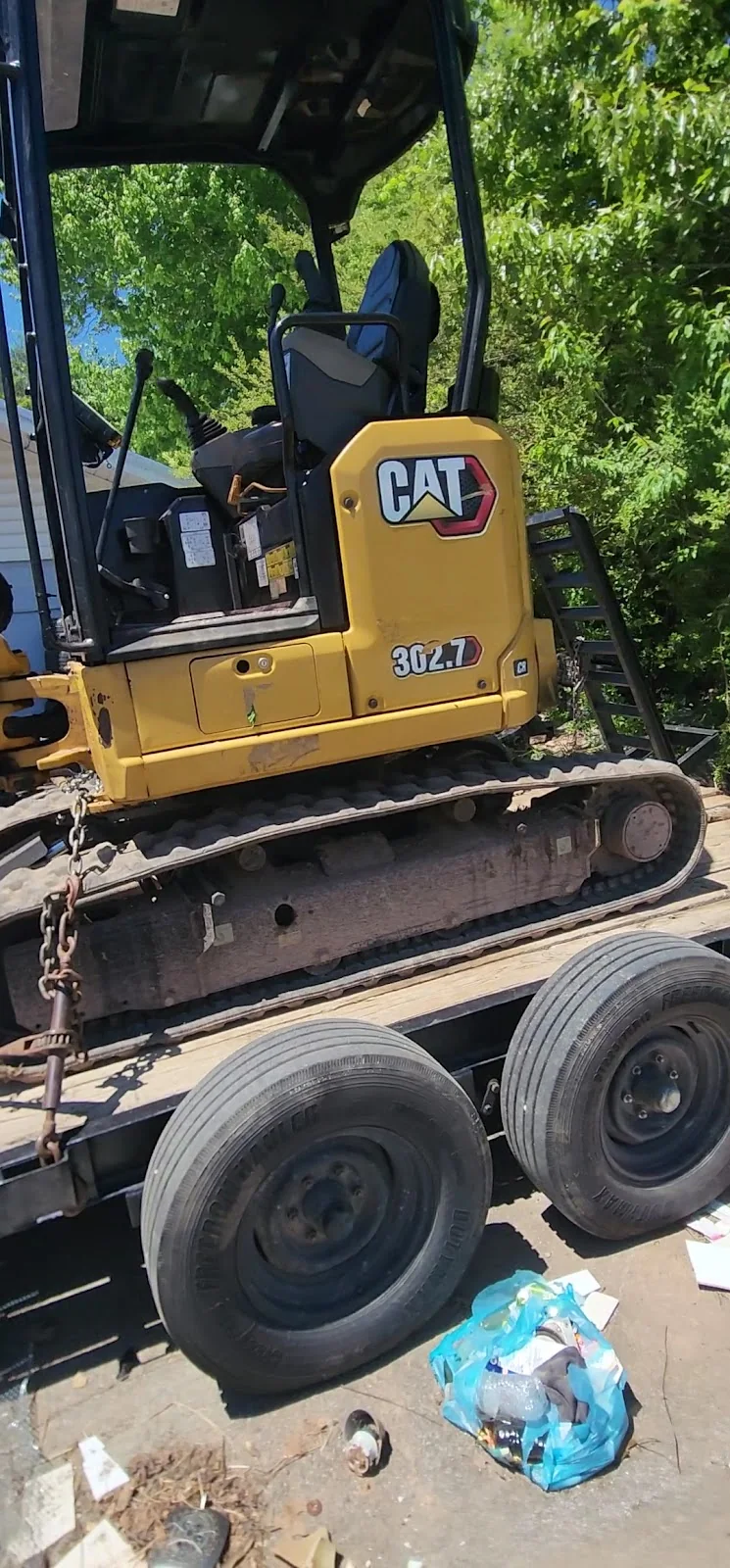
Hot Springs is small enough that most drainage work here is done by crews who also grade and excavate, which helps, because the fix usually involves moving dirt, not just laying pipe. Two things are worth checking. First, ask how they read the water before quoting; if the answer is a pipe size and a per-foot price with no site walk, keep looking. Second, for larger jobs, ask whether the scope includes erosion controls where the acreage threshold applies.
For projects that cross into structural or major grading work, general contracting rules and licensing thresholds apply through the NC Licensing Board for General Contractors. If you are starting from scratch and want the excavating side covered, the Hot Springs grading contractors page is the right starting point.
A third question is worth asking on any river-adjacent or steep parcel: what happens to the water after it leaves the yard? A fix that sends the problem onto a neighbor's lot or straight into a creek is not a fix. A contractor who talks about the outlet as carefully as the inlet is usually the one whose work holds up through a wet season, and in this county the wet season is the only test that matters.