Why Biltmore Forest approaches are their own category of job
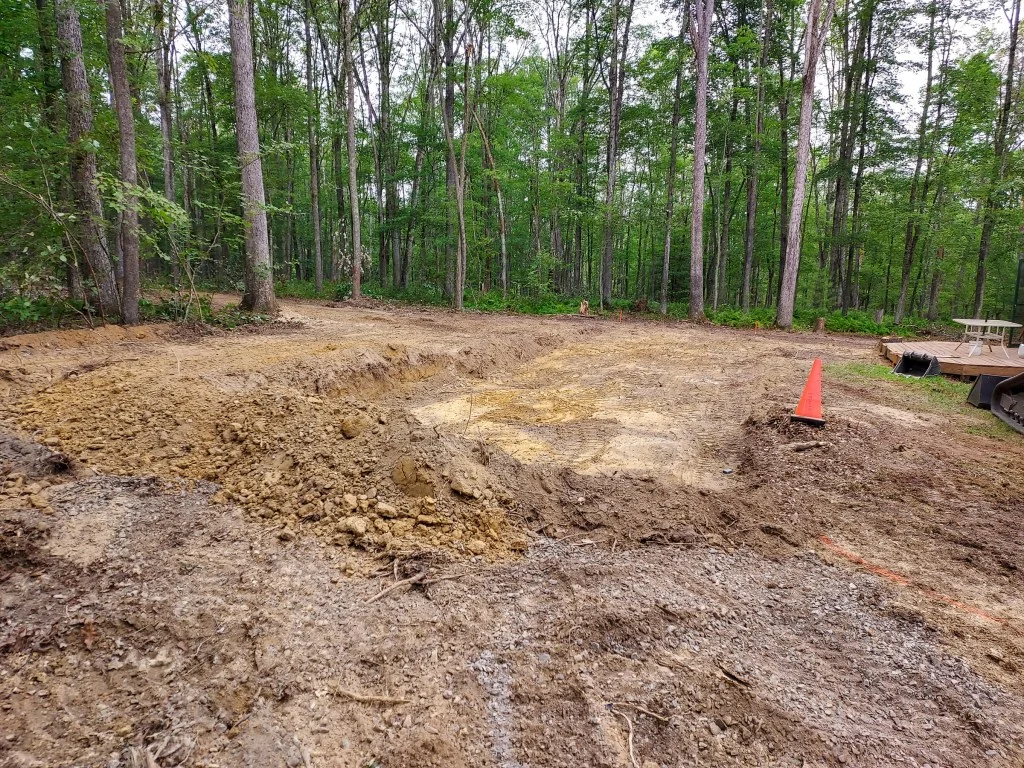
Drive through Biltmore Forest and the first thing a grading contractor notices is not the houses — it is the length. This is a town of estate parcels and wooded lots off roads like Hendersonville Road and Brookline, where a driveway can run several hundred feet from the street to the house, and where mature hardwoods and laurel mean the approach was cut into a slope rather than laid across flat ground. That single fact reshapes the entire estimate. On a level quarter-acre lot in a denser Asheville neighborhood, gravel driveway installation is mostly a stone and compaction job. In Biltmore Forest, it is a drainage and grade-control job that happens to end in gravel.
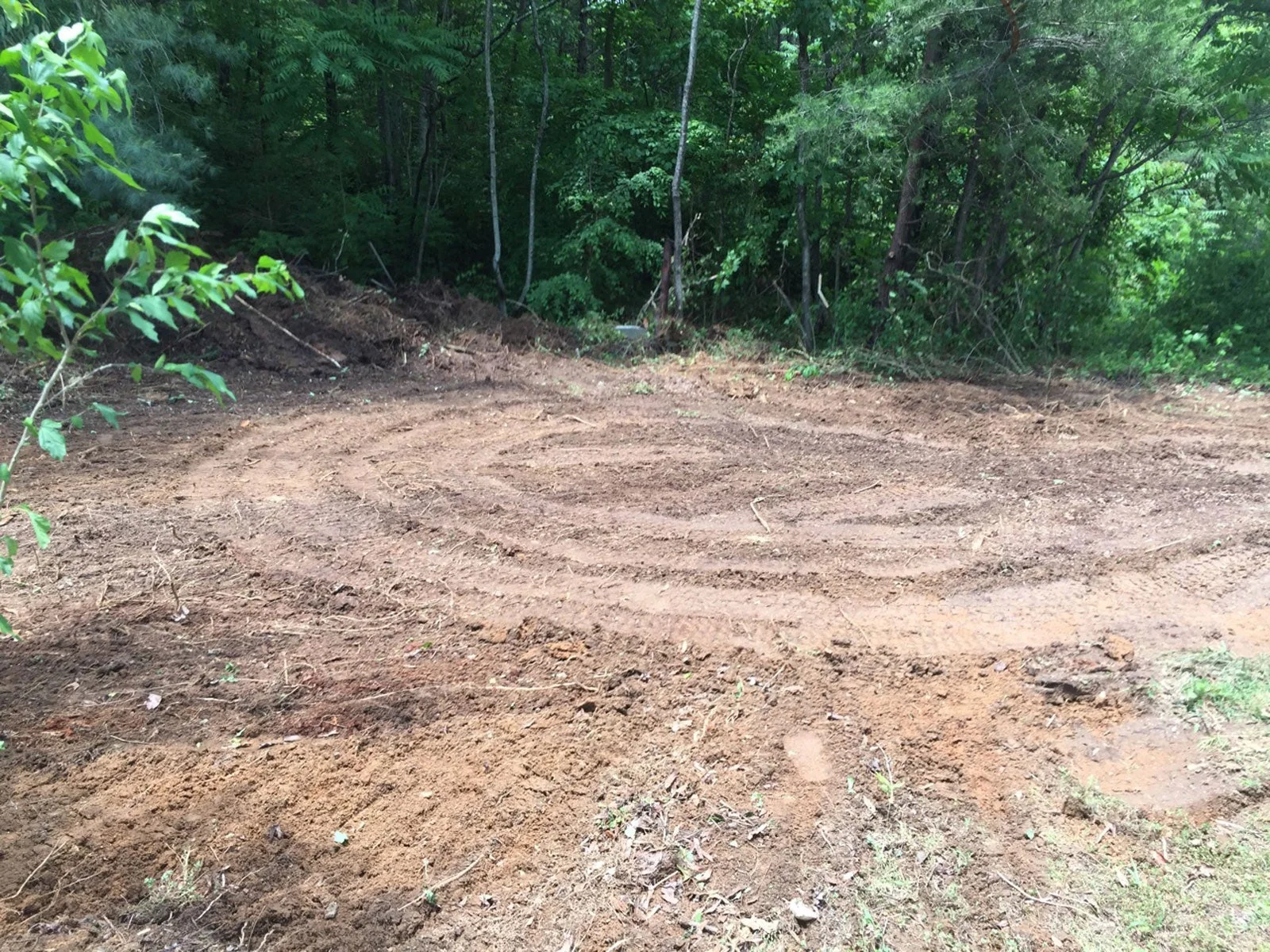
The second thing a contractor notices is curves. Tight radii and switchbacks are common where lots climb off the road, and curves change how you build. Water accelerates through a bend. Gravel migrates to the outside of the turn. A driveway that would hold fine in a straight line will rut in a curve unless the base, the crown, and the ditch are done correctly. Long before a single ton of stone is placed, the shape of the ground decides the price.
What a proper gravel driveway build includes here
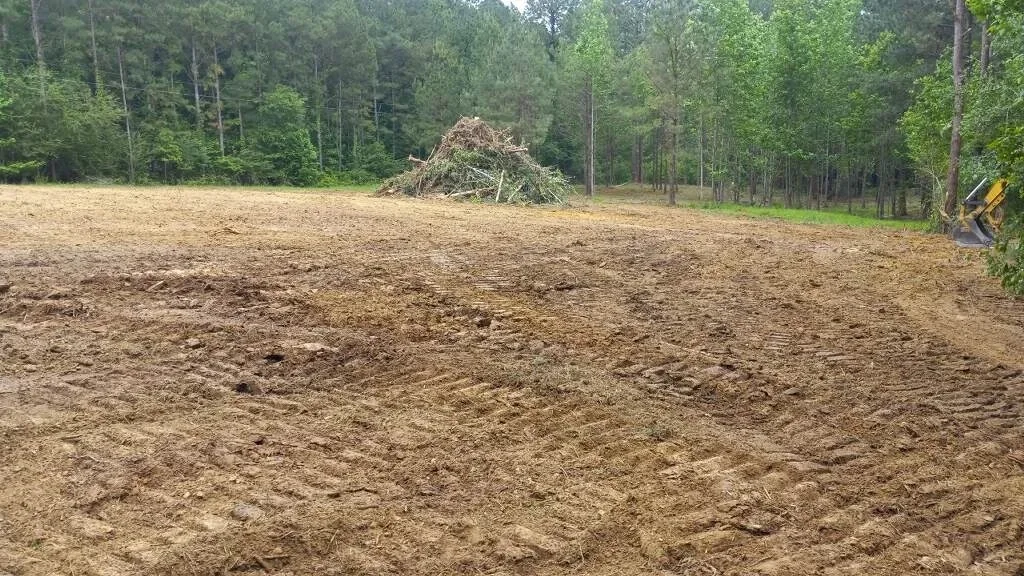
A driveway that lasts on these lots is built in layers, and each layer has a job. Order matters as much as material. The sequence below is the one that holds up on sloped estate approaches in this part of Buncombe County; skipping a step is how a new driveway becomes a spring project.
| Scope | What it covers | Typical range |
|---|---|---|
| Short level run, existing base | Refresh 80-150 ft, regrade, top with crushed stone, compact | $3,800-$6,500 |
| New short drive, moderate slope | 150-250 ft, strip and grade, geotextile, 4-6 in base, surface stone | $6,500-$10,000 |
| Long or curved approach | 250-400+ ft with one or more bends, crown, ditch, culvert | $10,000-$14,500 |
| Heavy grade change, switchback | Cut-and-fill, retaining edge or boulder wall, engineered drainage | $14,500-$28,000+ |
Every row assumes the same truth: the stone is the cheap part. Grading, drainage, and compaction are where the money and the durability live. A gravel surface laid over soft or poorly drained subgrade will not survive one wet mountain spring, no matter how good the stone is.
Drainage is not optional on a wooded slope
Biltmore Forest gets the same water Asheville does, and the county's federal disaster record shows it: 19 declared events have touched this area across 1973-2026, overwhelmingly storm and flood driven. On a steep, tree-shaded lot, that water has to go somewhere, and a driveway is the path of least resistance. The single most common failure we see is a driveway built with no defined ditch, no crown, and no culvert under the entrance — so every storm sheets across the surface and cuts channels in it.
The fix is designed in from the start: a crowned surface that sheds water to a stabilized ditch, cross-drainage where the driveway meets a cut bank, and a properly sized culvert at the street. North Carolina's residential code treats site drainage as a first-class requirement, and the state's building code resources at ncosfm.gov are worth reading before you approve any scope that leaves drainage to chance. If a bid has no drainage line item on a sloped lot, it is not a cheaper driveway — it is an incomplete one.
Stone choices and what they cost you later
Gravel is not one product. In this region, driveways are typically built with a crushed base course (often called crusher run) for structure and a washed surface stone for appearance and drainage. The base does the load-bearing; the surface sheds water and looks right from the house. Getting the ratio wrong is the second-most-common mistake after drainage — too little base and the drive ruts, too much rounded surface stone and it migrates off the slope in a season.
Cost tracks three variables: how much grading the slope requires, how much stone the length demands, and how much drainage protection the water needs. See the working numbers on our Buncombe County grading cost page for how those line items price out locally. The planning detail behind the build is covered in our driveway grading and gravel guide, which walks through base depth, crown, and stone selection for mountain lots.
Permits, licensing, and hiring on an estate lot
Not every gravel driveway refresh needs a permit, but work that changes grade, alters drainage, or touches a street entrance often does — and Biltmore Forest lots frequently sit in or near protected tree cover, which adds review. Before work starts, confirm two things. First, whether the scope triggers a permit or a stormwater review through the town. Second, that the contractor is properly licensed for the job: North Carolina's general contractor licensing rules, explained at nclbgc.org, set the threshold where a project legally requires a licensed GC, and grading that moves significant earth can cross it.
The right crew for these lots has three habits. They walk the slope and check where water comes from uphill, they sequence drainage and base before surface stone, and they show you a plan for maintaining grade over years, not just for the first pour. When you are comparing bids, our Biltmore Forest grading contractors page explains what a serious local bid contains and what a thin one leaves out. For environmental and runoff considerations on larger earth-moving scopes, the EPA's resources at epa.gov are a useful reference on protecting water quality during construction.