The driveway apron tells you more than the wet spot does
Start at the driveway, not the swampy corner of the yard. On Woodfin's hillside cuts above the French Broad, the apron is where the story usually begins: if the slab tilts toward the garage, every French drain you bury downstream is fighting a losing battle with that grade. Water arrives from the slope above, crosses the pad, and stops where the concrete tells it to. Reading the apron first saves Woodfin homeowners from paying for pipe that never had a chance.
The same logic applies to an old patio, a low deck footing, or a walkway that ponds after every storm. Those hard surfaces were set to a grade, and that grade is now a drainage decision — whether anyone meant it that way or not. On the river-terrace lots along the French Broad, the house is often set low and the yard sloped gently toward the street, which works until a wet spring pushes the water table up and the yard can't shed fast enough. Repairing a misgraded yard costs a fraction of what re-doing a driveway or patio costs after water undermines it.
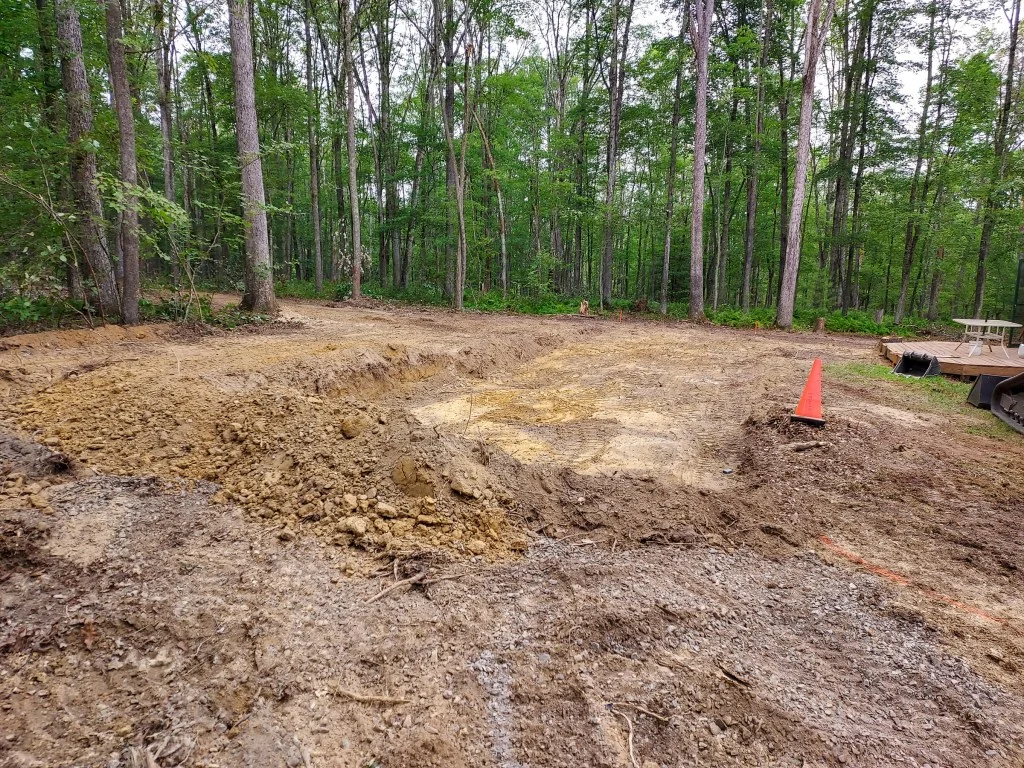
So the order for any Woodfin job is grade first, drainage second, hardscape last. Walk the lot after real rain and mark where water stands, sheets, or cuts a channel. Check where any existing dry well or buried corrugated line discharges. Then decide what to build. The full sequence, with scope-level pricing, is set out in the drainage and erosion control guide.
What actually gets built on Woodfin lots
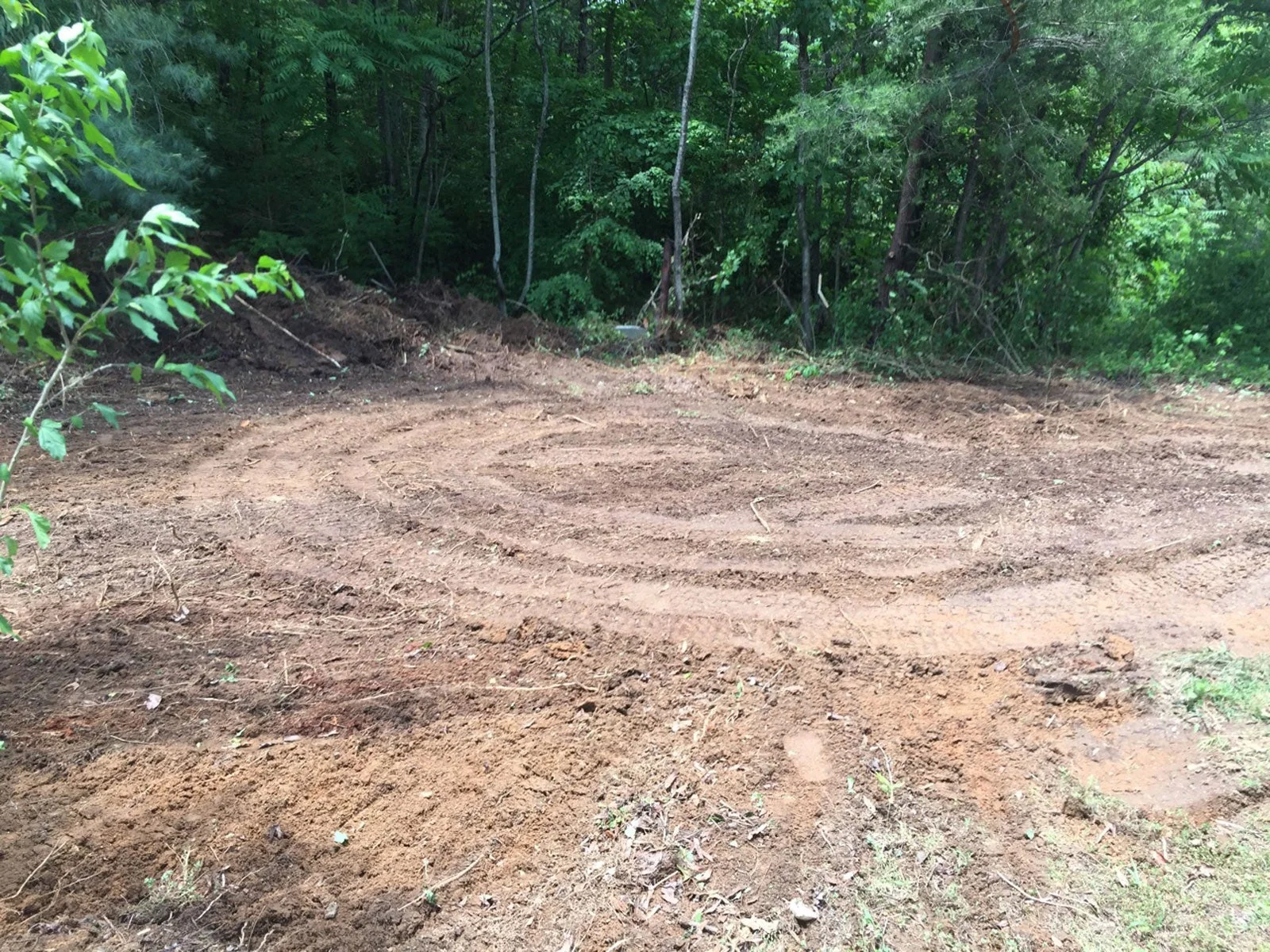
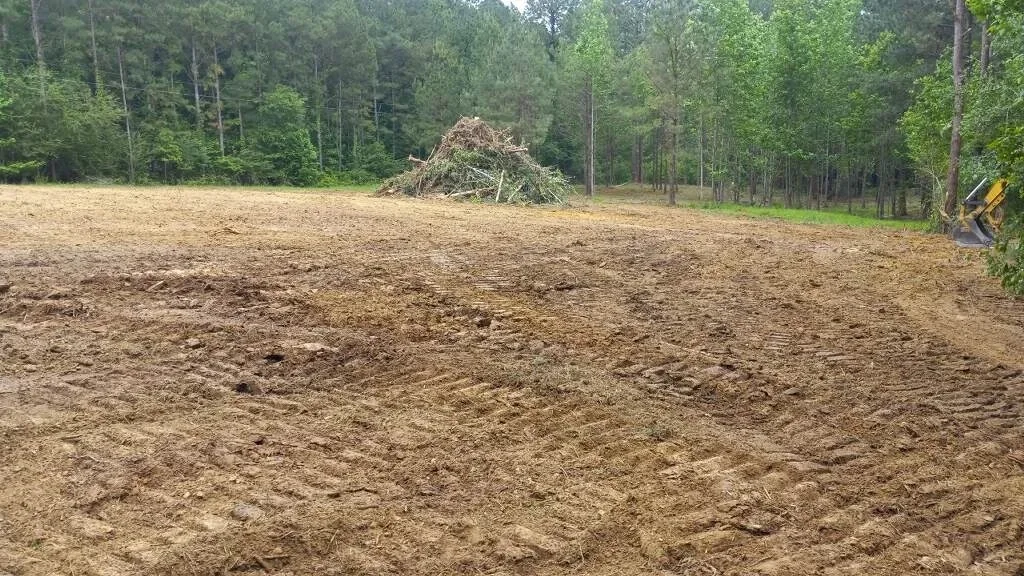
The jobs that come up here have a small number of shapes. A swale and regrade along a hillside foundation. A French drain intercepting surface flow before it reaches a low patio. Downspout extensions and buried discharge lines that move water away from the footing instead of into the crawl. A dry creek bed for the runoff a flat terrace lot can't shed on its own. And erosion control on the steeper cuts, where bare clay moves every storm and takes mulch, seed, and topsoil with it.
Two things push Woodfin bids toward the top of any range more often than neighbors like Weaverville or Black Mountain. First, haul-off: tight river-terrace lots often leave no room for a spoils pile, so dirt has to be trucked out, and that adds cost fast. Second, outlet distance: when the only legal or practical discharge point is a long run downhill or across a yard, pipe length climbs and so does the price. A bid that looks low often just hasn't accounted for where the water actually ends up.
Before anyone digs, permits and code matter. The NC Licensing Board for General Contractors sets the state contractor licensing threshold that applies to many grading and drainage installations, and any grading that changes drainage across a property line or moves significant dirt can trigger local review. Woodfin's terrain is not forgiving of shortcuts on slope and outlet placement.
Woodfin and Buncombe County price ranges
Numbers below are honest regional ranges for the Asheville metro, not flat rates. Every Woodfin job is priced against slope, pipe length, outlet location, and whether the existing grade needs correction before any drain goes in. The county-wide breakdown lives in the Buncombe County grading cost table.
| Scope | Typical price range | What drives it |
|---|---|---|
| Downspout extensions and buried discharge | $600-$1,500 | Number of downspouts, run length, outlet |
| Surface swale and regrade | $3,000-$5,000 | Linear feet, slope, soil moved |
| French drain, single run | $3,000-$9,000 | Length, depth, gravel, outlet |
| French drain, multiple runs plus dry well | $8,000-$12,000+ | System count, storage, discharge |
| Erosion control on steep cuts | $3,000-$6,000 | Slope, fabric, riprap, seed |
| Full yard regrade with drainage | $15,000 and up | Lot size, haul-off, engineering if required |
Any bid that treats drainage as an add-on to a grading quote, or vice versa, deserves a second look. Water and grade are one system.
Storm history is priced into every quote here
This county has seen 19 federal disaster declarations across 1973-2026, and the overwhelming majority are flood and storm events. That record is not trivia — it's the reason Woodfin drainage bids carry outlet design, riprap, and overflow paths that drier markets skip. The National Weather Service's climate and hydrology data for the Southern Appalachians shows what mountain storms do here: short, heavy, and capable of overwhelming a drain sized for average rain.
The practical rule on Woodfin slopes is to size for the storm that happens, not the one that's typical. A French drain that moves normal runoff but backs up in a downpour puts water where it hurts most. Overflow paths, daylighted outlets, and clear discharge points aren't upsells — they're the difference between a drainage system and a liability.
That history also explains why the sequence matters. After a major storm event, the yards that flood worst are rarely the ones with no drainage. They're the ones with drainage that was never tied to the grade — a French drain that empties into a low spot, a dry well that filled with sediment years ago, a downspout that dumps at the foundation because the original extension was never buried. Reading what's already there is how you find out which of those you're living with.
A shortlist built on terrain, not pipe
Three checks specific to this market. First, ask whether they'll walk the property during rain or inspect the grade before quoting — anyone who prices from a phone call is guessing. Second, confirm they handle grading and drainage together, because a contractor who only installs pipe and won't move dirt will hand you a system fighting your own slope. And for larger projects, check licensing against the NC Licensing Board for General Contractors threshold.
A good Woodfin crew will also talk about where the water goes before they talk about pipe. On the terraces, that might mean an infiltration trench or a dry creek bed sized for a high water table. On the hillside cuts, it means a daylighted outlet and enough fall to keep the line self-cleaning. Either way, the plan should start at the grade and end at a discharge point you can stand on.
If you want a shortlist built for Woodfin specifically, the Woodfin grading contractors page covers what to look for and how to vet bids. The right question to ask any crew is simple: show me where the water comes from and where it goes. If they can't, keep calling.