Where the one-acre line lands in Maggie Valley
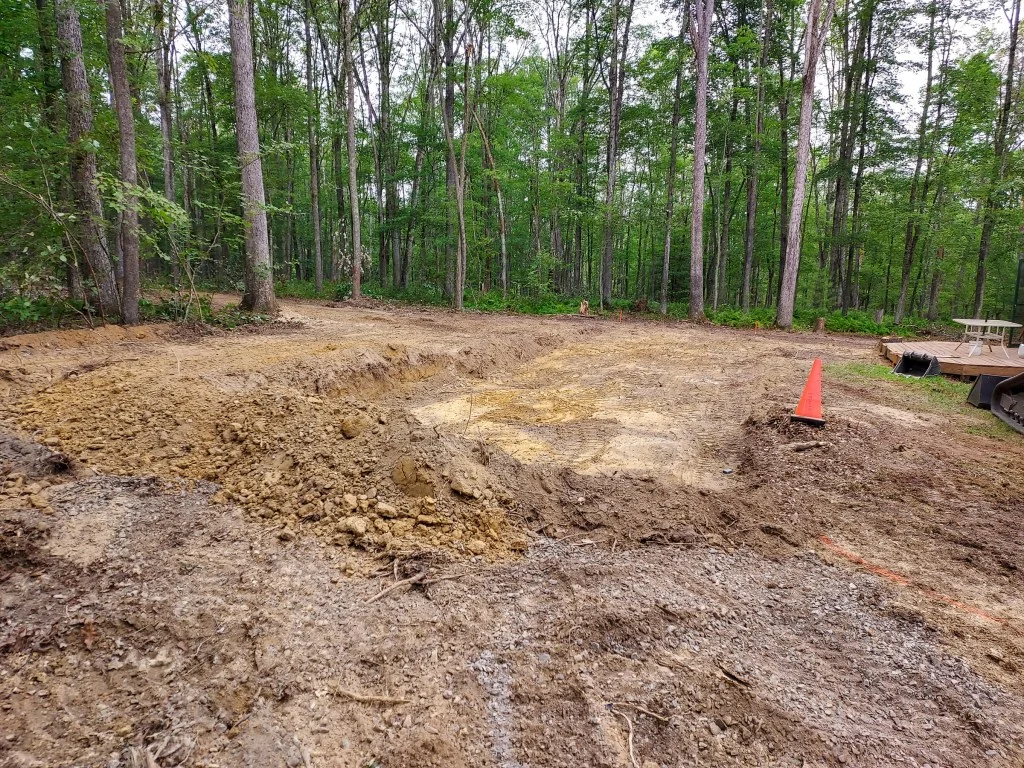
Most Maggie Valley projects never touch the state's erosion-control threshold, which is the point. A single homesite cut into one of these slopes, a driveway bench, a footer for a small addition: the county handles it. Cross a full acre of disturbed ground, though, and the job shifts into the state program, with a plan, inspections, and a paper trail the excavator has to build before the first bucket drops. That line matters here more than in flat country because a one-acre cut on a Soco Road hillside is a real engineering event, and the rules treat it that way.
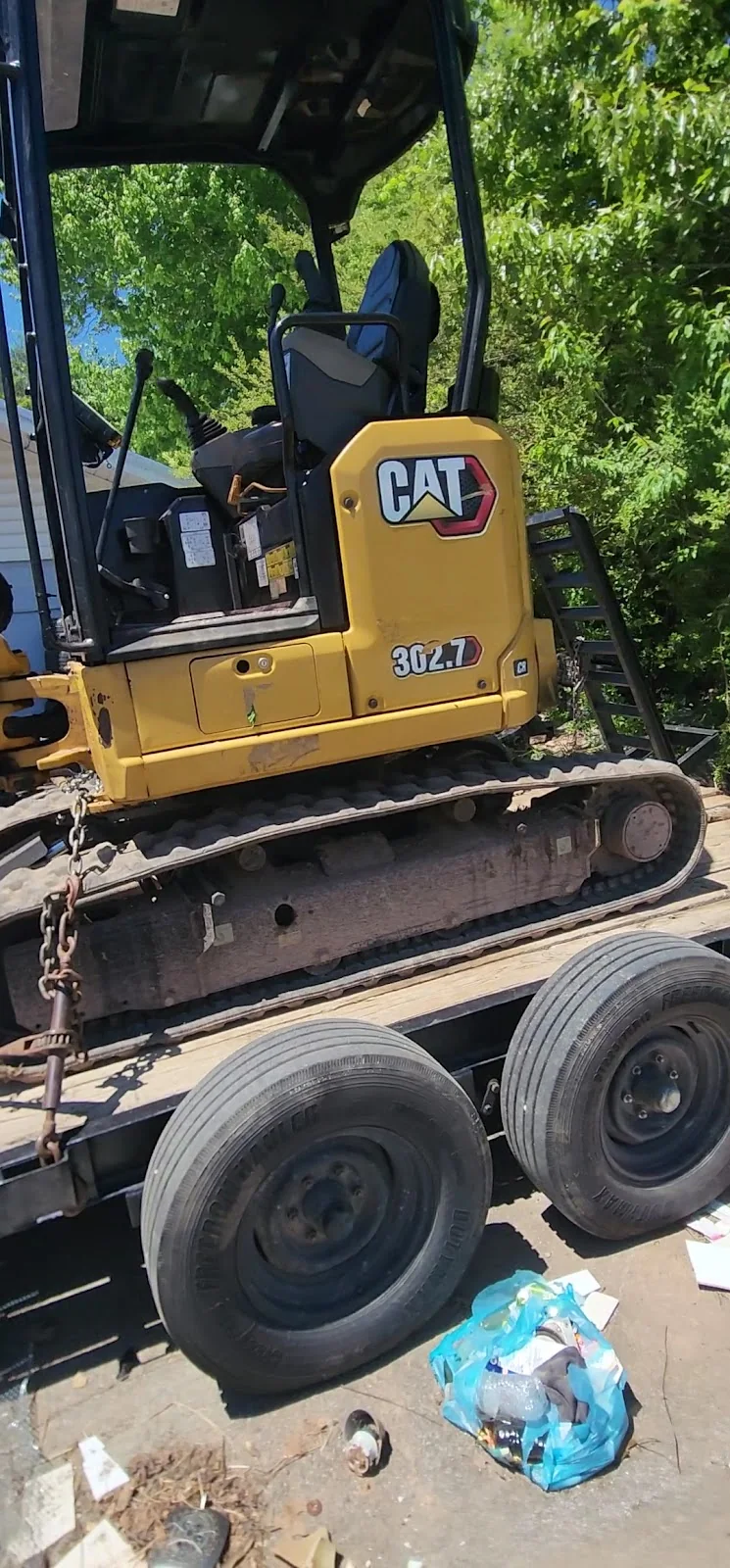
So the first honest question on any Maggie Valley dig is not which machine shows up. It is how much ground gets opened, and what that triggers. Knowing which side of the one-acre line you are on tells you whether you are pricing a simple dig or a permitted site — and those are different budgets.
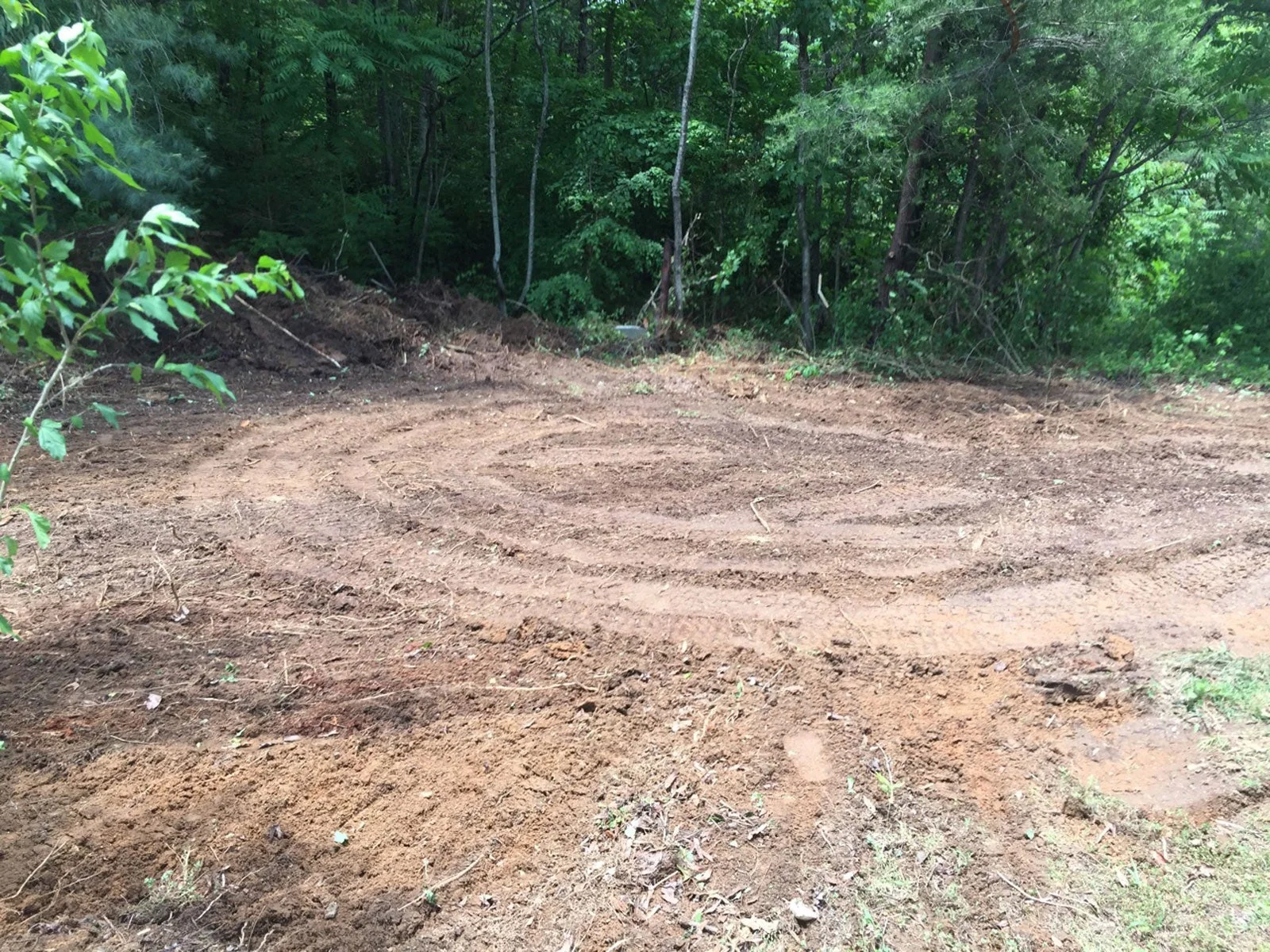
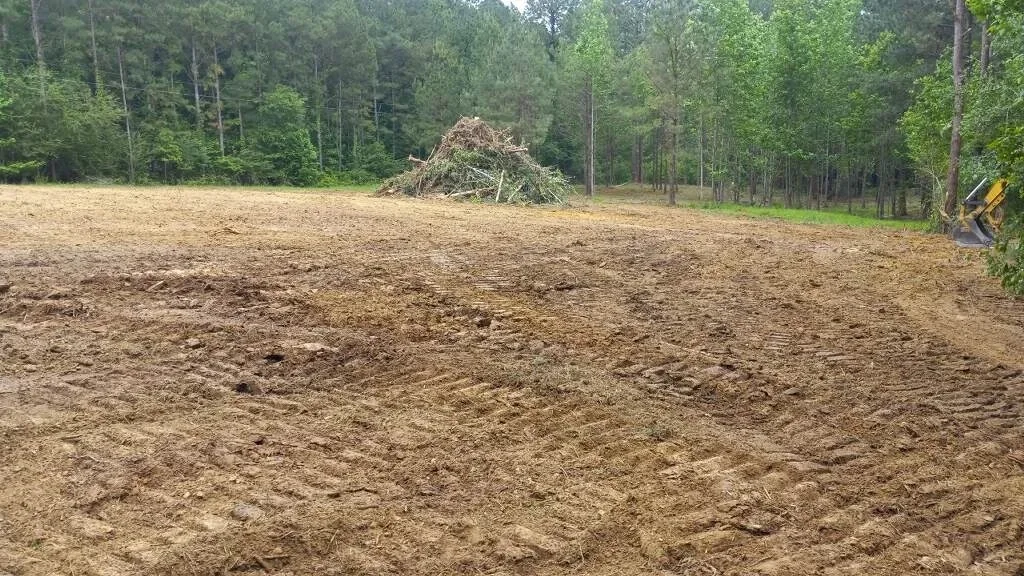
In practice, the acre math sneaks up on people. A homesite pad, a driveway, a septic drainfield, and a utility trench all count toward disturbed ground, and on a tight mountain parcel they add up faster than the lot looks like it should allow. A half-acre lot with a switchback drive can open most of an acre before the foundation is even dug. That is why the acre question gets settled on paper before a machine is dispatched, not discovered mid-job when the county or state inspector asks for a plan that does not exist yet.
What steep ground does to an excavation bid
Haywood County terrain is the cost driver. A footing excavation on a flat lot in Waynesville is a straightforward day. That same footing on a shoulder off Fie Top Road may need a bench cut first, a retaining wall to hold it, and every yard of spoils hauled off unless there is a spot to waste on site. Haul distance on mountain roads eats hours, and hours are most of the bill.
Expect quotes to separate machine time from trucking, and get suspicious of a single lump number that never mentions spoil. On slope lots, how much dirt leaves the property is often the largest variable in the price.
Access is the other quiet multiplier. A machine that fits through a standard gate cannot reach a ridgeline lot off a narrow gravel spur, so the work either gets done with a smaller machine over more days or the drive gets improved first, and both show up in the number. It is worth walking your own access before calling anyone: measure the narrowest point, note the overhead lines, and count the switchbacks. A contractor who asks those questions up front is reading the site, not guessing at it. The same logic carries into the grading side of the job, where final grade, drainage, and retention decide whether the slope stays put through a wet winter.
The Maggie Valley price picture
The working numbers are in the Haywood County grading cost breakdown, and the shape of the local work looks like this:
| Job | Typical range |
|---|---|
| Single footing or short trench | $1,800–$3,000 |
| Garage or small equipment pad | $2,200–$4,500 |
| Driveway cut and gravel, steep grade | $4,000–$9,000 |
| Full homesite excavation | $6,000–$15,000 |
Slope, wall work, and hauling push jobs toward the top of these ranges; a flat in-town lot lands near the bottom. If everything a bidder quotes sits at the high end with no site visit, that is a guess, not a quote.
A detail worth knowing: many Maggie Valley lots are second homes or rentals, and the owner is not on site during the dig. That makes the written scope more important, not less. The quote should say what gets dug, where the spoils go, how the drive gets left, and what happens if rock shows up under the pad. Rock is the classic mountain surprise, and a bid that never mentions it is leaving the risk on you. Ask how the contractor handles unexpected rock and ledge, and get the answer in writing before the machine arrives.
Water is the second scope nobody sees
Federal disaster history is a fair guide to what mountain ground does under load: 19 declared events touch this county across 1973-2026, mostly storm and flood family. Excavated slopes behave the same way the day a summer cell parks over the valley. Cut a bank without a drainage plan and the first hard rain finds the weak seam.
Good excavators plan grade for the storm, not the picture. That means diversion above the cut, a defined path for water around the house, and slopes finished to hold seed and matting. The NC Office of State Fire Marshal and state erosion rules both exist because water wins arguments with bare dirt. Ask any contractor how water crosses your site during a real rain, and listen for a specific answer.
There is a reason the Weather Service and the erosion rules are both in this conversation. The same storms that close the Parkway bring the runoff that carves a new channel down a fresh cut. The National Weather Service's mountain forecasts and flood watches at weather.gov are the practical heads-up during the work; the matting, silt fence, and diversion ditch are the practical answer on the ground. Neither replaces the other. On a steep lot, drainage work done before the rain is cheap; drainage work done after the rain is repair.
Checking a crew before the machines arrive
Three checks that save mountain homeowners real money. First, ask whether state licensing rules apply to your job — the NC Licensing Board for General Contractors sets the threshold, and a driveway plus wall package can cross it. Second, ask who pulls the permit if ground disturbance reaches an acre; if the answer is vague, the schedule will be too. Third, ask to see a similar slope they finished two winters ago, not a fresh job still looking new.
A winter is the real test out here. A slope that looks fine in July can show its seams after a freeze-thaw cycle and a wet spring, and a wall that has not settled tells you more than any brochure. Ask what the crew does about outlet protection on the driveway culvert and where the cleanout goes, because plugged culverts are the most common reason a mountain drive washes out. And ask how the site will be left if weather shuts the job down mid-dig, since a bare cut with no matting going into a storm is the one combination everyone wants to avoid.
Our own start-to-finish process is laid out on the excavation contractor page; for the grading side of the same work, including retention and finish grade, see grading contractors in Maggie Valley. Sorting out which scope you actually need, and which permits it triggers, is most of the battle up here.
How the valley's housing pattern shapes the work
Maggie Valley is not Waynesville, and the difference shows up in the digging. Waynesville's core has flatter in-town lots and older street grids where the excavator is working tight between houses. The valley runs to steeper, larger-parcel ground, with more cabins, short-term rentals, and second homes on ridges and hollows off the main road. That means more benched pads, more hauling up and down private drives, and more jobs where the owner is coordinating from out of town. A crew that works the valley regularly knows which spur roads a dump truck can climb loaded and which ones it cannot, and that knowledge is worth as much as the machine time.
It also means the season has a texture. Late fall and winter digs are cold and clear but the ground is hard; spring work is muddy and the erosion control has to be right; summer brings the afternoon storms and the tourism traffic on the main roads. If your timeline is flexible, saying so can matter more than a small price difference, because a job slotted in the right window skips the worst of the weather delays. That is a local variable no formula captures, and it is exactly why the site visit still counts for more than any phone estimate on this kind of ground.