The order of work on a Swannanoa lot, and why it matters
Swannanoa's terrain gives you two kinds of lot, and they sequence differently. Valley-floor lots along the river and Old U.S. 70 are flat but wet — the first real work is proving where water goes before anything gets moved. Hillside lots stepping up toward Bee Tree, Riceville, and the Black Mountain line are the opposite: they're dry but steep, and the sequence is cut, then drainage, then final grade, because you can't place drainage on a slope you haven't shaped yet.
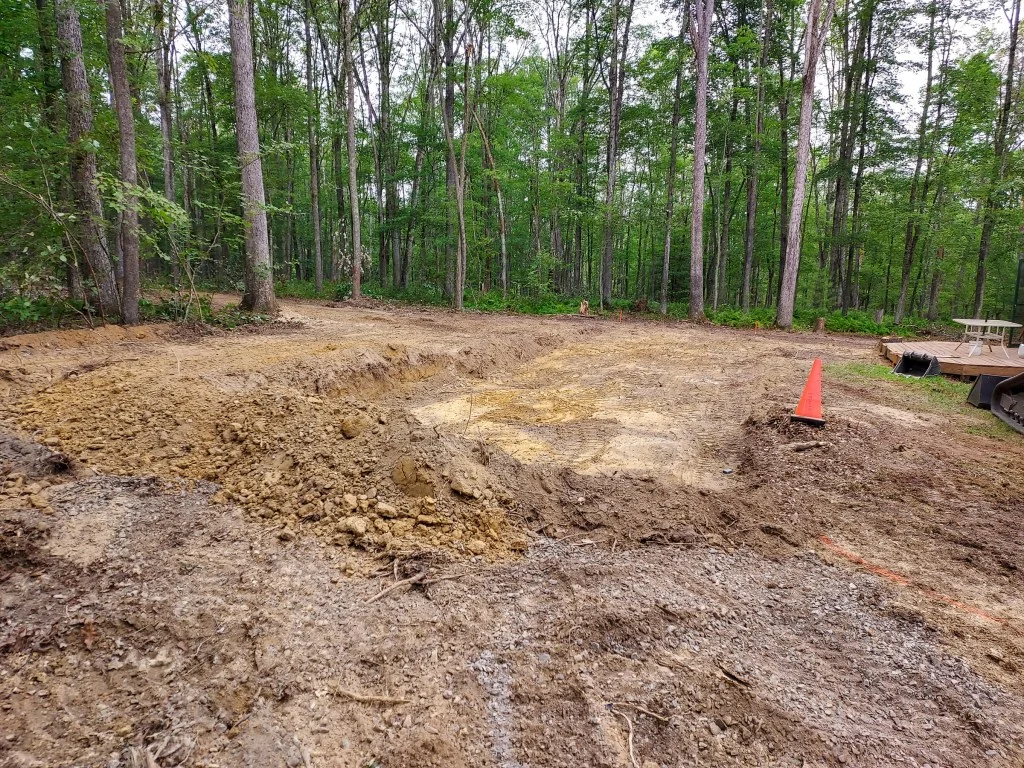
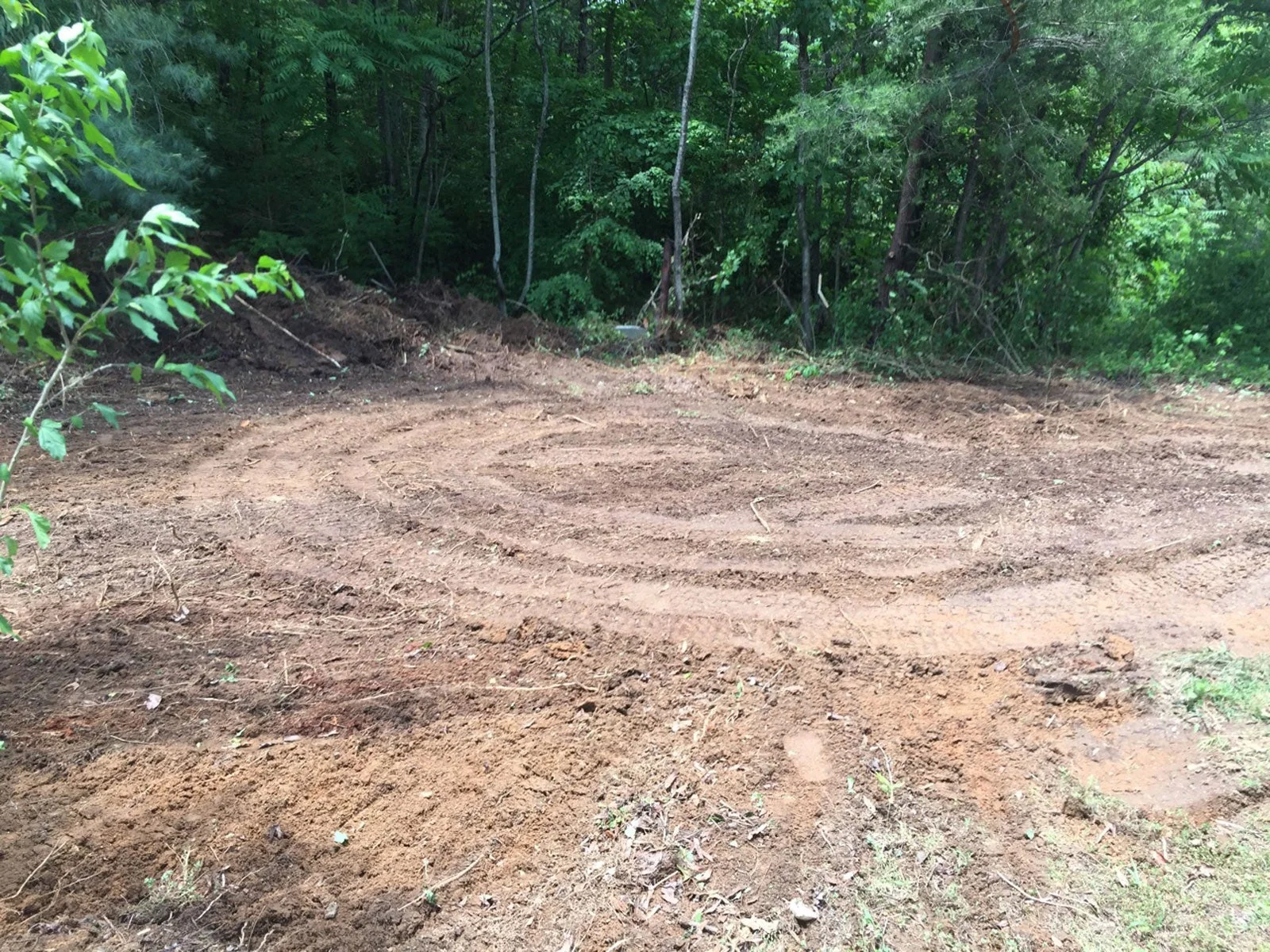
The standard order a competent crew follows: walk the lot and mark what stays, clear it, rough-cut to subgrade, install drainage and any retention, then finish-grade to within a quarter inch of plan. Skipping drainage between cut and finish is the single most common shortcut we see, and it's the one that comes back as a wet crawl space or a driveway that heaves the first spring.
On a valley lot, the sequence has a twist. The river corridor through Swannanoa sits low enough that groundwater can be within a couple feet of the surface through a wet winter. Before a machine ever cuts, a good operator will walk the lot after a hard rain and mark where water is already sitting — those low spots are the tell for how the finished grade has to drain. On these lots, the drainage phase often comes before the cut, because you're installing tile and swales into ground that hasn't been disturbed yet, which is cheaper than digging them back in after you've placed fill. FEMA records 19 federal disaster declarations across 1973-2026 for this county, and while most of those events are flood-driven along the river bottoms, the soil-moisture pattern they leave behind shapes how any grading job here has to be scheduled.
On a slope lot, the opposite rule holds. You cut first because the finish grade can't be set until the pad is at subgrade, and drainage has to sit on that shaped surface. Cut too little and you're building on fill that will settle; cut too much and you're retaining a bank you didn't need to create. A crew that understands Swannanoa's mix of residual clay over weathered bedrock on the hillsides will set the cut line conservatively and adjust after the first day of digging, because what's under the surface here rarely matches the soil map.
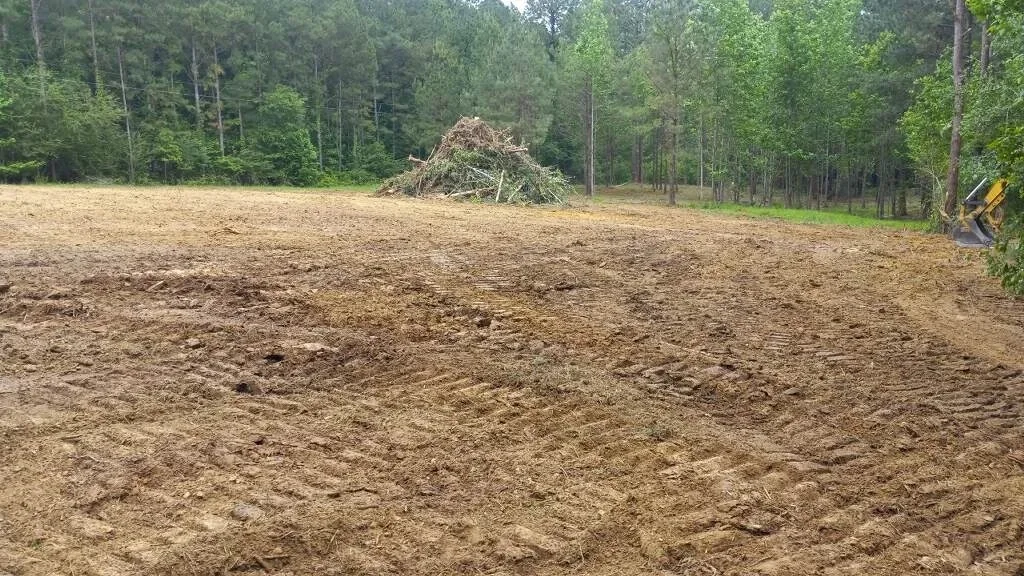
If your project starts with standing timber, the sequence begins one step earlier — see land clearing for what that first phase actually involves on a Swannanoa slope. Clearing on a hillside lot isn't just felling trees; the stumps and root balls have to come out far enough back from the cut line that they won't rot and leave voids under the pad, and the grubbing depth depends on whether the lot was pasture or cut-over woodland. A lot that's been grazed for decades has a shallower root zone than one that came out of timber in the last twenty years.
For current official guidance, see the North Carolina Licensing Board for General Contractors. For current official guidance, see the NC Department of Insurance - Office of State Fire Marshal (Code Enforcement).
How long a Swannanoa grading job actually takes
Calendar time is the question most homeowners ask second, after price. A simple regrade of an already-cleared residential lot — correcting positive slope away from the foundation, re-establishing swales — is typically a two-to-three-day job with one machine and one operator. Add cut-and-fill for a new driveway pad or a build site, and it stretches to three to five days. Bring in drainage correction, a retaining wall along a cut bank, or a lot that's never been touched, and you're looking at one to two weeks, plus weather.
Weather is not a footnote here. Swannanoa sits in a rainfall belt that produces saturated soils most of the winter and spring, and a machine working saturated clay does more damage than grading. A realistic crew budgets for rain days rather than fighting them; a bid that assumes dry conditions on a slope lot in February is a bid that will slip. The National Weather Service outlook for the Asheville area is worth glancing at before you sign a start date.
There's a second timing issue specific to this valley: the ground here holds moisture longer than the ground on the other side of the Blue Ridge. A slope lot on a north-facing hillside above the Swannanoa River can stay soft into April while a south-facing lot at the same elevation is workable in March. That's not a reason to avoid the work, it's a reason to plan the start date around the aspect of the lot rather than the calendar. If your lot faces north and holds shade through the morning, expect the finish grade to firm up later, and expect the crew to build in a couple of dry days after the final pass before anybody drives a loaded truck across it.
Driveway cuts take their own time. A new cut up a moderate slope off a road like Bee Tree or Warren Wilson Road involves more than pushing dirt — it involves setting the grade so a loaded concrete truck or a moving van can actually make the turn, and that often means widening the cut or benching the inside of the curve. That's a half-day to a full day of work that doesn't show up as "grading" on a bid, but it's part of why a driveway cut runs longer than homeowners expect.
For larger site packages, the schedule usually runs like this: day one is mobilization and marking, days two and three are clearing and grubbing, days three through five are rough cut to subgrade, day five or six is drainage, and the final day or two is finish grade and compaction. That's a clean-weather schedule. Add two to four rain days for a winter job, one to two for a summer job, and you have a realistic window.
What grading work costs in the Swannanoa area
Ranges below reflect residential site work in Buncombe County; see the full county grading cost breakdown for how these line items stack on a real bid.
| Scope of work | Typical range |
|---|---|
| Regrade existing lot, fix slope away from house | $900-$2,800 |
| Cut-and-fill for a residential build pad | $2,500-$7,500 |
| New driveway cut and base, moderate slope | $3,000-$9,000 |
| Full drainage correction (swales, French drains, downspout routing) | $1,800-$6,500 |
| Retaining wall along a cut bank (per linear foot, engineered where required) | $45-$150/ft |
| Combined site package: clear, cut, drain, finish | $6,000-$14,000+ |
Two things move these numbers more than anything else: how much dirt has to leave the site versus stay on it, and how tight the machine access is. A hillside lot where a dump truck can't turn around adds hours to every load. The range is wide because the lot determines the work — treat any bid that quotes a flat price before walking the property as a place to start asking questions.
On a Swannanoa valley lot, the dirt usually stays on site. Fill is cheap when it's already there and doesn't have to be hauled, and a lot with a gentle grade can often be balanced so cut equals fill within a few yards. The exception is a lot with a high water table, where the top layer of saturated clay has to be stripped and either replaced with structural fill or hauled off, because you can't compact material that won't drain. That stripping cost is what pushes a valley-lot package toward the middle of the range instead of the bottom.
On a hillside lot, the cost driver flips. You're almost always short of fill, not long on it, so imported structural fill shows up as a line item, and the haul up a steep access road adds to every load. A lot with rock in the cut — and there's plenty of that on the slopes above Swannanoa — can need a breaker or drilling and blasting, which is a jump in cost that shows up as a change order more often than a bid line. The honest way to handle rock is to price the job with an allowance and settle up when the cut reveals what's actually there.
Retaining walls deserve their own note because they're the most variable line on the page. A three-foot decorative wall along a landscape bed is a weekend project. A six-foot engineered wall holding back a cut bank for a build pad is a different job entirely, and in Buncombe County the threshold for when an engineered design is required is set by the building code, not by preference. For anything over a few feet, expect the design to come from an engineer and the cost to reflect that. The International Code Council publishes the model codes that local amendments are built on, and the county's adopted version is what governs your wall.
Slope, soil, and access: what actually drives a Swannanoa estimate
Every bid on a Swannanoa lot comes down to three variables: how steep the site is, what the soil does when it gets wet, and whether a machine can reach the work. Slope is the obvious one — a lot with a 25 percent grade costs more to cut than a lot with a 5 percent grade, not because the dirt is harder but because every pass is slower and every load is smaller. What surprises people is how much the soil matters.
Swannanoa's hillsides are largely residual clay over weathered bedrock, and that clay behaves differently depending on how much water it's holding. Dry, it compacts well and makes a stable pad. Saturated, it turns slick and won't hold a slope, which is why a cut bank that looks solid in August can slump after a February rain. A crew that knows the area will compact in lifts on the dry side of the year and won't try to finish-grade in a downpour just to hit a date.
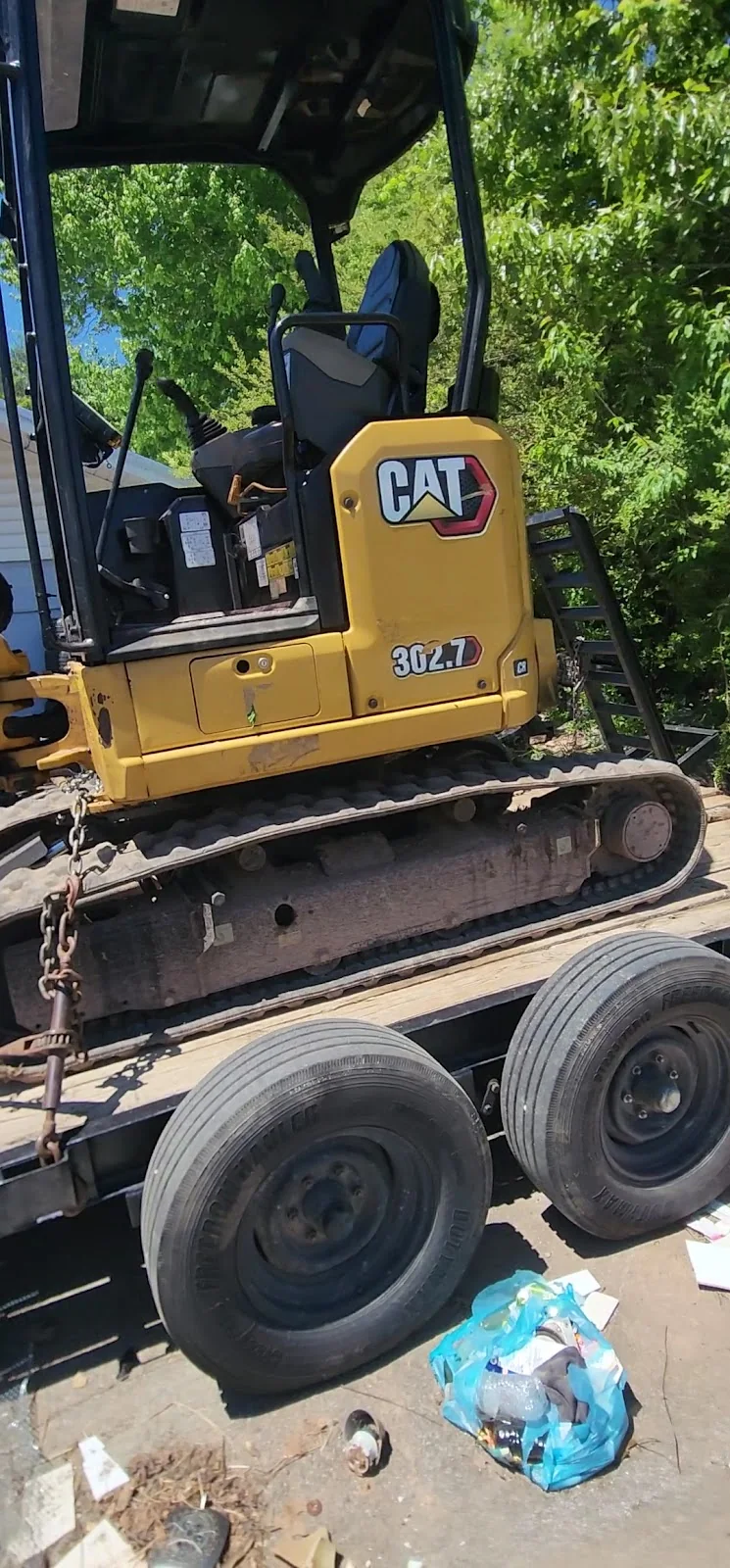
Access is the third variable and the one homeowners underestimate most. A lot off a narrow private drive in the Bee Tree area may need the machine offloaded at the road and walked in, which adds time. A lot with a tight switchback may need a smaller machine, which means more passes to move the same dirt. A lot with overhead lines or a tree the owner wants to keep may need the work sequenced around them. None of these is a surprise to a local operator, but all of them show up in the number.
If your project includes both earthwork and utility trenching, the two phases need to be sequenced so the trenches don't undermine the finished grade. That's covered in more detail under grading and excavation, but the short version is that a site graded before the utilities go in is a site that will need to be re-graded after — and that's a cost that's easy to avoid with a little planning.
One more site-specific factor: the river. Lots in the floodplain along the Swannanoa River may have restrictions on how much fill can be placed and where, because fill in a floodplain displaces floodwater onto the neighbors. The EPA publishes guidance on floodplain management that local rules are built on, and any lot with a creek or a floodplain map designation should be checked before dirt moves. A lot outside the floodplain doesn't have this issue, but it's worth knowing which side of the line you're on before you plan a pad.