The one-acre line: when a washout repair turns into a permit job
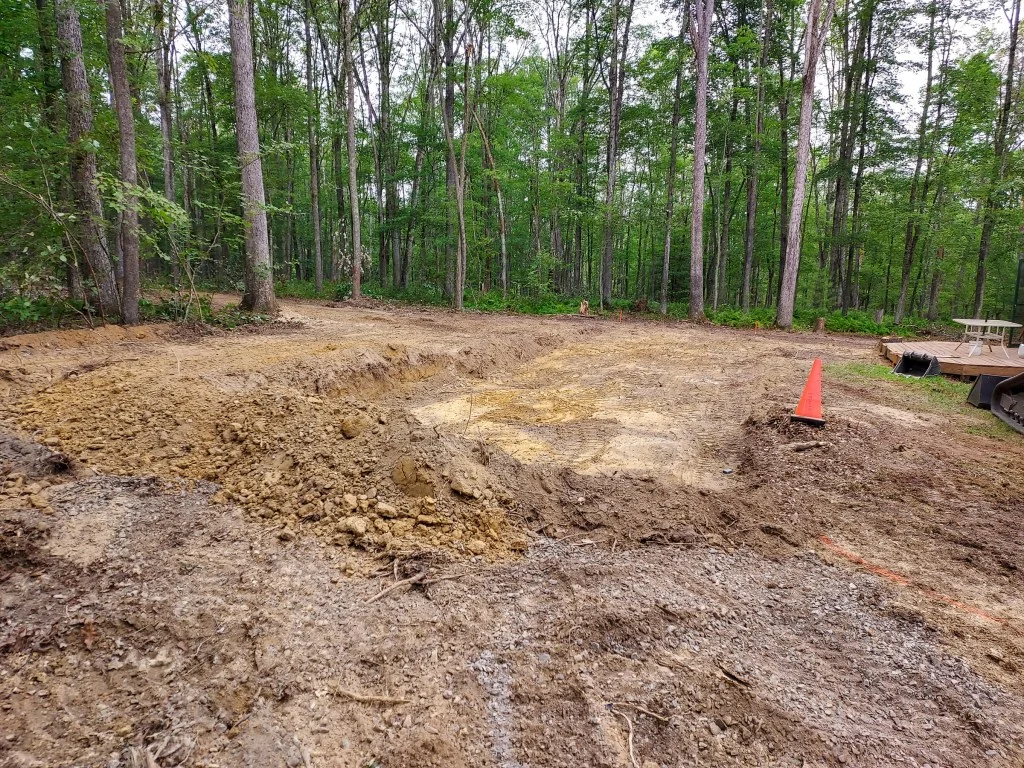
Maggie Valley driveways are mostly cut into hillsides, and that's the first thing a grader looks at. Before anyone quotes, they check what's uphill of the drive and how far the disturbed ground stretches. On a quarter-acre lot off Soco Road, a washout repair is usually a day of work. On a two-acre ridge property, the same failure may be a state erosion-control permit job, and that's the difference between a $900 ticket and a $4,000 project with a plan.
North Carolina's thresholds and requirements for land-disturbing activity are enforced at the state level, and any grading project that crosses the one-acre line generally triggers an erosion and sedimentation control plan before equipment touches the ground. That adds design time, inspections, and often a sediment basin or silt fence system, all of which push a job toward the top of the Haywood County cost picture. The second thing a grader checks is the culvert. Most long-running washout complaints in this valley trace back to a failed or undersized culvert pipe, not to the gravel itself.
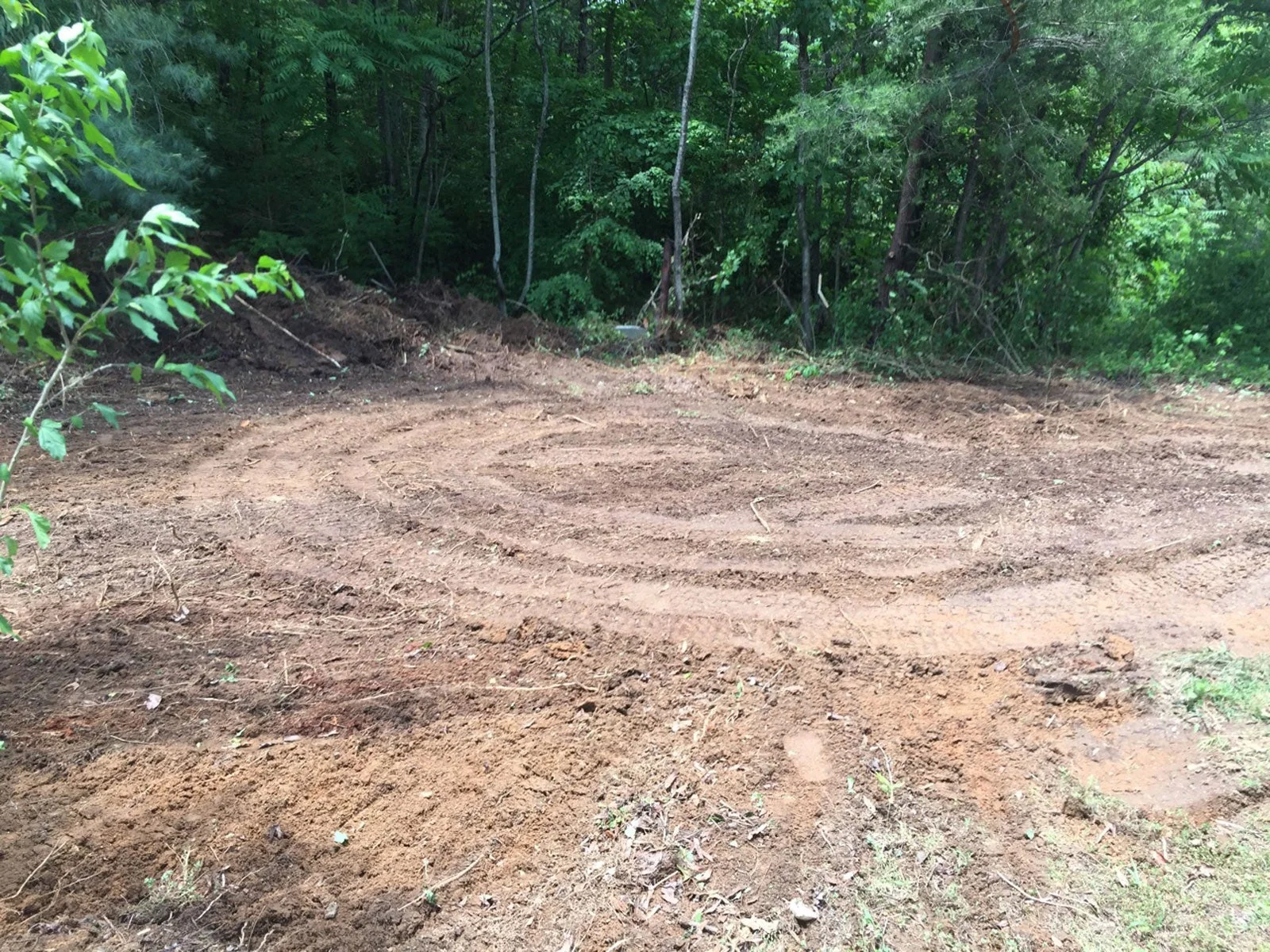
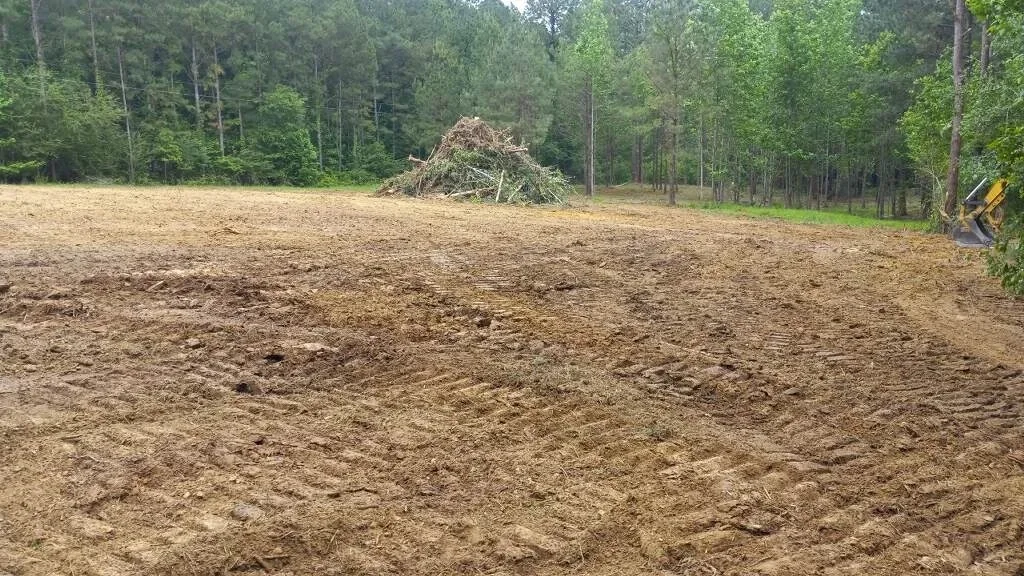
There's a reason the one-acre line hits differently here than it does in the flatlands. Haywood County's mountain lots are often carved out of larger parcels, and a single driveway cut with a turn-out, a parking pad, and a barn pad can disturb more ground than the owner expects. A grader working off Jonathan Creek or up toward Cove Creek will pace the disturbed area first, because a job that starts as a $1,200 regrade can cross the threshold once the spoils pile and the ditch line get counted. Reading the site honestly at the start is what keeps a small repair from becoming a permitted project by accident.
If the job does cross the line, the plan has to name where the sediment goes, how the disturbed slope gets stabilized, and who inspects it during rain events. That's real design work, and it's why the same fix on two neighboring properties can land thousands of dollars apart. The grading and gravel overview breaks down how the scope grows as the disturbed footprint grows.
What mountain-grade driveway repair actually costs here
The working numbers for this valley, matched to what causes the failure in the first place:
| Scope | Typical range |
|---|---|
| Regrade an existing gravel drive | $350 – $1,200 |
| Washout repair, regrade plus fresh stone | $400 – $1,500 |
| Washout repair with ditching and a culvert | $800 – $2,800 |
| Engineered drainage on a steep grade | $2,500 – $6,500 |
Steep grades cost more because water moves faster and every fix is a drainage fix. A flat driveway just needs stone; a 20-percent grade needs a crowned surface, a defined ditch, and a discharge point that isn't your neighbor's yard. The grading and gravel overview walks through which of those applies to your situation.
Two things drive the price up in Maggie Valley specifically. First, access. Narrow mountain drives that switchback up to a ridge house leave no room for a full-size tandem dump truck, so stone gets shuttled in smaller loads and the labor hours climb. Second, material. Crusher run that compacts into a stable surface travels a distance to reach half the properties in this valley, and haul distance shows up in the ticket whether the gravel comes from a quarry over toward Clyde or from further out. A driveway that a flat-lot crew could regrade in half a day can take two days here because the machine can't get where it needs to go in one pass.
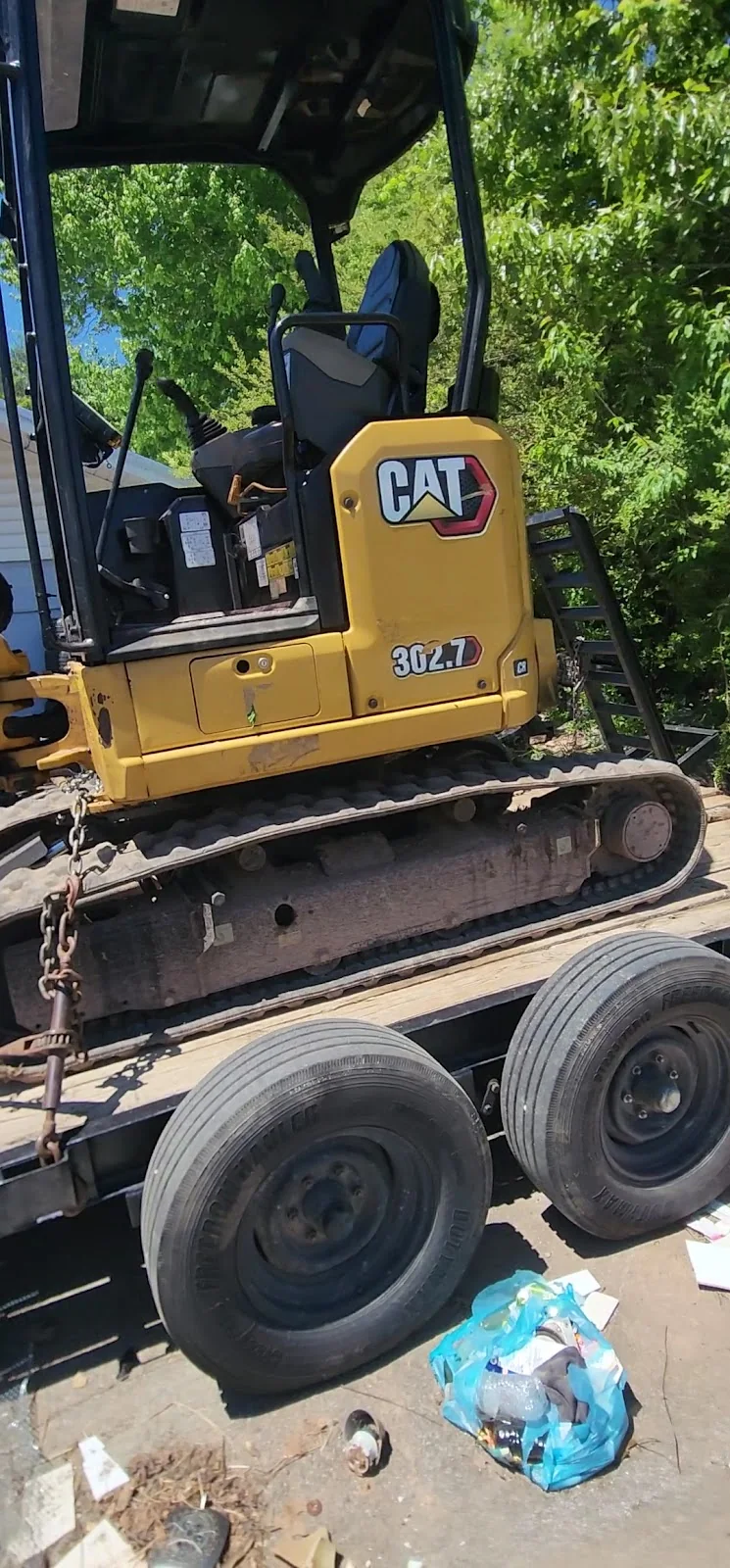
Where the money goes on a typical washout: roughly a third to half is machine time, a good chunk is gravel by the ton, and the rest is the ditching, culvert, and finish grading that nobody sees but that decides whether the repair lasts. Skipping the ditch to save a few hundred dollars is the most common way homeowners end up paying for the same repair twice.
The water ledger: what every washout here has in common
The federal disaster record for this county makes the pattern plain: 19 declared events have touched Haywood County across 1973-2026, and the overwhelming majority are storm and flood family. Every one of those events pushed water down the same slopes. When a driveway in Maggie Valley fails, it's almost never the first storm that did it. It's the third or fourth time the same rain hit the same bad grade and found the same weak spot.
That's why the honest order of work is ditch first, pipe second, stone third. The National Weather Service keeps the rainfall records that show how often this valley gets hit, and the numbers are why grading crews here treat drainage as the whole job rather than a line item. A regrade without a discharge plan is a regrade you'll pay for twice.
The valley's shape matters as much as its rainfall. Cool, wet air funnels along the Smoky Mountain front, and the steep North Carolina slopes above Maggie Valley shed that water fast. A driveway on the uphill side of a road may be catching runoff from a bank that a grader can't touch, which means the fix has to intercept the water before it reaches the drive. On the downhill side, the problem flips: the drive's own surface becomes the channel that cuts the slope below it. Both are the same failure in different clothes, and both come back to where the water leaves the property.
This is why a two-year-old repair that looks fine in August can be a rutted mess by March. The pattern here is repeated soakings through fall and winter, not one dramatic storm. Grading that assumes a single big event will miss the slow, season-after-season erosion that actually destroys these drives.
What separates a real grading quote from a load of gravel
A real quote tells you where the water goes when the crew leaves. It names the ditch depth, the culvert size and material, the crown, and the discharge point. It also tells you whether the job crosses the one-acre threshold and what that means for permitting.
Three checks that matter in this county. First, licensing: any grading work that crosses into general contracting scope falls under the NC Licensing Board for General Contractors, and you should know where your contractor stands before work starts. Second, erosion control: if the job disturbs an acre or more, ask who files the plan and who holds the inspections. Third, references on steep grades specifically. A crew that's only done flat-lot driveways in Waynesville will quote you the same price and give you the same failure.
A trustworthy bid also separates the work into stages: what gets done now, what the surface will look like after the first rain, and what the owner should watch for. It should say whether the crown is built into the finished grade or argued about later, and it should name the stone spec instead of quoting a vague by-the-load price. Anything that can't be written down is something a homeowner will end up paying to correct.
Permits aside, some grading work here touches other trades. If the fix reaches into a septic drainfield area or reroutes a water line to a ridge home, the plumbing side falls under the NC State Board of Examiners of Plumbing, Heating and Fire Sprinkler Contractors, and a good grader knows when to pull in the right licensed trade rather than wing it. Asking how your contractor handles that boundary tells you a lot about how the rest of the job will go.
The terrain question nobody asks until it's too late
Maggie Valley lots are steep, and the failure modes stack. A driveway cut into a hillside has three water sources: rain falling on it, runoff from above it, and spring seepage from the bank itself. A grading quote that only addresses the first one is incomplete. The local grading contractors who work this terrain regularly will walk the uphill side of the property before pricing, and any bid that doesn't is worth a second look.
One more honest note: gravel is not the fix for a drainage problem. New stone over a bad grade looks great for a season and then washes out again. If your last repair lasted less than two years, you don't have a gravel problem.
There's a local wrinkle worth knowing. Some lots up toward the ridge line sit on ground that stays wet well into spring, and that seepage shows up as soft spots that no amount of surface grading will cure. Where that's the case, the fix is often a French drain or a drainage mat along the uphill cut rather than another crown and another load of stone. A grader who has worked these hills knows the difference between a drive that sheds water and a bank that keeps feeding it, and they'll price the second one differently because it is a different job.
Finally, the season matters. Regrading in the dead of winter on frozen or saturated ground produces a surface that never compacts right, and it fails the first warm rain. The best window here is late spring through fall, when the ground drains and the stone knits. A quote that ignores timing is a quote that ignores the place.