How a Hendersonville clearing job actually runs, start to finish
On most Henderson County lots the bottleneck is not the cutting, it is the order things get done. A crew that fells first and figures out drainage later leaves you with root balls, mud, and a driveway that ponds. The sequence that works here: walk the lot and flag what stays, call in utility locates before anything touches soil, cut and stack timber, grub stumps, then shape grade and stabilize bare ground. On a gentle half-acre in Flat Rock or a yard off Kanuga Road that is a two-to-five day arc. On a wooded slope above the valley, the same sequence stretches out because every machine pass costs time and the haul-off is slower.
Hendersonville sits in a bowl of rolling terrain where a lot can drain toward the house from three directions. That is why the grade-and-stabilize step at the end is not optional here, it is the difference between a cleared lot and an eroding one that sends sediment to the neighbor below.
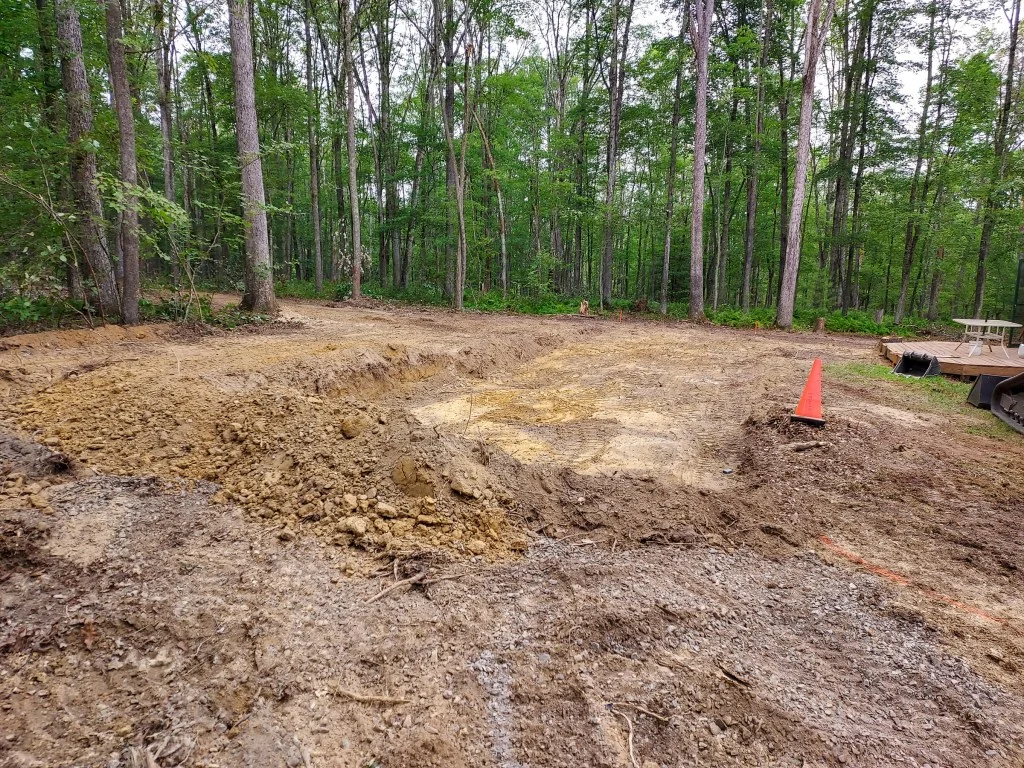
Walk-through day matters more than people expect. A lot that looks open from the road on a February afternoon is often a different property once leaves are off the oaks, poplars, and hickories that fill most of these half-acre tracts. Crews who mark keep-trees first tend to hit fewer surprises: the white oak shading the well, the dogwood cluster the homeowner wants, the pines growing over the septic field. Once those are flagged, the work moves in a fixed order. Brush and saplings get masticated or pushed into piles. Marketable timber, if any, gets felled toward a laydown area where a log truck can actually reach. Stumps come next. Grading and seeding close it out. Skipping ahead to grading before stumps are out is how a lot ends up with humps and low spots that take a second pass to fix.
What each stage of the work typically costs
Residential clearing here prices by scope, not by acre alone, because stump diameter, slope, and how much dirt has to move swing the number more than size does. The table below reflects the ranges crews quote across Henderson County; the land clearing service page walks through each scope in more detail.
| Scope | Typical range |
|---|---|
| Light clearing — brush, saplings, small trees, no stumps | $750–$2,500 |
| Full clearing — trees felled and hauled, stumps left | $1,500–$4,000 |
| Clearing with stump removal and rough grading | $2,500–$8,000 |
| Heavily wooded or steep acreage, haul-off included | $10,000+ |
For a fuller line-item picture of dirt work after the trees are down, see the Henderson County grading cost breakdown.
Three variables move a Hendersonville quote most. Stump diameter: a mature oak stump takes far longer to grub than the pine saplings that colonize old pasture, and stump grinding is usually billed separately from stump pulling. Slope: a lot climbing a ridge above the valley needs a controlled access path, and steep ground forces smaller equipment and slower passes. Haul-off distance: debris leaving a Laurel Park or Etowah job travels to a permitted disposal site, and the trucking is a real cost. A neighbor pushing brush into a ravine on his own property is doing something very different from a permitted clearing job with offsite disposal.
Watch how quotes are structured. A responsible bid separates felling, stump work, haul-off, grading, and erosion control, because a lump sum hides which piece gets shorted when the schedule tightens. If two bids differ by thousands, the gap is usually stump removal, haul distance, or whether final grade and seed are actually included.
Terrain and weather set the clock more than lot size does
Henderson County's federal disaster record is dominated by storm and flood events: 16 declared events touch this area across 1978-2026. That history matters for two practical reasons. First, saturated clay soils stall machines and force crews to wait, which is why a job quoted at three days can become five after a wet week. Second, clearing that leaves bare, unmanaged slope is exactly what feeds the erosion problems the next storm exposes. The National Weather Service outlook is worth checking before you schedule, and any honest crew will tell you the same.
Slope is the other variable. A lot with a 25 percent grade above the town needs silt fencing, a controlled access path, and often a plan for where water goes once the trees that held the bank are gone. Flatland quotes rarely include those line items, so treat any bid that skips them as incomplete.
The local calendar matters too. Late winter and early spring are the muddiest stretch in Henderson County, when every thaw loosens the same clay. Summer thunderstorms roll through fast and dump hard. Fall is often the most workable window, but that is also when everyone with a grading project calls. The practical point: a crew that promises a fixed start date without any weather caveat on mountain terrain is selling you something the ground may not deliver.
Frost heave is a lesser but real factor. On exposed subgrade through a cold snap, clay lifts and softens, so a grade finished in January can settle unevenly by spring. Jobs that seed immediately before a freeze often need a second touch-up, and crews who know the county build that possibility into the schedule rather than promising a one-pass finish.
Burn piles, haul-off, and what the rules expect
Burning is the cheapest disposal option on paper and the most regulated in practice. Open burning in North Carolina is restricted by state forestry rules and local ordinances, and on many Hendersonville lots the practical answer is haul-off or chipping instead. Debris that leaves the site goes to a permitted facility, and the disposal cost is a real line item that shows up in every serious bid.
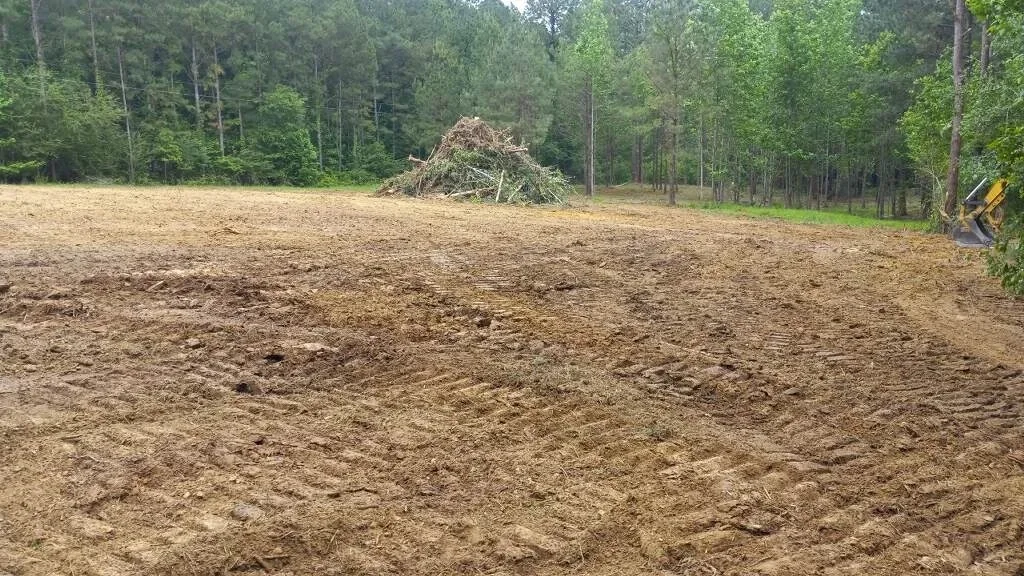
Erosion control during and after clearing is controlled by state and local sediment rules, and larger or steeper jobs may require a plan before ground is broken. The EPA publishes plain-language guidance on stormwater and sediment that explains why bare ground is treated as a regulated condition, not a cosmetic one. Fire safety on a clearing job is its own discipline — the NC Office of State Fire Marshal sets the framework that local burn permitting and fire codes rest on. When burn bans are posted in a dry fall, even a small yard pile can be off the table, and a crew that plans only for burning will stall. Chipping on site is often the middle path: brush and small limbs go into a chipper, chips get spread as ground cover or hauled, and the big stems leave on a truck.
Haul-off has its own logistics. A log truck needs a reachable laydown, and a dump trailer full of stumps and clay is heavy. On a tight in-town lot near downtown Hendersonville with no curb space, loading time alone can eat into a day. Suburban lots in Fletcher or Mills River with a wide pull-off make the same job faster. That is why the same half-acre can price differently three miles apart.
Choosing a crew without getting a surprise change order
Three checks separate a crew that finishes on schedule from one that stalls. First, ask whether the quote includes stump removal, haul-off, and final grading as line items, because those three are where budgets quietly grow. Second, ask how they handle wet weather and what a rain delay does to your price. Third, ask who is responsible for utility locates and any required sediment plan, which in North Carolina falls under state contracting rules once a job crosses the threshold set by the NC Licensing Board for General Contractors.
A good local crew will also tell you what not to clear — a tree holding a bank, a root system managing water on a slope. If every bid you get pushes maximum clearing, get one more. The Hendersonville grading contractors page covers how to compare bids across both clearing and dirt work.
Timing of payment is another tell. A fair contract ties draws to milestones — mobilization, stumps out, grade finished and seeded — rather than one large deposit up front. Ask for the schedule in writing, with the weather caveat spelled out, so a rainy week does not become a surprise change order. And confirm who handles the sediment plan and inspection paperwork if the job requires it; that responsibility should be named in the contract, not assumed.