What actually drives a pad price on Marshall ground
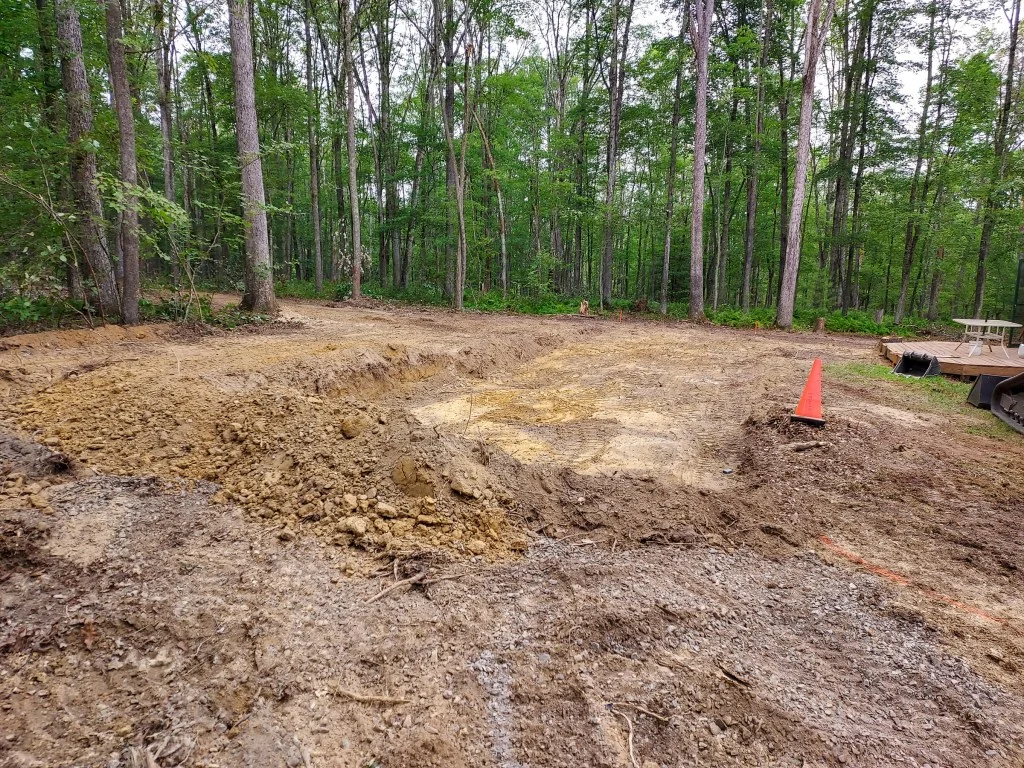
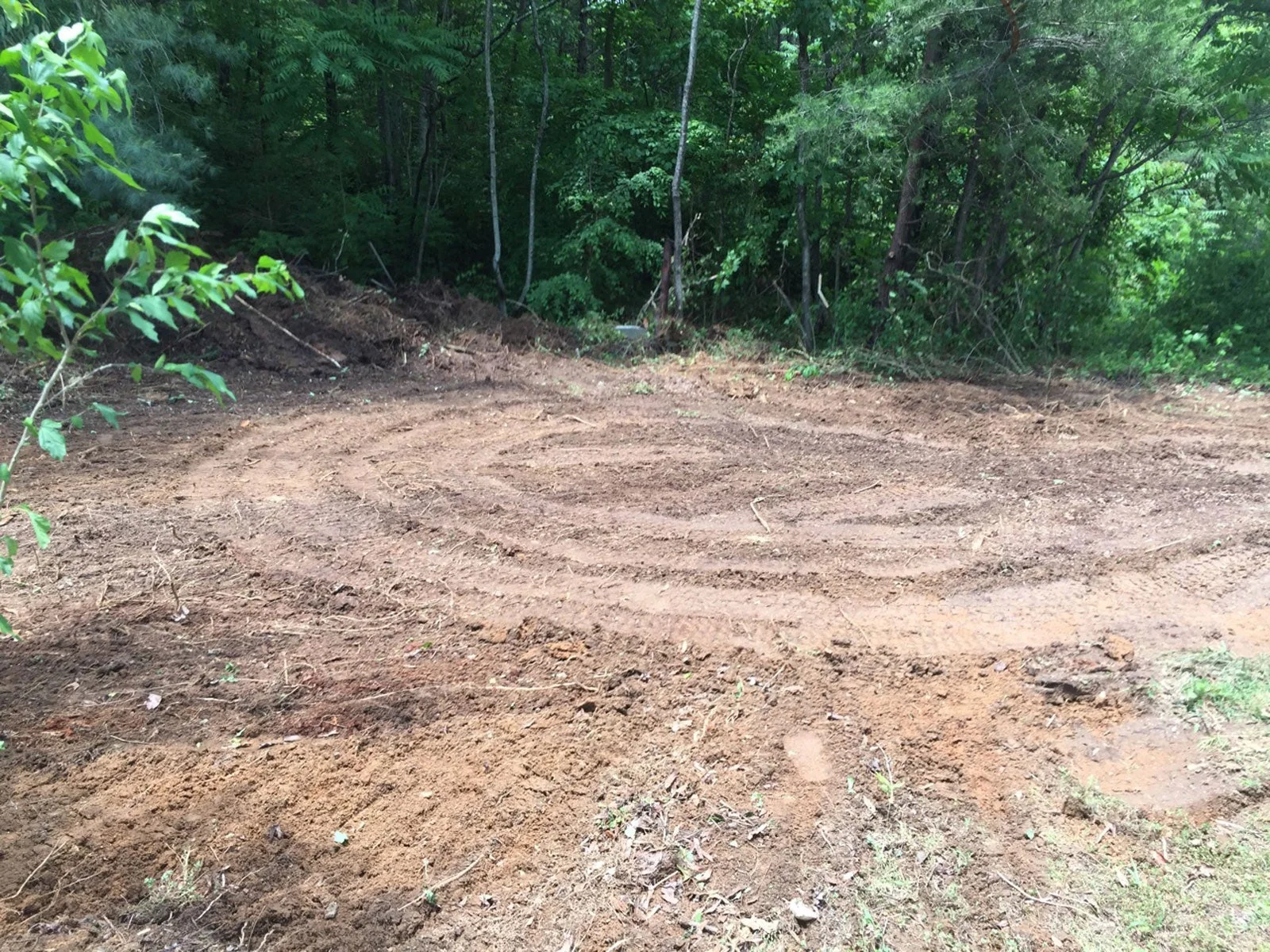
A flat lot and a Marshall hillside can carry the same square footage of driveway and still price $6,000 apart. The difference lives in four line items: how much brush and timber has to come off, how many cubic yards of dirt move, how thick the lifts of fill have to be compacted, and how much water has to be routed away from the pad's uphill side before anything else matters. On the river bottoms and creek-hollow lots around town, the drainage line item alone can rival the cut-and-fill line, because a pad that holds water is a pad that fails as a foundation. See the wider scope picture at site prep and building pads before you compare bids.
Marshall's terrain splits into a few honest types that price differently. Ridge lots along the edge of town tend to have shallow topsoil over weathered rock, so clearing is cheap but excavation can turn expensive fast if the cut hits intact rock. Hollow lots off the feeder creeks carry deeper topsoil and wet subsoil, which means more dirt has to come out and be replaced with engineered fill. River-bottom lots near the French Broad are the flattest ground in the county but often need the most drainage work because the water table sits high and runoff from the whole upstream watershed passes through.
The single biggest swing on most Marshall quotes is haul distance. If the lot has room to waste excess cut on site, that's one number. If the only place to put it is off-site, every cubic yard of spoil gets loaded, trucked, and dumped somewhere, and that cost stacks up quickly on a steep lot where the cut is deep.
The line-item table Marshall quotes are built from
These are honest regional bands for Madison County work. Your lot moves them, and rocky ground moves them most. The Madison County grading cost table breaks the earthwork line out further.
| Scope | Typical range | What moves it |
|---|---|---|
| Clearing & grubbing (half acre) | $1,200–$4,000 | Timber size, stumps, haul-off distance |
| Cut and fill earthwork | $2,500–$9,000 | Cubic yards moved, slope of draws, haul |
| Compaction in lifts | $500–$2,000 | Pad depth, engineer's spec, moisture |
| Drainage & swales | $800–$3,500 | Uphill runoff, culvert sizing, outfall |
| Driveway & culvert | $1,500–$6,000 | Length, grade, NCDOT driveway permit |
Rock excavation is the wildcard. It isn't a pad line item until it is, and then it can be the largest one on the page.
A few line items sit outside that table but show up on Marshall jobs often enough to plan for. Sediment control, for example, is a separate cost on any lot near a creek or the river, and it usually means silt fence, a rock check dam or two, and a stabilized construction entrance. On steeper lots a temporary diversion swale above the work area keeps stormwater from running across bare dirt, and that's another small line. On lots that need a septic system, the site prep and the septic installer have to coordinate, because the drainfield area has to be protected during earthwork and the pad grades have to shed water away from it.
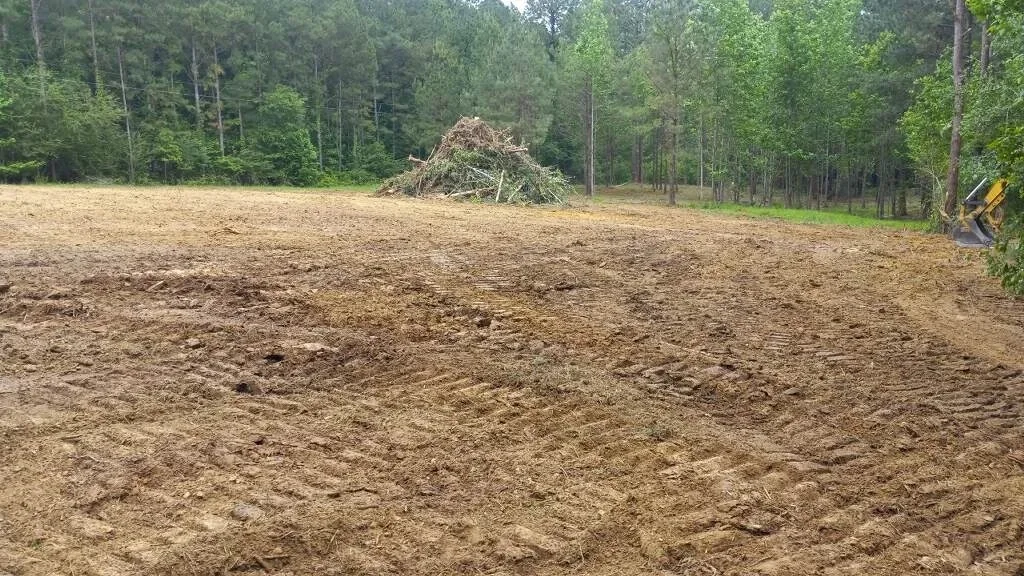
Tree clearing is also worth calling out because it can look like one line and behave like three. Cutting the trees is one thing. Grubbing the stumps is another. Disposing of the debris, either by burning, chipping, or hauling, is the third, and on a lot with mature hardwoods the disposal alone can move the clearing number more than the cutting does.
Why creek-hollow and river-bottom lots behave differently
Marshall grew along the French Broad and its feeder creeks, and a lot of buildable ground sits in the bottoms and the lower hollows. That ground is often deeper topsoil over soft, wet subsoil than anything on a ridge. A pad there needs to get down to competent bearing material, and the fill that replaces the organic layer has to be placed and compacted to spec, not just pushed around. The federal disaster record matters here: 21 declared events touch this county (1978-2026), and the storm and flood family in that list is why drainage gets its own line item on a Marshall pad rather than being folded into grading. The National Weather Service rainfall patterns for these mountains explain why so much of it concentrates in short, hard events.
That pattern has a direct cost consequence. Mountain storms often drop a month's rain in a few hours, and the ground can't absorb it. On a hollow lot the water sheets down the slope above the pad and has to be turned and carried around the building envelope. On a bottom lot it has to be lifted, because the outfall may be higher than the low corner of the pad. Both cases turn into culverts, swales, and sometimes a small retention basin, and none of those are optional on ground that floods. A prospective buyer looking at a cheap lot near the river should price drainage before falling in love with the view.
There's also a soil distinction worth knowing if you're talking to a contractor. The bottoms tend to hold silt and clay that drain slowly and lose strength when saturated, while the ridges hold more broken rock and weathered saprolite that drain well but are hard to dig. A pad on each behaves differently in a wet winter, and good local excavators price accordingly.
The permit and rule layer before a machine moves
Ground disturbance, stream buffers, and fill over a certain depth each pull different rules into play. Erosion control plans and inspections are a standard part of Madison County earthwork, and if the job crosses the state's general-contractor threshold, the crew doing it has to be licensed — check the North Carolina Licensing Board for General Contractors for that. Code requirements for foundation drainage and site grading follow the state-adopted residential code, summarized through the NC Office of State Fire Marshal. Buffers and stormwater near the river can also invoke federal water rules, which is what the U.S. Environmental Protection Agency site is for when a project sits close to a stream. And any pad that will carry a manufactured home has its own HUD-side siting requirements worth checking at HUD before you pour a footing.
The practical order in Marshall is usually this: talk to the county about whether the scope triggers an erosion control plan, get the plan together if it does, schedule the pre-construction inspection, do the earthwork, then get the inspections as the work stages. Stream buffers are the one that catches people by surprise, because the setback line isn't always obvious from the ground and a small miscalculation can push a driveway or a drain field into protected area. On lots near the French Broad, it pays to confirm the buffer line before design, not after the bid.
Driveway culverts on county and state roads are another layer. If the driveway ties into a state-maintained road, the culvert and its installation generally need approval through the state transportation department, and that approval can take time. Building it before approval is a problem. Knowing this early lets you put the driveway on the schedule instead of discovering it the week the crew is supposed to start.
How to compare two Marshall site prep bids
The cheap bid is usually cheap because it stopped at pushing dirt. Ask each contractor three things: whether compaction is being done in lifts with a spec or just tracked in, where the pad's uphill water goes when it leaves the site, and whether the quote includes the driveway culvert and its permit. A pad that isn't compacted to spec fails later as a foundation problem, and a pad without drainage fails next spring. The crews worth hiring are the ones who quote the water, not just the dirt. Our Marshall grading contractor page walks through what a good first site visit looks like.
A useful exercise is to ask each bidder to break the number into the same four lines used here: clearing, cut and fill, compaction, and drainage. Bids that can't be broken down are bids that are guessing, and guesses are where change orders come from. If one bidder shows a rock allowance and another doesn't, ask how the second would handle rock if it turns up. On Marshall lots it often does, and a bid that pretends otherwise isn't a lower bid, it's an incomplete one.
Ask, too, about the compaction standard. A pad that will carry a conventional foundation needs a documented density, and most good crews will tell you which one they build to and whether a third-party test is being run. If the answer is vague, the pad is probably not instrument-tested, and the risk lands on the foundation later, not on the grader now. And ask about the wet-weather plan: on a hollow lot in Madison County, a week of rain can stop work or turn a clean site into a mud pit, and knowing how the crew handles that tells you whether the schedule you're given is realistic.
Finally, protect the investment. Once a pad is built, keep construction traffic off the finished surface where possible, don't let the first hard rain run across bare slopes without any protection, and don't allow the foundation crew to cut the pad's drainage swales to make their footing work easier. The pad is doing a job. Treat it like one.