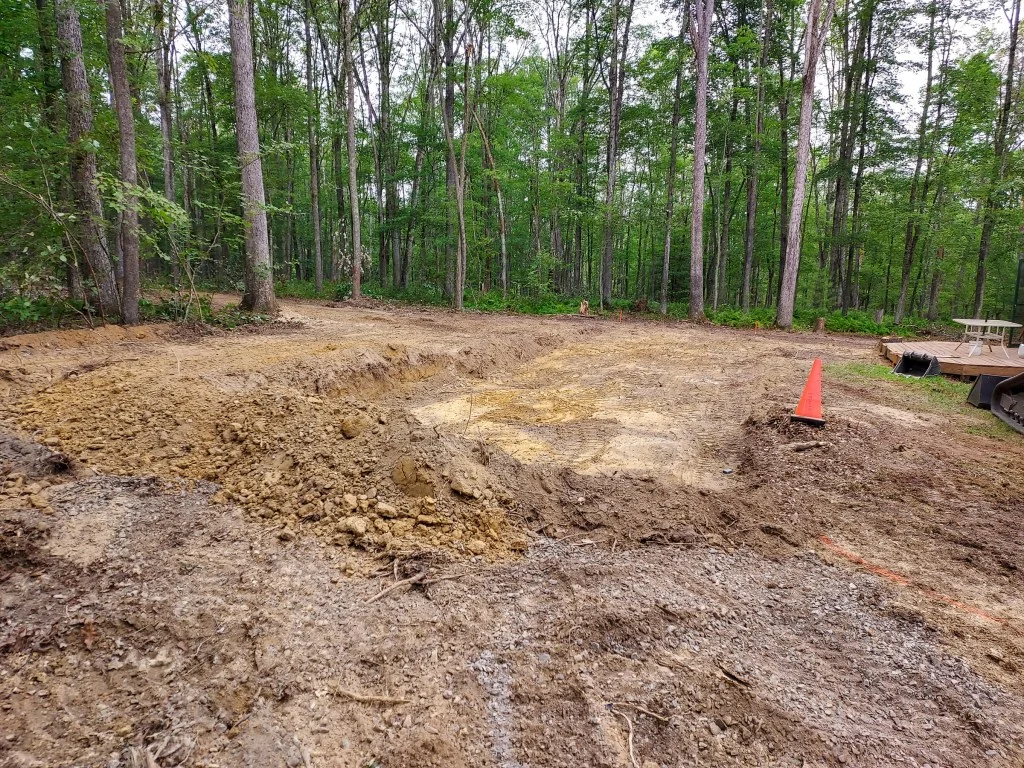
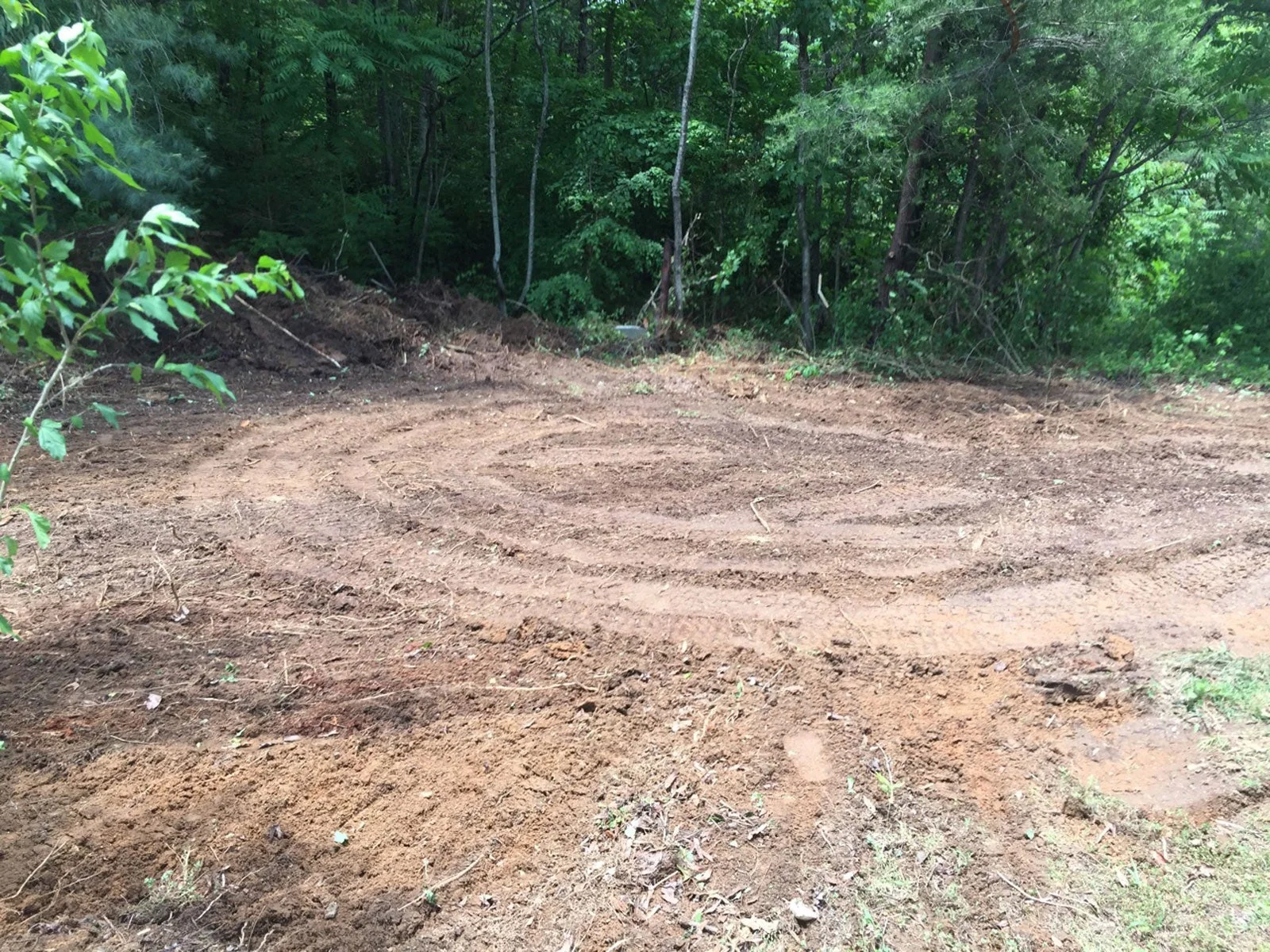
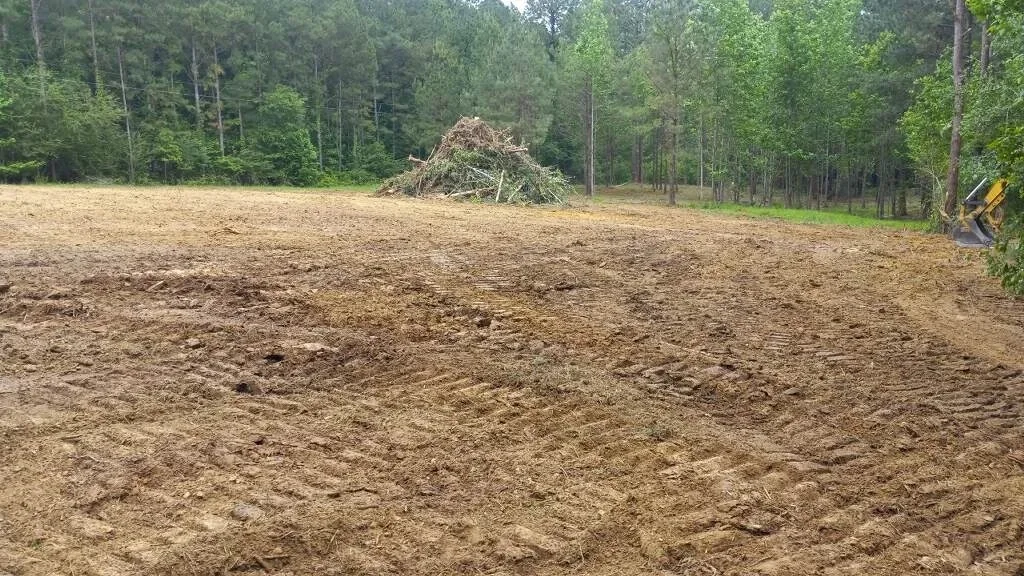
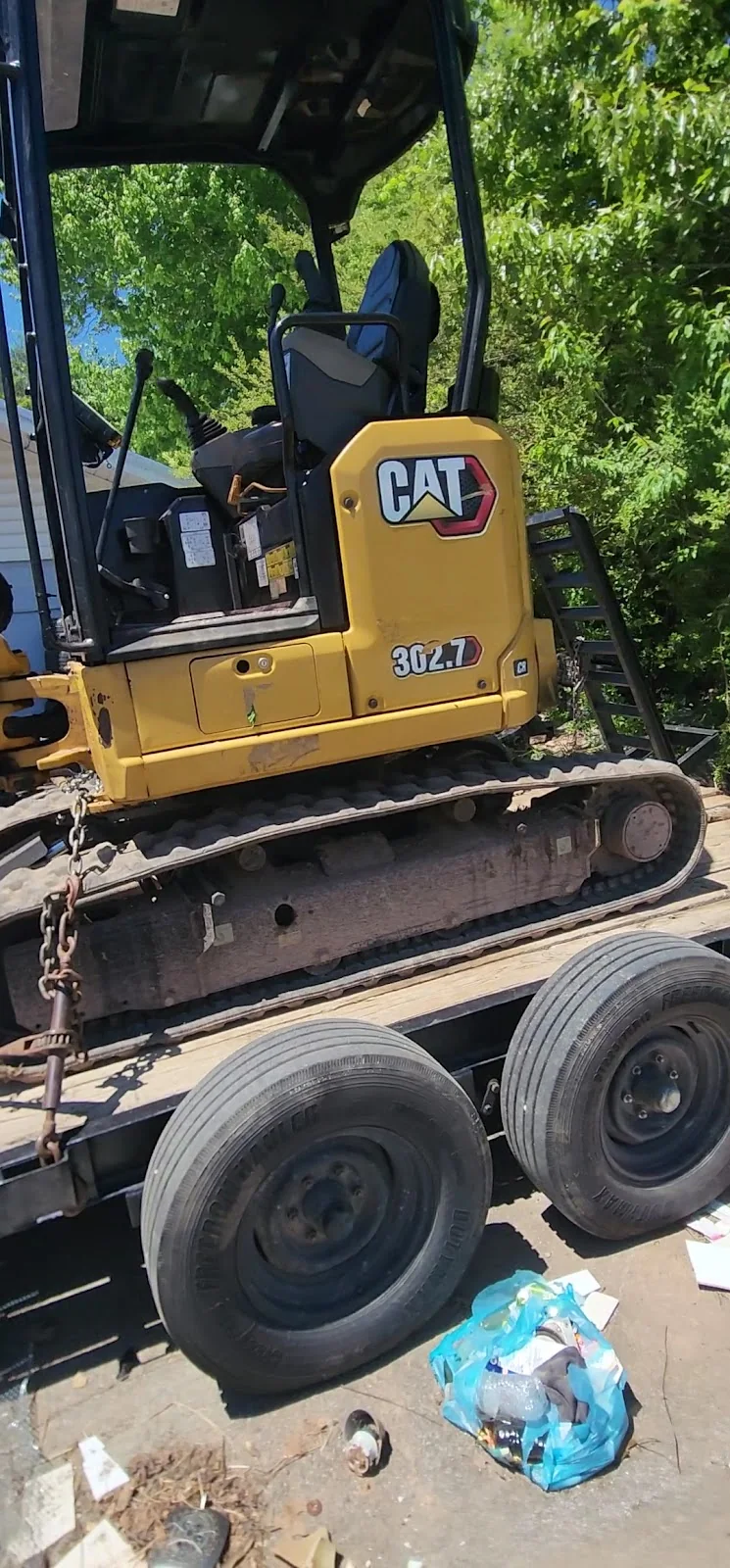
Before you break ground, read what's already there
Most Mars Hill excavation trouble starts above the dig, not in it. A driveway that sheds water toward the future footing, a gravel pad poured a half-foot low, a swale that used to work until someone regraded the bank above it — these are the same details that decide whether a new foundation drains or sits in a bowl. On Madison County ground, where the county seat climbs from the valley floor toward the ridgelines, that read matters more than the machine you rent.
Walk the site in a hard rain if you can. Note where water actually runs, not where a plan says it runs. If the existing clearing, drive, or pad is usable with a culvert and a regrade, say so honestly — a footing crew can often trim thousands off a job by working with the grade instead of burying it under fill. If the access is hopeless, that is a real cost too, and it should be on the bid, not discovered at the end.
Driveways in and around Mars Hill tend to do one of two things: they climb steeply from the road and dump onto a bench, or they switchback and gather water at the inside of every turn. Both are telling you where the excavation will have to put a culvert, a cross-drain, or a level spreader before a single footing is formed. If the current drive has a soft spot that never dries, that is not a weather problem — it is a water problem, and the new foundation will inherit it. On the north side of town, up toward the higher ground, drives often border a cut bank that keeps the pad in shade; that bank sheds surface water directly onto the work area. Knowing that before the machine shows up is the difference between one dig and two.
Also read the trees. Roots from mature hardwoods near an old clearing will have colonized any loose fill, and pulling them disturbs bearing soil. A lot that was logged or cleared years ago often has stumps left in place under the duff. You find those with a probe or a mini-ex, not with a plan sheet. If the seller or prior owner cleared the lot, ask how and when — that history is worth more than the survey when you are pricing a dig.
What a Mars Hill footing dig actually costs
Excavation here prices by the yard moved, the depth below grade, and how far a machine can legally and safely get. The steepest lots above town and the tightest in-village lots sit at opposite ends of the range. Get a written scope that names depth, bearing strata, spoil handling, and backfill before signing. The Madison County grading cost breakdown covers the earthwork side in more detail.
| Scope | Typical range |
|---|---|
| Standard footing trench, walk-out or gentle slope | $3,500–$7,000 |
| Deeper footing or stepped foundation on grade | $7,000–$12,500 |
| Steep access, limited machine reach, offload spoil | $12,500–$18,000 |
| Footings only, no full basement dig | $1,200–$4,500 |
Any bid that quotes below the low end without stating how spoil leaves the site is missing a line, not saving you money. Haul distance to a legal disposal or reuse site is real.
Bids around Mars Hill commonly come in three flavors. The cheapest is a flat per-foot trench price with no spoil line — fine only if the dirt can stay on site and be used as backfill. The middle tier prices the yardage moved, the depth, and a set number of truckloads off site. The top tier adds a rock clause, a shoring allowance for deep or near-vertical cuts, and a line for reworking the entrance so a loaded dump truck can actually leave. If you compare bids without normalizing those three items, you are comparing apples to a stack of gravel.
Two costs that surprise out-of-county owners: first, haul roads. A long, steep gravel drive means fewer trips per day and more wear on the truck, and that shows up in the haul price even when the yardage is small. Second, topsoil. In the mountains, usable topsoil is thin, and if you strip it and mix it with clay subsoil, you have created a spoil pile you have to pay to remove. Ask the crew to stockpile topsoil separately if you plan any lawn or garden after the build.
Slope, rock, and water on Madison County lots
Madison County is not flat. Foundations here are often stepped, benched, or dug into a cut bank, and each of those changes the excavation plan. Rock is common enough that a bid should say who pays if it appears — a per-hour rock clause is normal, an open-ended one is not. The federal disaster record is part of the story too: 21 declared events touch this county (1978-2026), mostly storm and flood family, which means the ground you dig has been reworked by water before and will be again.
Where a cut bank sits above a new footing, the excavation plan has to answer drainage before backfill. The International Code Council code family (adopted statewide) treats foundation drainage and footing bearing as non-negotiable items, not finish work. If your excavator cannot explain where the water goes after the dig, that is a warning.
Stepped footings are the mountain norm. Instead of one level trench, the dig moves down the slope in increments, each step bearing on undisturbed soil, each step drained so the top of one step does not feed water into the bottom of the next. Done well, this reads as a tidy staircase cut into the bank. Done badly, it reads as a series of ponds. The difference is almost always visible in how the excavator handles the trench bottom — clean, compacted, and shaped to shed, or smeared and dished.
Water is the other constant. Ridge-top lots shed to both sides and can be deceptively dry in summer, then funnel a surprising volume across the pad in a February thaw. Valley-floor lots near the creek bottoms have their own problem: a high winter water table and the potential for a seasonal spring. On those lots, footing depth and underdrain placement are decisions to make before the bucket drops, not after the concrete truck is scheduled. The National Weather Service outlook for the mountains is worth a look when scheduling a dig, because a wet winter changes how a trench holds up overnight.
Permits, licensing, and who can legally dig
Excavation alone is not the trigger; the building project is. Madison County issues grading and building permits through its own offices, and the state thresholds for licensed general contracting apply once a job crosses them. Confirm any contractor's standing with the North Carolina Licensing Board for General Contractors before work begins, and ask for the permit number on the site card. Our Mars Hill grading contractor guide covers how to screen crews for this terrain.
Safety rules around trenching exist because footing digs injure people every year. The federal occupational standards that govern protective systems apply to any excavation deeper than a few feet. If a crew is working a vertical cut with no shoring and no plan, stop the job.
Two more screening questions pay off in Madison County. Ask whether the crew carries general liability and workers' comp, and ask for the certificate, not a verbal yes. And ask who is on site running the machine — an owner-operator who has been cutting footings on these slopes for years is worth more than a rotating crew, but the license and insurance are what protect you if something goes wrong, not the résumé. Erosion control is a smaller but real item on any disturbed acreage; if a silt fence goes in before the dig and gets inspected after, you know the crew understands the county's expectations. The U.S. Environmental Protection Agency stormwater guidance explains why sediment leaving a site is a regulated issue, not just a neighbor complaint.
Reading a quote for a re-do versus a first dig
A first-time footing excavation on a clean, accessible lot is a straightforward job and should be priced as one. A re-do — replacing a failed retaining pad, correcting a driveway that drains into a foundation, re-digging footings that were set on fill — is priced differently because the site has history you have to work around. On the redo side, expect the quote to name what comes out (old concrete, unsuitable soil, organic material) and where it goes. Read the full foundation excavation service breakdown for the line items a complete bid should show.
One habit separates good outcomes from expensive ones: get the drainage and grade decisions settled before the first bucket of dirt moves. Moving soil twice is the most common waste in this trade.
On a re-do, the tell is in the questions the contractor asks before quoting. A good one wants to know why the last attempt failed — did the pad settle, did the trench fill with water, did the driveway undercut the footing? That history drives the plan. A weak quote skips the diagnosis and just re-quotes the same numbers, which is how a failed foundation becomes a failed foundation twice. On the first-dig side, the tell is different: the contractor should want to see the septic layout, the well location if there is one, and the utility locates before the machine arrives. Any dig around Mars Hill that ignores where the septic field and the buried lines sit is asking for a bad day.