How Swannanoa's three ground types shape the bid
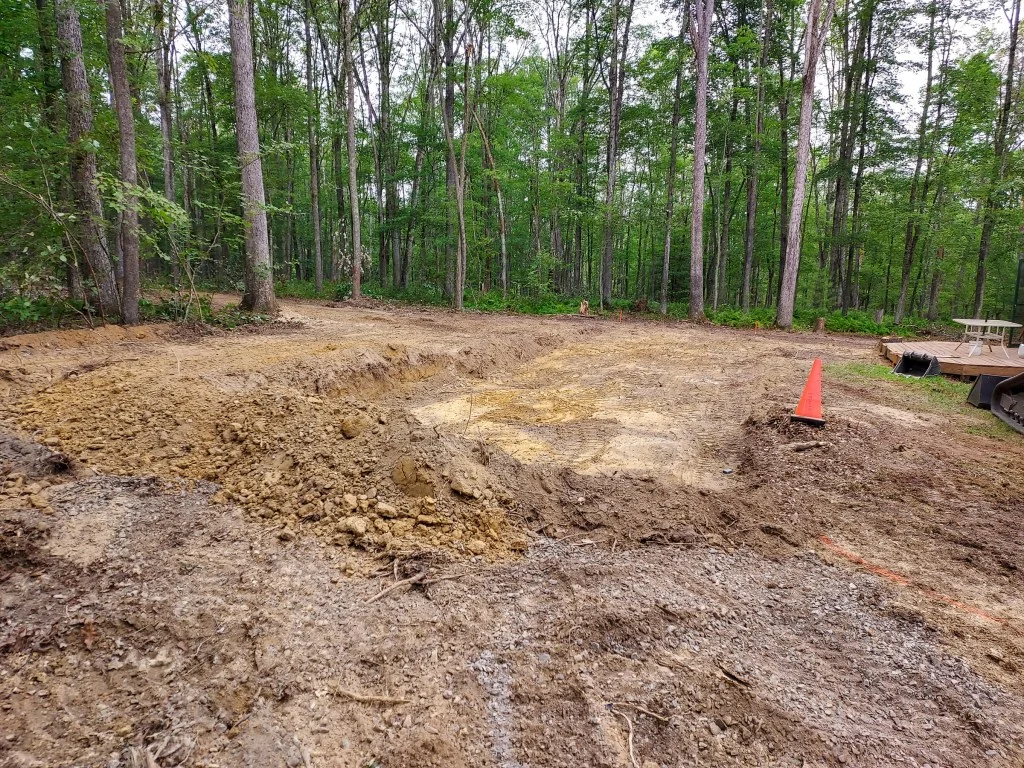
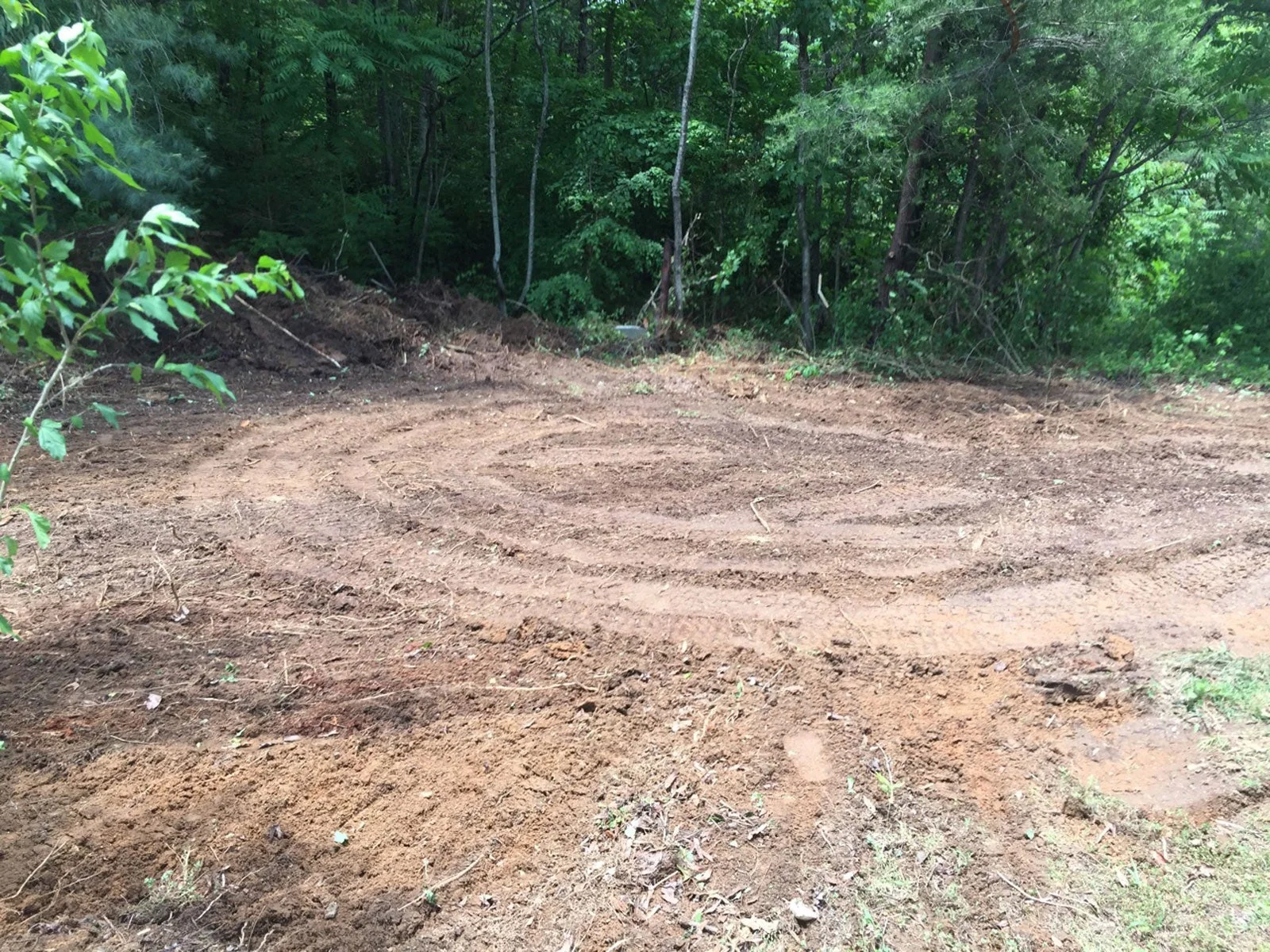
Swannanoa sits in the flats and benches along the river, with the ground rising quickly toward the Blue Ridge on either side, and that split in terrain shows up in the soil before it shows up in the bid. Flat lots near the river valley are commonly deep red clay, the kind that holds water, pumps slowly when wet, and turns slick on a slope after a hard rain. Benches and hillside cuts above town frequently run into rock close to grade, weathered schist and saprolite that a mini-excavator can rip but a trencher will not. And scattered through the valley floor and older road frontage is fill, some of it placed decades ago with no compaction documentation anyone can find.
Each one changes the work. Clay means you plan for undercut and replacement stone, not just a blade pass. Rock means the pad elevation is negotiable but the excavation method and equipment aren't. Old fill means the question isn't can we grade it but how do we prove the subgrade will carry a slab without settling six months after you move in. A site prep and building pad contractor in Swannanoa who leads with a soils answer rather than a price is usually the one who has dug here before.
Housing character reinforces the point. A lot of Swannanoa is older single-story homes on small valley parcels that were never engineered, sitting beside newer builds on graded benches from later subdivisions. On the older parcels, the pad may be sitting on fill placed by a previous owner with a tractor and no testing, and the homeowner has no record of it. On the newer benches, the pad is often part of a larger subdivision grade with an approved plan set. Same town, same ZIP, two completely different starting points for a contractor walking the lot.
The practical takeaway: before you accept any number, walk the lot and ask what the contractor sees under the surface. A concrete, place-specific observation about clay, rock, or fill in Swannanoa is worth more than a fast verbal estimate, because ground conditions here do not average out the way they do in flatter parts of Buncombe County.
What the pad actually includes, and what it costs
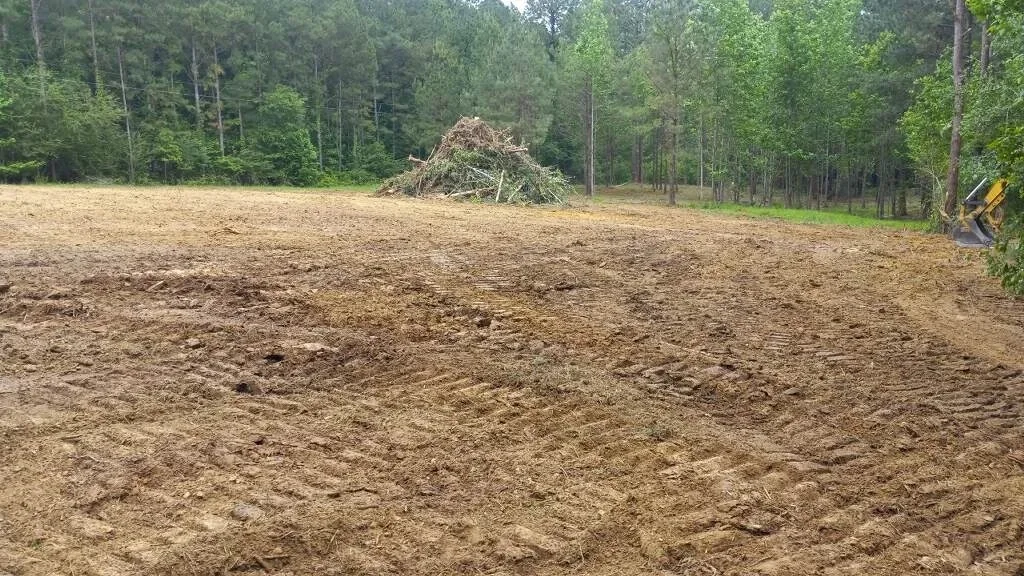
The number you get quoted should map to a scope you can read. A stripped and graded pad on a favorable clay lot sits at the bottom of the range; a cut-and-fill bench on rock with engineered fill and compaction testing sits toward the top. Steep, wooded, or rock-heavy lots can reach $30,000 once access, haul-off, and material import are counted honestly. For the working table behind that, see the Buncombe County grading cost breakdown.
| Scope | Typical range | What drives it here |
|---|---|---|
| Strip, clear, rough grade, simple pad | $3,500–$6,500 | Gentle clay lot, easy access, on-site material balances |
| Cut-and-fill pad with drainage | $6,500–$12,000 | Rock hit at depth, undercut, footing drains, downspout routing |
| Engineered fill with compaction testing | $12,000–$20,000 | Old fill or soft subgrade, import material, third-party density tests |
| Steep or wooded lot, haul-off, retaining | $20,000–$30,000 | Access cuts, trucking, rock removal, walls, erosion control |
Two line items get quietly left off cheap bids: drainage and erosion control. Both are code and site obligations, not extras, and both matter more here than in flatter parts of the county. The federal record explains why, with 19 declared events touching this county over 1973-2026, and the storm and flood family dominating that list. The National Weather Service tracks the same pattern in the mountain forecast — heavy rain on clay ground has nowhere to go but downhill and into somebody's cut.
Concrete examples of what that means on a Swannanoa lot: a pad cut into a hillside above the valley may need a footing drain running to daylight because there is no storm sewer to tie into, and a pad on the valley floor may need the finished floor set high enough that a summer downpour sheet-flowing off the road does not run across the slab. Neither of those is a materials-cost issue, they are layout and grading decisions, and they are the reason two pads that look identical from the street can differ by thousands of dollars.
Access is the other quiet cost driver. A narrow older driveway off a state road along the river may not take a loaded tri-axle, which means import material has to be staged, shuttled, or brought in on smaller trucks. On a steep bench lot, the excavator may have to cut its own temporary access, and that access work gets included in the pad number whether the homeowner sees it or not. If the top bid and the bottom bid both list the same pad dimensions but wildly different prices, access and haul are usually hiding in the gap.
Permits, licensing, and where the lines sit
Grading and fill activity in Buncombe County is not a free-for-all. Land disturbance over the state's threshold, fills placed for a building pad, and anything touching a stream or the floodplain all trigger review, and the floodplain question is real in the Swannanoa valley. The NC Licensing Board for General Contractors sets the dollar threshold at which grading and excavation work must be done by a licensed general contractor, so confirm your contractor's license status against the project value rather than taking a business card at face value. If the pad involves a septic area, well, or any work tying into plumbing, separate trades are licensed through the NC State Board of Examiners of Plumbing, Heating and Fire Sprinkler Contractors. Burn permits and open-burning rules around land clearing come through the NC Office of State Fire Marshal. For a general overview of the service, see our site prep and building pads guide, and for local crews, our Swannanoa grading contractor list.
Sediment and erosion control is the part homeowners most often miss. In a county with this much rain and this many steep drainages, disturbed ground without silt fence, inlet protection, or a stabilized construction entrance sends clay straight downhill. That is not just a fine risk, it is a downstream neighbor problem, and it is why erosion control plans are folded into the grading approval on most non-trivial pads. If a bid does not mention it, ask where it lives in the scope.
Septic and well siting overlaps the pad work more here than most people expect. On a valley lot with clay and a high water table, the septic drainfield area may push the house position, which then moves the pad, which then changes the cut and fill balance. Getting the septic authority involved early, before the pad is staked, saves a redesign later. The same is true for the driveway grade: a pad that sits a foot low is a drainage problem, and the fix costs more after the slab is poured than before the first bucket of dirt moves.
Getting a bid you can compare to another bid
Ask each contractor to write down five things: the existing ground condition they found, how much fill they will import or move on site, whether compaction testing is included, where the water goes at the end, and the erosion control method. If two bids don't share those five items, they aren't comparable, and the cheaper one is usually cheaper because one of the five is missing. Also ask how the pad elevation was set relative to the finished floor plan and the driveway, because a pad that ends up half a foot low is a drainage problem the homeowner pays for twice.
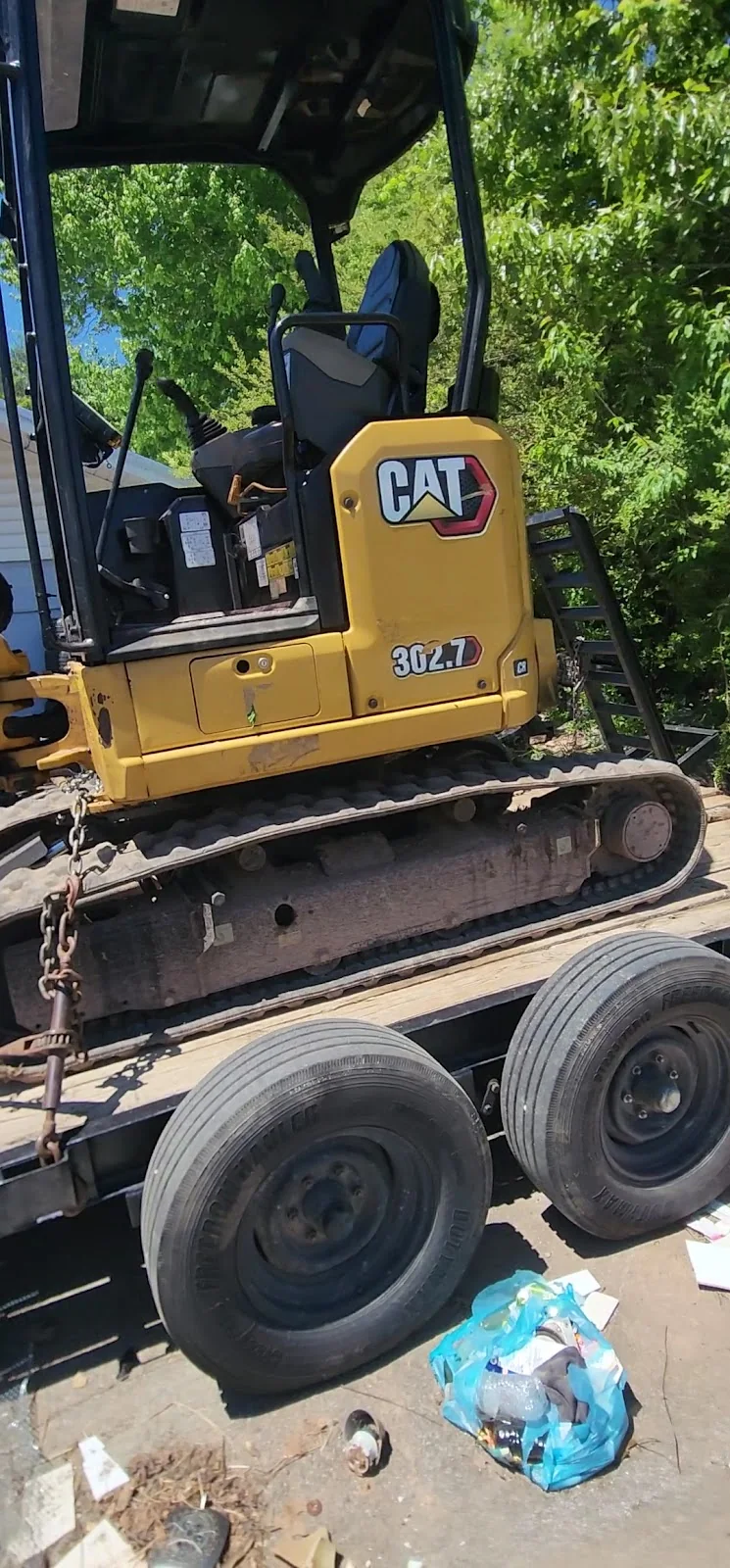
One more Swannanoa-specific question: what did the contractor find on the test pit? A test pit dug with a mini-excavator before the bid tells you whether you have two feet of clay over rock or twelve feet of fill over a soft layer, and those two lots take different equipment, different material, and different days of work. Skipping the test pit is how a homeowner ends up with a change order in week two. On a valley lot where the subdivision was platted decades ago, the test pit is the only honest way to know what is really under the pad.
Finally, ask for the finish grade plan in writing: where the pad drains, where the downspouts will discharge, and how the driveway ties in. A pad that is perfectly flat and perfectly compacted still fails if the water has nowhere to go, and in this valley, water always finds the low spot. If you want a second set of eyes before you sign, start with our site prep guide and then talk to a local crew from our Swannanoa contractor list.