How a Weaverville dig actually sequences
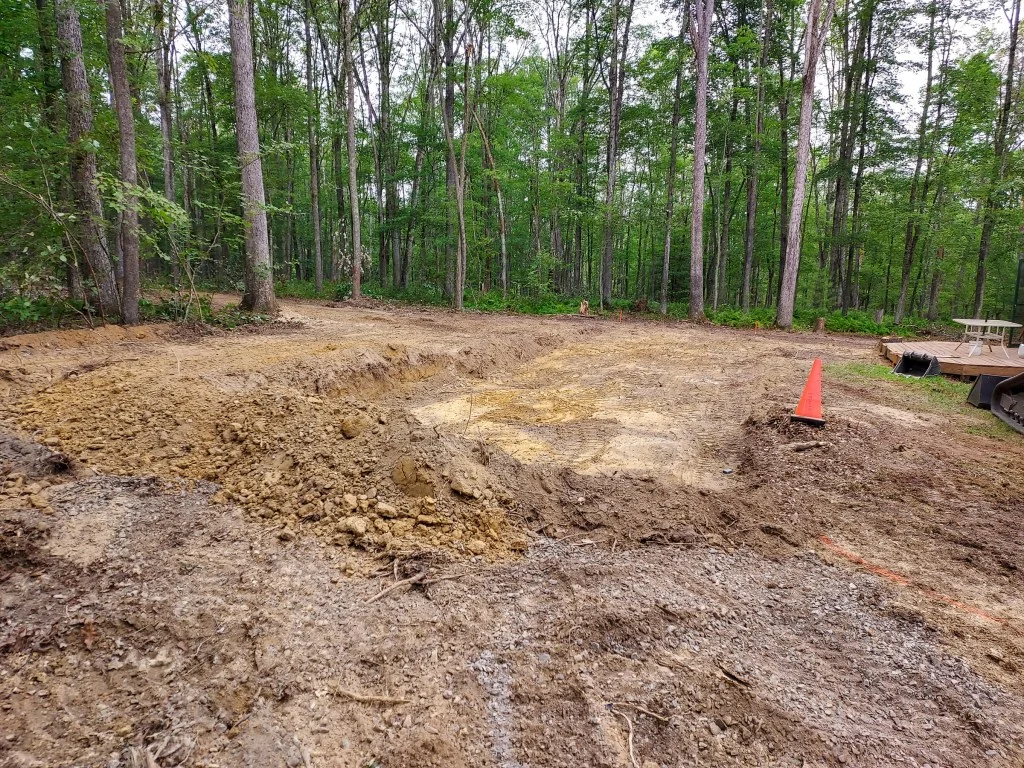
Weaverville crews work in a fixed order, and knowing it tells you whether a quote is real. Utility locate first, then machine cut, then hand-trim, then footing trench, then inspection, then pour. On the valley-floor lots near the main crossroads that rhythm is calm: flat ground, wide access, and a dig that finishes in two or three days. On the ridge roads above town, where driveways pinch to a single track and the downhill side of the hole has to stay undisturbed, the same job stretches out because every scoop has to swing out over a slope.
The sequence matters because the slow part is rarely the digging. It is the trim and the inspection window. A crew that tells you when the footing trench will be dug, when it will be seen, and when concrete arrives is describing the one schedule that cannot be compressed — concrete does not wait, and a trench left open overnight in a wet spell is a trench that has to be cleaned out again.
On a typical in-town lot off Monticello Road or near the elementary school, the utility locate is usually a formality: gas, water, and electric are marked, and the machine cuts a clean rectangle for a crawl space. The hand-trim crew follows behind with flat shovels, squaring the corners and shaving the last few inches so the footing trench is uniform. That hand-trim stage is where a good crew separates itself. A sloppy trim leaves loose soil that has to be removed before the inspector arrives, and that removal is often an unbilled extra day.
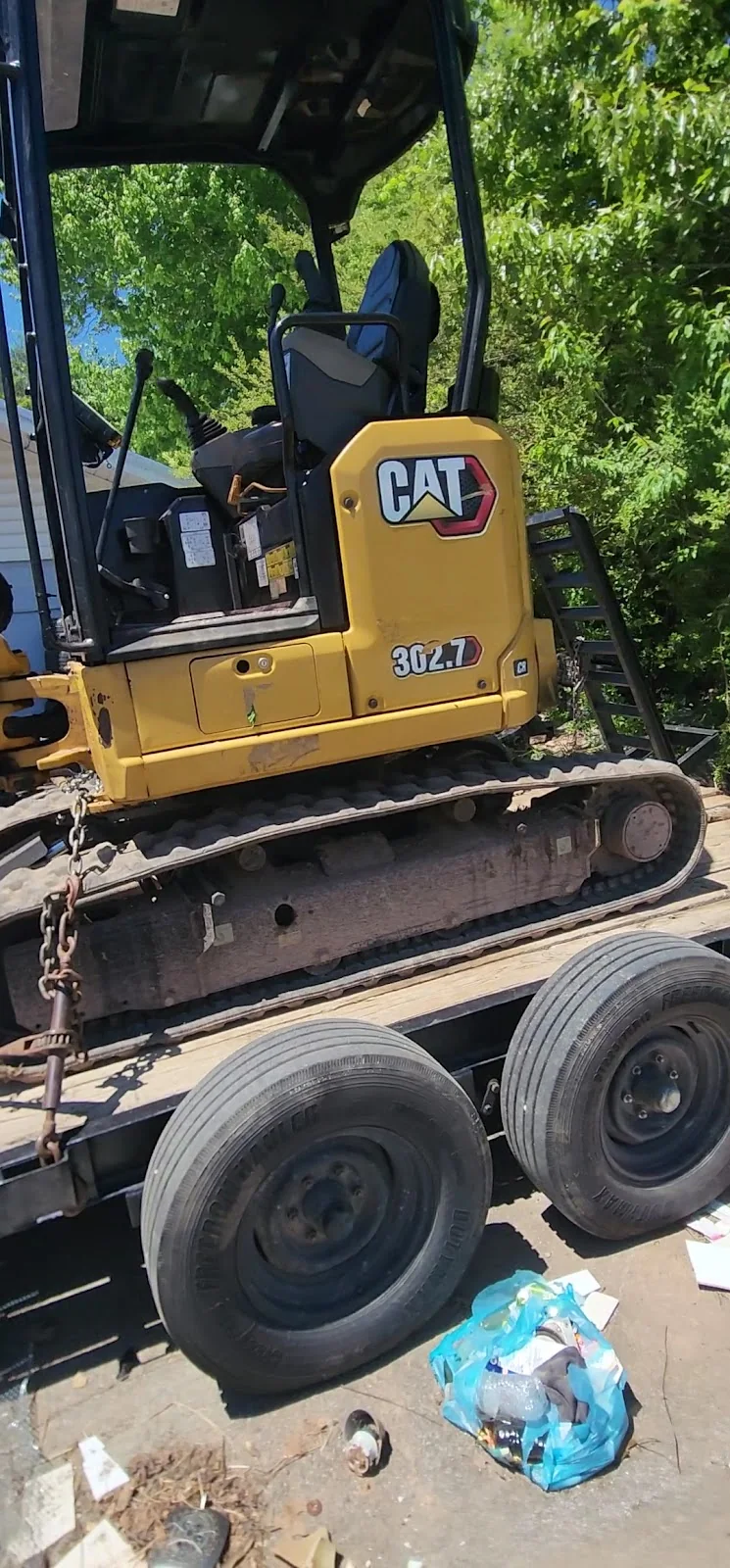
On the ridge roads — Reems Creek, Dula Springs, and the lanes that climb off them — the sequence is the same but the pace changes. The machine may be a smaller excavator that can fit between a rock wall and a drop-off. The operator cuts a bench first, a flat shelf wide enough to work from, then digs the hole in stages. Spoil goes into a truck almost immediately because there is no flat ground to stockpile on. The trim crew works from the bench, which means every shovel of dirt has to be lifted up and out, not just pushed aside. That geometry is why hillside quotes sit higher and why a job that would take two days on the valley floor takes four or five on the ridge.
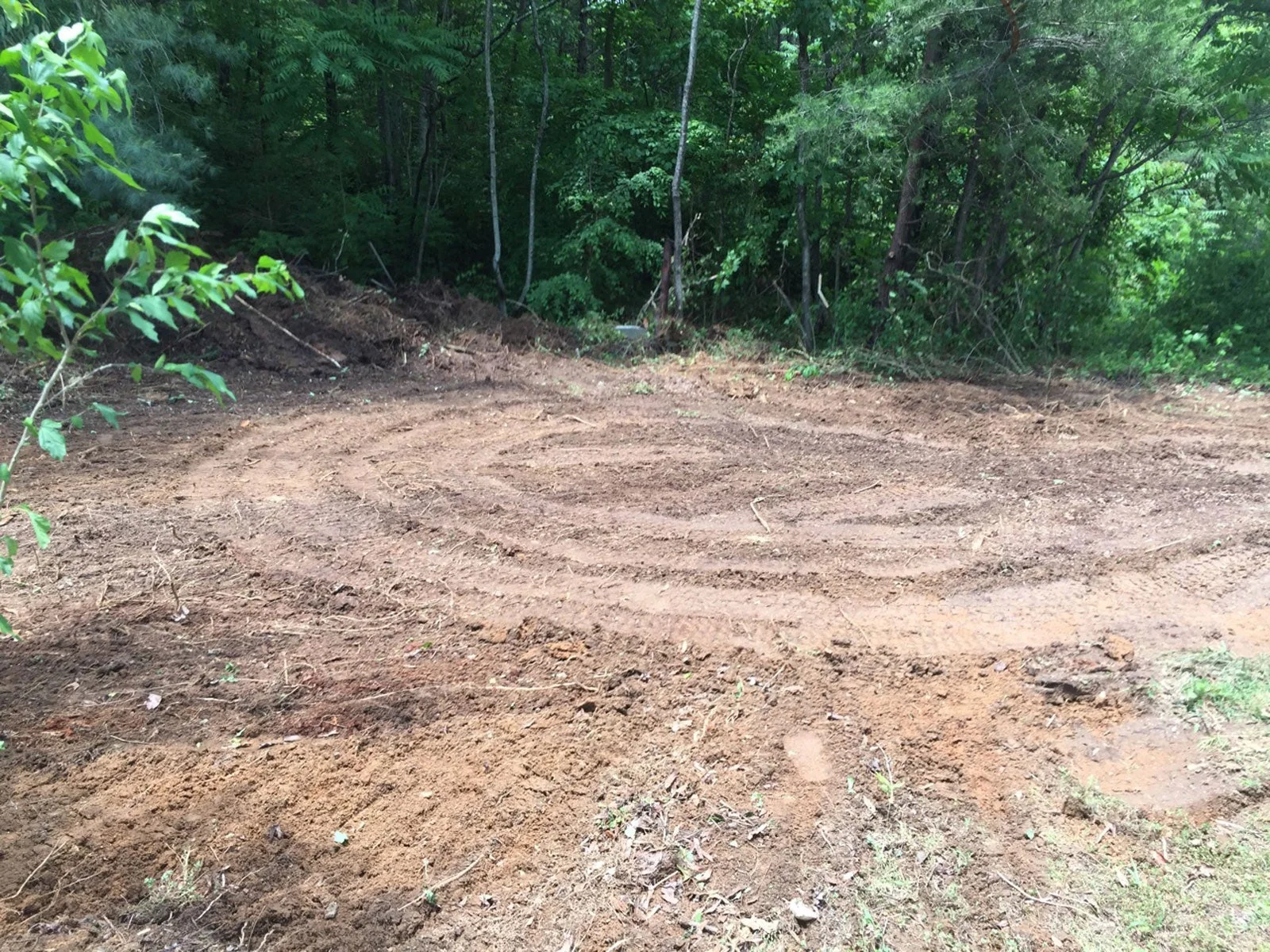
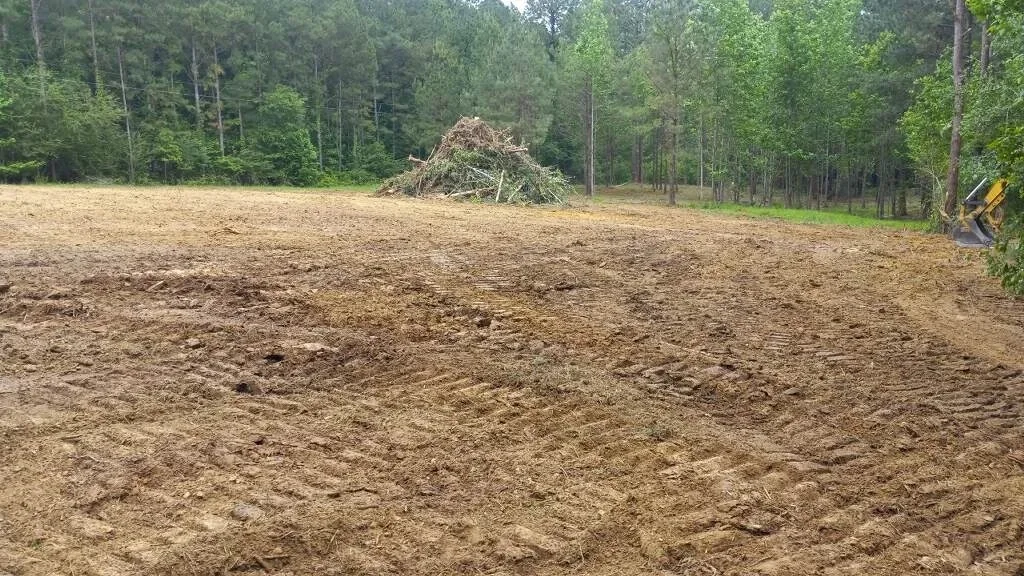
After the pour, the same machine often comes back for backfill. The sequence closes with compaction and grading, and that final step is when a homeowner can finally see the shape of the yard again. A crew that talks about backfill and compaction on day one is a crew that has done this in Weaverville before.
What the dirt here does to the schedule
Buncombe County ground is varied enough that two lots a mile apart can behave completely differently. Valley lots along the Reems Creek bottomlands often carry deep, soft alluvium that needs over-excavation and structural fill before a footing is even formed. Ridge and bench lots above town hit weathered rock early, which is fine until it isn't — a ledge means the footing has to be stepped, and each step is another hand-trim and another inspection.
Water is the other schedule variable. The federal record puts this county through 19 declared events spanning 1973-2026, and the overwhelming majority are storm and flood family. When the ground is already saturated, spoil piles turn to mud, trench walls slump, and a three-day dig becomes six. The National Weather Service outlook at weather.gov is worth checking before anyone sets a dig date in a wet month.
There is a local texture to this that a national cost guide will never capture. In the bottomlands, the soil can be dark and soft, almost spongy, and a footing dug there may need to go deeper than the plans show because the top layer is not bearing material. On the ridge, the opposite problem: a machine can hit a shelf of rock that stops the cut cold. The operator then has to either break it out with a hammer attachment or step the footing around it. Both are legitimate extra cost, and both are visible on site the day the cut happens.
Seasonality matters too. Late winter and early spring in this county tend to be the wettest stretch, and that is when trench walls are most likely to slump. A dig scheduled for February on a north-facing slope may sit under snow or frozen crust, which delays the start but also keeps the ground firm once the thaw comes. Late summer can be the opposite: dry ground is easy to cut, but dust becomes a nuisance and the spoil piles are light and easy to haul. A crew that has worked this county for years will often steer a homeowner toward a dry stretch for the footing trench, even if the rest of the site work starts earlier.
Scope-by-scope price picture
Ranges below are for excavation work only — concrete, rebar, engineering, and foundation construction are separate lines. For the surrounding county numbers in a grader's context, see the Buncombe County grading cost breakdown.
| Scope | Typical range | What moves the number |
|---|---|---|
| Footing trench only (shallow, clear access) | $1,200–$4,500 | Trench depth, hand-trim percentage, rock |
| Full basement or crawl dig, cut-and-fill | $3,500–$18,000 | Depth, spoil haul-off, machine access width |
| Stepped footings on slope | Upper half of the band | Number of steps, ledge, bench width |
| Over-excavate and replace soft soil | Adds to base scope | Depth of unsuitable material, import volume |
Spoil is the line item homeowners forget. On a tight Weaverville ridge lot there may be nowhere to spread the dirt, which means every yard of it gets loaded and hauled — and that is a real, chargeable service, not padding.
Access width is the second quiet multiplier. A full-size excavator needs a travel path that is wide enough and stable enough to carry its weight. On a lot with a narrow driveway, a retaining wall, or a mature tree canopy that cannot be cut, the crew may have to use a smaller machine and take more passes. The hole is the same size, but the hours are not. That is why two bids on the same house plan can differ by several thousand dollars: one assumes a straight shot from the road, the other assumes a tight crawl up a wooded slope.
Rock is the third variable, and it is the hardest to predict from a desk. A bidder who has dug nearby lots will often say something like "expect some rock" rather than a firm number, because the depth to ledge varies block to block. If rock is hit, the cost is not a scam; it is the time to break, remove, or step around it. A homeowner can protect themselves by asking how rock is handled in the bid: is it a unit price per hour, or a contingency line?
Who is allowed to dig, and who inspects
Excavation itself is not a licensed trade in North Carolina, but moving earth as part of a construction project usually sits inside a general contractor's scope once the job crosses the state threshold, and the rules are published by the NC Licensing Board for General Contractors. If the dig is tied to a footing, the footing inspection happens before the pour — no exceptions, and no crew should ever ask you to accept a poured footing that was never seen.
Related trades show up on the same site. If the project involves a sewer or water line reroute, the plumbing side is governed through the NC State Board of Examiners of Plumbing, Heating and Fire Sprinkler Contractors. Getting the sequence of those two inspections right is the difference between a clean week and a re-dig.
On a practical level in Weaverville, the inspection for a footing trench is usually scheduled through the county's permitting process and happens before the concrete truck is called. The inspector is looking for a clean, uniform trench that reaches the depth shown on the plans and sits on stable, undisturbed soil. If the trench has slumped overnight, or if the bottom is soft, the inspector may ask for it to be cleaned out or deepened before signing off. That is a delay that costs the homeowner nothing in extra work if the crew did the trim correctly the first time, and a real cost if they did not.
For a project that includes a basement, the inspection sequence may also include a check of the under-slab plumbing and the footing drains before the pour. The plumbing inspection is separate from the footing inspection, and they are sometimes handled by different offices. A general contractor who has built in Buncombe County before will know how to stagger those visits so the job does not sit idle waiting for one inspector while the other is available.
Access is the whole conversation on these roads
Weaverville's housing is split between flatter in-town lots and the wooded ridges and hollows that ring the town, and the second group is where excavation gets expensive honestly. Machine width matters: a full-size excavator cannot work a ten-foot driveway with a rock wall on one side. That means a smaller machine, which means more hours, which means a higher price for the same hole.
Spoil placement is the second half of the same problem. When there is no flat ground to stockpile on, dirt comes out and goes straight into a truck. Ask any bidder where the dirt is going — "on site" and "hauled off" are very different numbers. If grading and site work beyond the hole is part of your plan, the Weaverville grading contractors page covers that side, and the foundation excavation overview explains how the dig ties into the foundation build that follows.
There is also a neighborly reality on the ridge roads: some driveways are shared, and a loaded dump truck leaving the site can be a bigger event than the digging itself. A crew that has worked these lanes will often schedule hauling early in the day and coordinate with neighbors if the road is narrow. That kind of coordination does not show up on a bid sheet, but it is the difference between a job that runs smoothly and one that gets stopped by a truck meeting a school bus on a switchback.
If the lot is on a slope serious enough that a machine cannot safely work from above, the crew may need to bench in from the downhill side or use a track machine with a tilt bucket. Those are legitimate techniques, not upsells. A homeowner can ask a bidder to describe the access plan in plain language: where will the machine enter, where will it sit, where will the spoil go, and how will the truck get out. If the bidder cannot answer those questions on the spot, the quote is probably a guess.