Grading and excavation contractor, Weaverville NC

Yard Leveling and Regrading in Weaverville, NC

For yard leveling in Weaverville NC, most projects run <strong>$1,800 to $9,500</strong>, with a typical lot landing at <strong>$2,500 to $6,000</strong>. Also in Weaverville: culvert installation, driveway grading and washout repair and excavation contractors. Owner-run from Candler, west of Asheville. English and Spanish.

  • Free on-site estimate, price in writing
  • Water routed first: ditches, culverts, crown
  • Cut, fill and compaction in lifts so it stays put
  • Real photos and footage of our own jobs

Pictured: from our own footage: the skid steer cutting grade across red clay. Our own work.

Get a free estimate

Tell us where the lot is and what it is doing. We walk it, read the slope and the water, and put a real price in writing.

Free, no obligation. Or call (828) 424-8873. English and Spanish.

Free on-site estimateA real number, in writing, after we walk the lot.
Based in CandlerSmokey Park Highway, west of Asheville. Four counties.
Rated 5.0 on Google11 reviews, all five stars, from people we graded for.
English and SpanishOn the phone and on site.
Quick answer
Yard Leveling and Regrading in Weaverville, NC

For yard leveling in Weaverville NC, most projects run <strong>$1,800 to $9,500</strong>, with a typical lot landing at <strong>$2,500 to $6,000</strong>. The number is set by three line items: how much dirt must move, how tight the access is, and whether drainage has to be corrected before the grade will hold.

19
federal disaster declarations on record in Buncombe County
Hurricane Dorian
most notable event in the federal record
1973–2026
span of the declaration record
Asheville
Buncombe County hub

The three line items that set your number in Weaverville

On most lots inside town limits, the estimate gets built from dirt volume, machine access, and water. Volume is simple arithmetic: cubic yards to cut, cubic yards to fill, plus a compaction factor for anything that will carry a structure or a driveway. Access is the Weaverville wildcard — a lot off Buncombe Street with a wide driveway prices the same as flat ground anywhere, but a back yard reached through a 36-inch gate on a slope means wheelbarrow or conveyor work, and that is where a job climbs toward the top of the band.

Water is the line item owners skip and then pay for twice. If the yard ponds near the house, the fix is grading that falls away from the foundation at roughly a 5 percent slope for the first several feet, plus a defined path for roof and surface runoff. Leveling ground that has nowhere to drain just relocates the puddle under your crawl space. This is the same logic the EPA applies to stormwater on residential property: slow it, spread it, or send it somewhere designed to take it.

Where that money actually goes

The table below shows the way a normal Weaverville job breaks down. Treat it as a planning frame, not a bid: two yards of the same size can differ by thousands once slope and access are measured. For a broader line-item view across the county, see the Buncombe County grading cost breakdown, and for the service itself, yard leveling covers what gets done and in what order.

Scope on a typical Weaverville lotWorking range
Touch-up grading and re-seeding of a small, mostly flat yard$1,800 – $2,800
Regrade a moderate lawn, strip sod, reset fall away from the house, re-sod$2,800 – $5,000
Full regrade with a cut-and-fill reshape or a small retaining wall$5,000 – $8,000
Steep or tight-access lot: haul-off, erosion control, drainage correction$8,000 – $9,500

Two line items frequently get left off cheap bids. Haul-off: excavated dirt has to go somewhere, and in Buncombe County that means tipping fees and truck time. Erosion control: any disturbed ground near a slope or a waterway needs silt fence or similar before the first rain. Both are real costs, and a bid missing them is incomplete rather than inexpensive.

What the terrain around town asks of a grade

Weaverville sits in a bowl of the Reems Creek and Flat Creek valleys north of Asheville, and the residential ground follows it: older in-town lots that are small and mostly level, 1970s and 1980s subdivisions stepping up the hillsides, and newer homes on ground that was cut and filled to make a pad. Each one grades differently.

On valley-floor lots, the problem is usually positive drainage — the yard is flat enough that water has no direction, so the answer is building consistent fall toward a swale or a daylighted low point. On hillside lots, the problem is a steep transition where one property meets the next, and the fix often includes a terrace or a retaining wall rather than a single plane. On cut-and-fill pads, the fill side settles over the first several years, and regrading is often the honest fix once the house is past its initial settlement window.

Do the grading rules apply here?

Residential grading that stays within a normal yard, moves modest amounts of dirt, and does not change drainage onto a neighbor's property generally does not need a county permit. Move enough earth to look like site work, dam a drainageway, or work within a stream buffer, and the rules change — Buncombe County's land-use ordinance and its steep-slope and erosion provisions start to apply, and so can state sediment rules. When in doubt, ask before the machine shows up.

Contractor selection has its own threshold. The NC Licensing Board for General Contractors requires a licensed general contractor once a project crosses specified cost thresholds, and grading and excavation work frequently falls under that umbrella. A crew that cannot tell you whether your job crosses it is a crew to keep looking past. The Weaverville grading contractor guide covers the questions worth asking before you sign.

Storm water and the yards that hold it

Mountain storms are not gentle on yards with no plan for runoff. Federal disaster records show 19 declared events touching this county across 1973-2026, and they are overwhelmingly flood and storm family — the same weather pattern that turns a poorly graded lawn into a washed-out trench. The National Weather Service issues the flood and flash-flood products worth watching when a system is forecast to stall over the mountains.

The practical takeaway is to grade for the storm you will get, not the drizzle you usually see. That means fall away from the house, a defined travel path for concentrated flow, and a low point that is not your foundation or your neighbor's. It costs less to build in the first time than to repair after the second flood. If your yard and the ground under the house both need attention, the order matters: stabilize water first, then level and regrade, then address anything structural the water damaged.
Buncombe County, NC: the storm record

Federally declared disaster events19
Named storms in the recordHurricane Dorian, Hurricane Florence, Hurricane Fran, Hurricane Helene, Hurricane Ian, Hurricane Isaias
Incident typesFire, Flood, Hurricane, Severe Storm, Snowstorm
Record span (fiscal years)1973–2026
Source: FEMA OpenFEMA disaster declarations. County-level federal declarations, not individual claims.
More in Weaverville

Everything we build in Weaverville, NC

Questions people ask

Straight answers

How much does yard leveling cost in Weaverville NC?
Typical projects run $1,800 to $9,500, with most yards at $2,500 to $6,000. Slope, dirt volume, machine access, and whether drainage is corrected are the movers; see the county cost breakdown for line items.
Can you level a yard that slopes toward the house?
Yes, and that is the most common reason we get called. The fix is not to flatten the whole yard, it is to reshape the ground so it falls away from the foundation at roughly a 5 percent grade for the first several feet, then direct the runoff to a low point that handles it.
Do I need a permit to regrade my yard in Buncombe County?
Small residential grading that does not change drainage onto a neighbor's land usually does not require a permit. Larger cuts and fills, work near a stream, or anything that reads as site work can trigger county and state rules. Ask before you dig, and check licensing thresholds at the NC Licensing Board if the job is substantial.
Will leveling the yard fix the water in my crawl space?
Often it helps a lot, but grading alone is not always enough. Correcting the surface grade, the gutters, and the downspout discharge is the first step, and a lot of damp crawl spaces dry out once those are fixed. If the ground under the house still holds water, that gets addressed separately.
How long does a typical yard leveling job take?
A straightforward regrade of a normal in-town lot is usually a two to four day job, weather permitting. Steep lots, tight access, and jobs that include drainage correction or a retaining wall run longer. The estimate should tell you what your specific timeline looks like.
Do you move dirt or can I keep it on site?
Keeping dirt on site is cheaper and common when there is a low spot to fill. Haul-off is the line item that adds cost, so a plan that balances cut and fill on your own lot usually prices better than one that trucks everything away.
Our work

Our work

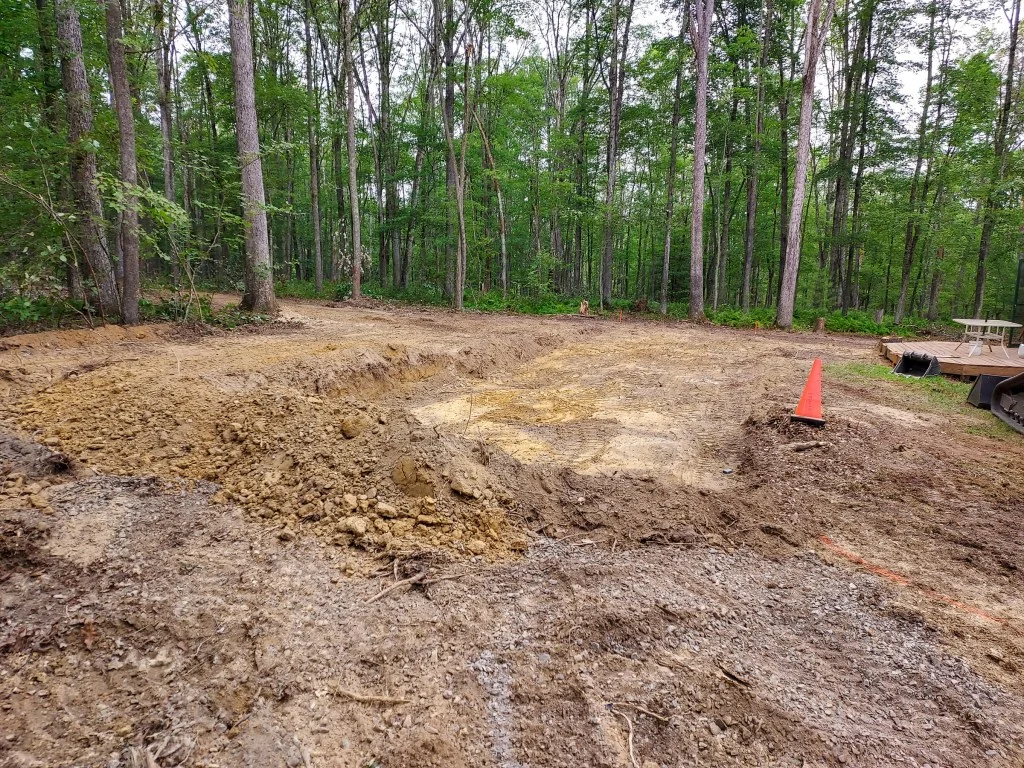
A lot cleared and rough-graded, stumps out and the pad corner marked with a cone. Built by Grading Lands.
A lot cleared and rough-graded, stumps out and the pad corner marked with a cone.
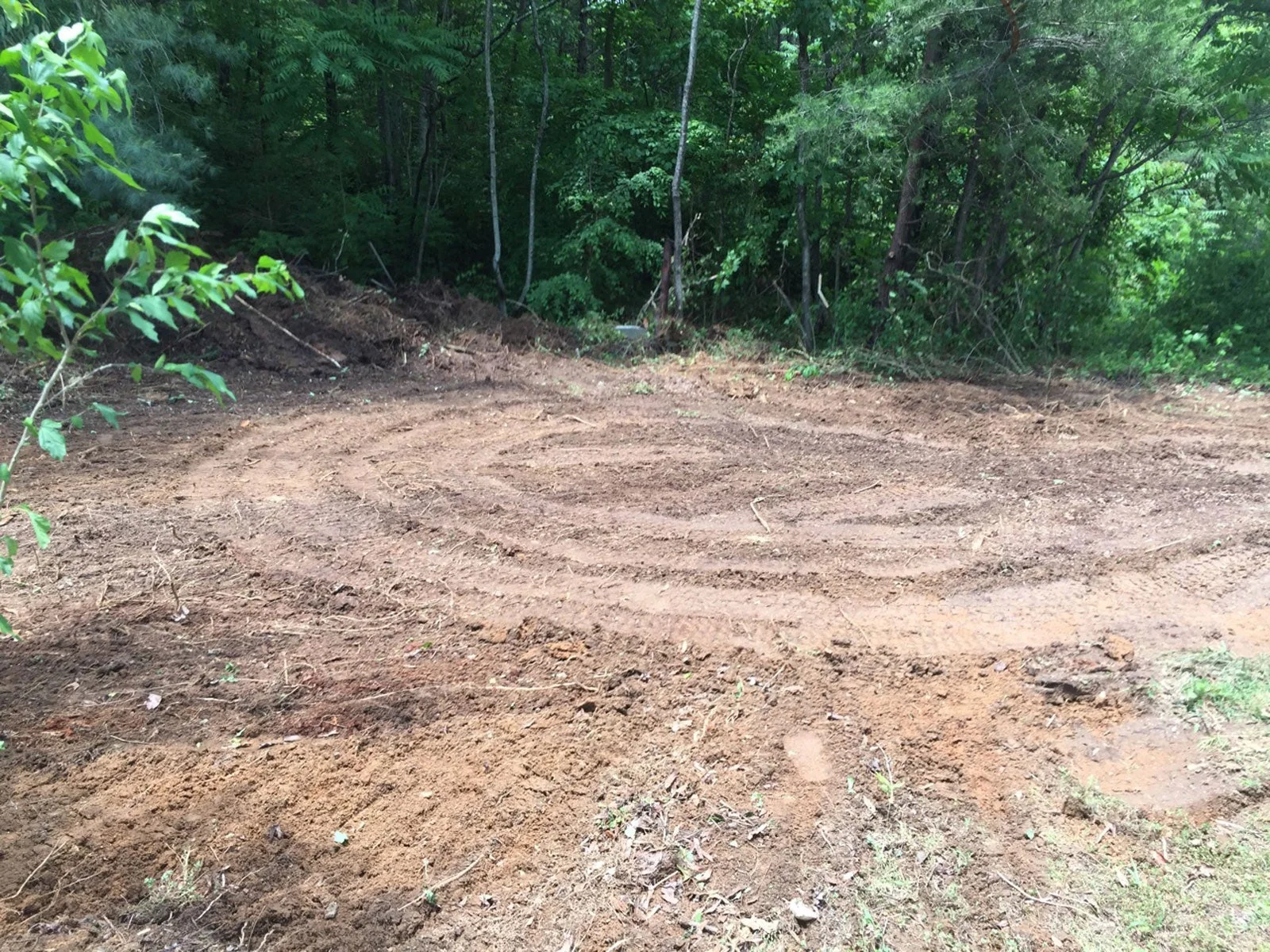
Fresh clearing on a wooded lot, brush pushed back and the topsoil stripped down to the clay. Built by Grading Lands.
Fresh clearing on a wooded lot, brush pushed back and the topsoil stripped down to the clay.
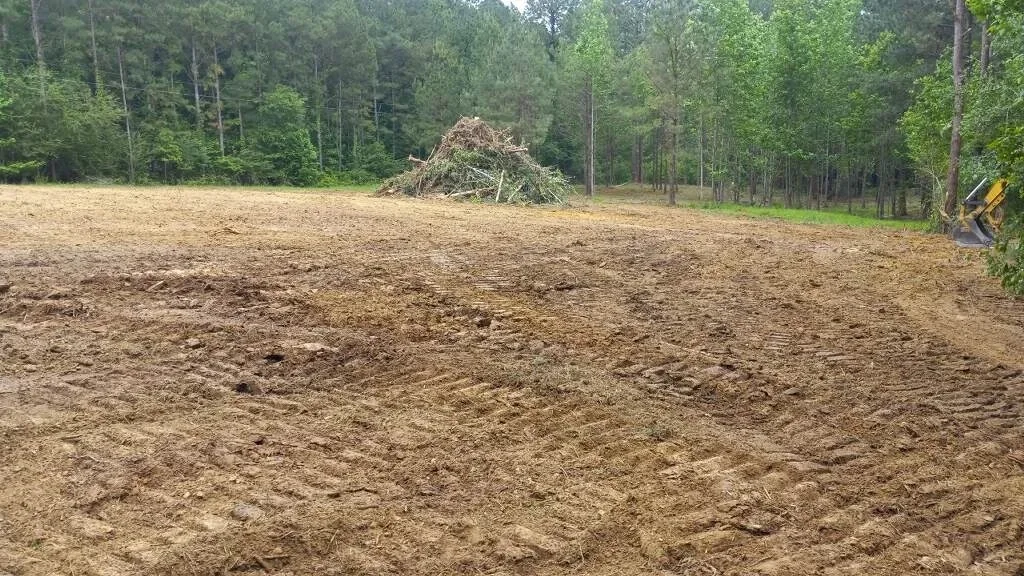
A cleared and graded lot with the brush pile stacked at the tree line for haul-off. Built by Grading Lands.
A cleared and graded lot with the brush pile stacked at the tree line for haul-off.
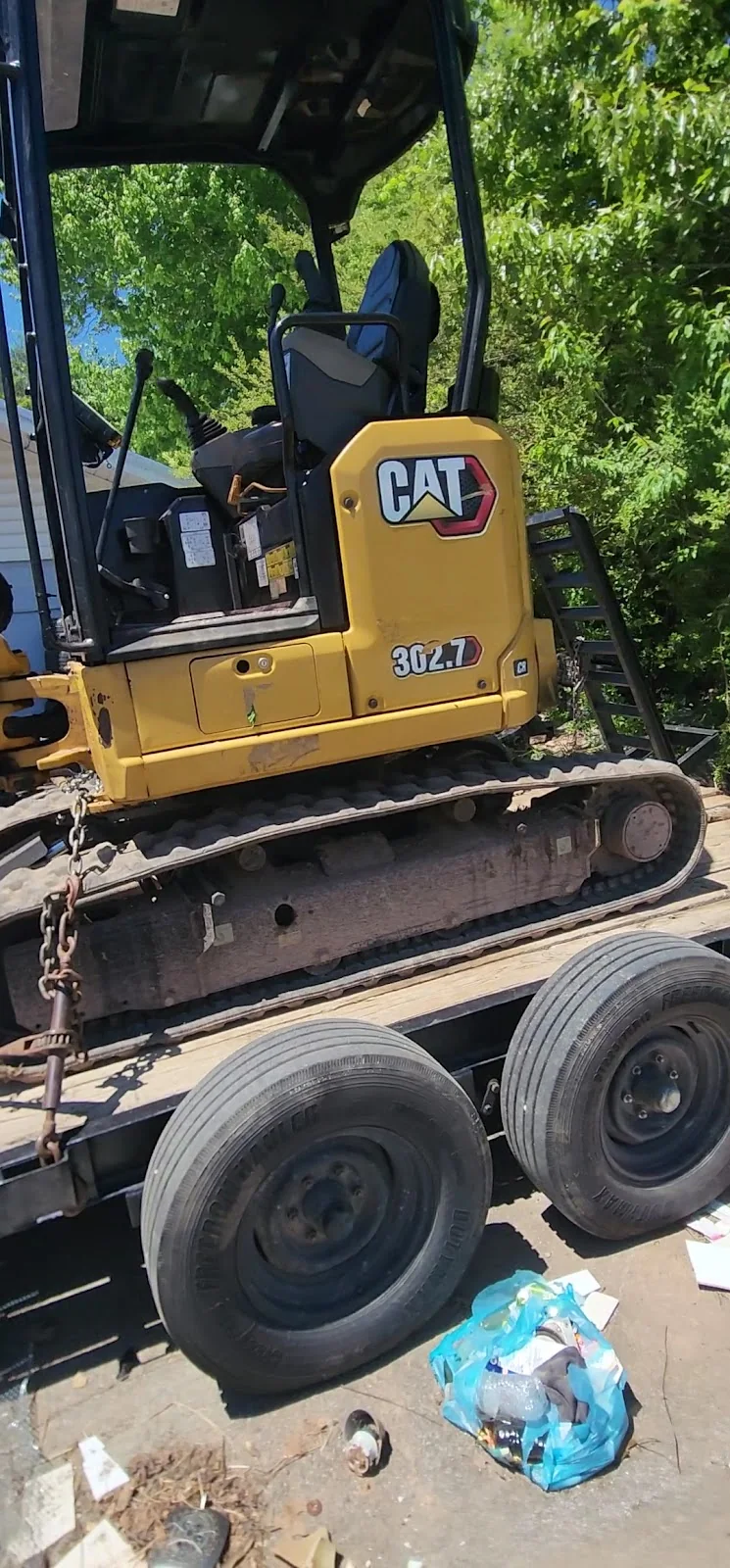
Our CAT excavator loaded on the trailer, headed to the next job. Built by Grading Lands.
Our CAT excavator loaded on the trailer, headed to the next job.
Get a quote

Tell us about your project. We price it straight.

Where it is and what you need — that's all it takes to start. You get a clear scope and an honest number, and your info never gets sold to a list.

Or call — (828) 424-8873

Get a free estimate

Free, no obligation. Or call (828) 424-8873. English and Spanish.

Call now Text us