Woodfin water starts uphill of the culvert, not at it
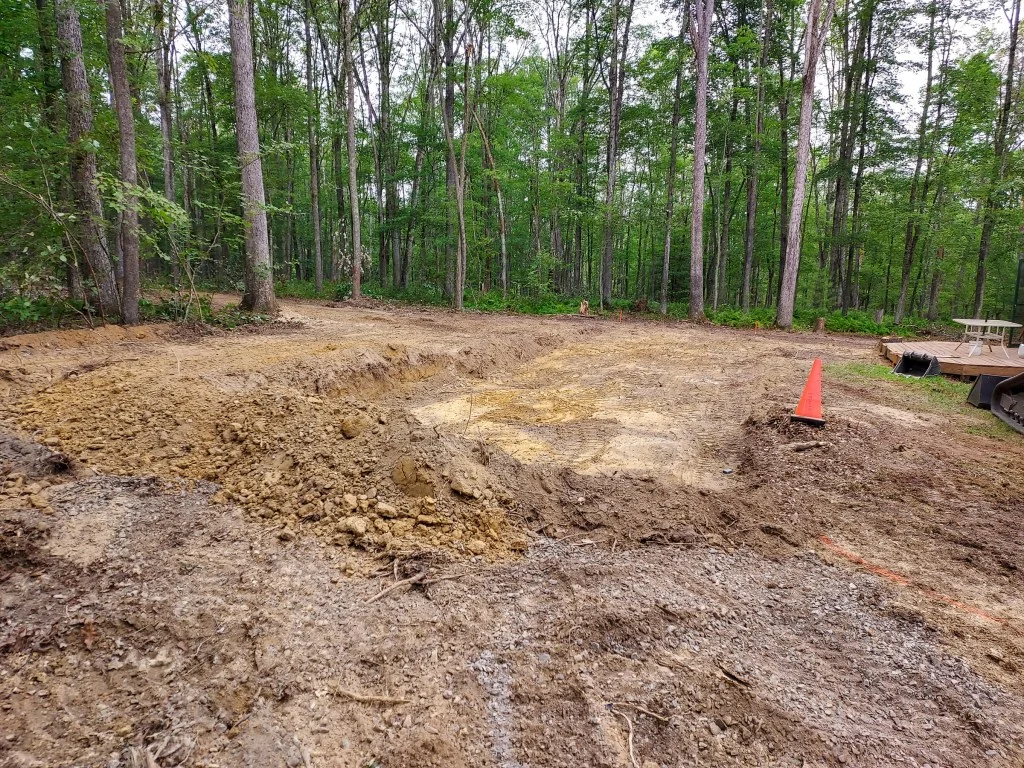
Woodfin sits in a bowl, and that shape decides every culvert here. The French Broad runs the western edge, Reynolds Mountain and the Elk Mountain ridges rise to the east, and each driveway cut into those slopes acts as a funnel for stormwater headed downhill. A culvert on a Riverside Drive lot handles a different volume than one on flatter ground off Beaverdam Road, and a pipe set on the uphill side of a switchback has to move water that already picked up speed before it reached the drive. When that calculation is wrong, it rarely shows up as a wet yard first. It shows up as a washed-out gravel drive, a rutted shoulder, and a crossing that has to be rebuilt instead of repaired.
That is why the first question on a Woodfin culvert job is not pipe diameter. It is where water enters the property, where it has to leave, and what the grade does in between. Buncombe County's seat is Asheville, just south of here, and the whole county shares this pattern: high ground above, narrow valley floor below, and not much flat acreage in the middle to slow anything down.
Outlet elevation is the constraint everything else answers to
A culvert is only as good as its outlet. On graded ridge lots the outlet often needs to daylight several feet below the driveway, which means the pipe has to carry enough fall to keep water moving without scouring the ditch downstream. Short, fat pipe at a shallow grade silts up. Long, narrow pipe at a steep grade erodes the receiving channel. The International Code Council storm drainage standards assume the pipe is sized to the drainage area it serves, not to whatever diameter is left on the truck.
Woodfin driveways routinely need one of three configurations: a single run under a straight drive, a double-pipe setup where the drive crosses a swale, or a flared end section where the outlet dumps into an existing drainage way. Each carries different excavation, bedding, and backfill scope. Where the culvert ties into a roadside ditch, the town or the county may control the invert elevation at the connection point, and that one number drives everything upstream of it.
What the work costs, scope by scope
The table below shows realistic regional bands for Woodfin and the surrounding county, not flat quotes. Every property has its own rock, its own ditch, and its own access. The Buncombe County grading cost breakdown covers the grading line items that usually ride alongside a culvert install.
| Scope | Typical installed range |
|---|---|
| 12"–15" corrugated HDPE, short residential run | $1,800–$3,200 |
| 18"–24" pipe with flared end sections both ends | $3,000–$5,400 |
| Double-pipe driveway crossing with headwall | $4,500–$7,500 |
| Rock excavation in the ditch or under the drive | $800–$3,500 add |
| Ditch regrade and riprap at the outlet | $600–$2,200 add |
| Driveway repair and gravel restore after trenching | $400–$1,800 add |
Rock is the wild card. Ground in this part of Buncombe County turns to saprolite and fractured rock fast once you leave the valley floor, and if the run cannot be dug with a mini-excavator the price moves. Ask any bidder how they handle unexpected rock before you sign, not after. A written unit price for rock removal beats a handshake every time.
Permits, floodplain review, and the contractor check
Any culvert that touches a public road right-of-way or a mapped stream needs approval before dirt moves, and Woodfin's position along the French Broad means some lots sit in or near regulated floodplain. Work in a floodplain or a waterway brings state and federal review into the project, which is why the U.S. Environmental Protection Agency stormwater guidance is worth reading before a driveway project starts. On the building side, the NC Office of State Fire Marshal code enforcement office handles obligations that apply when a culvert is part of a larger site or structure project.
Separately, if the culvert job is folded into a bigger driveway or site grading contract above the state threshold, the general contractor handling it must be licensed through the NC Licensing Board for General Contractors. Verify that before work starts. It is a five-minute check that protects the whole project, and it is the cheapest insurance on the job.
Three checks that decide whether the pipe works
The crews that do this well in Woodfin do the same three things first. They walk the ditch to find the actual low point rather than trusting the driveway crown. They confirm the outlet has somewhere to go, because a pipe that dead-ends into a bank is a pond with extra steps. And they measure the drainage area uphill of the crossing instead of guessing from the driveway width. Skip any of those and the pipe becomes a plug, no matter how good the pipe is.
If your culvert is part of a broader driveway or slope fix, the culvert and driveway pipe guide walks through pipe material and end-treatment choices. If you are also regrading the lot, the local crews in our Woodfin grading contractor directory handle culvert and grade together, which usually costs less than hiring them separately. Doing the two in one mobilization also means the driveway repair gets folded into work you were already paying for.
The storm record makes the sizing argument
19 federal disaster declarations have touched Buncombe County across 1973-2026, overwhelmingly flood and storm events. Woodfin's position along the French Broad and its network of steep graded driveways put local culverts in the path of every one of them. That record is the case for installing to a real drainage calculation rather than to the size of the pipe that was already in the ground. National Weather Service rainfall data for this region, available through weather.gov, gives the intensity numbers a culvert has to be designed against, and those numbers are not the same as the ones builders used twenty years ago.