Where the money actually goes on a Canton lot
A grading quote for a lot off Pisgah Drive and a quote for a hillside parcel up toward the county line are not the same animal. They share four line items, and those four line items are the whole story.
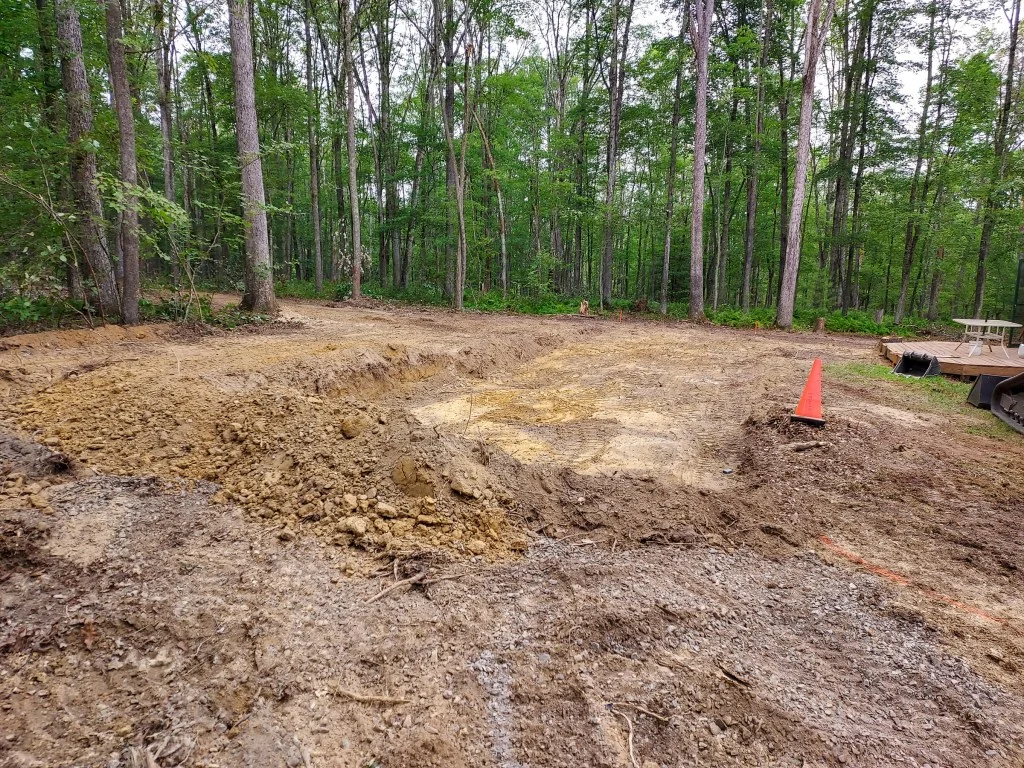
1. Cut and fill. Canton sits in the Pigeon River valley with ground rising fast on every side. A lot that needs 30 yards of cut on the uphill side and 30 yards of fill on the downhill side is cheaper than a lot that only needs fill — you're already paying to move dirt you get to reuse. A pure fill lot means importing material, and imported material is trucked, tested, and compacted, which is where budgets surprise people. Along the U.S. 19 corridor and the older mill-village streets near downtown, lots tend to be smaller and flatter, so cut-and-fill volumes are modest. Head out toward Cruso or Bethel and the same house pad can require triple the dirt movement because the grade never stops climbing.
2. Rock. Haywood County has shallow bedrock on a lot of its slopes. Soft dirt moves at a loader rate. Rock moves at a hammer rate, and a hammer is billed by the hour. This is the single line item most likely to blow a range, and why any honest bid above a certain rock threshold is written as an allowance rather than a firm number. The ridgelines above Canton often show rock within a few feet of grade, while valley-floor lots near the Pigeon River can be deep alluvial soil with almost none.
3. Water destination. You're not just moving dirt; you're deciding where rain goes for the next thirty years. A Canton lot that drains toward a neighbor or toward the wrong side of a driveway needs a swale, a drain field, or a dispersion trench. That's site work that doesn't look like grading but prices like it. Because the town sits in a valley, lots on the north side of the river frequently shed toward the river itself, which raises questions about buffers and outlets that a flatland lot never sees.
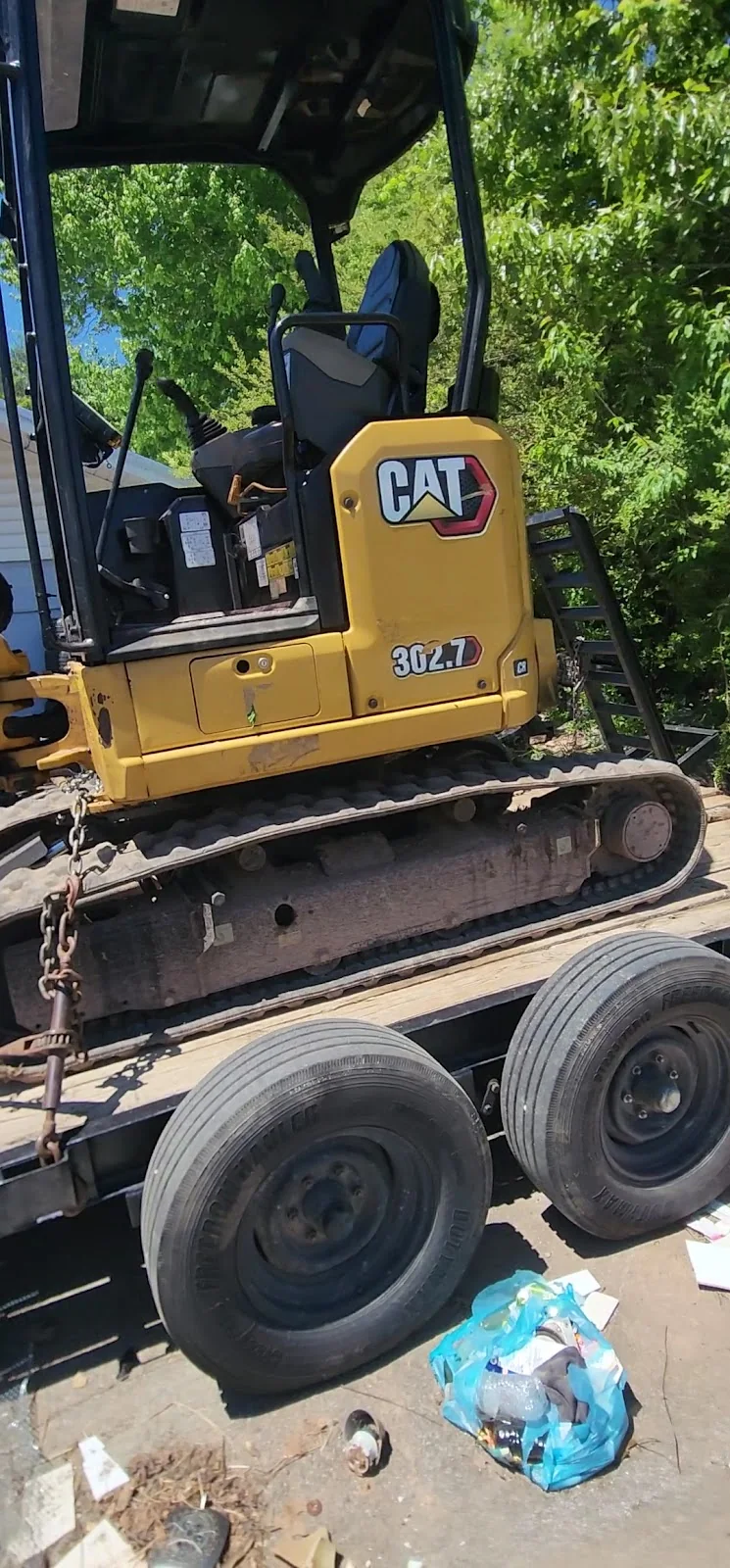
4. Access and trucks. A tight in-town lot with a fence and a power drop means small equipment and more hours. A raw parcel with room to turn a dump truck runs faster. Canton's older neighborhoods have mature trees, narrow driveways, and utility lines that force a mini-excavator where a full-size machine would do the job in half the time. That access penalty is real and it shows up in the labor line, not the materials line.
Put those four together and you can usually predict a Canton bid before it arrives. Flat lot, deep soil, easy access: low end. Slope, rock, tight access, drainage question: high end.
Rough line items for a residential lot
Ranges below are for a standard residential lot; the full Haywood County cost breakdown works the same numbers per task. Treat these as scope anchors, not quotes.
| Scope | Typical range | What moves it |
|---|---|---|
| Site prep and rough grading (small, flat lot) | $1,200–$2,200 | Lot size, fence and tree removal, haul-off |
| Standard lot with cut and fill | $2,200–$4,200 | Yards moved, distance to stockpile, compaction |
| Slope lot with swale or drainage | $3,500–$5,500 | Rock allowance, drain depth, outlet location |
| Steep or rocky lot, or heavy import fill | $5,500–$8,000+ | Hammer hours, imported material, engineering |
Most Canton homeowners land near $2,800 on a standard lot. Anything above $5,500 in this town usually means rock, imported fill, or a slope that needed both.
Two line items deserve their own note. Compaction is invisible when it's done right and expensive when it isn't — a fill pad that wasn't compacted in lifts will settle under a foundation or a driveway within a couple of seasons. Haul-off is the other one. Some Canton lots have room to spread excess dirt on site; others don't, and every yard of surplus leaves on a truck. Ask which one your bid assumes, because it changes the number by hundreds, not tens.
Stripping topsoil is a third quiet cost. Good topsoil gets set aside for later landscaping or hauled away and replaced; either way it's machine time. A bid that skips stripping and grades directly on subsoil is cheaper on paper and a problem when the lawn won't grow.
When a permit enters the picture
Grading that changes drainage toward a neighbor, disturbs a creek buffer, or crosses soil-erosion thresholds pulls in county review, and review adds time and sometimes an engineered plan. The state's licensing framework is the place to confirm who's allowed to contract the work and at what dollar threshold: the NC Licensing Board for General Contractors publishes the current rules. Erosion control on a disturbed site is not optional, and the EPA maintains the stormwater guidance most local programs are built on. If a bidder shrugs at the permit question, that's a signal, not a shortcut.
In practice, the trigger most Canton homeowners hit is disturbed acreage. Small regrades around a house rarely trip it; clearing and reshaping a whole lot often does. When a project does cross the line, an erosion control plan and inspection schedule come with it, and those carry their own cost and calendar. A grading contractor who has worked this county knows roughly where that line sits and will say so up front rather than after the machines show up.
State fire and code rules can also surface on access and driveway grade. The NC Department of Insurance, Office of State Fire Marshal maintains the code framework local officials use, and steep driveways sometimes need to meet a maximum grade for emergency vehicle access. A lot that looks buildable can run into that requirement, and grading is where it gets solved.
Storm history shapes what good grading looks like here
The federal record for this county lists 19 declared events spanning 1973-2026, and the family is overwhelmingly flood and storm. That history is why grading in Canton is less about making a lawn flat and more about giving water a managed path off the property during the worst week of the decade, not the average Tuesday. The National Weather Service tracks the rainfall patterns that drive it. A lot graded for looks and a lot graded for drainage cost the same on day one and very different amounts in year five.
The terrain makes this sharper than it sounds. Water that leaves a ridge above town picks up speed on the way down, and a lot that sits mid-slope takes whatever the lots above it shed. Grading that ignores that reality, by flattening a pad and letting the overflow run to the property line, tends to work until the first big multi-day rain and then doesn't. This is why the drainage line item on a Canton bid is not padding. It's the part of the job that determines whether the driveway is still there after a wet spring.
The flip side is opportunity. Because so many Canton lots sit on grade, there's usually somewhere to send water if the plan accounts for it: a swale along the uphill edge, a dispersion trench on a downslope, a daylighted outlet that reaches a ditch or a natural draw. None of that is exotic. It's standard practice in mountain counties, and it's the difference between a pad that stays put and one that keeps needing work.
Reading a Canton grading bid
Ask three questions. First: is the rock line an allowance or a firm number? Allowances are honest; a firm number on unknown ground is a guess dressed as a contract. Second: where does the water exit the property, and who owns the outlet? Third: is the bid scoped as bare grading, or full grading and excavation including stripping, stockpiling, and haul-off? A cheap number that excludes haul-off isn't cheap. If the job also needs trees down first, that's a separate scope with its own price — see land clearing in Canton for how that stacks.
A fourth question worth asking: what happens if the ground isn't what the bidder expected? On mountain lots, the honest answer is a written allowance with a stated rate, so both sides know what extra rock or extra fill costs before the first bucket hits dirt. Bids that promise a firm price on unknown ground usually find a way to make it firm, either by bidding high to protect themselves or by cutting scope once the work starts. Neither is a good deal for the homeowner.
Finally, ask who does the compaction testing if the pad is for a structure. On a house pad, the answer matters more than the price of the grading itself, because a failed pad is a rebuild, not a repair.