Clay, ridge rock, and buried fill: what Woodfin dirt does to a quote
Woodfin is three different ground types wearing one ZIP code. River-bottom lots near the French Broad sit on deep, soft soils that drain slowly and pump out under a machine after a wet week. Parcels climbing off Riverside Drive and toward the Beaverdam and Elk Mountain sides hit shallow bedrock fast, sometimes within a few inches of the surface. And the older mill-town lots carry decades of fill, gravel, and buried debris under a thin skin of topsoil. On a half-acre lot, that mix moves the number more than acreage ever will.
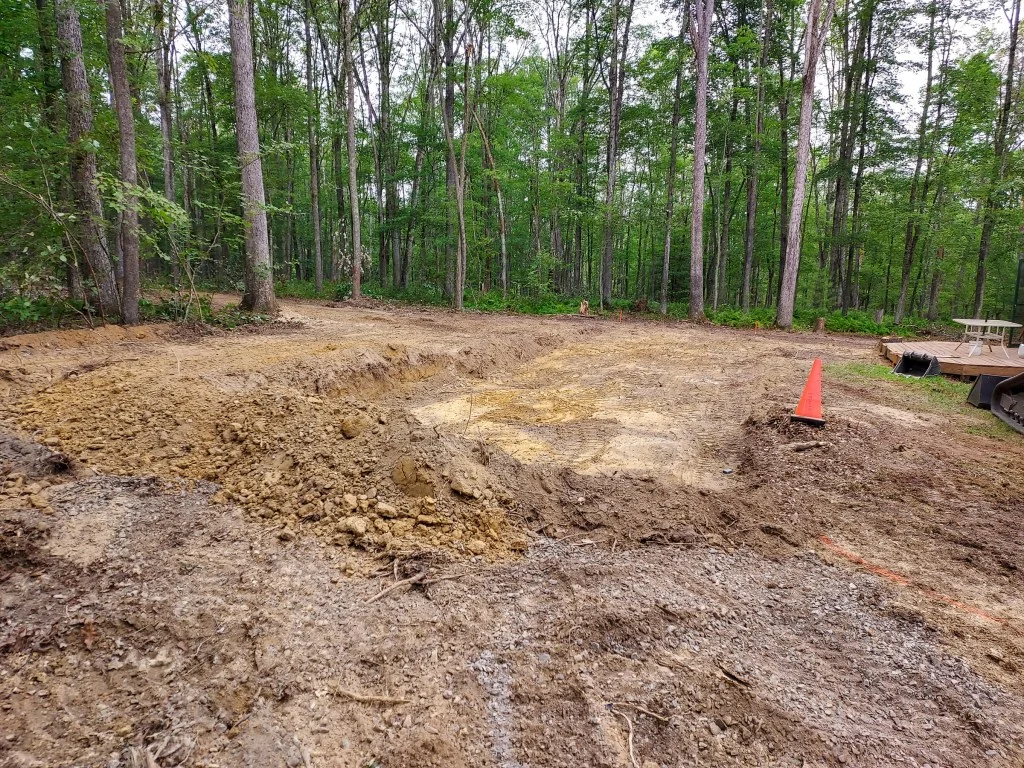
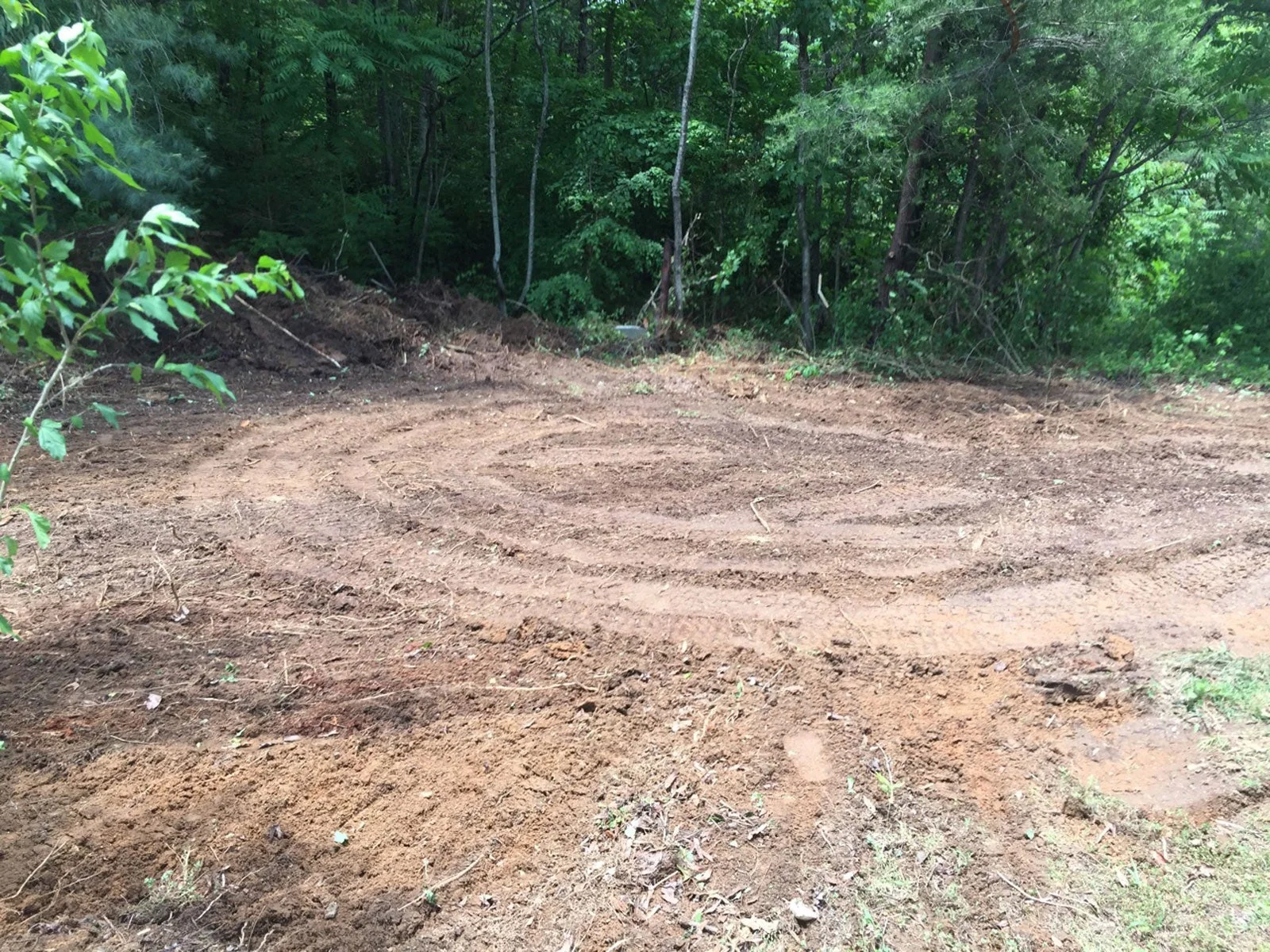
Red clay is the constant. Dry, it carries a machine and clears quickly. In a wet spring it greases tracks, forces mats and extra haul-off, or simply stops the job for a week. Rock is the second variable: ridge parcels regularly turn a plain stump-and-grade scope into ripping, drilling, or hoe-ram work. Old fill is the third and the one out-of-town bidders miss most, because mid-century fill often hides concrete, scrap, and organic pockets that will never compact. A crew that doesn't probe for it is guessing with your money.
Terrain compounds all three. Woodfin runs from near-flat bottoms along the river to slopes that fall away toward the valley, and a single parcel can hold both. That means the same acre count clears for a very different price on Riverside Drive than it does up a ridge road where the machine has to bench in and winch logs uphill. A bid that treats the town as one flat number is already wrong. Ask what slope the equipment can actually work, and where the cut and fill will balance, before you compare two quotes side by side.
What clearing costs on Woodfin parcels
These are working ranges for residential parcels in and around Woodfin, sized to the town's clay, rock, and fill. The full line-item breakdown sits in the Buncombe County grading cost table.
| Scope | Typical range | Woodfin ground notes |
|---|---|---|
| Light brush and sapling clearing (under 1/2 acre) | $750–$2,500 | Clay lots clear fast when dry; wet access adds haul fees |
| Selective clearing with stumps and grubbing (1/2–1 acre) | $1,500–$5,000 | Near-surface rock on ridge parcels may add ripping or drilling |
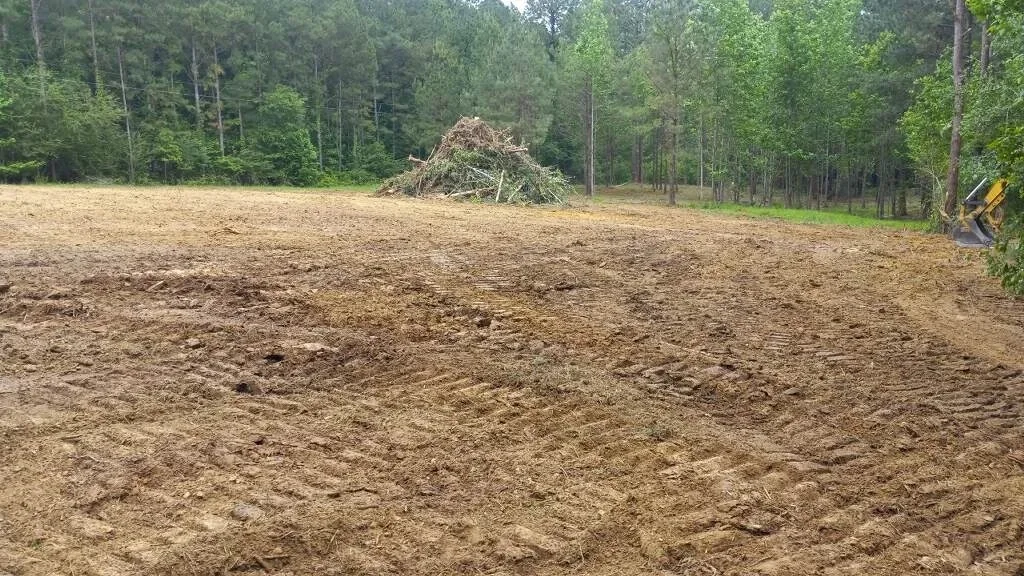
| Full clearing, stumping, rough grade (1–2 acres, slope) | $4,500–$8,000 | Steep ground needs mats, benching, or winching — a real line item |
| Steep, heavily wooded acreage | Above $10,000 | Combined slope, rock, and haul-off push these past the norm |
| Old-fill takedown and re-compaction | Quoted per tested area | Mill-era fill must be probed and tested before it can bear on |
| Debris haul-off (per load, county landfill) | $400–$900 / load | Multiplies fast on clay-heavy sites; on-site burn is often restricted |
A bid that doesn't separate clay, rock, and fill in its scope isn't comparable to one that does. Ask for the line items in writing, including the diameter cutoff for what counts as a tree versus brush, whether stumps are ground below grade or pulled whole, and where the spoil and slash actually go. Those three details alone can swing a Woodfin job by thousands, because hauling off clay-heavy spoil and stump balls is the silent cost that never shows up in a lowball number until the trucks start running.
One more local reality: access. Many older Woodfin lots were platted tight, with narrow gravel drives, low overhead lines, and neighbors close on both sides. A machine that fits a wide new subdivision lot may not fit your drive, which means smaller equipment, more trips, and a higher per-acre number. If your access is tight, say so before the walk-through, and a honest crew will price for it instead of discovering it on day one.
Erosion control and why this town's rules bite harder
Woodfin drains to the French Broad, and that single fact shapes how clearing is regulated here more than most crews outside Buncombe County expect. Silt fence, stabilized entry points, and sediment controls aren't optional on any job that disturbs more than a small patch, because county and state both watch what leaves a site. The NC Department of Insurance, Office of State Fire Marshal publishes the code-enforcement side of site preparation, and the federal EPA governs the stormwater and wetland edges that matter anywhere this close to the river.
Sequencing is where most jobs go wrong. Clear only the acreage you'll build or grade this season, hold a vegetative buffer at the downhill edge, and check silt fence after every heavy rain. The storm record explains the caution: this county has seen 19 federal disaster declarations across 1973-2026, overwhelmingly flood and storm driven, and each one moved soil off cleared lots that weren't held back. Clearing is step one of site work; done wrong, grading, drainage, driveway, and foundation all pay for it.
Practical controls for a Woodfin parcel look like this. Put a stabilized rock pad at the driveway entrance so clay doesn't track onto the road. Run silt fence along the downhill perimeter, not just where you think water goes, and give it a trench and compacted backfill instead of draping it. Keep a stockpile of topsoil behind the fence, not at the edge where rain reaches it. If your lot slopes toward a neighbor or a creek, add a check dam or a settling area before the fence, because a single fence line won't hold a season of red clay runoff. Inspect after every storm and repair before the next one; the fine for a failed control usually costs more than the fence did.
Checking out a clearing crew before you sign
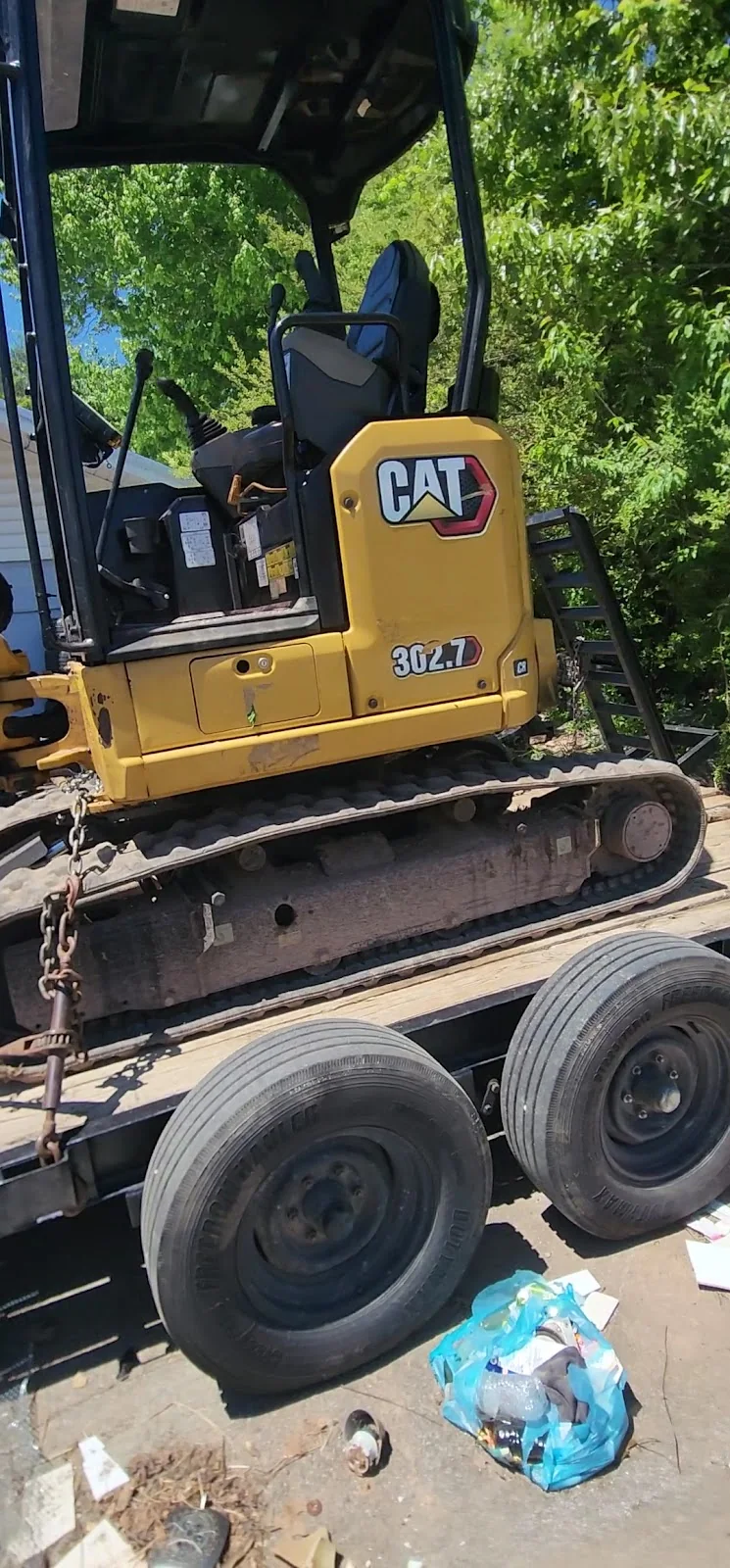
Three local questions separate real bids from placeholders. Ask what equipment they'll run on your slope — Woodfin's ridge parcels sort the crews with winches and low-ground-pressure machines from the ones who bid low and rent later. Ask how they handle fill: do they probe and test it, or grade over it and hope nobody notices? And check licensing for the grading and excavation portion, since the North Carolina Licensing Board for General Contractors sets the thresholds where a general contractor license is required, and drainage or utility tie-ins can pull in trade boards too. Start with the land clearing overview, then get two or three site-walked quotes for your parcel. If a bidder won't walk the ground, treat the number as fiction. Referenced local crews with Woodfin-specific experience are listed in our Woodfin grading contractor directory.
A site walk should take twenty minutes or more. A real crew walks the whole parcel, pokes around the old fill areas, checks where the water sheet-flows, and asks about your build plans so the clearing matches what comes next. They look at the trees, not just the acreage, because a few big hardwoods near a future foundation are a different job than a stand of young pine. If someone quotes from the truck or over the phone without seeing the land, the number is a guess, and on Woodfin's mix of clay, rock, and fill, a guess is the most expensive part of the project. Compare line by line: how stumps are handled, where debris goes, how erosion control is installed, and what happens if rock turns up under the topsoil.
Ask for a written scope and a schedule, and confirm who pulls the erosion-control permit and who maintains the controls through the job. A good crew will put all of it in the proposal, because they'd rather set expectations up front than explain a surprise later. Get the disposal destination in writing too, since where slash and spoil go affects both cost and how fast the job finishes. On a tight Woodfin lot, the crew that plans the haul and the sequencing is usually the one that stays on budget.
What belongs in a complete Woodfin clearing scope
A finished scope names tree and brush removal with a diameter cutoff, whether stumps are ground or pulled, grubbing depth, topsoil stockpile location, rough grade tolerance, the erosion-control plan, haul-off destinations, and the soil-testing step wherever fill stays in place. If your parcel sits on a slope above a neighbor or a creek, it should also name the downhill buffer and who maintains it. Anything shorter is a wish list. Woodfin's clay-and-rock mix punishes scope gaps harder than flatland sites, because a missing line item usually means importing material or redoing drainage, and both cost more than doing it once.
Read the scope against your own parcel. If it says "clear the lot" without a diameter cutoff, you'll argue later about what counts as a tree. If it grades without a tolerance, you won't know whether the pad is level enough for a foundation. If it buries stumps on site, make sure that's allowed and that they're below the future build area, because decay under a slab settles. And if old mill fill stays, the scope should say who probes it and who tests it, not leave it to chance. A complete scope protects both sides and makes every bid comparable on the same terms.