Read the water before you move any dirt in Hot Springs
Hot Springs sits at the confluence of the French Broad and Spring Creek, in a town built tight against the river and up the steep hollows that feed it. Yards here are small, tilted, and rarely flat for more than a few feet. That means the water has already written an opinion about your land — and you can read it for free before a single bucket moves.
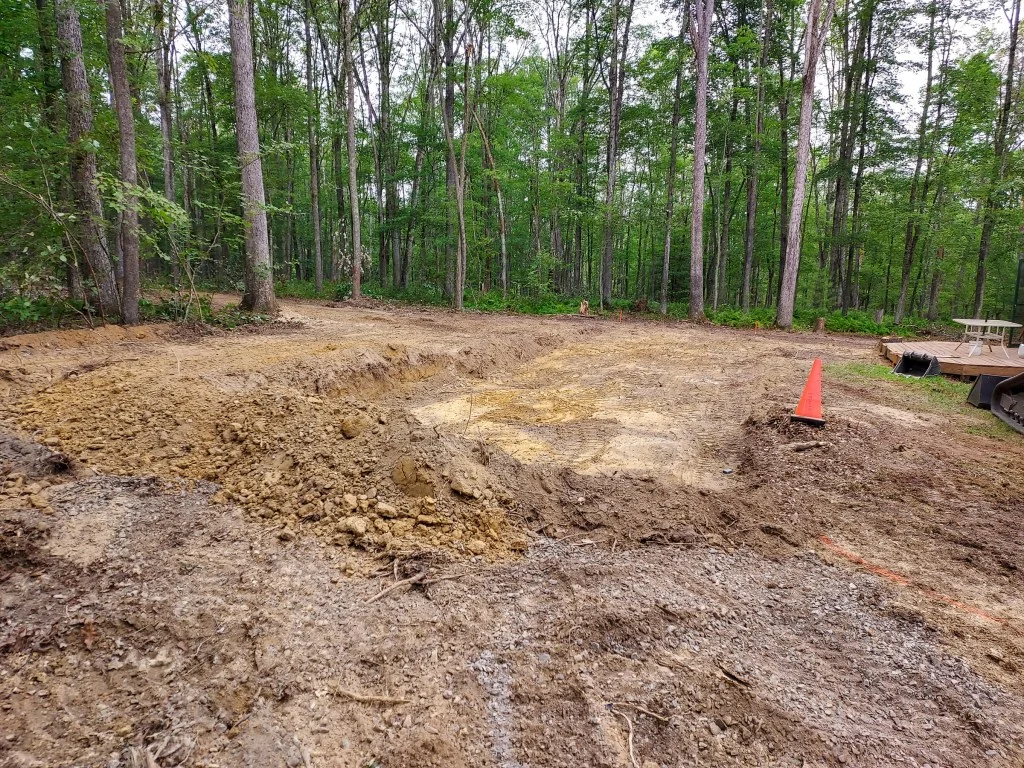
Walk the property after a real rain. Where the driveway gravel has washed to a low corner is where the grade is failing. A pad that stays damp days after the storm is a drainage problem, not a leveling problem. If your existing driveway was cut years ago and now runs water toward the house, regrading the yard above it won't fix anything; it just relocates the water. The angle matters more than the slope.
Spring Creek hollows behave differently from the river flats. A lot that backs up toward the national forest edge is usually shedding groundwater as well as surface runoff, and the ground stays soft near the toe of the slope well into May. Down along the French Broad, the problem inverts: the water table sits close, the soil is often sandy and river-deposited, and a grade that looks fine in August can pond for a week after a February rain. Two yards a hundred yards apart can need entirely different fixes, and that is not a sales pitch — it is the terrain.
This is the read that separates a yard leveling job that lasts from one that gets redone. A crew quoting off a phone photo cannot do it, and a bid without it is a guess, not a scope. When someone walks your lot, watch where they look. If they spend their first ten minutes at the high corner and the driveway culvert instead of the house foundation, they are reading the water.
What regrading actually costs, and why the range is wide
Prices here follow scope, not acreage. A small in-town yard with an existing drainage pattern that just needs the grade re-tied to it lands near the bottom of the band. A steep hollow lot that needs cut, fill, compacted subgrade, and re-drainage pushes toward the top. The table below shows typical scope-versus-price rows for Madison County work.
| Scope of work | Typical price range |
|---|---|
| Small yard re-slope, existing drainage kept | $1,800–$3,000 |
| Standard lot regrade, cut and fill, one drainage fix | $2,500–$4,500 |
| Slope-lot regrade with swale and re-drainage | $4,000–$6,000 |
| Pad rebuild plus driveway grade re-tie | $5,500–$9,500 |
The working cost detail lives in the Madison County grading cost breakdown. The short version: water design is the biggest price mover, and the trucks, dirt, and compaction add up fast when a lot only has one access point. A bid that does not mention where the water leaves is incomplete, not cheap.
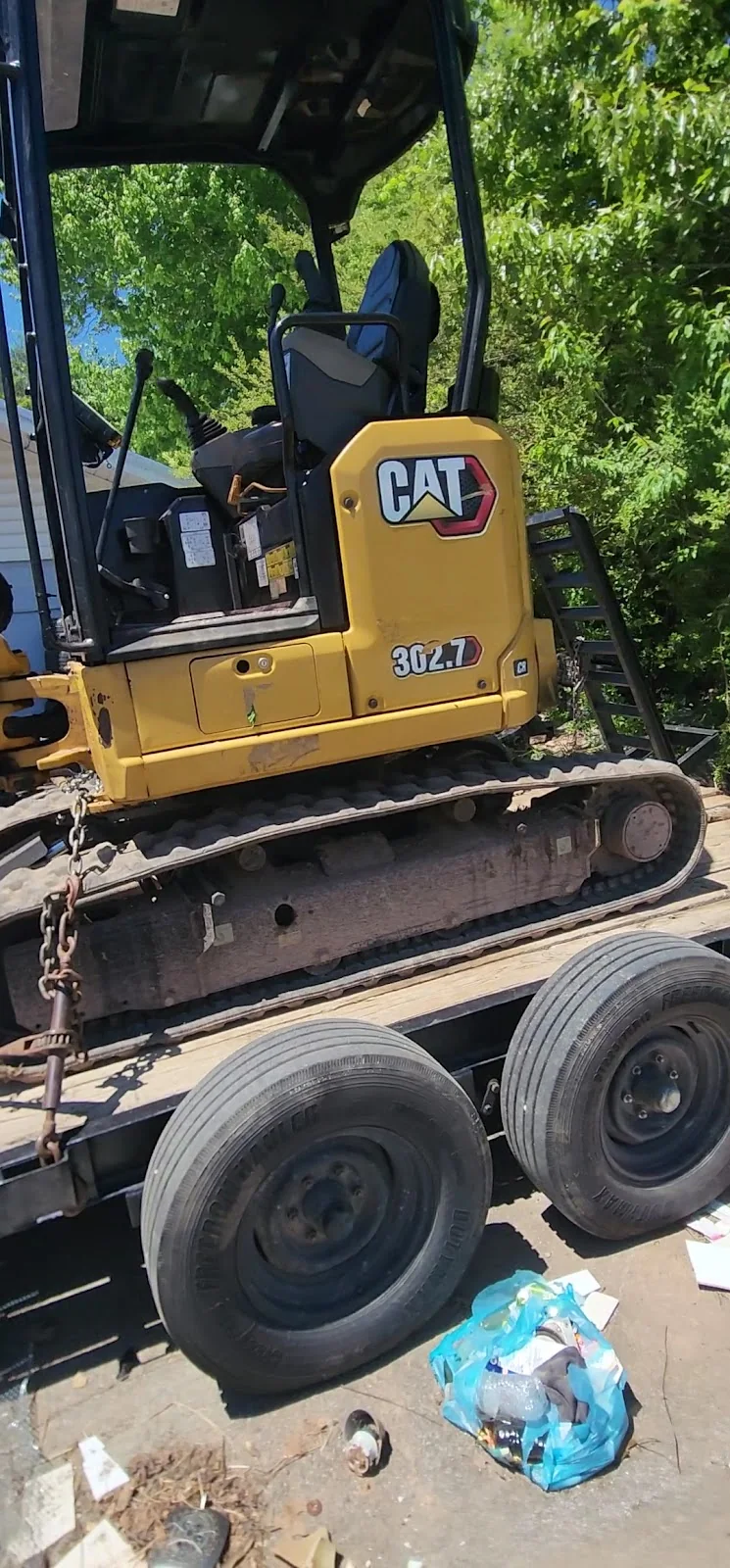
Access is the line item most homeowners underestimate. In the tight streets behind the Spa and along Bridge Street, a mini excavator and a single-axle dump can reach most backyards, but a full-size machine often cannot turn around, and the operator will burn hours moving spoils by hand or by conveyor. Up the hollows off Highway 25/70, the driveway itself is sometimes the only way in, and if that drive is soft or under two vehicles wide, every load of fill gets expensive. Ask any bidder how they plan to get equipment in and spoils out — the honest ones will tell you it changes the number.
Compaction matters more than people expect on these lots. Fill dumped and raked flat will settle, and a settled yard re-creates the same low corner that started the problem. Proper lifts, machine compaction, and a final grade that sheds water are what you are actually paying for. If a quote is dramatically below the others, the missing line is usually compaction or drainage, and you will pay for that gap a season or two later.
Driveways, pads, and the redo trap
Most Hot Springs regrade calls start with something already built: a gravel drive that washes out every spring, a concrete pad poured level then undermined, a retaining wall that coughed after the last wet season. These are warning signs, not repair jobs. If the driveway is crowned wrong, or the pad was set on uncompacted fill, regrading the yard around them will not stop the movement.
The order of operations matters: stabilize the grade, direct the water, then repair or replace the flatwork. Doing it in the opposite sequence — new pad first, grade later — is the most common way homeowners in this county spend the same money twice. A proper first visit should identify which of the three failures you actually own: water direction, subgrade compaction, or the slope itself. The yard leveling guide walks through what the first assessment should cover.
A driveway is a drainage structure whether or not anyone designed it that way. On these slopes it is the largest hard surface on the property, and every gallon that lands on it is being delivered somewhere. If the drive is crowned and ditched correctly, that water runs to a turnout and away from the house. If it is a flat ribbon of gravel, or crowned the wrong way, the drive is funneling water to the lowest point, which is often the garage slab or the front steps. Rebuilding that crown and adding a proper turnout is frequently cheaper than the yard work people call about, and it solves the actual problem.
Concrete pads and patios on Madison County slopes fail in a signature way: they crack in a line that points downhill, because the fill beneath one edge settled while the other edge held. Regrading around a pad that is already broken just hides the failure. The durable sequence is to cut the slope back to stable material, compact the new subgrade in lifts, tie the pad's grade to a drainage plan, and only then pour. That is more work up front, but it is the difference between a patio you keep and a patio you replace.
What the state and federal rules actually require
Small grading work on your own residential lot generally does not trigger state general contractor licensing, but any project that crosses the threshold for a "general contractor" does — check the NC Licensing Board for General Contractors before signing with anyone. Grading that changes how stormwater leaves your property, or that touches within a stream buffer or floodplain, falls under county and state review, and the Hot Springs area includes real floodplain along the French Broad.
Storm-water history is not abstract here. 21 federal disaster declarations reach Madison County across 1978-2026, and the dominant family is flooding and severe storms. That record is why a proper regrade plan in this county has to answer the question every inspector asks: where does the water go when it comes hard, and who is downhill of you. The National Weather Service tracks the storm patterns that drive that question, and the honest local answer is that the water does not disappear — it just leaves someone's yard, and you want it to leave yours correctly.
Two more rule sets are worth knowing because they come up on these lots. If a project disturbs enough ground to require erosion control, the plan has to be in place before the first bucket, and the EPA maintains the stormwater guidance that local programs are built on. Separately, if the water you move feeds a stream or wetland, the buffer rules that protect those features can shrink what you are allowed to do near the property line — again, worth a county call before designing, not after.
None of this is meant to scare anyone off a regrade. It is meant to set expectations: on a lot near the river or a creek, the honest answer to "can I just push the dirt around" is usually no, and the projects that go smoothly are the ones that walked through the rules first.
Picking a crew in a small mountain county
There are not a lot of grading and excavation outfits working Hot Springs, and the good ones are busy because they know the ground. Three checks worth making: ask whether they have worked a lot like yours (steep, tight access, near the river), ask who designs the drainage (you want a named answer, not "we'll handle it"), and ask for the references on a job two winters old — a grade that survived two wet seasons is a grade that was built right.
The Hot Springs grading contractors page covers who serves the town and what to expect on the first visit. When you're ready, the form on this page routes to local crews and flags timeline.