Where the money actually goes on a Junaluska lot
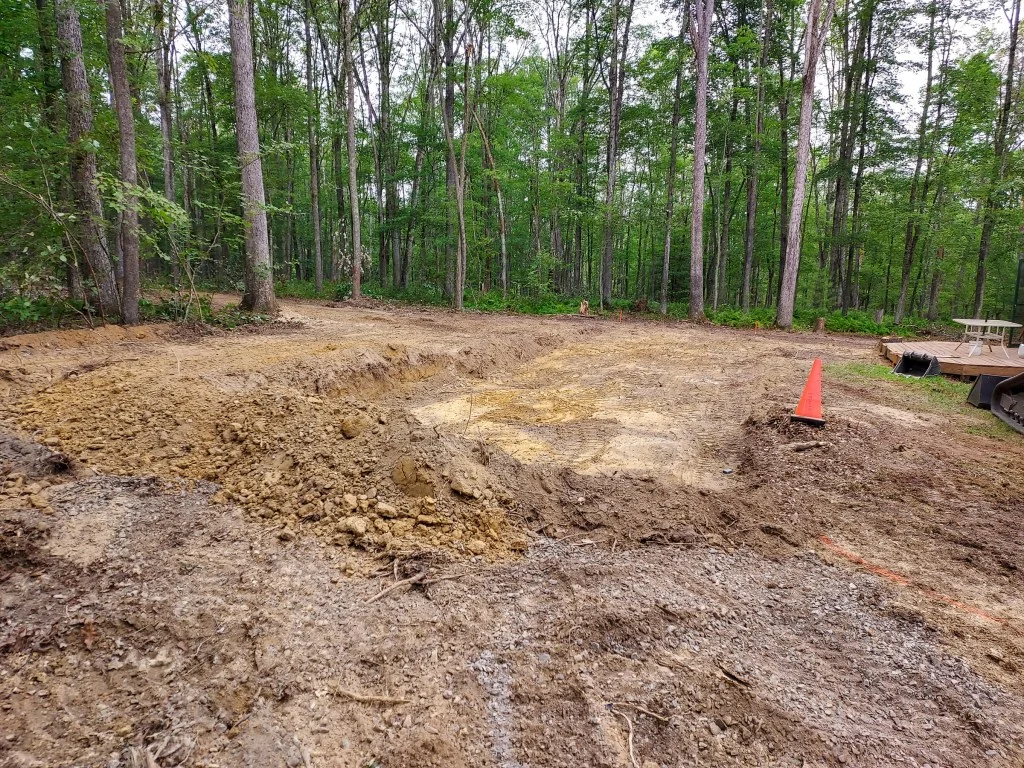
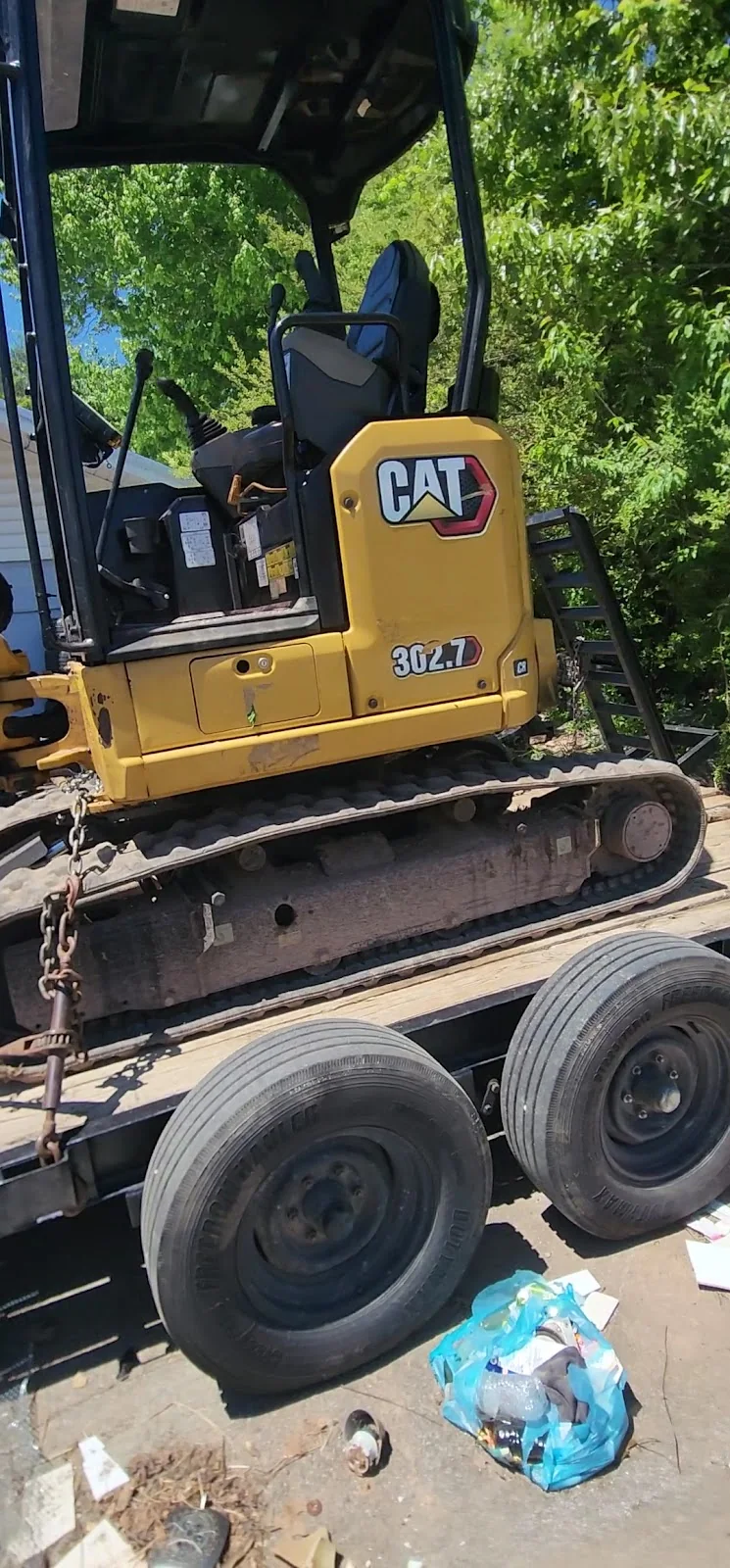
A grading bid on a Lake Junaluska lot rarely fails on the base rate. It fails on the four line items this terrain forces into every scope: haul-off, slope control, rock, and access. The shoreline side of town is gentle until it is not — driveways off Lakeshore Drive drop toward the water and have to shed runoff somewhere legal. Lots rising toward the US 19 ridge sit at grades where a cut-and-fill pad needs a retaining structure or a swale before anything gets built on it. And anywhere in between, the machine may not fit: narrow lakefront frontage means small equipment, more trips, and a number that reflects it.
That is why two quotes for the "same" half-acre in this town can differ by thousands and both be honest. One engineer scoped a swale that pumps uphill; the other is relying on gravity and gutters. Until the scope names where the water goes, the price is not comparable.
Walk the town and the pattern is legible. Streets stepping down to the water — Lakeshore, Terrace, the lanes feeding off them — carry lots where the housepad has to sit above the road, so fill gets hauled in rather than pushed around. Lots behind the conference center sit on benches that look flat from the road but pitch hard at the rear property line, which is usually where the neighbor's runoff already lands. And the north side toward the ridge above US 19 is a different job again: cut into the slope, hold it with something, and get the water off the cut face before the next front moves through.
Haul-off is the quiet mover in all of this. In-town lots rarely have a corner big enough to waste spoil, so dirt leaves by the truckload and the price follows the round trip. Ask where it goes. A bid that names a site is a bid you can compare; "disposal included" is not.
What grading runs in Haywood County
The working table for this county is the Haywood County grading cost breakdown. The short version sits below; treat every row as a range, because rock and haul distance are quoted per site, not per town.
| Scope on a typical Junaluska lot | Typical price range |
|---|---|
| Lot grading and rough pad, good access, minimal slope | $2,600–$4,800 |
| Sloped lot with swale and downspout/daylight drainage | $4,200–$6,500 |
| Driveway cut and gravel base, short run | $3,000–$6,000 |
| Cut-and-fill pad with retaining wall or engineered fill | $5,500–$8,000 and up |
| Small machine / limited-access lakefront work | +15%–35% on the base scope |
| Rock excavation, when the mountain is mostly granite | Quoted per site; hourly machine rate applies |
Two line items get skimmed by cheap bids: haul-off (where did the spoil actually go?) and permanent stabilization. Both reappear later as a cost, usually with interest.
Read the table against your own lot before you call anyone. A flat building envelope with a legal place to push spoils sits at the bottom row. A lot where the cut exposes ledge, the fill has to be compacted in lifts, and the driveway needs a culvert under it climbs to the top of the range — and the difference between those two situations is visible from the street in about five minutes. That is the number to have in mind when the bids come back, so a fair price does not look like an outlier and a low one does not look like a bargain.
Rain is the schedule, and the record here proves it
Haywood County's federal disaster history is a grading argument all by itself: 19 declared events touch this county across 1973-2026, and they are overwhelmingly storm, flood, and landslide family. That matters because grading in the mountains is a sediment-control job as much as an earthmoving job. The EPA treats construction stormwater as a regulated discharge once a site crosses its size threshold, and the International Code Council codes that North Carolina adopts fold grading and drainage into the same inspection as the foundation. Read the NWS forecast for the weather.gov Waynesville area before you let a contractor leave a bare slope over a weekend.
Practical version: any scope that does not name silt fence, a stabilized construction entrance, and where the downslope water exits is not finished being written.
The local rhythm reinforces this. Summer afternoon storms build over the Balsams and drop hard on a short window; the ground here is clay-heavy under a thin organic layer, so it sheds rather than soaks once it is saturated. A slope that was stable in May can move in a wet September. Grading plans written for this county tend to assume a gravel construction entrance that survives a downpour, silt fence keyed into the ground rather than laid on top of it, and a settling area sized for the worst week of the year rather than the average one. If a contractor's plan stops at "we'll keep it clean," ask what that means when the rain comes sideways.
Clearing before grading, and why order matters
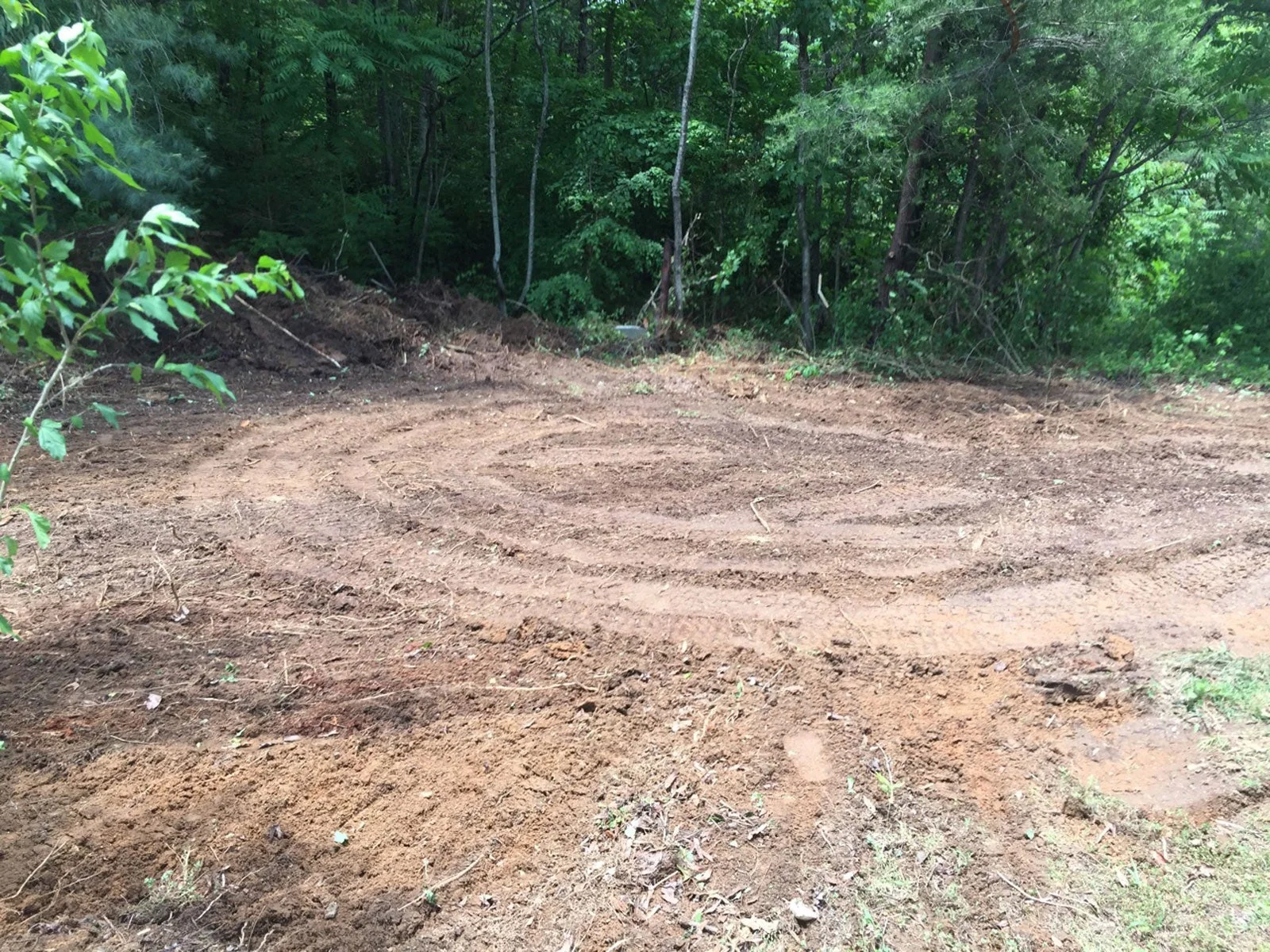
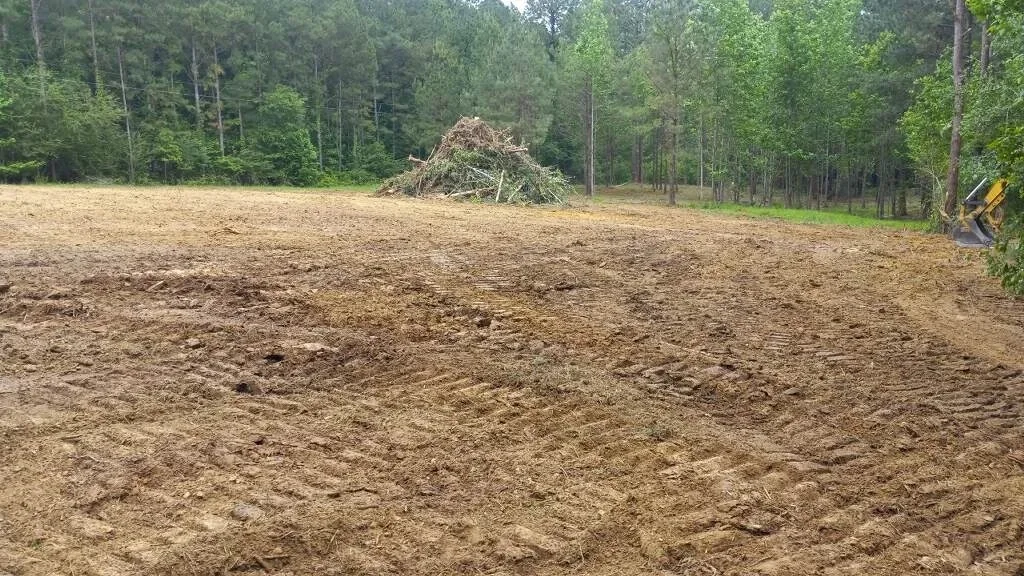
On wooded Junaluska lots, the grading quote is only half the job. Stumps left in a building pad rot and settle; chips buried on site look tidy for a season and then sink where you poured. If trees are coming out, that scope belongs on the table first — the Lake Junaluska land clearing page covers stump and debris handling — and the grading number should assume a cleared pad, not a hopeful one. Bid the two together even when you hire them separately, so nobody can point at the other crew when the pad drops an inch.
Mature hardwoods are common on the older in-town lots, and their root plates extend well past the drip line, so grubbing is more than pushing tops. It is stump removal to depth, root raking, and hauling the organic material off the pad footprint rather than burying it at the edge. The lots that fail a few years on are usually the ones where debris was tucked under the fill and the fill then settled unevenly around it.
How to compare bids in this market
Three checks, all of them about the same thing: written scope. First, does the bid state cubic yards moved, and where the spoil is going? Second, does it name the drainage it is installing — swale, French drain, daylighted downspouts — or just the word "drainage"? Third, is the contractor licensed for the size of the job? North Carolina draws that line through the NC Licensing Board for General Contractors, and the threshold applies to grading and excavation work the same as it does to building. The full service picture lives at grading and excavation; start there for what a complete scope should include, then compare numbers against it.
Two more habits separate a clean job from a stressful one on these lots. Get the stabilization plan in writing, including the seed-and-mulch or matting spec and when it goes down, so the slope is not bare through the wet season. And confirm in writing how rock is billed — a per-hour machine rate with a defined trigger, not a vague "extra if we hit it." Between the shoreline lots where the machine has to be small and the ridge lots where the cut is deep, the honest difference between bids is almost always scope, not price. Compare like for like and the right number usually shows itself.