Why Waynesville driveways are really a soils problem
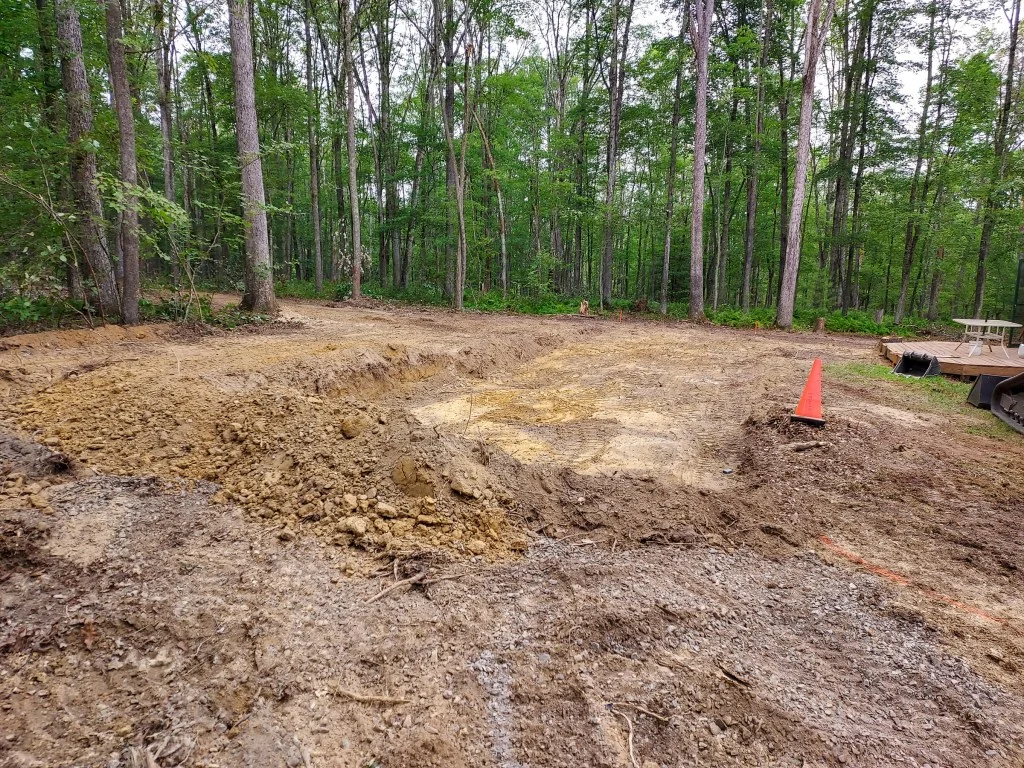
Around Waynesville, almost every driveway complaint traces back to ground that was never asked to carry gravel. On the valley lots near downtown and along the Pigeon River bottoms, you are usually working over red clay — dense, slick when wet, and prone to pumping soft under tire load if the subgrade is left uncompacted. Up the coves and ridges, it flips: rock ledges sit a few inches down, and cutting through them costs different money than hauling in fill. Between those two extremes are the older cut-and-fill pads on the slopes off Russ Avenue and the rural roads toward Maggie Valley, where a former house pad or logging bench was never built to drain.
That variety matters because gravel does not float. It bridges. Clay needs a separation and drainage layer or the stone migrates down into the mud within a season or two. Rock needs the opposite treatment — a thinner, well-graded section that sheds water without blading off the high spots. Fill needs proof that it was compacted, because a soft bench will rut no matter how much crushed stone you drop on top.
You can usually read the lot before a machine ever arrives. Where the ground stays dark and greasy a day after rain, you are on clay and the base is where the money goes. Where a spade rings off six inches down, you are on rock and the machine time is where the money goes. Where the ground feels hollow or mushy near an old building corner, you are likely over fill that was never compacted. Those three reads are the difference between a quote that holds and one that grows after the first afternoon of digging.
What the job actually involves, layer by layer
A proper install is a stacked section: cleared and stripped subgrade, a compacted base, and a crowned surface course that sheds water off the edges. Skipping the base is the single most common reason a Waynesville driveway fails early — the truck delivers stone, the stone disappears into clay, and the homeowner assumes gravel just does not work here.
Drainage is not optional on these grades. Water running off an uphill neighbor, a spring seeping at the toe of a slope, or a gutter discharging onto the drive will move more material than any vehicle. That is why the grading plan comes before the gravel plan, and why the county's storm and drainage expectations (and the state code behind them) treat how water leaves your property as a design question, not an afterthought.
Culverts, turnout ditches, and a slight crown on the surface are the low-cost features that decide whether your drive still has stone on it in three years. If your lot slopes hard, those features carry more weight in the quote than the stone itself.
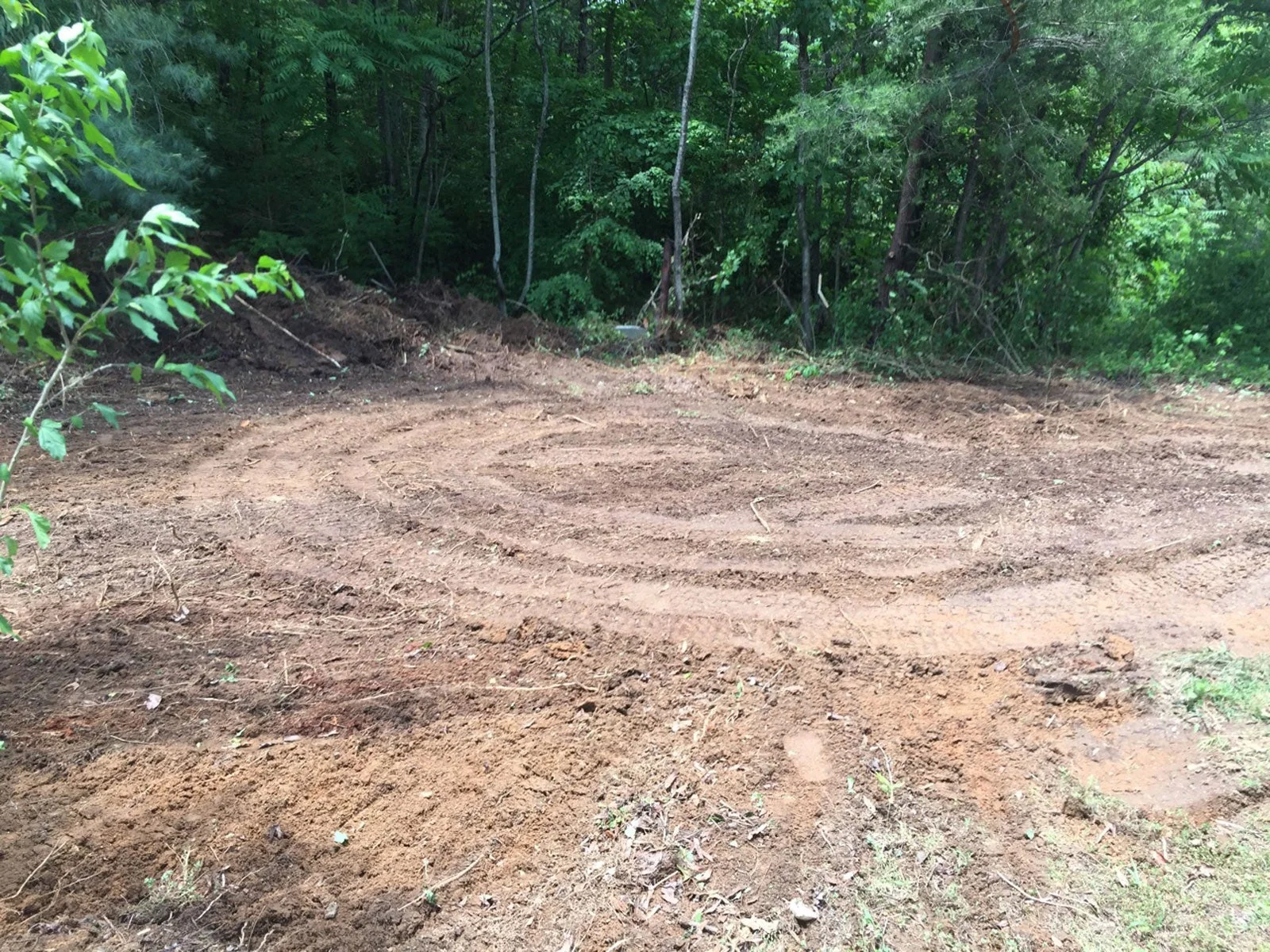
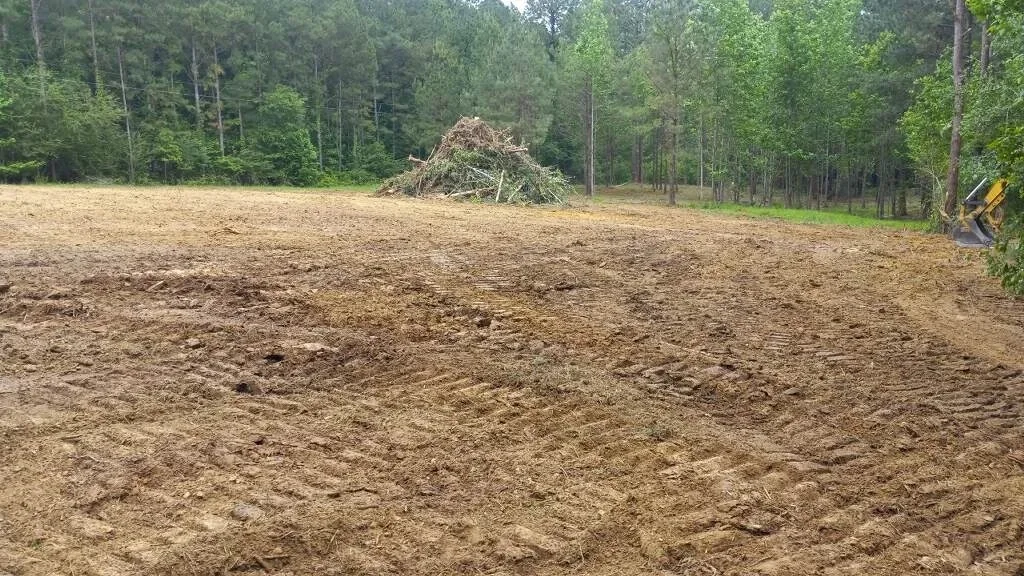
The sequence matters as much as the materials. Clearing and stripping the organics comes first, then rough grading to a shape that drains, then the compacted base, and only then the surface stone. When a crew reverses that order — spreading stone on ground that was never shaped — you can often see it months later as a drive that holds up in the middle and ruts at the edges, because the edges are where the water actually leaves.
Typical Waynesville cost picture
Pricing here tracks scope, not square footage alone. A short, flat, straight run on stable ground is a straightforward number. A long, steep, curved mountain drive with rock or an old soft fill pad underneath is a different project with a different machine list. The table below shows how the scope tiers usually land; the Haywood County grading cost table breaks out the prep line items separately.
| Scope | Typical installed range | What drives it |
|---|---|---|
| Short drive, firm ground, light grading | $1,800–$3,200 | Minimal cut, limited base stone, easy machine access |
| Standard residential drive with base prep | $3,200–$5,500 | Stripping, compacted base, crown and edge control |
| Long or steep mountain drive | $8,000–$12,000 | Grade work, rock or fill handling, culverts, more stone |
Two honest cautions. First, if a bid lands far below the table without an explanation of what is being skipped, the missing piece is usually base prep. Second, rock encountered during the cut is a real line item, not a surprise to spring on you later — ask how it is handled in the proposal. The driveway grading and gravel guide walks through the layers in more detail before you sign anything.
Access is the quiet cost driver on Waynesville-area lots. A drive wide enough for a tandem-axle dump truck to reach the work area keeps hauling efficient, while a narrow, gate-lined, or overhung run means smaller loads and more trips, and that shows up in the number even when the scope looks identical on paper. Clearing a turn-around or a passing spot near the top is often cheaper than paying for extra trips caused by poor access.
Water history belongs in the conversation
Haywood County has seen 19 federally declared disaster events across 1973-2026, and the region's storm record is dominated by heavy rain and flooding. That history is not trivia — it is the reason driveway drainage gets designed to a storm, not to an average day. A driveway that handles a normal rain and washes out in a two-inch-an-hour event has not been built, it has been staged. The National Weather Service tracks the patterns that drive this, and the takeaway for a Waynesville driveway is simple: plan for the worst water your slope can deliver.
All of it is on file to be looked up rather than guessed at. Search the disaster record for Haywood County and compare it to the full span the county has been on record for. A driveway built here is not competing with a mild season — it is competing with the record, and that is the standard the drainage should be held to.
Hiring a crew that knows this terrain
Ask three questions before you hire. Does the crew cut and compact a proper base, or just spread stone? How do they handle rock or soft fill encountered mid-job, and is that priced or hidden? And can they show drainage work — culverts, ditches, crowns — on similar grades? The NC Licensing Board for General Contractors sets the threshold for when a driveway or grading job needs a licensed general contractor, and any crew working above that line should be able to say so plainly. Larger earthwork can also brush against stormwater and environmental rules, which the EPA covers at the federal level.
When you are ready to compare bids, the Waynesville grading contractors page shows what a credible estimate includes — and what a low one leaves out.
One more filter that costs nothing: ask whether they have worked on a steep, curved mountain drive before, not just a flat gravel lot. The two jobs look alike on a bid sheet and nothing alike on the ground. A crew that has graded a few of these hills will tell you where the water is going before you ask, and that answer is usually the one you can trust.