Flat Rock water starts uphill of wherever you are standing
Stand anywhere in Flat Rock and the water story begins above you. The village sits on the Blue Ridge escarpment in Henderson County, where lots tilt enough that a heavy rain barely slows on the way down. Springs show up after wet winters, and the heavy clay subsoil under most of these yards sheds far less water than a homeowner expects when they dig a test hole and watch the bottom hold a puddle overnight. On the older farm parcels along Greenville Highway, decades of terracing and old field ditches still steer runoff in directions no current plat or survey shows. On newer lots cut into the slope, the builder's original grade often pushes water toward the house because that was the cheapest place to shed it during construction.
That is why yard leveling here is not cosmetic. The grade has to move surface water away from the foundation, off the driveway apron, and toward a lawful discharge point — a swale, a vegetated slope, or a drainage easement — without dumping the problem on the neighbor below. When a yard is low in the middle and high at the edges, that bowl collects every storm and turns the soil to soup, which is where settlement cracks, soggy lawns, and mosquito-flooded backyards begin. The National Weather Service tracks how routinely this corner of the state gets soaked, and the ground here shows the results every spring.
The escarpment position matters more than most newcomers realize. Flat Rock sits in the transition between the higher Blue Ridge plateau to the north and west and the warmer, wetter Piedmont to the south and east. That overlap means the village often catches moisture both ways — the upslope storms that break against the higher elevations and the low, slow systems that push in from the south and sit over Henderson County for days. A yard graded for a one-inch rain event cannot handle the three-inch version that actually shows up, and the low spot in the middle of the lawn is where the difference collects.
Reading the lot type before anyone quotes the job
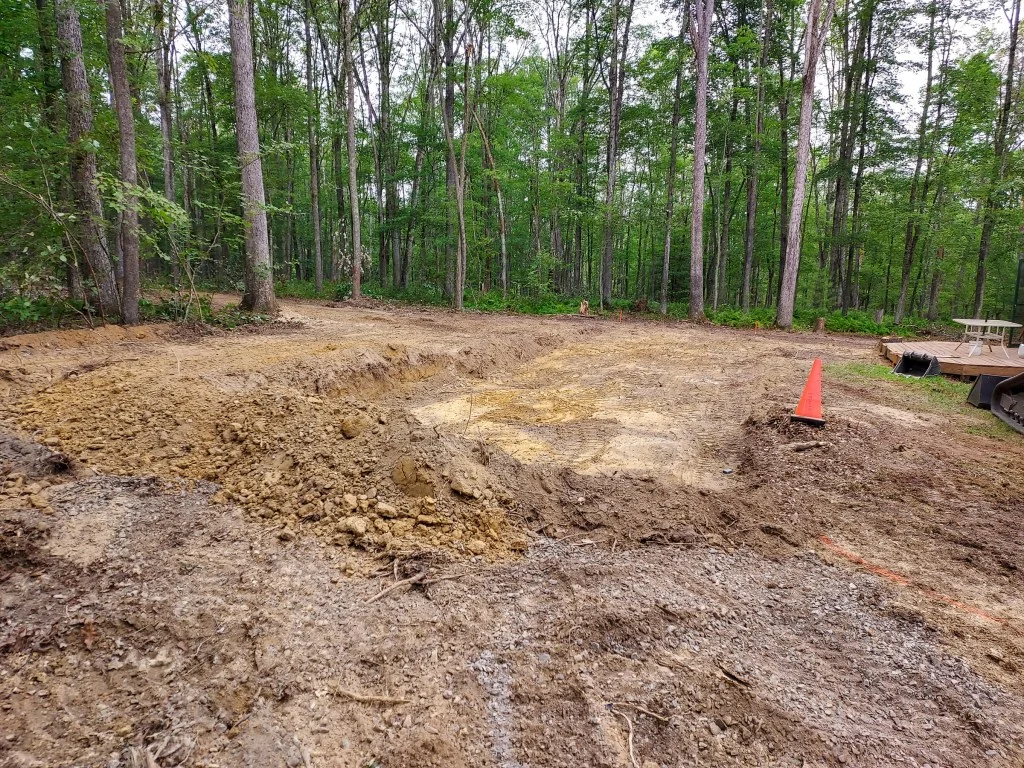
Flat Rock yards fall into a few honest categories, and each one prices differently. Slope lots off the escarpment need cut-and-fill balancing, often with a retaining element or a reinforced toe to hold the new shape. Old terrace-and-pasture parcels need the historic grade re-established so water stops ponding in the furrows that were cut for row crops, not for drainage. Cut-and-fill new-construction lots usually just need the builder's grade corrected and compacted, because the fill was placed loose and has been settling since the first winter. Flat in-town yards around the historic district and the older streets need gentle crowning and drainage away from mature root systems that hate being buried under fresh soil.
Before anyone brings equipment, the questions are: where does water enter the lot, where does it leave, and what is the legal outlet? A yard can be beautifully level and still drown a foundation if the outlet is wrong or if the grade sheds against the foundation wall instead of away from it. That is why a proper scope starts with drainage, not topsoil. Our yard leveling overview walks through what a competent first visit actually includes — a walk of the lot, a look at where water has been sitting, and an honest conversation about the outlet before a number gets quoted.
It also helps to know what kind of soil you are working with under the grass. Flat Rock clay is heavy and sticky when wet, and it does not perk the way Piedmont or coastal soils do. That single fact shapes everything downstream: how deep the cuts need to be, how much fill has to come in, and whether the drainage plan can rely on the ground itself or needs a pipe and a defined outlet. A crew that skips this step is guessing, and on this terrain guessing gets expensive.
What Flat Rock yard leveling actually costs
Local pricing tracks Henderson County rates — the working line items are in the Henderson County grading cost breakdown. The table below shows the shape of a real bid. Slope, access, and where the water outlet has to go are what push a job toward the top of its band, not the square footage of the lawn.
| Scope | Typical range |
|---|---|
| Small yard touch-up, spot low spots, reseed grade | $1,800–$2,800 |
| Full yard regrade with swale and downspout extensions | $2,500–$4,500 |
| Slope-lot cut-and-fill with drainage outlet work | $4,500–$7,500 |
| Complex slope + retaining + engineered drainage | $7,500–$9,500 |
Treat any bid that omits the drainage outlet line as incomplete. A low number that skips where the water goes is not a deal; it is a future repair. On a slope lot, the difference between a $2,800 touch-up and a $6,000 regrade is usually whether the plan handles the water coming off the hill above you or only the water that lands on your own lawn. That distinction is worth asking about directly.
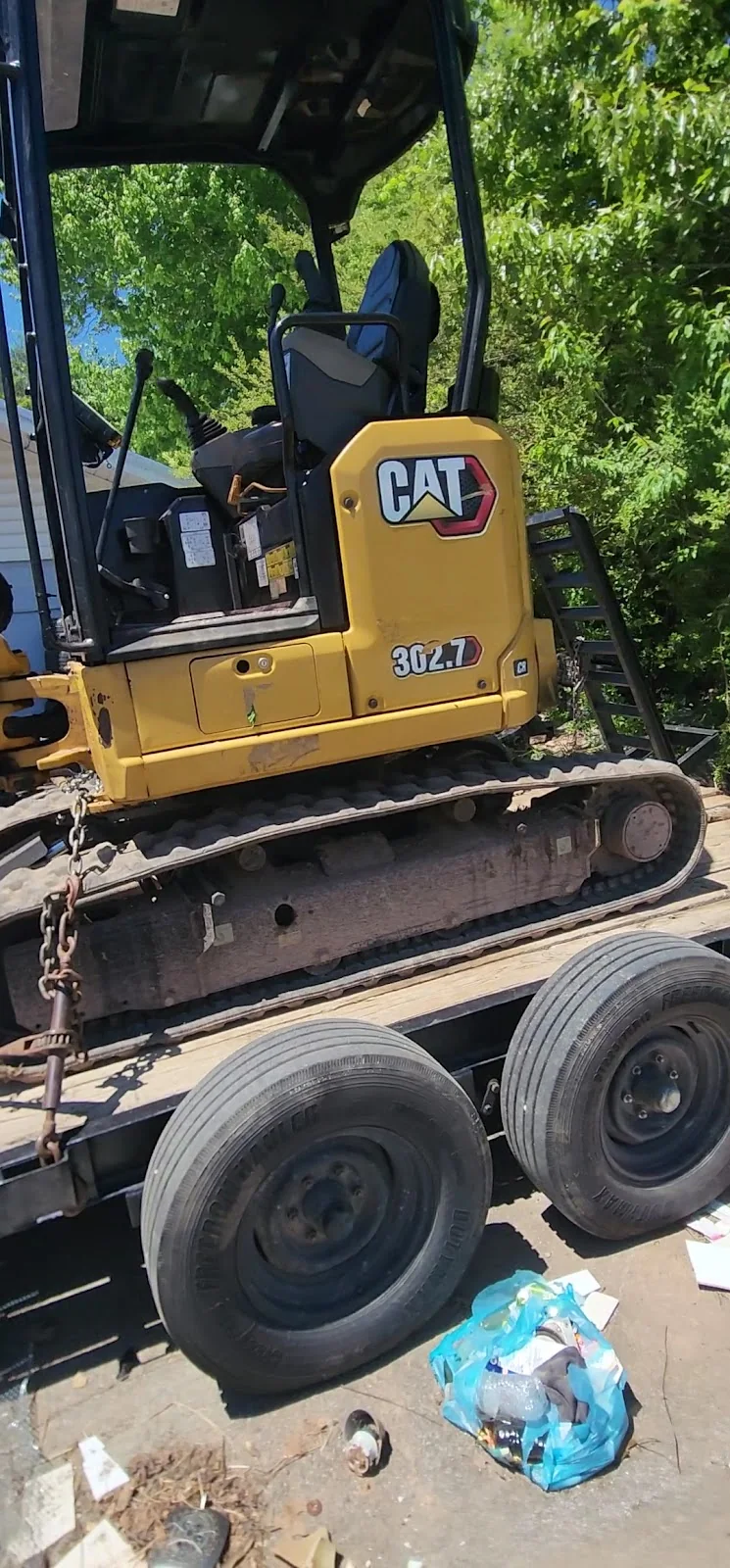
Access affects the number too. A yard that backs onto a narrow lane or sits behind a tight gate may need a smaller machine, which takes longer and costs more per hour. A lot with a wide driveway and open side yard lets a full-size machine work efficiently, which keeps the price closer to the middle of the band. When you request a quote, mention how equipment would reach the work area so the number you get reflects the real job.
Permits, licensing, and the rules that bind this work
Most routine yard leveling in Flat Rock is landscaping and does not require a building permit. But the moment the scope includes a retaining wall over the state's height threshold, a structural fill, or a change to a drainage easement, the rules change. North Carolina requires general contractors to be licensed once a project crosses the state's cost threshold — verify any contractor through the NC Licensing Board for General Contractors before signing. Where fill or grading touches a stream buffer or wetland edge, federal rules apply, and the EPA publishes the stormwater and discharge guidance that governs it.
Henderson County and the Village of Flat Rock each administer their own land-use rules on top of that, so a quick call to the local office settles the question for your specific parcel. Do the call before the equipment shows up, not after. In a village that includes parts of the historic district and several protected viewsheds along the Greenville Highway corridor, a change to a yard that fronts a protected view can draw a closer look than the same work three streets away.
If your property sits near a tributary that eventually feeds into the Green River watershed or any of the creeks that cross the county toward the French Broad, the buffer question comes into play more often than on an interior lot. Keep that in mind when your plan involves pushing fill toward the back fence line — what looks like a harmless regrade can be a jurisdictional issue if it changes the drainage path into a protected channel.
Storm history makes the drainage plan, not the lawn
Flat Rock has been in the path of 16 federal disaster declarations over the 1978-2026 on record with FEMA, and the pattern behind those numbers is what shapes how seriously this work gets taken here. The storms that have caused the most damage locally were not wind events but rain events — slow systems that sat over the Blue Ridge escarpment and dumped water fast enough that the clay subsoil could not absorb it. Yards that carry water for the first hour fail at hour three. Yards graded with a real outlet keep working.
This is why local crews talk about the yard's drainage in relation to the whole slope above it, not just the lot boundary. A neighbor's uphill grade, a driveway that sheds toward your side, or a road culvert that dumps onto your back corner all feed the same problem. The fix rarely lives inside one parcel. When we look at a bid on a Flat Rock slope lot, we want to know how much water arrives from off-site, because that determines the size of the swale, the depth of the fill, and whether an underground pipe has to carry the flow to a real outlet instead of a rock pile at the fence.
It also shapes timing. The window for grading work that will hold is shorter here than in the Piedmont — a freshly worked slope that gets a hard rain before it is stabilized loses its shape and its topsoil at once. Local crews schedule around the wet season for that reason, and a homeowner who wants the work done well should expect that timing to be part of the conversation rather than something they dictate after the bid is signed.
Choosing a crew on this terrain
Flat Rock is not a place where a flatland grader can guess. Three checks separate the crews who get it: ask how they will route water off your lot before they discuss dirt, ask for a reference on a slope lot similar to yours, and ask whether the quote includes compaction and re-vegetation or just pushing soil around. Loose fill that is not compacted will settle and recreate the low spot within a season, sometimes within a month of the first real rain. On clay subsoil, that settling is worse because the water sits on top of the fill instead of moving through it, and the whole layer softens.
Another thing to ask about is how the crew handles the outlet at the end of the job. A proper swale or drain line that discharges into a rock-lined splash area, a vegetated slope, or a defined ditch is doing real work. A drain line that ends in the middle of the yard, or a swale that just fades out at the property line, is not finished. The grading contractors serving Flat Rock we list are the ones whose scope goes the whole distance, from the inlet at the top of the lot to the outlet where the water legally leaves.
You should also ask about re-vegetation. The slope covering matters as much as the shape underneath, especially on the steeper lots. Bare clay will crust over and shed the next storm in sheets, carving rills through the new grade you just paid for. A crew that seeds, mulches, or blankets the finished slope is protecting the work, and that step should appear in the bid, not as an optional add-on after the machines leave.
When you are ready, use the form on this page and flag whether your issue is a wet spot, a foundation concern, or a full regrade. Those three answers send a job down very different paths, and telling us up front means the first visit is about the actual problem instead of a general walk of the yard.