Grading and excavation contractor, Asheville NC

Erosion After Land Clearing: Stabilizing a Cleared Lot

Erosion after land clearing in Buncombe County: what drives the $2K-$14K stabilization bill, permits, and how to stop mud before it moves. Also useful: land clearing, drainage and erosion and NC grading permit rules. Owner-run from Candler, west of Asheville. English and Spanish.

  • Free on-site estimate, price in writing
  • Trees, brush and stumps out, debris handled
  • The lot left ready to grade, erosion held
  • Real photos and footage of our own jobs

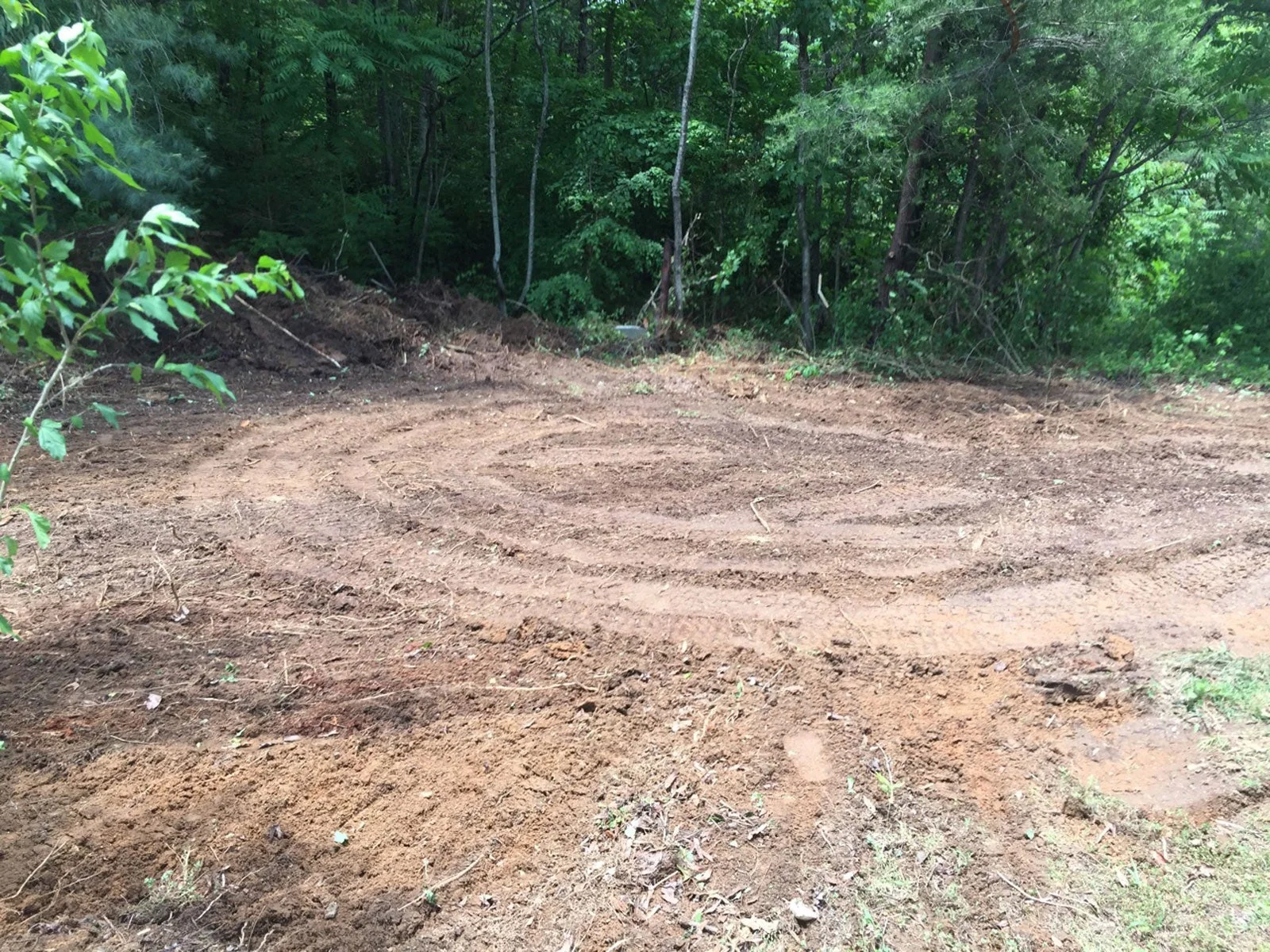
Pictured: fresh clearing on a wooded lot, brush pushed back and the topsoil stripped down to the clay. Our own work.

Get a free estimate

Tell us where the lot is and what it is doing. We walk it, read the slope and the water, and put a real price in writing.

Free, no obligation. Or call (828) 424-8873. English and Spanish.

Free on-site estimateA real number, in writing, after we walk the lot.
Based in CandlerSmokey Park Highway, west of Asheville. Four counties.
Rated 5.0 on Google11 reviews, all five stars, from people we graded for.
English and SpanishOn the phone and on site.
Quick answer
Erosion After Land Clearing: Stabilizing a Cleared Lot

Erosion after land clearing in Buncombe County typically costs $2,000-$14,000 to stabilize, with most cleared lots landing near $4,500-$8,000 once silt fence, a sediment basin or trap, slope seeding, and outlet protection are itemized. Ravines, steep cut slopes above 15%, and off-site mud that reaches a creek or neighbor push the number higher.

19
federal disaster declarations on record in Buncombe County
Hurricane Dorian
most notable event in the federal record
1973–2026
span of the declaration record
Asheville
Buncombe County hub

Where the stabilization money actually goes

A cleared acre on a Haywood Road hillside and a cleared acre on flat bottomland near the French Broad are not the same invoice. In Buncombe County the cost of fixing erosion after land clearing breaks into four line items, and they rarely move together: perimeter control (silt fence, compost socks, or a turbidity barrier where flow concentrates), internal control (a sediment trap or basin sized to the drainage area), surface treatment (straw, hydroseed, erosion-control blanket, or bonded fiber matrix on the steep faces), and outlet protection where all that water leaves your property. On a gentle lot the perimeter and seed lines dominate; on a 20% slope the blanket and basin lines eat the budget.

Two things drive the spread more than acreage. First, whether clearing happened above a stream buffer or within a designated water-supply watershed, which adds inspection and design cost. Second, whether mud has already left the site. Off-site sediment turns a grading job into a cleanup and possible enforcement matter, and the invoice reflects that.

A working price table for a cleared lot

Ranges below are what Buncombe crews typically quote for post-clearing stabilization, assuming the lot is under about two acres and equipment access exists. Steep terrain, rock, or a stream crossing move everything up.

Scope itemTypical rangeNotes
Silt fence (per linear foot, installed)$3-$7Includes posts, fabric, trench; more on rock or frozen ground.
Compost filter sock$6-$11 / lfFaster install on hard ground, higher material cost.
Sediment trap or small basin$1,200-$4,500Excavation, outlet structure, cleanout access.
Hydroseeding / temporary cover$0.10-$0.35 / sq ftSteeper slopes need higher rate and tackifier.
Erosion-control blanket (steep faces)$1.50-$3.25 / sq ydAnchored, netting, overlap; the slope tax.
Outlet protection / riprap apron$600-$2,800Where concentrated flow leaves the lot.
Site stabilization plan (engineer or designer)$500-$2,500Usually required above small-area thresholds.
Cleanup of off-site sediment$2,000-$12,000+Highly variable; road, ditch, or creek dependent.

For the pre-clearing planning side and what a proper control set costs before dirt moves, see the drainage and erosion control page.

The permit question comes before the mud question

Most cleared-lot erosion problems in Buncombe trace back to a missing or undersized plan, not bad luck. North Carolina ties land-disturbing activity to the state sedimentation program and to local ordinances, and the trigger is area disturbed, slope, and proximity to water, not the owner's intent. The NC grading permit rules page walks through which thresholds apply here, and the underlying standards trace to the NC Building Code Council and NCDOI Engineering Division. If the job exceeds the general-contracting threshold, the contractor you hire must be licensed by the NC Licensing Board for General Contractors. Get the plan and the permit straight first; every stabilization dollar after that is cheaper and more defensible.

One local wrinkle: Buncombe's rainfall pattern and steep headwater terrain mean inspection timing matters. A plan that looks fine on paper in a dry week can fail the first afternoon storm off the Blue Ridge. Design for the storm, not the average.

Why mountain lots behave differently

Clearing a ridge lot above Asheville changes the hydrology of everything below it. Water that used to hit leaf litter and infiltrate now hits bare clay and runs, and on a 25% cut slope it arrives at the toe with real energy. The federal record backs the local experience: 19 declared events touch this county across 1973-2026, overwhelmingly storm and flood family, and each one tested how well cleared ground was held. The National Weather Service outlooks are worth watching during any exposed phase. Practical consequence: on Buncombe slopes you should expect blankets or bonded fiber matrix rather than seed-and-straw alone, and you should expect the outlet to be engineered, not improvised.

Clearing itself is the other half of the equation. How a lot is cleared, where the debris goes, and whether topsoil is stockpiled versus pushed into the drainage all set up the erosion bill that follows. The land clearing page covers sequencing that keeps stabilization costs down.

Sequencing stabilization so you only pay once

The cheapest erosion fix is one done in the right order: install perimeter and internal controls before clearing, keep exposed area small and short-lived, cover as you go, and stabilize permanently before the rainy season. Crews that skip ahead and clear the whole lot first then chase mud are the reason the cleanup line in the table above exists. If your site drains toward a stream, buffer, or neighboring parcel, the design and inspection bar rises and so does the cost, but so does the case for doing it properly. EPA guidance on construction stormwater at epa.gov and the state code both point the same direction: control at the source, treat before discharge, inspect after every storm.
Buncombe County, NC: the storm record

Federally declared disaster events19
Named storms in the recordHurricane Dorian, Hurricane Florence, Hurricane Fran, Hurricane Helene, Hurricane Ian, Hurricane Isaias
Incident typesFire, Flood, Hurricane, Severe Storm, Snowstorm
Record span (fiscal years)1973–2026
Source: FEMA OpenFEMA disaster declarations. County-level federal declarations, not individual claims.
Questions people ask

Straight answers

How much does it cost to stabilize a cleared lot in Buncombe County?
Most cleared lots here run $2,000-$14,000, with a typical single-lot job near $4,500-$8,000 once silt fence, a sediment trap, seeding or blanket, and outlet protection are itemized. Steep slopes, stream buffers, and off-site sediment push the high end.
Do I need a permit to clear land and then stabilize it?
Often yes. North Carolina ties land-disturbing activity to the state sedimentation program, and area disturbed, slope, and proximity to water determine the threshold. See the NC grading permit rules for how this applies in Buncombe County.
How fast does erosion start after clearing?
Immediately. The first rain after bare soil is exposed moves material, and on a Buncombe slope a single afternoon storm can cut a rill that becomes a ravine. Controls should be installed before or during clearing, not after.
What is the cheapest effective way to stop erosion on a cleared slope?
Match the treatment to the slope: temporary seeding and straw on gentle ground, anchored erosion-control blanket or bonded fiber matrix on steep faces, plus a functioning sediment trap and protected outlet. Doing the cheap version on a steep slope just buys the expensive version later.
Does the contractor need a license for this work?
Once the job crosses the state general-contracting threshold, yes — verify licensure through the NC Licensing Board for General Contractors. Erosion-control design may also require a qualified designer or engineer depending on the plan.
My mud already ran onto a neighbor's property or a creek. Now what?
Stop the source first, then contain and clean up. Off-site sediment triggers enforcement exposure and a cleanup line item that can exceed the entire original stabilization budget. Get a plan and documented controls in place quickly.
How long until a cleared lot is considered stabilized?
Until permanent cover is established, which on Buncombe slopes usually means a full growing season of vegetation or an approved permanent structural cover. Temporary cover buys time but is not stabilization.
Our work

Our work

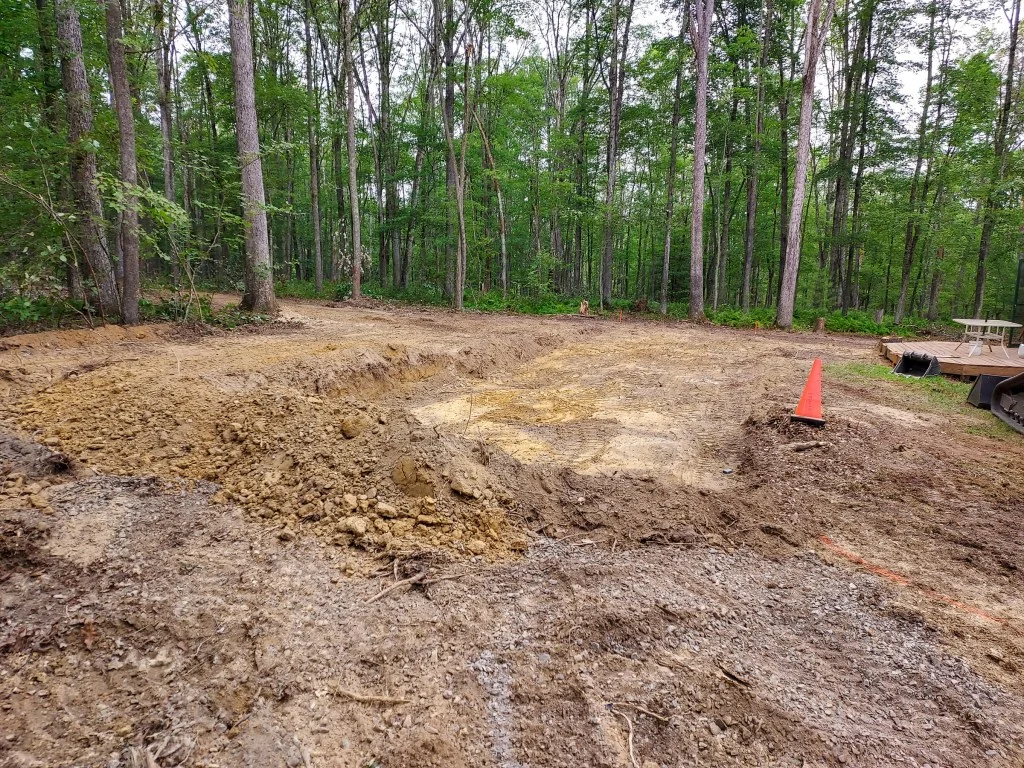
A lot cleared and rough-graded, stumps out and the pad corner marked with a cone. Built by Grading Lands.
A lot cleared and rough-graded, stumps out and the pad corner marked with a cone.
Fresh clearing on a wooded lot, brush pushed back and the topsoil stripped down to the clay. Built by Grading Lands.
Fresh clearing on a wooded lot, brush pushed back and the topsoil stripped down to the clay.
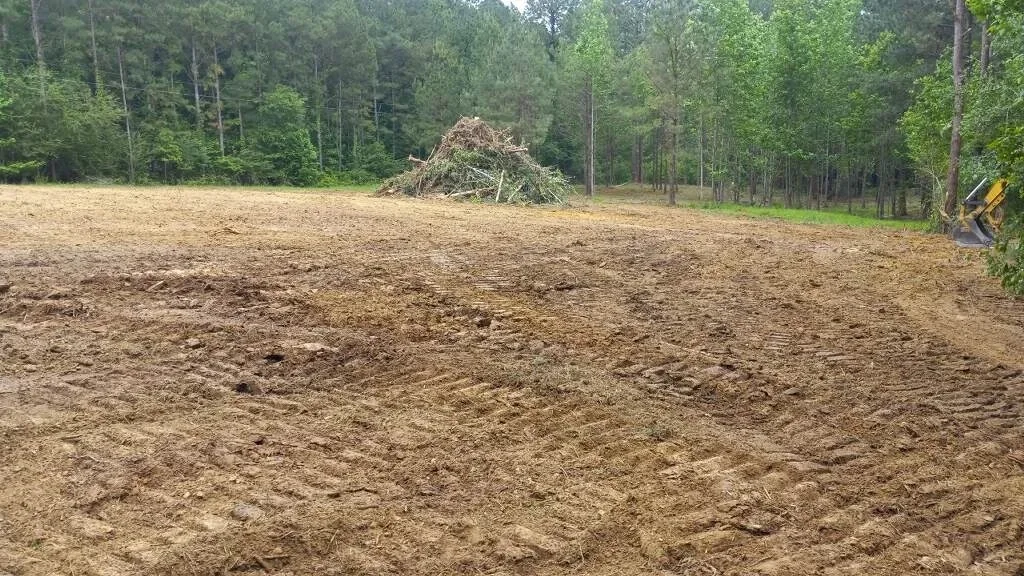
A cleared and graded lot with the brush pile stacked at the tree line for haul-off. Built by Grading Lands.
A cleared and graded lot with the brush pile stacked at the tree line for haul-off.
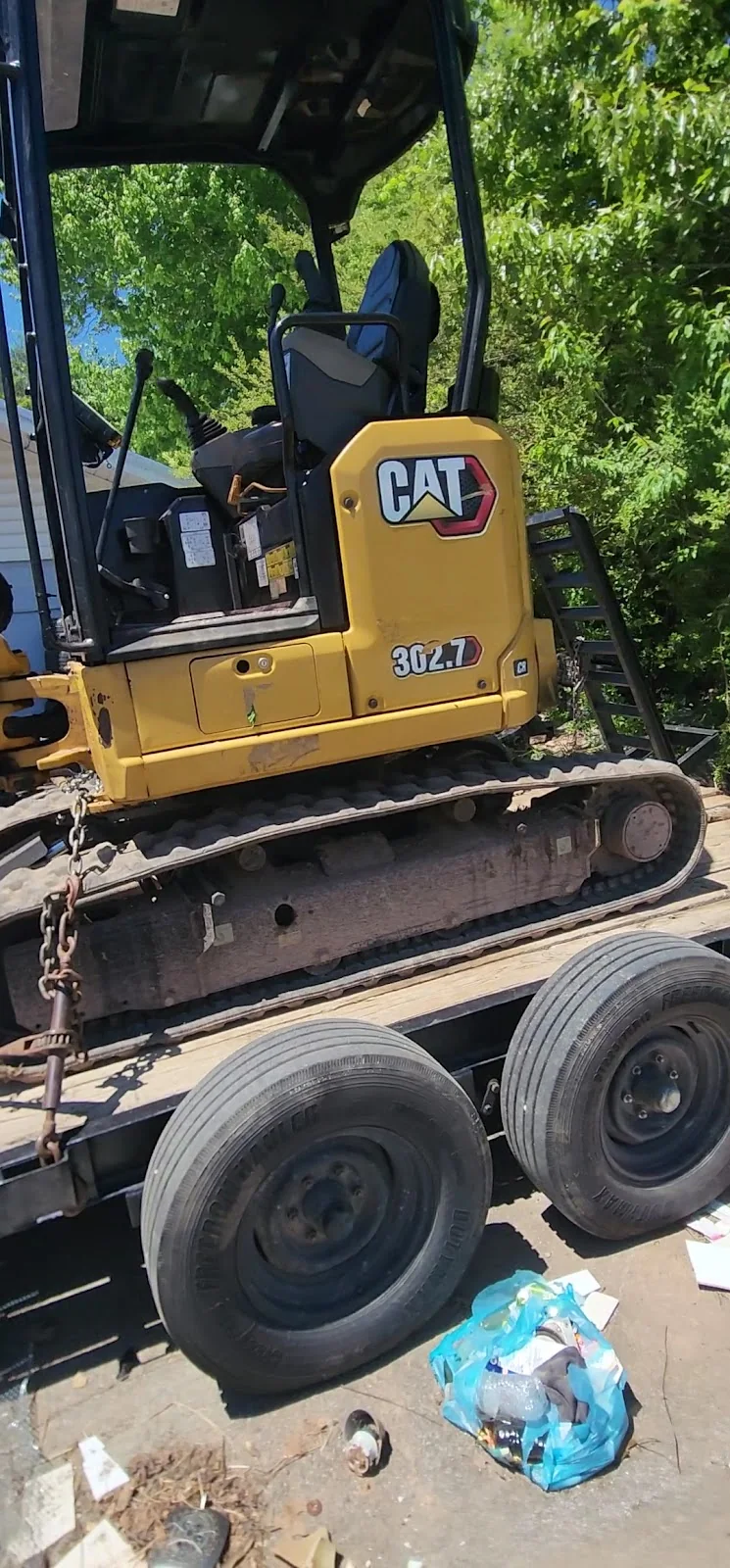
Our CAT excavator loaded on the trailer, headed to the next job. Built by Grading Lands.
Our CAT excavator loaded on the trailer, headed to the next job.
Get a quote

Tell us about your project. We price it straight.

Where it is and what you need — that's all it takes to start. You get a clear scope and an honest number, and your info never gets sold to a list.

Or call — (828) 424-8873

Get a free estimate

Free, no obligation. Or call (828) 424-8873. English and Spanish.

Call now Text us