What the ground in Clyde does to a clearing job
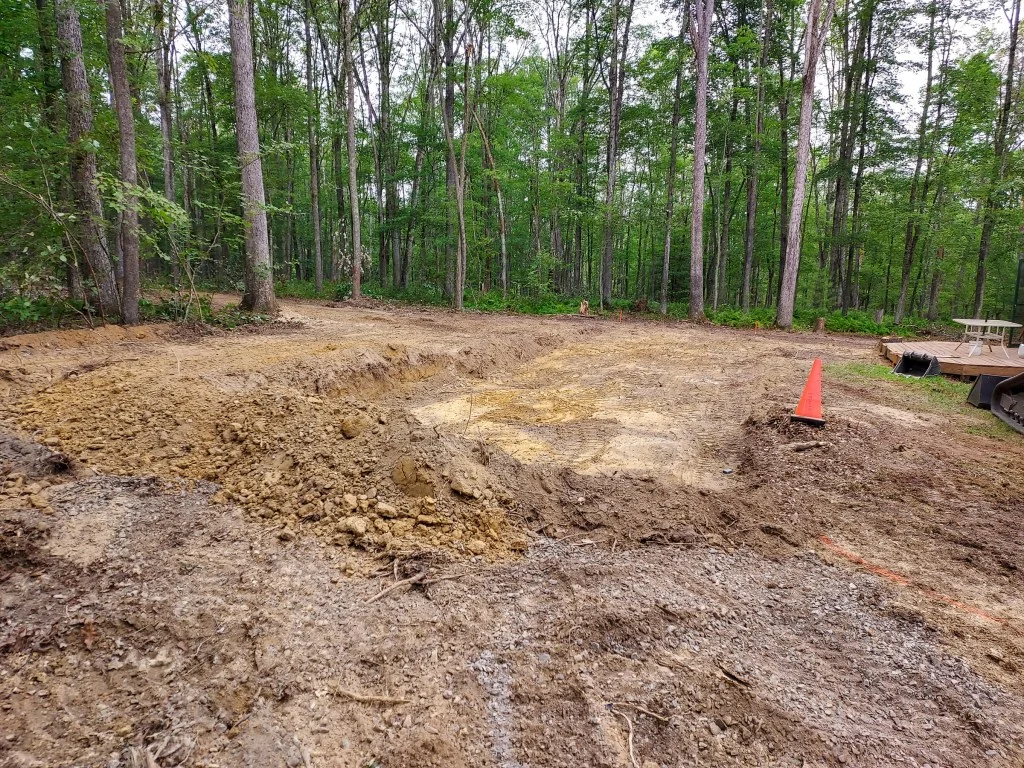
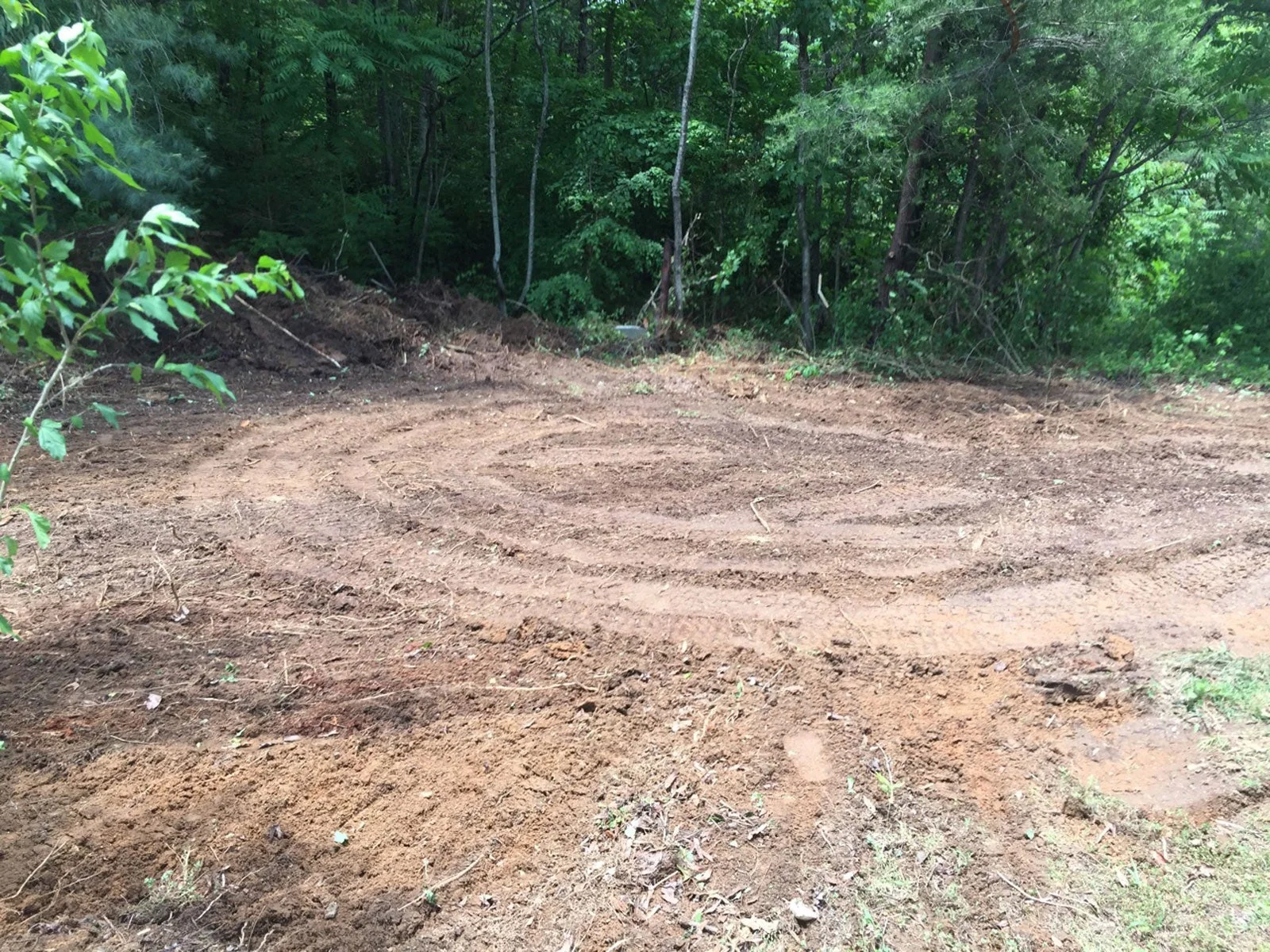
Drive the back roads off Old Clyde Road or up toward the Plott Balsam side and you'll see the same three ground conditions on nearly every lot. First, red clay: heavy, plastic when wet, and unforgiving when a loaded truck tries to cross it in February. Second, rock — not boulders you can pry out, but shallow bedrock and that hard saprolite layer that stops a stump grinder cold. Third, old fill: decades of farm terraces, buried fence rows, and pushed-up house pads that look flat from the road and turn out to be soft pockets eight feet in.
Each one changes the job. Clay means hauling costs and timing become the price movers, because a wet lot in Haywood County can stall a crew for weeks. Rock means the grinder stops and a breaker or hoe ram gets billed instead. Old fill means the stumps may hide deeper than the visible trunk suggests, and a cleared lot can still need compaction work before anyone builds. Clyde sits in the Pigeon River valley where the terrain flattens just enough to make a lot look easy — and that is exactly when the ground surprises people.
Ask around town and you'll hear the same story from people who bought a pretty, open lot off a paved county road only to find that the fill under the grass was never compacted. That is a grading problem disguised as a clearing problem, and it surfaces the first time a foundation contractor walks the site. The terrain here rewards anyone who digs a test hole before signing a bid.
Scope versus price: what each line actually costs
Quotes confuse people because they mix three different jobs: knocking the trees down, getting the stumps out, and making the ground usable. Treated separately, the numbers stop sounding random. The county-level working figures live in our Haywood County grading cost breakdown, and the short table below shows how scope drives the range.
| Scope | Typical residential range | What moves it |
|---|---|---|
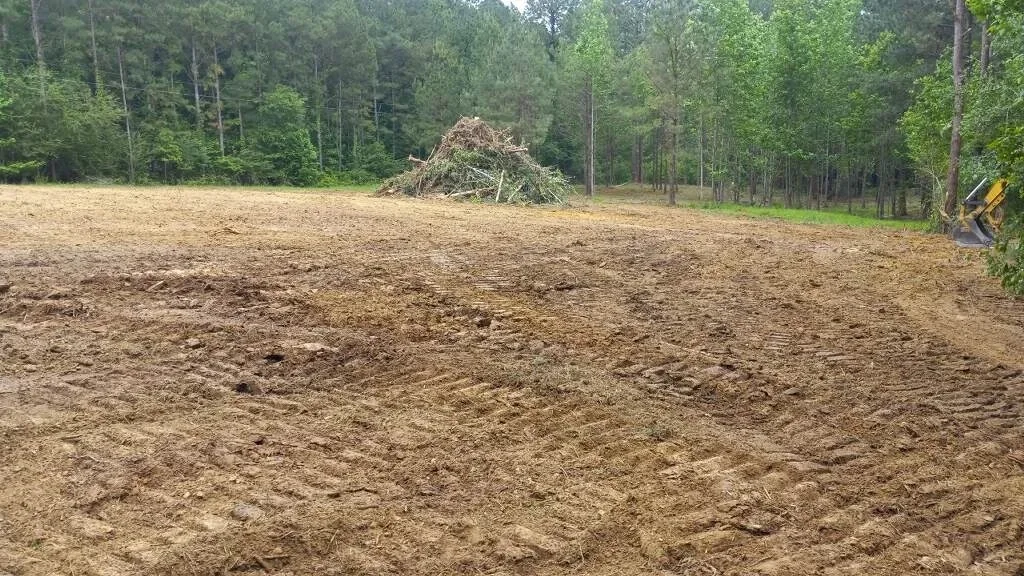
| Brush and small trees cleared, debris stacked on site | $750–$2,000 | Density of undergrowth, whether the owner keeps the wood |
| Cleared lot with stumps ground or pulled | $1,500–$5,000 | Stump count and diameter, rock near the roots |
| Cleared, stumped, and rough-graded for building or seeding | $2,000–$8,000 | Cut-and-fill volume, red clay haul-off, drainage swales |
| Steep or heavily wooded acreage | Past $10,000 | Slope access, log removal, engineered drainage |
A flat half-acre of pasture with a dozen softwoods is a different job than a wooded ridge lot with rock under the topsoil. Any bid that does not separate clearing from stumping from grading is hiding the part that will grow.
Consider two lots a mile apart. One is a level bottom field near the Pigeon River with a few walnut stumps left from an old fence line; the stumps are in soil that was worked for generations, so they come out with an excavator and a thumb, and the biggest cost is hauling the debris. The other is a ridge lot off a gravel drive where the same number of trees sit on saprolite and the grind heads dull before noon. Same acreage, very different invoice. That is why an honest Clyde quote starts with someone walking the ground, not measuring it from a satellite view.
Water, slopes, and why the valley floods the way it does
Haywood County's federal disaster record is dominated by storm and flood events: 19 declared events touch this county across 1973-2026, and the Pigeon River corridor is the reason. Clyde's lots sit close to that corridor, so drainage is not an afterthought — it is the design. Clearing removes the trees and root mass that were drinking the water, and a bare clay slope sheds runoff instead of absorbing it. That is how a clean-looking cleared lot ends up eroding into a neighbor's driveway or a county ditch.
The fix belongs in the scope from the start: silt fence installed before the first tree falls, a stabilized construction entrance so clay does not track onto the road, and catch points or swales sized before the ground is bare. The EPA's stormwater resources explain the mechanics, and the NC Office of State Fire Marshal sets the burn-permit rules that govern how debris gets handled. Both matter more than most owners expect when the debris pile is large.
Slope is the other half of the story. A lot that falls away from the road at a gentle grade near the valley floor drains predictably once you cut a swale along the uphill edge. A lot that climbs toward the national forest boundary above Clyde sheds water fast and concentrated, and the same swale has to be wider, deeper, and lined with something that will not wash out. On the steepest parcels, the honest answer is that clearing should wait for a plan from whoever will design the driveway and the house pad, because moving dirt twice costs more than doing it once with a grade in mind.
Hiring a crew that knows this county
Three checks worth making before anyone drops a blade on your lot. First, ask what they do about rock — if the answer is vague, the bid is probably priced off flat Piedmont ground and the change order will show up. Second, ask about haul-off: red clay and stumps leave the site, and dump fees and travel time are part of the number, so find out where the material goes. Third, ask how they handle the wet-season problem, because a Clyde winter will test any plan that assumes dry clay.
On the contracting side, North Carolina requires a license from the NC Licensing Board for General Contractors once a job crosses the state's project-value threshold, and clearing that includes grading and drainage work can push a project over that line. Ask for the license number and verify it before the work starts. When you are ready to compare bids, our land clearing overview covers what a proper quote should itemize, and local crews are listed through grading contractors in Clyde.
It helps to walk the lot with each bidder and listen to what they notice without prompting. A crew that has worked this county will point at the color change in the soil where old fill was placed, ask whether the county has ever reworked the ditch along the road, and mention the burn window before you do. A crew that just measures and quotes per acre is not reading the ground. That difference is usually worth more than the spread between the highest and lowest bid on a Clyde lot.