Where the water comes from, and where the grade has to send it
Below Hendersonville's flat courthouse square, the county tilts hard: orchard terraces out toward Edneyville, wooded ridges off Kanuga and Willow roads, and 1970s ranches cut into those slopes. Water shows up from three places here. It falls on the roof and lands in a strip two feet from the foundation if the gutters dump short. It sheets downslope from the uphill neighbor's yard. And on hillside lots, it seeps out of the ground itself — a spring line, often above the house, that shows as a permanently wet swale no amount of surface grading fixes.
The first two are a grading and collection problem: capture it, pipe it, and deliver it to a daylight outlet or storm system downhill of the structure. The third is a subsurface problem — a curtain drain intercepting the seep above the house, not a French drain along the foundation wall. Diagnosing which one you have before a shovel moves is the entire job. A contractor who quotes pipe without walking the uphill property line is guessing.
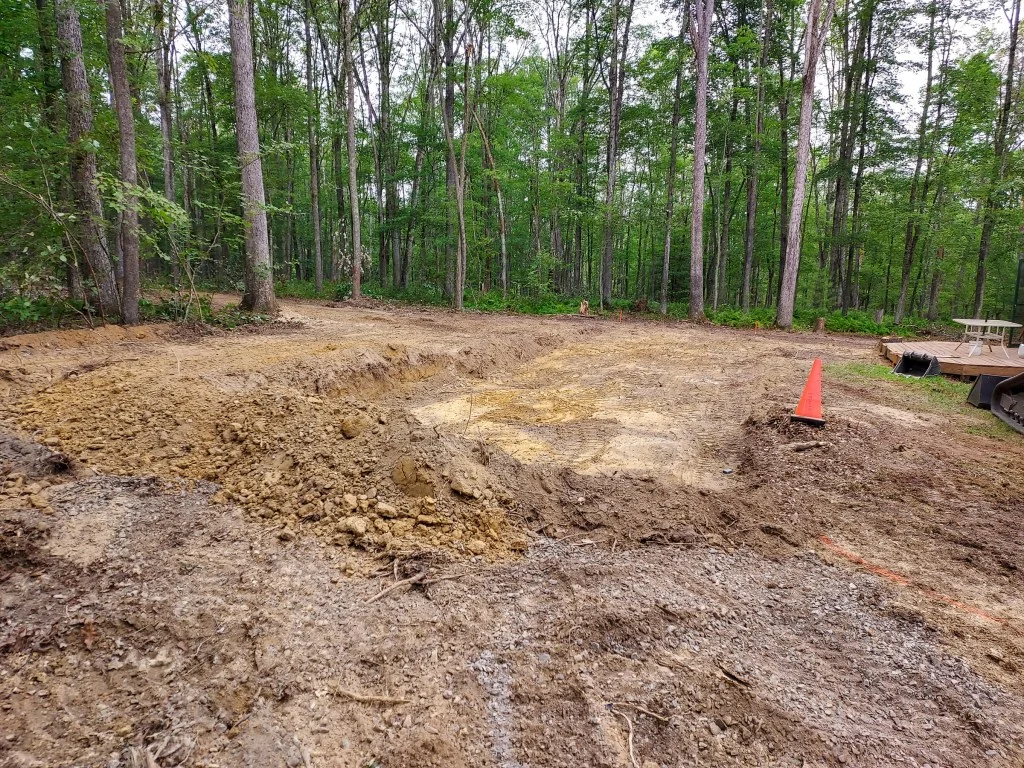
Terrain in this county rarely gives you a flat answer. A lot off Chimney Rock Road might drop thirty feet front to back; a lot near the Flat Rock playhouse may be nearly level and pond instead. Same county, opposite fixes. On slopes the outlet is easy to find — gravity does the work — but the trench has to be cut across the fall line so water doesn't just run parallel to the pipe. On flatter ground near the Historic Courthouse district, you often need a dry well, a pop-up emitter, or a graded swale to a ditch, because there may be no daylight within reach. Knowing which situation you're in before pricing is why two neighbors on the same ridgeline can get bids thousands of dollars apart.
Why Henderson County yards punish shortcuts
Two local facts drive the price. First, the soil: heavy red clay over weathered rock, which absorbs almost nothing and sheds almost everything. In a July storm cell the ground goes from dry to saturated in minutes, and whatever isn't intercepted runs along the surface until it finds a low spot — usually your foundation backfill, which is looser than the surrounding clay and acts as a drain into the house. Second, the record: 16 federal disaster declarations touch this county across 1978-2026, overwhelmingly storm and flood family. Runoff that arrives fast and has nowhere to go is the recurring theme, and it's why the National Weather Service flash-flood messaging for the southern mountains reads the way it does.
Hendersonville also sits well above the French Broad, so this is rarely river flooding — it's local drainage failure on sloped lots. That distinction matters, because river floodplain rules don't apply and the fix is almost always on your own property.
Summer here has a rhythm worth understanding. Afternoon thunderstorms build over the Pisgah ridgeline west of town and dump fast on already-saturated ground, then the sun returns and the surface dries within hours while the subsoil stays wet for days. That wet layer is what keeps pressure against a basement or crawl space wall long after the storm has passed. It's also why drainage installed in a dry August can look unnecessary and then prove its worth the following March, when the ground is already charged and a single front drops two inches. Clay doesn't forgive a missed detail: a trench backfilled with native spoil instead of washed stone and filter fabric will silt in and stop working within a few seasons, and the homeowner pays twice. On these lots a properly sited drain is less about moving today's puddle and more about giving the water a permanent, low-resistance path that stays open through freeze-thaw and the wet season.
What drainage work costs here
Site-wide residential drainage runs $3,500 to $12,000; Henderson County's clay and slope are the local factors that push a job toward the middle or top of that band rather than a re-sodded flat lot. The county grading-cost table lives at grading cost in Henderson County, and the scope-by-scope picture is below.
| Scope | Typical range | What drives it |
|---|---|---|
| Single French drain run | $3,000–$9,000 | Length, depth, outlet distance, clay vs. amended backfill |
| Curtain drain above a spring line | $4,000–$10,000 | How far uphill the seep originates, trench depth to reach it |
| Downspout reroute + splash control | $3,500–$6,000 | Run count, whether underground pipe is needed to daylight |
| Whole-yard regrade | $15,000 and up | Tons of fill moved, slope re-cut, retaining where grade meets grade |
| Catch basin + collection system | $4,500–$12,000 | Number of inlets, pipe run to a legal outlet |
Any bid with no line item for the outlet — where the pipe actually discharges, legally and downhill — is incomplete, not cheap.
Read the ranges as scope, not as a discount menu. The low end of a French drain run assumes a short trench on a lot with an obvious downhill outlet, like a ridge property off Howard Gap Road where the pipe can daylight into a ravine within a hundred feet. The high end shows up where the trench must go deep to catch a seep, where the outlet is across a driveway or paved patio that has to be cut and restored, or where the soil is so rocky that the trencher gives way to hand work. A curtain drain above a spring line is priced separately because the trench has to intercept water before it reaches the house, which means going uphill of the structure rather than wrapping it.
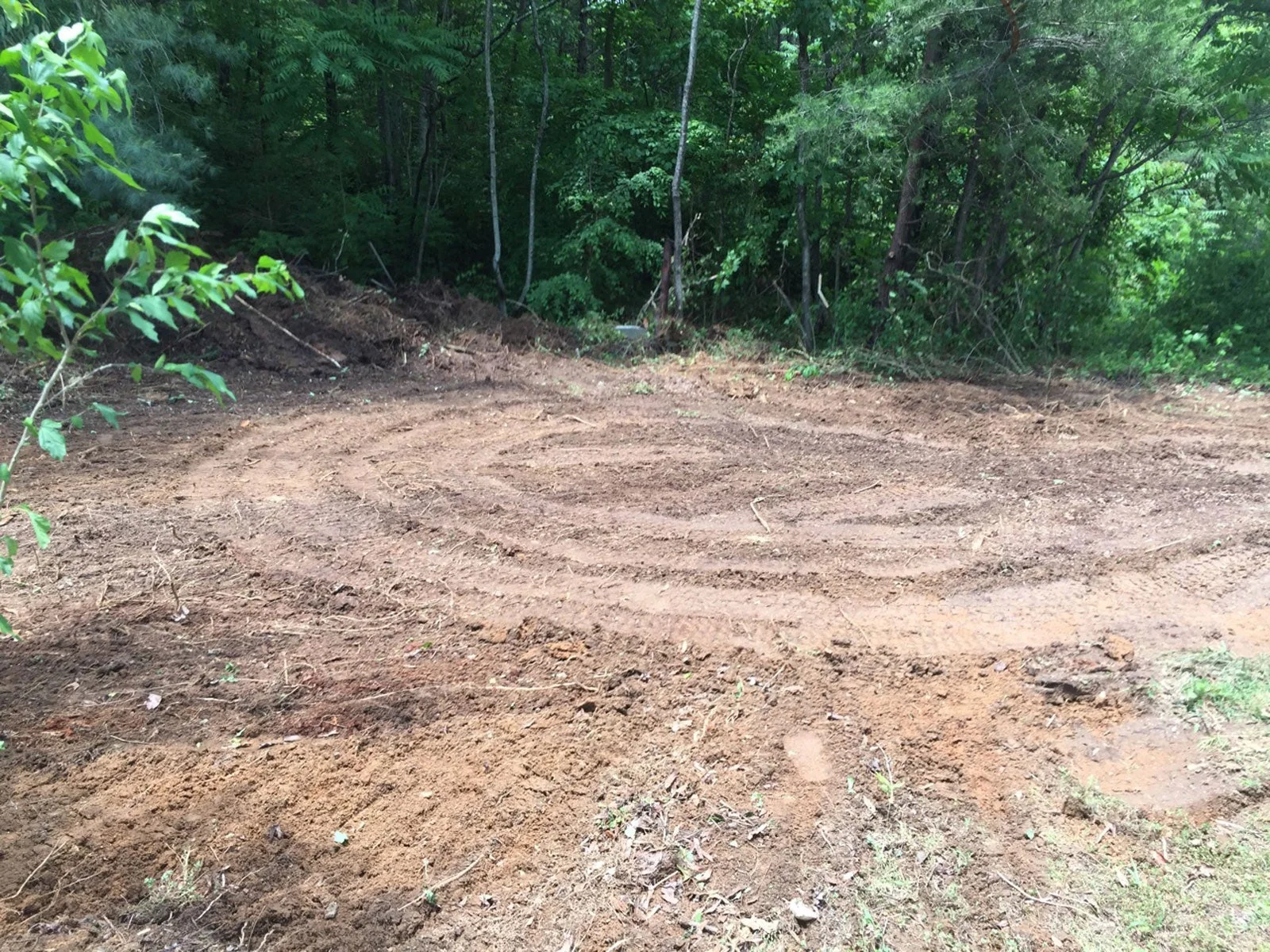
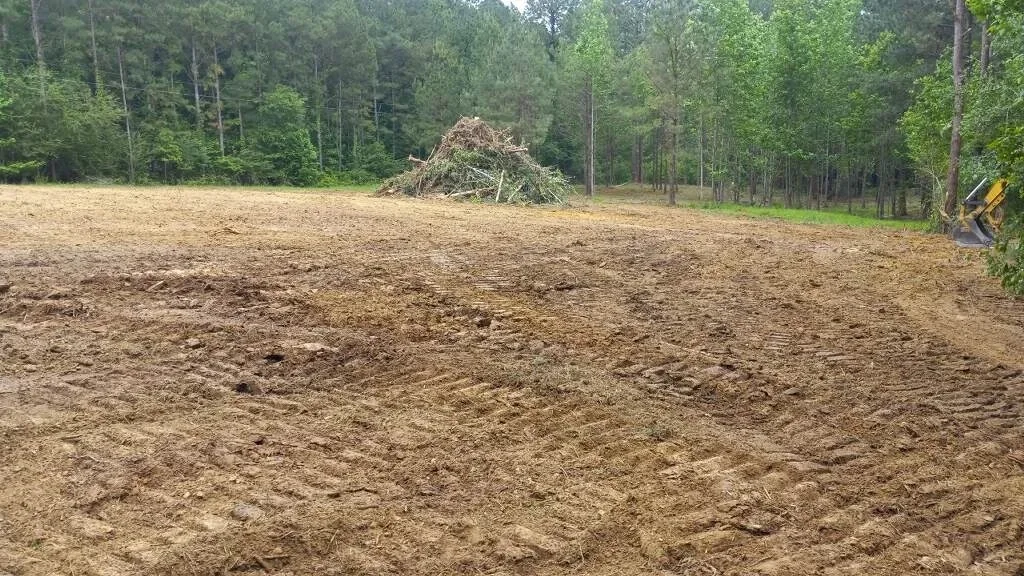
Regrading is the line item homeowners most often underestimate. Moving enough fill to reverse the fall of a yard is not a weekend with a wheelbarrow; it is truckloads in, re-cut slope, and often a short retaining wall where the new grade meets the neighbor's. On a steep lot the wall can be the single biggest cost inside the regrade. Get the whole scope, including restoration of lawn, walkways, and any fencing the work crosses, in one written proposal so the drainage total and the landscape repair don't arrive on two different invoices.
Who may legally do the digging
North Carolina ties contractor licensing to project value and scope, and the thresholds matter when a project includes regrading, retaining, or anything that reads as land-moving rather than a landscaping tweak. The NC Licensing Board for General Contractors publishes those thresholds; check the company's license status there and confirm the classification fits drainage and grading work, not just landscaping. For anything touching a foundation or common wall, ICC-based code requirements for drainage and waterproofing apply — see the International Code Council for the code family local inspectors use.
One more local wrinkle: many Henderson County lots drain toward a road ditch or a neighboring parcel. Discharging concentrated water onto a neighbor's ground is a fast route to a civil dispute, so ask every bidder to state the outlet plan in writing.
Storm-water quality is the second layer. Runoff leaving a graded lot carries sediment into creeks and ditches, which is why the U.S. Environmental Protection Agency treats construction and land-disturbing runoff as a regulated concern. On small residential jobs you may never see a formal permit, but the principle still governs good practice: slow the water, filter it, and release it clean. Silt fencing, straw wattles, and settling before discharge are the tools, and they cost little when they're part of the original plan and a lot when they're retrofitted after a slope has already washed. For a homeowner in a subdivision with a storm drain at the end of the street, the outlet discussion should include whether that drain is legal to discharge into, because not every lot has that right. If it doesn't, the drain has to run to daylight on your own ground, and the yard design has to make room for that path.
Sequencing the job so it actually drains
The order that works on these lots: roof water first (gutters and downspouts extended well away from the wall), then surface grading to steer sheet flow, then subsurface interception for springs, and only then decorative finishing. Reversing it — sod and stone, then drainage — wastes the hardscape. Erosion control belongs in the same plan; our drainage and erosion control page walks through how captured water is safely released without washing the slope out, and a proper firm should scope grading and drains together rather than selling pipe by the foot.
If your last storm left a wet crawl space or a new crack, don't wait for the next one. Start with the Hendersonville grading contractors page for how vetted local contractors approach sites like yours.
Watch a sloped Henderson County yard for one rainy week and the sequence proves itself. The gutter that dumps beside the foundation keeps a half-moon of mud alive; extending that downspout ten or fifteen feet downhill changes it overnight. The low spot that ponds after every storm is usually a grading miss, not a drain miss, and pushing a few cubic yards of fill to restore a two percent fall away from the wall can solve it without any pipe at all. The persistent wet streak that survives a dry week is the one that needs a trench, because the source is below the surface. A contractor who treats all three as "a French drain" is selling a product rather than reading your lot, and on clay that difference shows up within a couple of wet seasons. Ask every bidder to walk the property with you, name the source, and point at exactly where the pipe will daylight before anyone talks price.