What actually moves the number on a Flat Rock dig
A quote for the same 40-foot footing trench can land $1,500 apart on two lots a mile from each other in Flat Rock, and the difference is almost never the hourly rate. It's the anatomy of the job: how much dirt leaves the hole, how far it has to go, what the bucket hits, and whether the cut has to be held back.
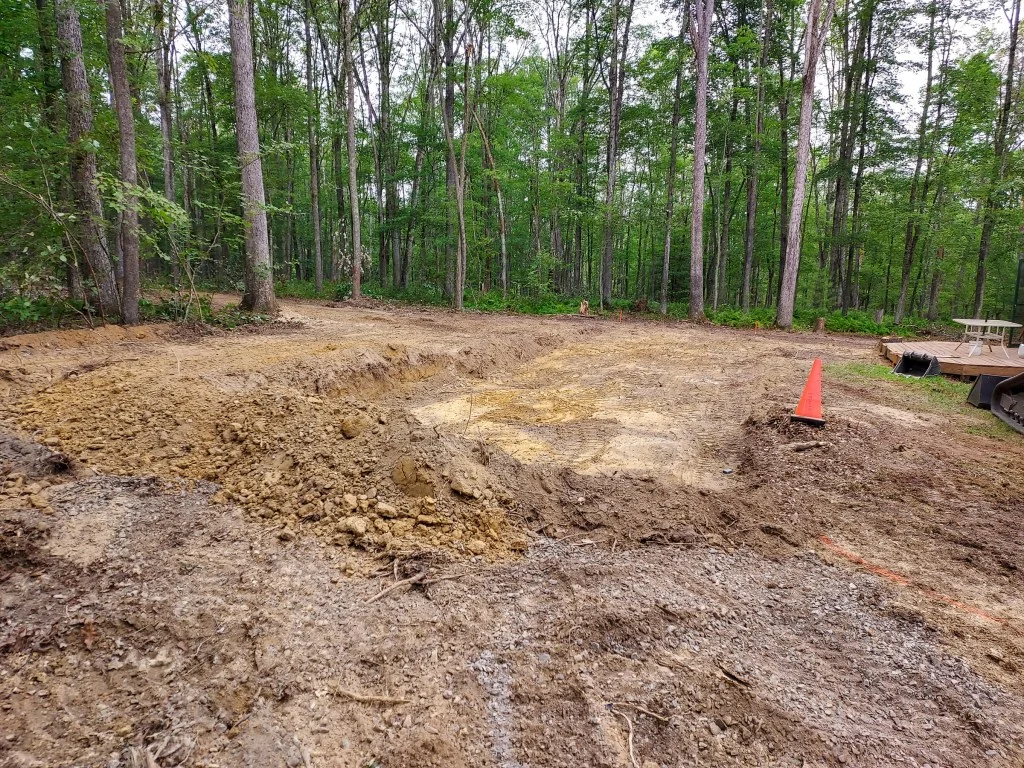
Flat Rock sits in the Blue Ridge foothills south of Hendersonville, and the terrain tells you what to expect. Lots off the older village lanes tend to be smaller and closer to grade, so spoils can often be stacked on site and the price stays near the bottom of the band. Builds on the ridge ground toward the state park side are a different job entirely — a cut into a slope means retaining, hauling, and sometimes rock, and those line items stack up fast. The point isn't that Flat Rock is expensive. It's that the price is readable before the machine shows up, if the estimator walks the lot and itemizes it.
Drive the village lanes near the Flat Rock Playhouse or the older streets off Greenville Highway and you can almost grade the job by eye: modest lots, shallow cuts, mature trees that dictate where a machine can swing. Head up toward the Carl Sandburg home side or the wooded parcels along Little River Road and the same square footage of house sits on a bench cut into a hillside, with a driveway that climbs and a septic field that has to find its own level ground. Those two lots are not the same job, even if the permit set looks identical.
The line items behind a Flat Rock excavation quote
Ask for these broken out and the quote stops being a mystery. Below is how they typically price in Henderson County — see the full Henderson County grading and grading cost breakdown for the broader table.
| Scope on a typical Flat Rock lot | Typical range | What drives it up |
|---|---|---|
| Trench or utility run, shallow | $1,800–$2,800 | Length, depth, hand-dig near existing lines |
| Footing dig, single-family | $2,000–$3,500 | Square footage, soil, access for the machine |
| Small pad or driveway cut | $2,500–$4,500 | Cut depth, spoils that must leave the site |
| Full site excavation and rough grade | $6,000–$15,000 | Slope, rock, haul distance, retaining |
Two line items surprise people most. Spoils removal: dirt that stays on site is cheap, dirt that gets trucked is not, and on a tight village lot there may be nowhere to put it. Rock: the foothills around Flat Rock are not solid granite, but weathered rock and boulders show up often enough that any honest quote either includes a rock clause or states plainly that it doesn't. A bid missing both is incomplete, not cheap.
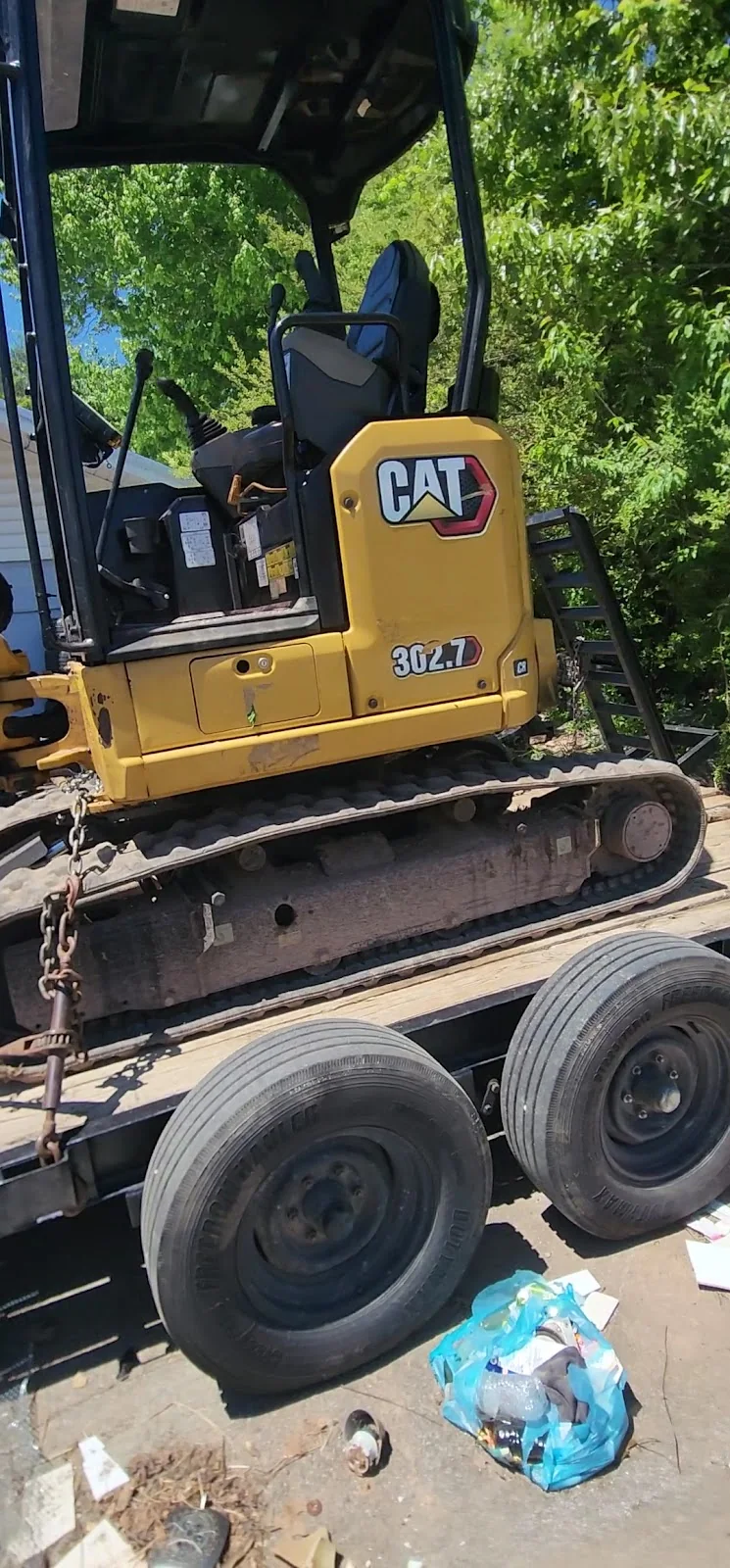
There is a third line item that hides in plain sight on a lot with any pitch to it: access. Whether a full-size excavator can walk to the back of the house or whether a smaller machine has to shuttle, whether the dump truck can turn around or has to back down a single-lane gravel drive, whether the tree canopy forces a smaller machine entirely — access quietly changes how many machine hours the same footage takes. On the narrow lanes closer to the village core, that alone can push a footing job toward the top of its range before a bucket touches dirt.
Spoils have their own local arithmetic. Dirt is heavy, and a tandem dump truck holds a lot less than people picture, so the number of loads climbs faster than the hole looks. On a foothill parcel with acreage, the smart move is often to bench the spoils into the slope or use them to build up a driveway pad, which keeps hauling cost at zero. On a tight in-village lot, every yard has to leave, and that trucking is a real line item, not a rounding error.
Water, slopes, and why Henderson County is a wet county
The federal disaster record explains a lot about excavation and drainage work here: 16 declared events touch this county (1978-2026), mostly storm and flood family. On sloped ground, that history shows up as a simple rule — the cut has to shed water somewhere, and if it sheds toward the house, the excavation created a problem instead of solving one. Final grade, swales, and where the downspouts land are part of the dig, not an afterthought.
Foothill ground makes this sharper than flatland. A house tucked into a slope collects water from everything above it, so the swale at the top of the cut carries more volume than a homeowner expects, and the outlet has to be sized for the whole uphill watershed, not just the roof. That is why a Flat Rock excavation that looks finished can still fail the first hard storm: the dirt moved fine, but the water was never given a path. The National Weather Service at weather.gov tracks the rainfall patterns that drive this, and the pattern here is heavy bursts on steep ground.
It's also worth knowing that big dirt-moving isn't just a handshake trade in North Carolina. The NC Licensing Board for General Contractors sets the threshold where a project needs a licensed general contractor, and grading that touches drainage or erosion control falls under state rules for a reason. When you hire through our excavation contractor directory, that licensing question is one of the first things screened.
Getting three quotes that are actually comparable
The fastest way to overpay is to compare three numbers that describe three different jobs. Make every bidder answer the same four questions in writing: how many cubic yards are being moved, where the spoils go, whether a rock clause exists and how it's priced, and what the finished grade looks like. Then the quotes line up.
Two more local habits worth having. First, ask when the site was last walked — a phone estimate on foothill ground is a guess. Second, check the erosion-control plan against the state's permit rules before the machine arrives; a Flat Rock grading contractor should be able to explain the silt fence and inlet protection without looking it up. The federal stormwater basics at EPA.gov are a good primer if you want to know what you're looking at.
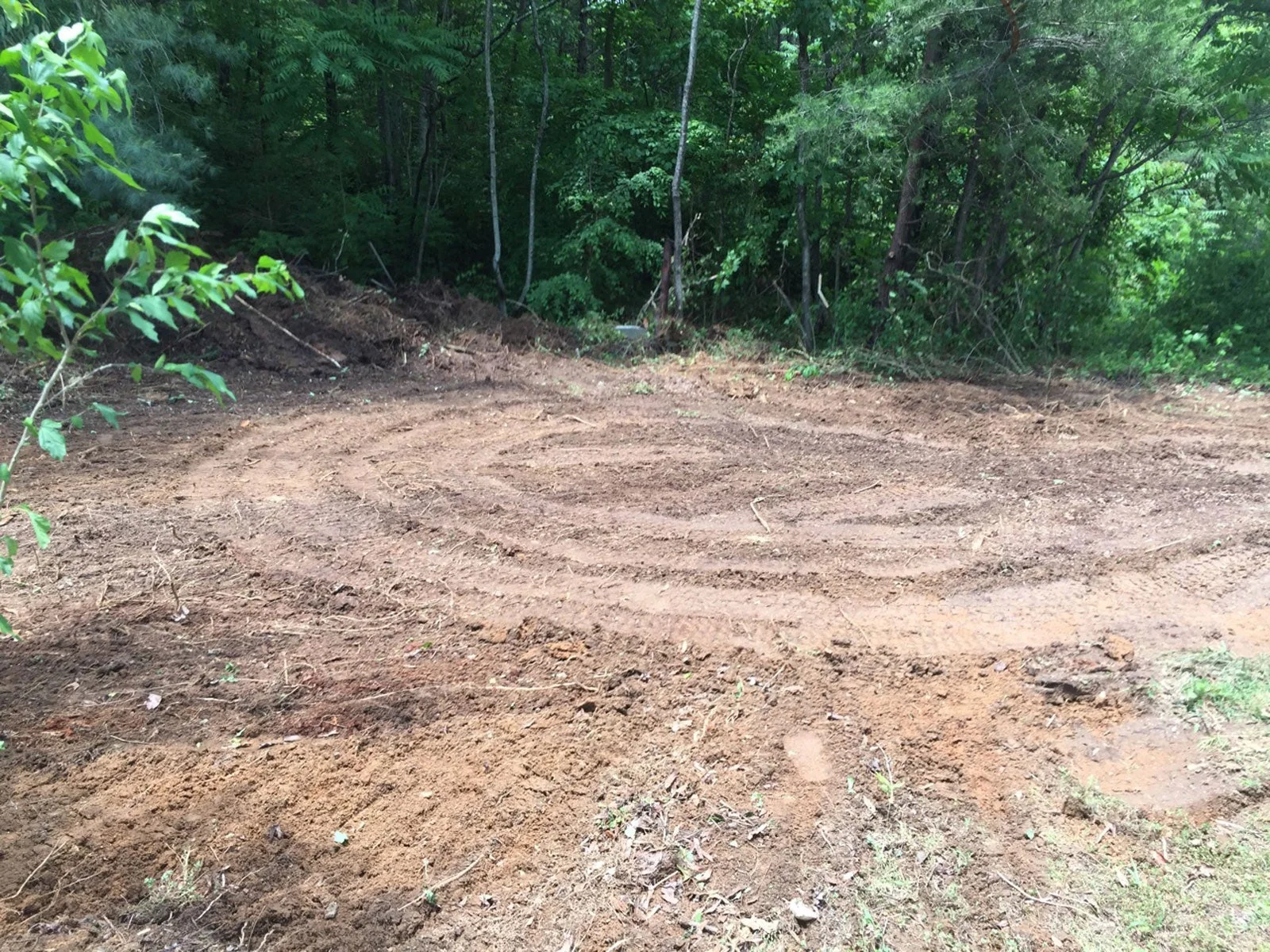
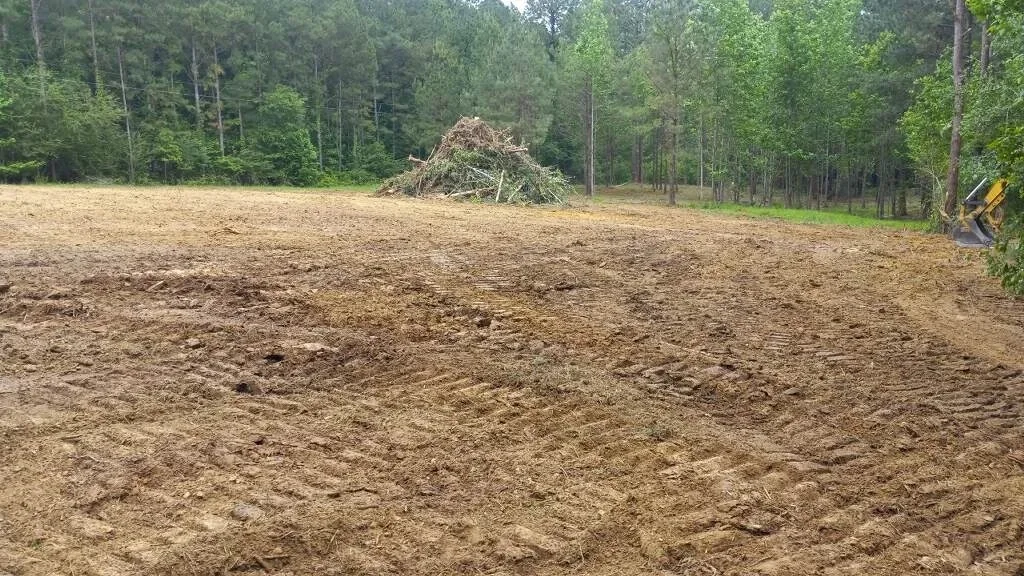
One more local reality: on wooded foothill parcels, clearing is often a separate conversation from the dig itself, and stumps and root balls are bulky spoils that behave nothing like clean dirt. If the lot is wooded, make sure every bidder is pricing the same clearing scope, or the lowest number may just be the one that quietly left grinding and hauling off the page.
When to schedule the dig
Excavation in this part of Henderson County is seasonal in a practical way. Late winter and early spring ground is often saturated, which means mud, rutting, and hauling that costs more; high summer is firm and fast but dusty. The sweet spots tend to be late spring and early fall. If your project has a fixed start date, flag it when you request quotes — scheduling pressure is one of the few things that changes a price without changing the dirt.
The mountain microclimates around Flat Rock matter too. Higher bench ground holds moisture longer and can stay too soft to work after the valley has firmed up, while a south-facing slope dries out early enough to get a jump on spring. A contractor who works this county regularly already knows which way a given lot drains and dries, and that local read is worth more than any calendar guess.