How a Canton drainage job actually runs, start to finish
Most Canton yards get their water from two directions at once: the ridge above and the creek bottoms below. On a slope lot off Dutch Cove or a flat yard near the Pigeon River, that means the first move is never a shovel. It is a walkthrough with a level and a hose, reading where the water currently goes, where the downspouts dump, and where the ground has already told you it stays wet. That walkthrough is usually 45–90 minutes, and it decides everything after it.
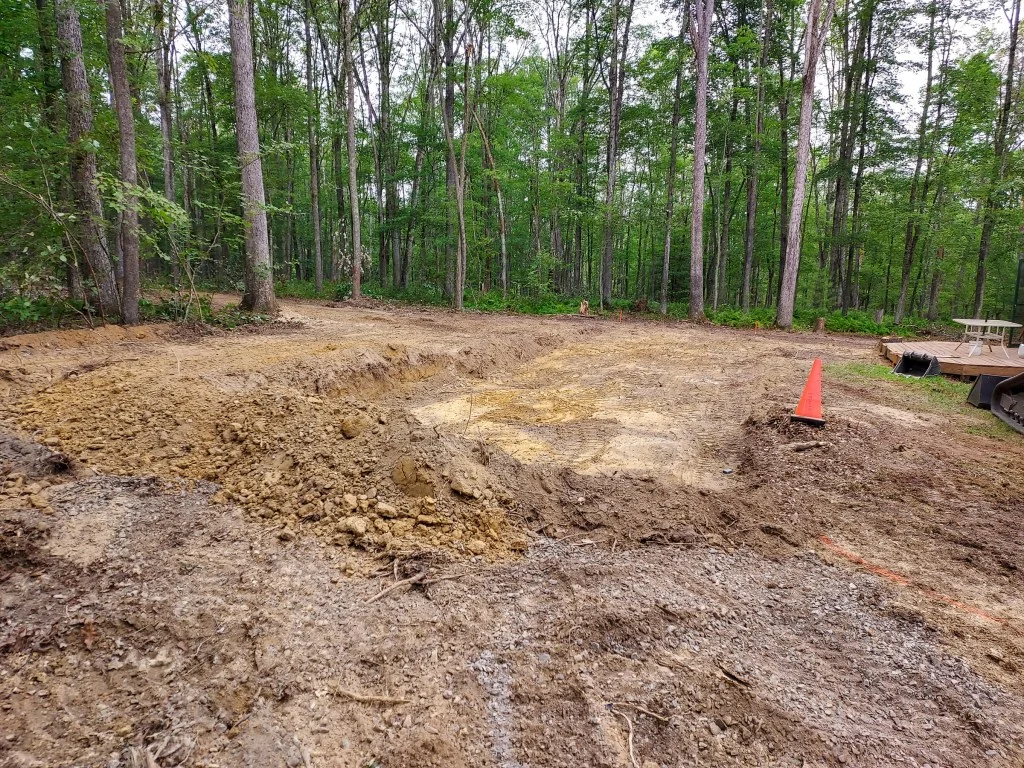
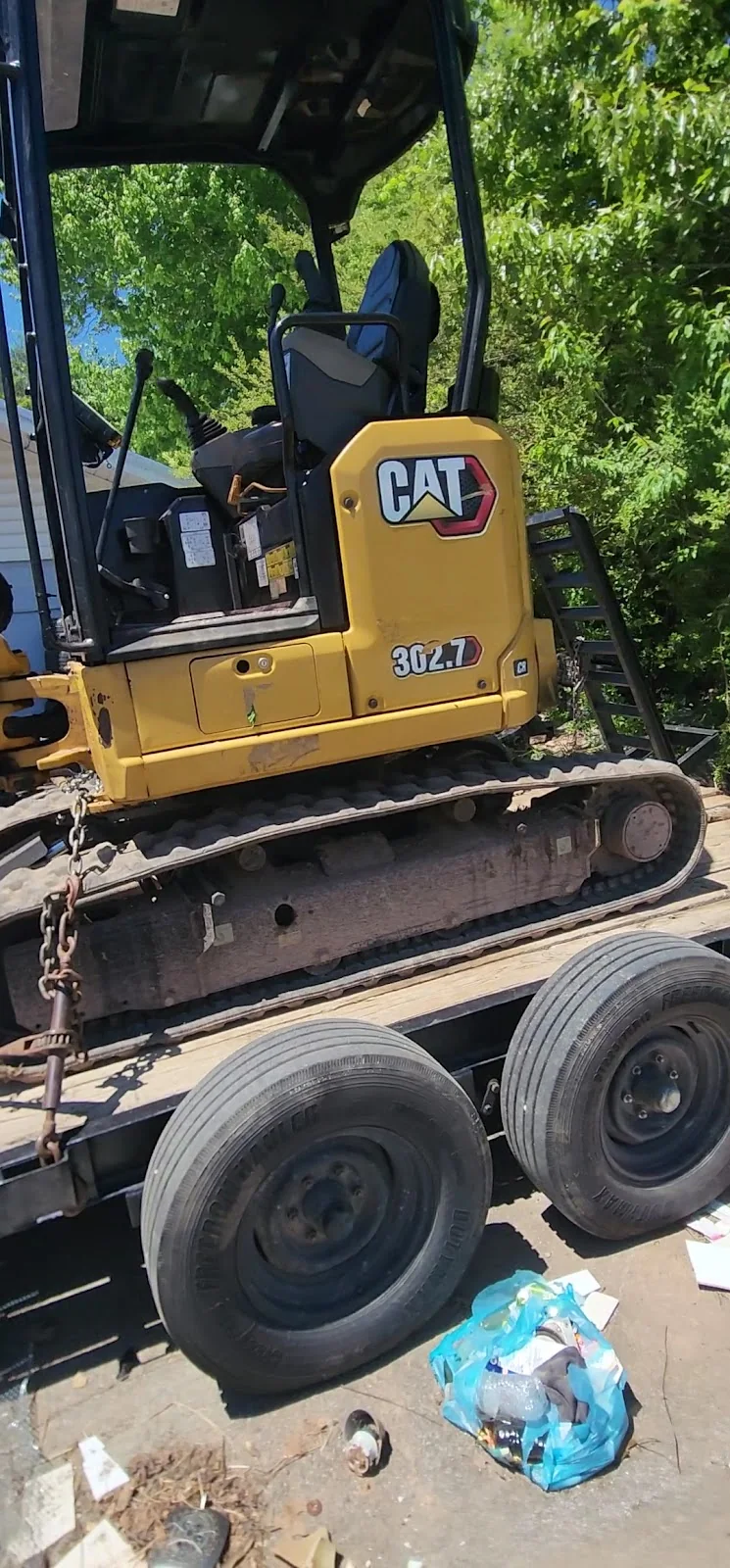
From there the job sequences like this. Day one is layout and marking: the trench line, the outlet point, the grades, and utility locates. Day two is trenching, which on Canton's rocky mountain soil is slower than the piedmont and sometimes needs a mini-ex rather than a walk-behind. Day three is gravel, perforated pipe, filter fabric, and backfill, plus the catch basins or channel drains at the low spots. Day four, when the job calls for it, is tying the drain outlet into a daylight or pop-up emitter and re-grading the surface so water reaches the drain at all. A single run is 2–3 days; a multi-zone yard with regrading stretches to 5–7 days plus drying time.
The order matters more than the parts. Grading first, drain second, outlet last. A drain installed before the surface is shaped to feed it just becomes a buried bucket.
One thing Canton homeowners often underestimate is how much the town's position between the Great Balsam range and the Pigeon River valley shapes a schedule. Storms here tend to stack up against the mountains, dump fast, and move on, which means a crew can lose a half-day to a pop-up shower in July and then work in mud the next morning. Good sequencing builds in a weather-day cushion on multi-zone jobs; a bid that promises a hard finish date on a five-day drainage install is not reading the same radar everyone else is. If your lot drains toward a neighbor downhill, the walkthrough also has to answer where that water legally and physically should go before a single trench gets marked.
Canton price picture: scope against range
What separates a $3,500 job from a $12,000 one in Canton is rarely the pipe. It is slope, rock, outlet distance, and whether the surface has to be re-shaped for the drain to catch anything. The table below maps honest scope to honest range; see the broader Haywood County grading cost breakdown for how the earthwork side prices.
| Scope | Typical range | Time on site |
|---|---|---|
| Single French drain run, daylight outlet nearby | $3,000–$9,000 | 2–3 days |
| Downspout tie-ins, catch basins, gutter extensions | $3,500–$6,500 | 1–2 days |
| Multi-zone yard drainage with trenching and outlet work | $6,000–$12,000 | 4–6 days |
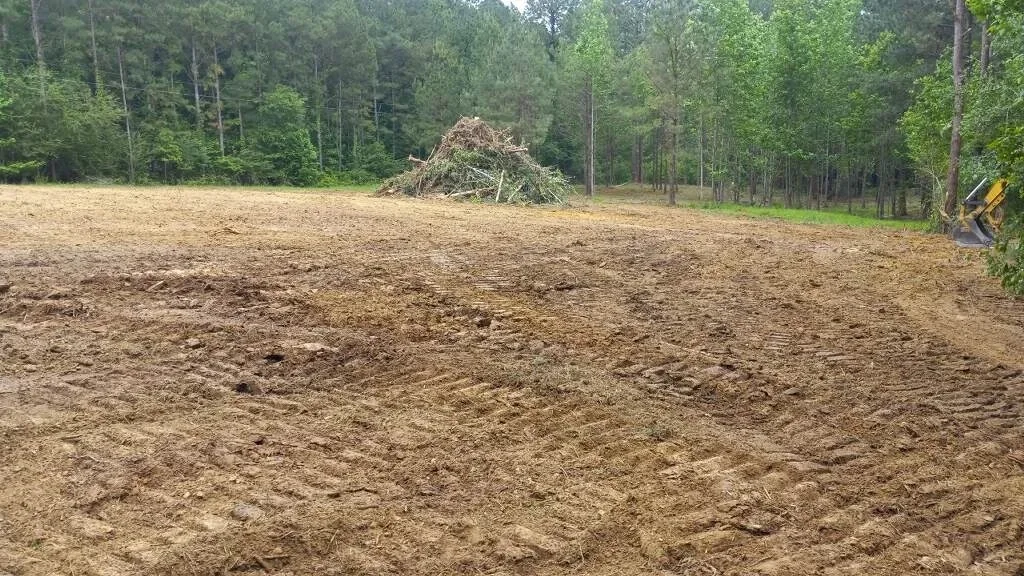
| Whole-yard regrading plus drainage | $15,000 and up | 1–2 weeks |
Rock is the wildcard. Canton sits on ground where a trench that should take an hour can take a day if it hits the wrong layer, and any bid that does not acknowledge that is guessing. The same is true of outlet distance: a drain that can daylight ten feet downslope at the property edge is a very different job from one that has to be carried a hundred feet or more to reach a storm inlet or a protected discharge point.
Access is the other quiet price mover. Lots along the older streets close to downtown Canton, and the hillside properties dotting the roads up toward the county seat in Waynesville, sometimes leave no room for a full-size machine. When a mini-ex or hand work is the only way in, the labor hours climb even though the pipe footage does not. A contractor who walks the access route before quoting is pricing the real job; one who quotes off a satellite image is pricing a job that does not exist.
The water history that drives almost every call here
Haywood County has seen 19 federally declared disaster events across 1973-2026, and the overwhelming majority sit in the storm and flood family. That record is the honest explanation for why drainage calls spike in Canton the way they do. Repeated heavy rain on ground that was graded for a drier assumption is exactly how French drain work becomes necessary rather than optional.
The practical consequence: a drain that only handles a normal rain is an underbuilt drain. The National Weather Service's rainfall data for the Southern Appalachians is the reason smart bids here size pipe and trench for the big event, not the average one — see weather.gov for the regional pattern. Size for the storm you have already had, not the one you hope for.
This history also explains the pattern of calls a Canton drainage contractor sees across a season. Spring brings the soaking, multi-day rain events that saturate ground and push water through crawl spaces and into low corners of yards. Late summer and early fall bring the fast, intense cells that overwhelm gutters and dump water against foundations in an hour. A system designed around one of those patterns tends to fail in the other. That is why the size of the trench, the diameter of the pipe, and the capacity of the outlet should all be chosen against the bigger of the two events, not the more convenient one.
Drainage is not separate from erosion control
On Canton's slopes, a French drain that dumps its outlet onto bare ground just relocates the problem downhill. The two jobs — moving water and holding soil — belong in one scope. Sediment control, outlet protection, and stabilized discharge points are part of a properly sequenced job, not add-ons. Our drainage and erosion control work exists because the two are inseparable on this terrain, and permit thresholds for larger earth-disturbing projects are set by the NC Licensing Board for General Contractors once jobs cross into regulated size.
If your drainage job will disturb more than a small area, expect soil and erosion provisions to appear in the scope. That is not upselling; it is the difference between a drain that works for years and one that silts in after two seasons. A discharge point that is not armored or vegetated will scour a gully within one rainy season on a Canton hillside, and that gully will then start feeding sediment back into the very drain it was supposed to protect.
For larger earth-disturbing work, the erosion-control expectations trace back to federal clean-water rules administered through the U.S. Environmental Protection Agency, layered with state and local review. The takeaway for a homeowner is simple: any drainage bid that disturbs a real area should describe how bare ground gets stabilized and how the outlet stays protected, not just where the pipe goes.
Who to hire, and what a good bid looks like
Canton homeowners should ask two questions before signing anything. First: where does the water exit, and is that outlet protected? A bid that describes trench, pipe, and gravel but never names the discharge point is incomplete. Second: is the surface being shaped to feed the drain, or is the drain expected to catch water that still runs the wrong way? The first answer separates a working system from a buried pipe.
For anything beyond a single run, confirm licensing and insurance status through the state board before work starts. Our own Canton grading contractors page covers how we sequence earthwork and drainage together on the same site, and the drainage guide link above covers what a proper site walkthrough includes. Get the walkthrough first, then the number.
A complete bid for a Canton yard usually names the trench depth and width, the pipe type and diameter, the outlet location and how it is protected, and whether any grading is included to move surface water toward the drain. It should also say what happens if rock is hit, since that is the one variable that can genuinely change the cost of a job after the work starts. When those pieces are in writing, the price stops being a guess and starts being a scope you can compare against another contractor's scope line by line.