Why Barnardsville lots don't prep like Asheville lots
Drive out Barnardsville Highway past the school and the valley tightens: the road rides the creek, the hillsides crowd in, and most buildable ground is a bench somebody carved out of a slope decades ago. Lots here tend to be long and skinny along the water, wide at the road and pinched at the back, or perched on a shelf with a 20-30 percent grade falling away behind. Compare that to a graded subdivision lot in Weaverville or a flat parcel in Leicester and the whole job changes: the machine time goes into access and cut-and-fill balance, not just topsoil stripping.
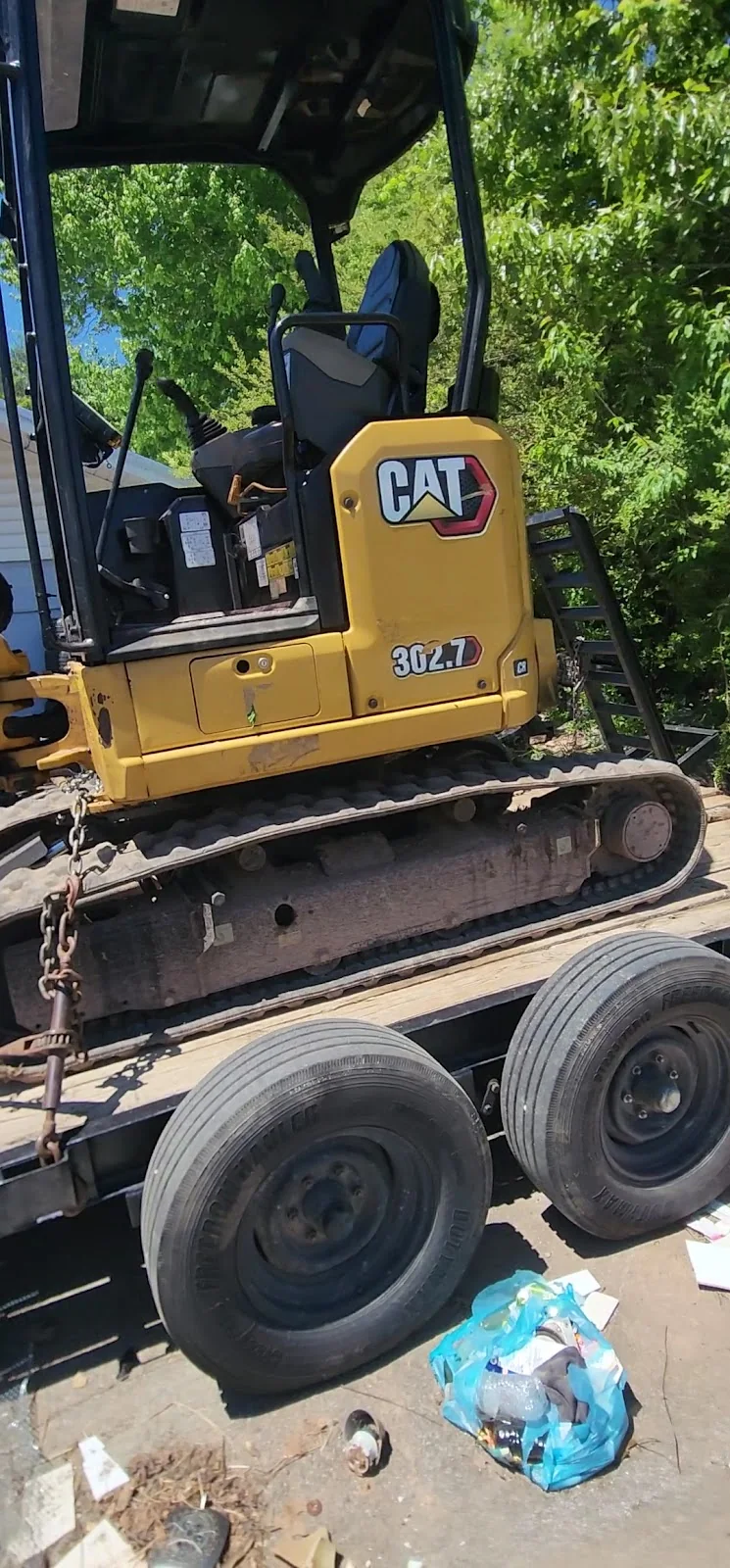
Two practical consequences. First, equipment has to be sized to what can actually get in — a narrow gravel drive with a culvert at the mouth rules out the big iron, and a smaller excavator and tri-axle loads are slower per yard. Second, the pad elevation decision is made by the driveway, not the house. If the only sane road grade puts the house four feet lower than you planned, the foundation plan changes with it. That conversation should happen before the septic perc and before anyone stakes a corner. See the full site prep and building pads overview for how the sequence normally runs.
What the work actually involves on a hillside pad
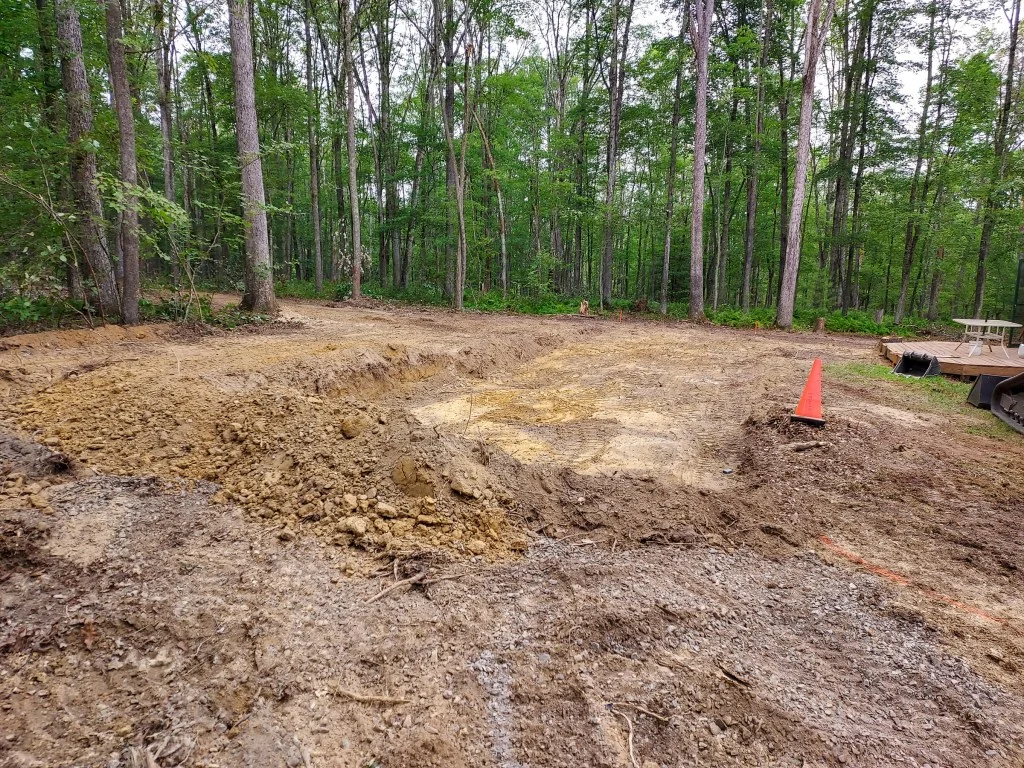
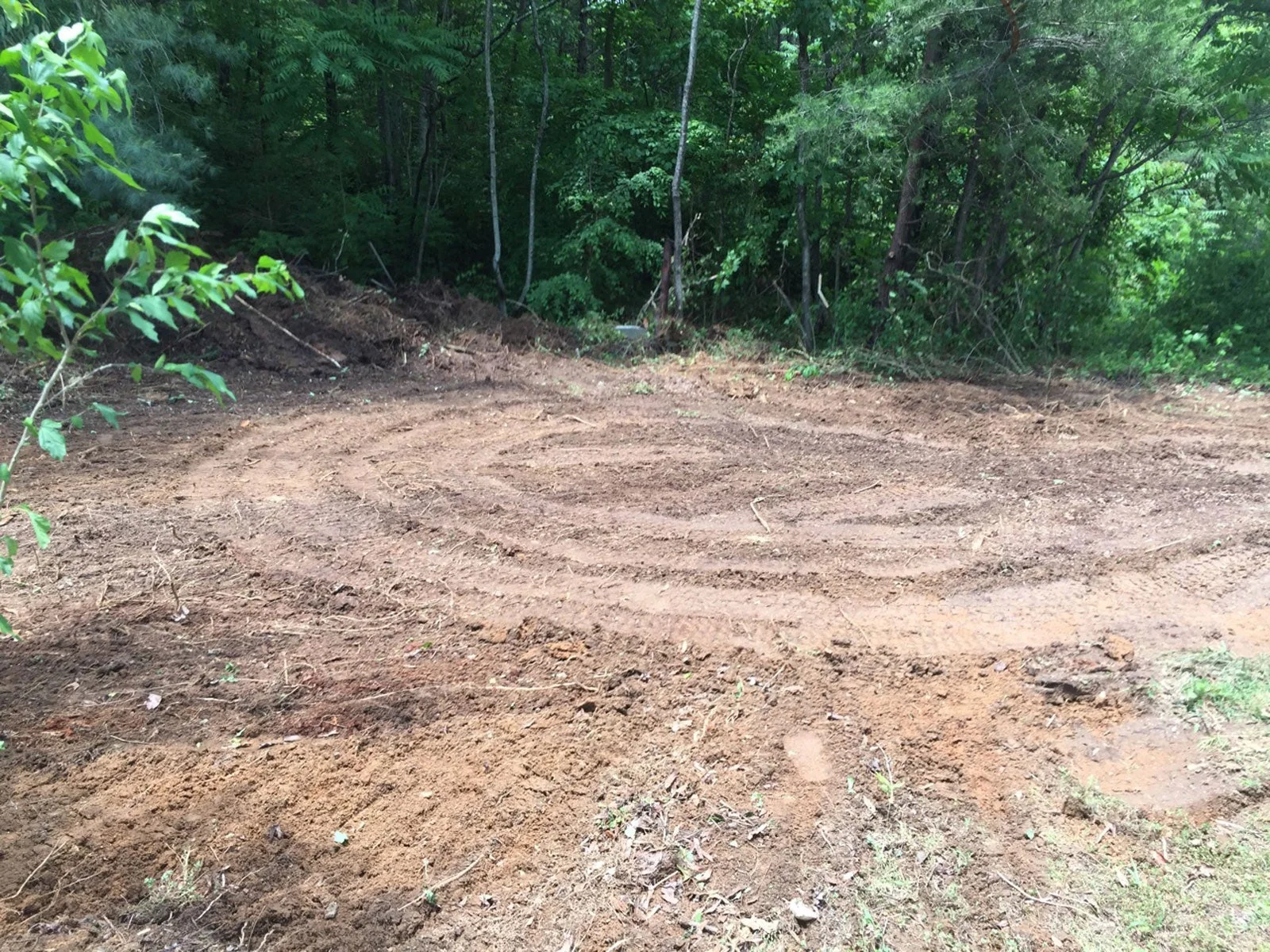
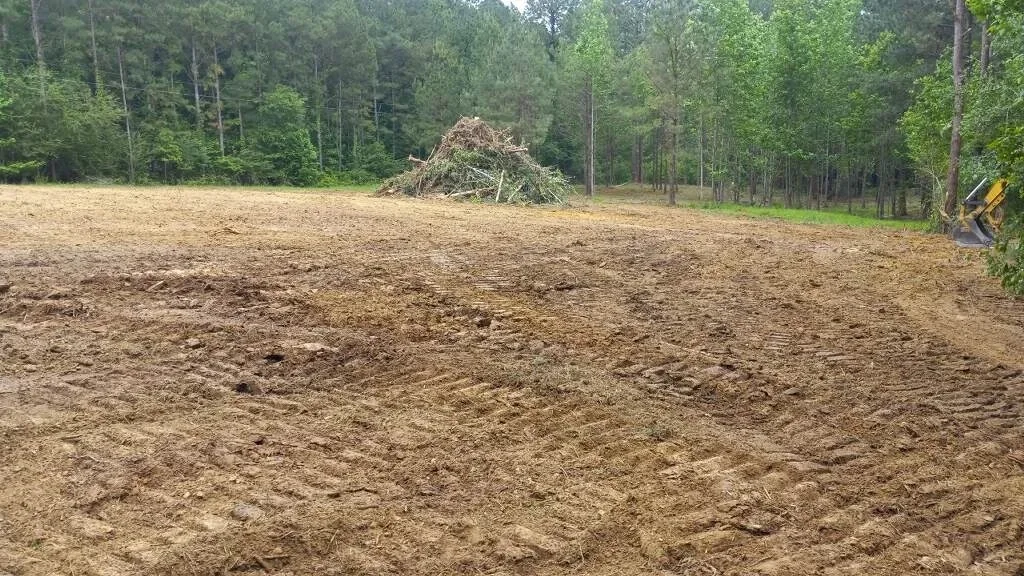
A typical Barnardsville pad job is less about clearing and more about dirt balance. The steps that drive cost: clearing and grubbing the footprint plus a work zone; stripping and stockpiling topsoil separately (it never goes back under the pad); the cut on the uphill side and the fill on the downhill side; compacting that fill in lifts, which is where a cheap job goes wrong and a structural problem gets built in; then drainage — a cut-off swale above the pad and a proper outfall below it. On creek-adjacent ground add extra for bank protection and keeping sediment out of the water.
Two rules that come from outside the trade. Anything touching a stream or its banks pulls in federal permitting questions, and the U.S. Environmental Protection Agency oversees the stormwater and wetlands side of that. And the code that governs how the pad, footings, and drainage are inspected is the state-adopted residential code enforced through the NC Office of State Fire Marshal code enforcement arm, working with Buncombe County inspections. The engineer's compaction letter and the inspection sequence aren't paperwork theater — they're the two things that protect you if the fill settles in year three.
The Barnardsville pad price picture
Ranges below are for this valley and the surrounding hollows, not flatland averages. Long pushes, narrow access, and rock all move you up the table. For how these lines price across the whole county, see the Buncombe County grading cost breakdown.
| Scope | Typical range | What moves the number |
|---|---|---|
| Small pad touch-up / re-grade existing pad | $1,800-$4,500 | Machine access, how much material has to move |
| Standard building pad, moderate slope | $6,500-$14,000 | Cut depth, fill volume, compaction lifts |
| Steep or narrow-access pad | $14,000-$24,000+ | Small-machine time, haul-off, retaining needs |
| Driveway cut and gravel (per 100 linear ft) | $2,500-$6,000 | Grade change, culvert, base depth |
| Drainage: cut-off swale + outfall | $1,500-$5,000 | Length, outfall distance, creek proximity |
| Rock excavation (when hit) | $60-$200 per cu yd | Whether it breaks or has to be hammered |
Treat any bid that skips drainage or compaction as incomplete rather than cheap. If you want the quote handled by crews who work this valley regularly, start with grading contractors in Barnardsville.
Water on this ground is not a side issue
The federal disaster record for this county explains most of the drainage work we quote: 19 declared events touch Buncombe County across 1973-2026, and they skew heavily storm and flood. Barnardsville sits on the Ivy Creek side of the county, where a summer thunderstorm can put a foot of water through a hollow in an hour, and the National Weather Service flood and flash-flood products for this terrain are worth reading before you pour a footing. A pad built without an uphill cut-off swale and a positive outfall will take water against the foundation the first big rain. On a creek lot, that same water can undercut a bank or push sediment onto a neighbor.
The practical rule: design drainage for the storm you saw last year, not the average year. Grade away from the pad on all sides, keep swales clean, and make sure the outfall actually reaches a stable channel instead of dumping on the property line. This is the part of site prep that pays for itself and the part cheapest bids quietly omit.
Hiring and permitting checks for this valley
Three questions worth asking before anyone fires up a machine. First, can they get equipment to your pad without tearing up the creek-side drive, and what does that do to the price? Second, do they compact fill in documented lifts and provide a letter, or do they push dirt and call it done? Third, is the scope sequenced right — clearing, cut, fill, compaction, drainage, then foundation — because doing drainage last is how you end up re-excavating around a finished foundation.
On licensing: North Carolina requires general contractor licensure above certain project thresholds, and the NC Licensing Board for General Contractors is the place to verify who you are dealing with. Grading alone doesn't always cross that line, but a combined pad and home project usually does, and an unlicensed operator can leave you with no recourse if the fill fails. Get the scope, the drainage plan, and the compaction terms in writing, and confirm who pulls the grading and erosion-control permits before work starts.