The machine, the spoil, and the quarry: what actually sets the price here
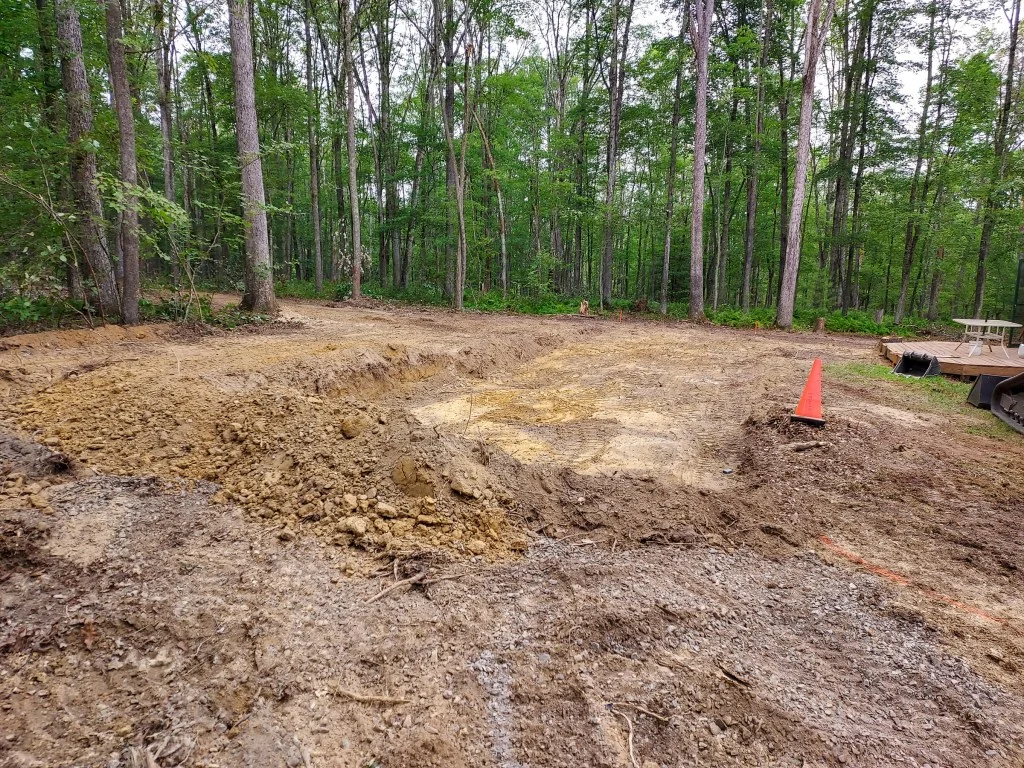
The first quote you get in Buncombe County often reflects a flat-lot formula: so many dollars per linear foot, stone and pipe included. Then the estimator walks the property. A half-acre lot off a Swannanoa gravel drive with a 30 percent grade above the house is not the same job as a level yard in Fletcher, even when the trench runs the same length. The deciding factor is rarely the drain itself. It is whether a compact excavator can reach the uphill side at all, or whether a crew ends up hand-digging a bench into the slope because the only access is a switchback wide enough for a wheelbarrow.
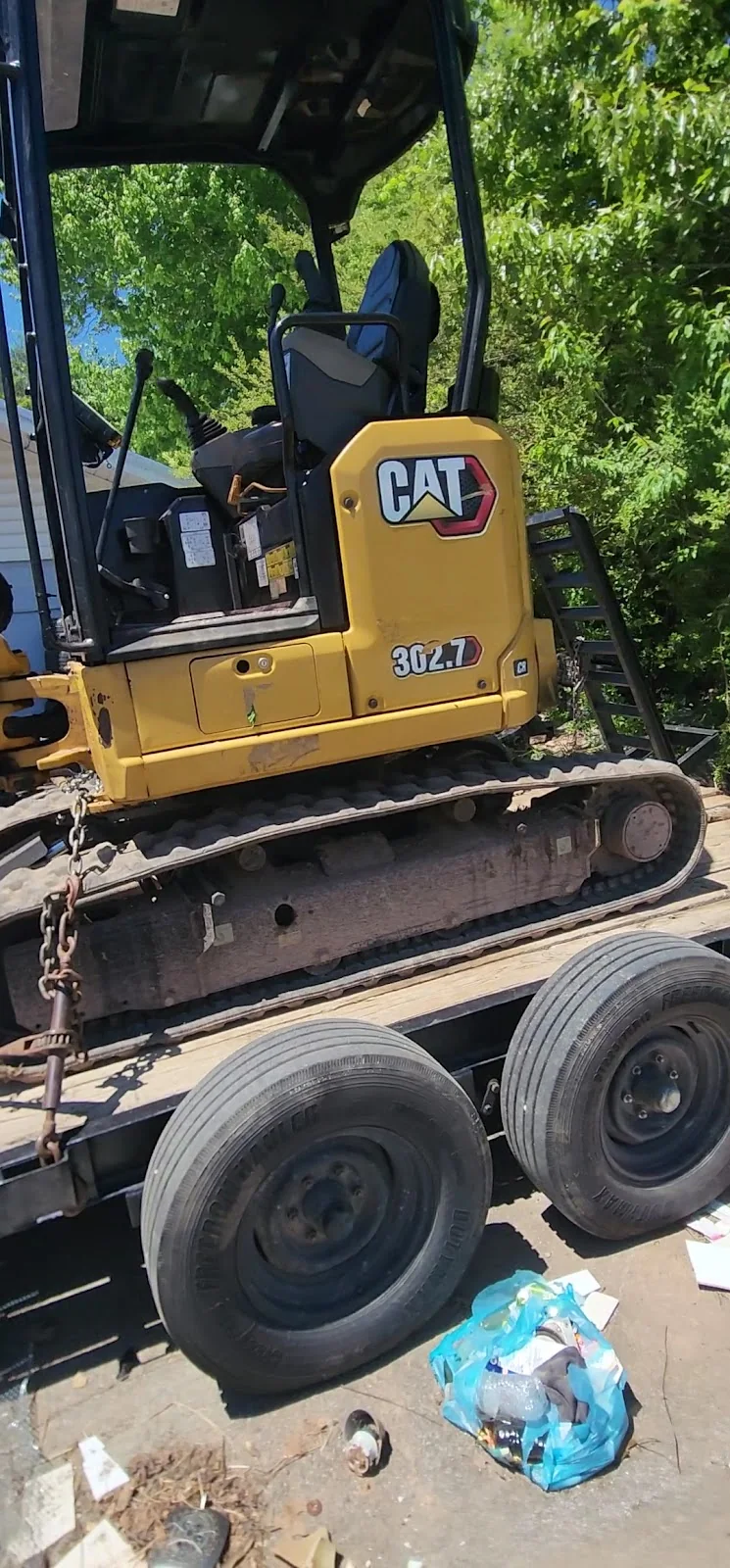
That access reality does three things to the price. It adds labor hours before any pipe goes in the ground. It changes how spoil leaves the site — a tracked machine and a dump trailer beat a wheelbarrow and a pickup. And on tight lots, it can mean renting a smaller machine with a narrower bucket, which cuts hourly productivity at the same rate.
Driveways are their own gate. A paved drive off a Haywood Road or Weaverville approach may have to stay untouched, so the machine walks in on plywood mats, or the crew cuts through a yard and repairs the turf afterward. On the steepest lots above the French Broad, the machine is sometimes staged at the bottom and the trench is dug uphill in short pulls, working the spoil downhill instead of up. That sequencing is invisible in a flat-lot quote and obvious in the labor line.
In this county, a drainage plan that ignores access is not a plan yet. Our french drain installation page walks through how a crew sequences a sloped yard, and our drainage and erosion control guide covers where a drain fits when grading and erosion are part of the same problem.
What Buncombe County homeowners actually pay
These are working regional ranges, not quotes. Every lot here has its own grade, its own rock, and its own driveway situation, so the middle of the range is wider than it is in the Piedmont. A job in a Black Mountain hollow that bottoms out in clay and groundwater reads differently than one on a drained ridge in Arden, and both can land in the same table row.
| Scope of work | Typical Buncombe range | What drives it |
|---|---|---|
| Short surface swale or downspout extension | $400 – $1,500 | length, whether any trench gets dug |
| Single-run French drain, easy access | $3,000 – $6,500 | linear feet, pipe type, outlet location |
| Full-perimeter drain around a crawl space | $4,500 – $9,000 | footing depth, foundation type, tie-in to existing footing drain |
| Slope-cut drain with retaining component | $8,000 – $15,000+ | wall length, engineering, how far spoil has to travel |
| Gravel and stone budget (alone) | $30 – $65 per ton delivered | quarry distance, quantity, whether it's washed #57 or riprap |
Notice the last row. Stone is quoted per ton because on these lots it is often 30 to 50 percent of materials cost, and the haul distance from the quarry to your driveway is what sets it. A 40-ton crawl-space job is a different trucking problem than a 6-ton downspout run, and the per-ton delivered price reflects that scale.
Filtration fabric and outlet hardware are small line items individually but add up across a long perimeter run, and a discharge that has to be piped to a daylight point below the house can cost as much as the drain trench itself. Any quote that folds those into one number hides where the money actually goes.
The quarry math behind every gravel bid
Buncombe County does not have a gravel quarry sitting next to every subdivision. Stone comes in from quarries around the county and from operations to the east and south, and the trucking charge is real money. On a job needing 20 to 40 tons of washed #57 stone, haul distance alone can separate two bids by several hundred dollars per load — before anyone touches a shovel. When a contractor quotes per-linear-foot without separating stone and haul, they are either eating the difference or padding the whole figure, and you cannot tell which.
The honest alternative is a quote with stone priced separately: so many tons at so much per ton delivered, plus the excavation and pipe labor. That structure lets you see the haul line, and it lets a change order stay honest if the crew hits rock and has to import bedding stone the original plan did not anticipate. A dry stacked wall against a cut bank adds riprap on top of that, so a sloped lot can carry two different stone line items at different prices per ton.
Truck access to the drop point matters as much as distance. A driveway that cannot take a tandem dump truck means the stone gets shuttled in smaller loads from a staging point at the road, which is labor the quarry never sees. If drainage ties into regrading, the yard slopes toward house guide covers how the surface water piece and the subsurface piece get priced together — because doing one without the other usually means the same driveway gets dug twice.
Water history makes this more than a comfort project
There is a reason French drains sell in Buncombe County. The same Blue Ridge topography that makes the lots scenic channels storm runoff into the cut side of a house, and the federal record agrees the pattern is real: 19 federally declared disaster events touch Buncombe County (1973-2026), most of them storm and flood family. That history is why water management ranks near the top of any foundation conversation here.
Two rules follow. First, a drain that discharges onto a neighbor's slope or into a septic field is not finished — it needs a legal and practical outlet, which sometimes means daylighting far below the house. Second, an undersized drain fails in the first five-year storm. The National Weather Service precipitation records for the mountains are a reasonable place to sanity-check whether a proposed pipe and stone size will actually move the water your ridge gets.
Asheville's own street pattern shows the problem in miniature: downtown sits in a bowl where the French Broad and Swannanoa meet, and the neighborhoods that climb away from those rivers sit on the slopes that feed them. A lot that drains toward one of those creeks is not just managing its own rain; it is managing water that arrived from uphill. That is why outlet placement on these lots is a design decision, not an afterthought.
Permits, licensure, and what to ask before signing
A French drain itself usually does not need a building permit if it stays outside the foundation footprint and does not alter grading on a regulated slope. Two situations flip that: any drainage structure that falls under stormwater or grading rules for a disturbed area, and any part of the work that touches a retaining wall over the height the county treats as structural. When in doubt, county planning can tell you in one phone call what triggers a plan review, and the NC Department of Insurance, Office of State Fire Marshal is the code enforcement arm inspectors work from.
Contractor licensure is the other half. In North Carolina, general contracting on a project above the state threshold falls under the NC Licensing Board for General Contractors. Work that involves water and sewer service lines may pull in plumbing licensing as well. A drainage-only contractor may not need either license, but they should still carry liability coverage and be able to describe their outlet plan in writing.
Ask for proof of insurance before the machine arrives, not after. On a steep lot, a slipped excavator is the kind of event that only matters once, and the difference between a covered mistake and an uncovered one is a certificate you can request up front.
How to keep the price honest
Three moves protect you in this market:
- Separate stone from labor. Ask for a line-item quote with tons and haul distance shown. If the contractor cannot break it out, you cannot comparison-shop.
- Insist on a defined outlet. Every drain terminates somewhere. That point should be on the sketch, and it should be a place you are allowed to discharge.
- Ask what the water does before the trench. A good crew starts with a walk of the property in a rainstorm or with a hose test, not with a wheelbarrow quote.
Those three questions tend to eliminate the bids that were never going to work on a Buncombe County slope. They also make the surviving quotes comparable, which is the only way a per-foot number means anything up here.