Read what's already there before you pay to replace it
On these ridges and creek bottoms, the most expensive grading mistake is assuming you need a new driveway, a new pad, or a whole new grade — when the one you have is fine and just draining wrong. In Marshall, the tell is almost always water: a driveway that holds puddles below a spring seep, a building pad that heaves toward the house, gravel that walks every time it rains hard. Before anyone sells you a rebuild, get eyes on the existing grade. A competent crew can re-shape a driveway crown, cut a proper ditch on the uphill side, and add a cross-drain for a fraction of a full replacement. If you're weighing whether the work is even needed, start with our grading and excavation overview so you know what you're actually buying.
The county's terrain makes this non-negotiable. Marshall sits along the French Broad where the land drops fast, and building sites up the hollows are cut into slope. A driveway that looks flat from the windshield is usually falling one way and seeping the other. Read the water lines before you sign a rebuild quote.
What the work actually costs here
Madison County pricing reflects the ground: rock, slope, and access. A straight re-grade of an existing drive is one thing; cutting a new one into a 20-percent hillside with boulders is another. The table below is the honest picture — a working band per scope, not a quote. For the county-wide working numbers behind these ranges, see grading cost in Madison County.
| Scope | Typical range | What moves the number |
|---|---|---|
| Re-crown + re-ditch existing driveway | $1,800-$4,500 | Length, culvert count, whether rock is already in place |
| New gravel driveway cut (moderate slope) | $3,500-$8,500 | Linear feet, grade, topsoil depth, base stone required |
| Building pad, cut and compact | $4,000-$9,500 | Square footage, cut depth, rock, how much fill has to be hauled in |
| Drainage install (swales, cross-drains, outlets) | $1,200-$5,500 | Run length, outlet location, whether a storm structure is needed |
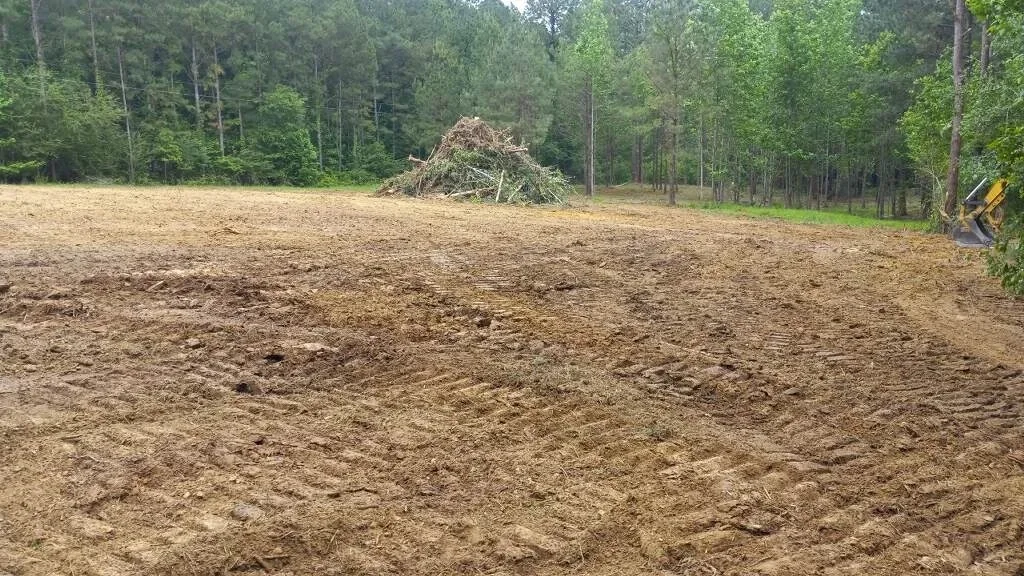
| Clearing + rough grade for a build site | $3,000-$12,000 | Acreage, stump count, haul-off vs. on-site burn or bury |
Steep hollow sites above the French Broad routinely carry a rock line item — and any bid that doesn't mention rock on those sites is either guessing or cutting a corner. Treat the range as a range. Get at least two site-read quotes.
Permits, code, and who's allowed to do the work
In North Carolina, the line between grading work and licensed general contracting is scope and price. Small, incidental grading tied to a driveway or drainage repair usually isn't the trigger; a project that becomes a structural or building site — a new pad with a build, a retaining structure, a change to how water leaves the property — can pull permitting and licensing into it. The NC Licensing Board for General Contractors publishes the dollar thresholds and definitions; if a bid is large enough to make you pause, ask the contractor whether their license covers the scope.
Any change to how stormwater exits a slope in Madison County needs to be thought through, not just pushed downhill. Erosion control, outlet placement, and the receiving water all matter — the NC Building Code Council / NCDOI Engineering Division publishes the state's residential code requirements, and the drainage sections apply to grading work whether or not a permit is pulled. A crew that talks about outlets and vegetation before it talks about moving dirt is usually the right one.
How Marshall's ground shapes the job
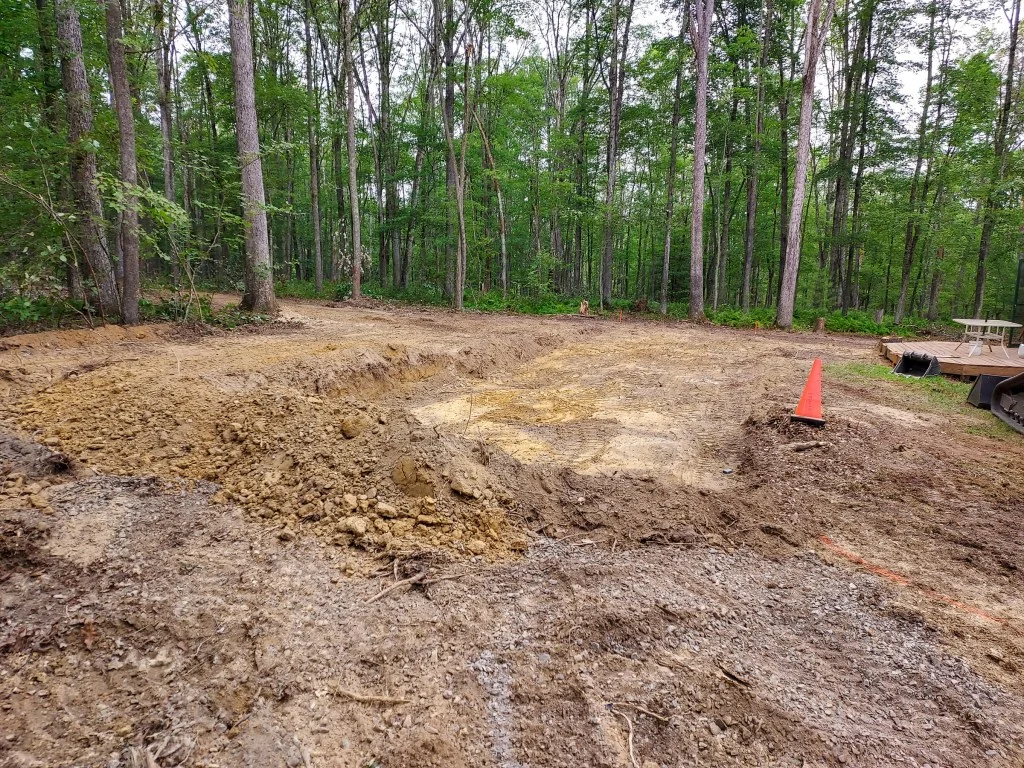
This is not flatland work. Marshall runs along the French Broad River where the valley is narrow and the walls are steep, and most of the surrounding residential ground is cut into those walls. Two practical consequences. First, cut-and-fill pads need compaction and a bench, or the downhill edge slowly slumps — a failure that shows up two winters later as a cracked slab or a leaning wall. Second, water you shed from one grade has to go somewhere legal and stable. The National Weather Service records for this part of the state are the reason: repeated heavy-rain events here test every outlet and every swale, and the ones built shallow are the ones that fail.
The federal disaster record backs that up: 21 declared events have touched this county over 1978-2026, overwhelmingly storm and flood family. Every one of them was a water test on somebody's grade. If you're planning work, plan for the wet year, not the average one. Land-clearing and grubbing for a site in these hollows is its own job — see land clearing in Marshall for what that scope includes and what gets hauled or burned.
Choosing a crew that reads ground, not just numbers
The right grading contractor asks about water first. Where does the uphill neighbor's runoff go? Where is the outlet, and is it legal? Is there a spring seep uphill of the pad? On Marshall sites, those three questions separate a crew that fixes the problem from a crew that re-grades it and hands it back. Ask for a walk-through, not a phone quote. Ask what base stone they spec and why. Ask whether they'll come back after the first big rain. Contractors who do this work on hillsides expect that question and answer it plainly.
If the existing grade can be saved, saving it is usually the cheaper, better answer — less disturbance, less haul-off, less new erosion risk. Spend the money on the water problem and keep the driveway you already have unless the grade is genuinely failing.