What Madison County ground does to a driveway budget
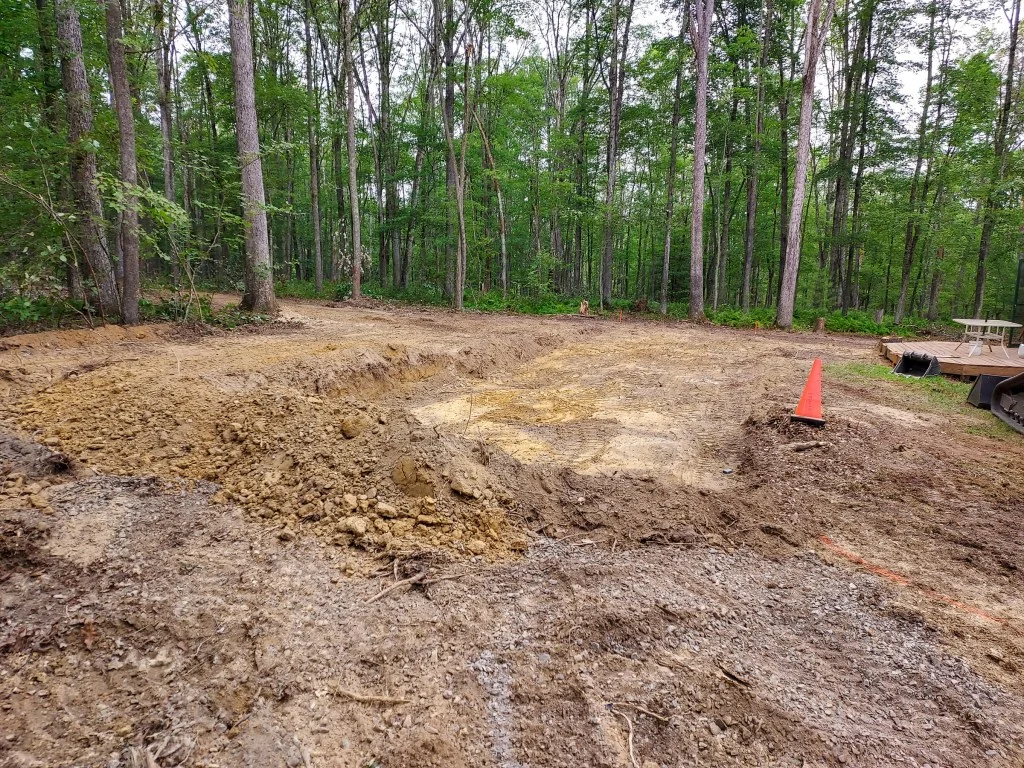
Around Marshall, three ground conditions decide most of the cost before a stone type is even discussed. The first is red clay: the hillside soils above the French Broad and its feeder creeks hold water like a bucket, so a gravel driveway built directly on clay pumps, ruts, and loses its crown every wet season. The second is rock — road cuts and house seats in these valleys frequently bottom out on weathered rock or hard ledges, which means ripping or drilling before you can blade a decent grade. The third is old fill: plenty of lots around town and along the county routes were built up decades ago with whatever was on site, and fill that was never compacted in lifts behaves like a sponge no matter what you put on top.
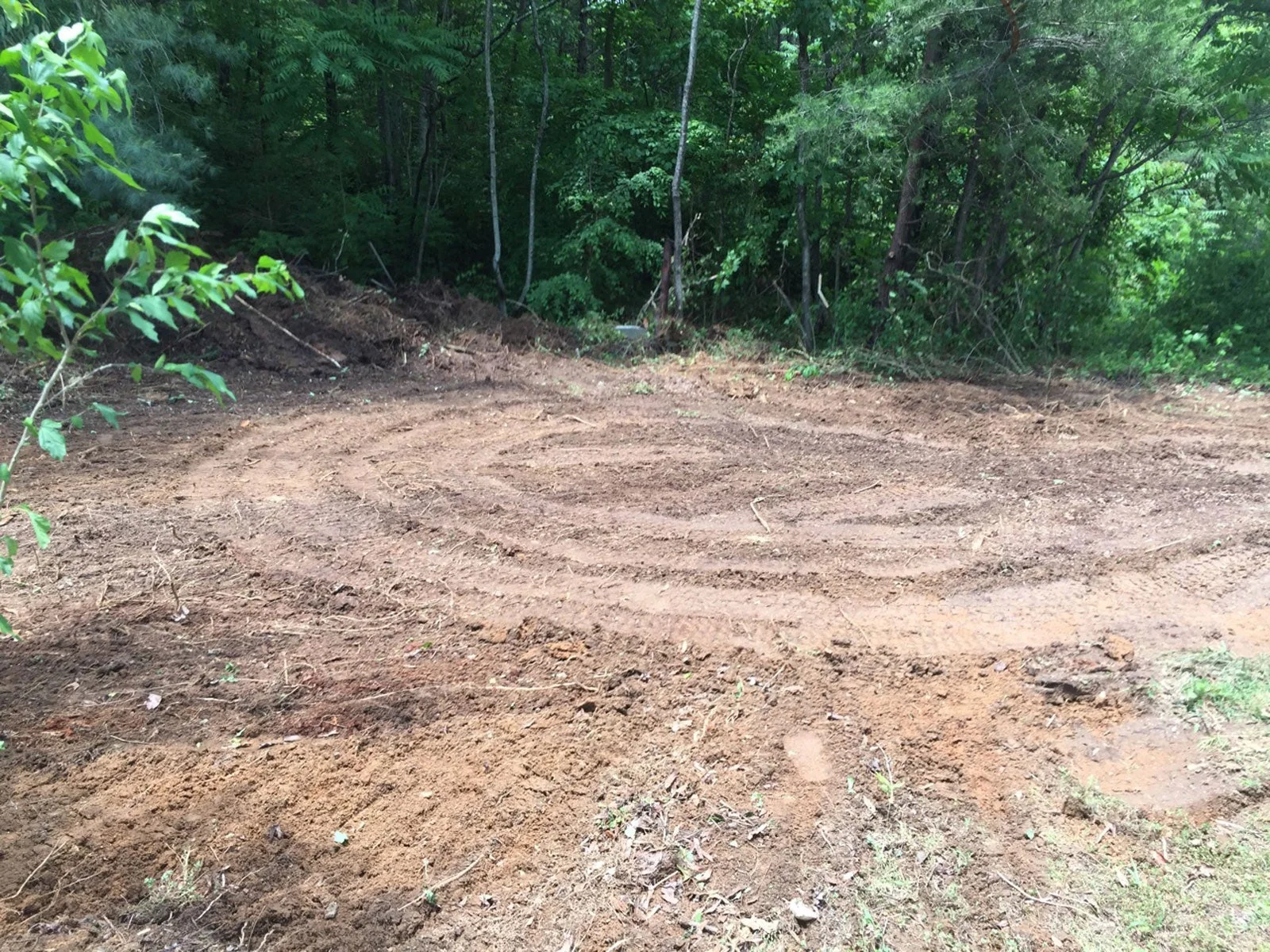
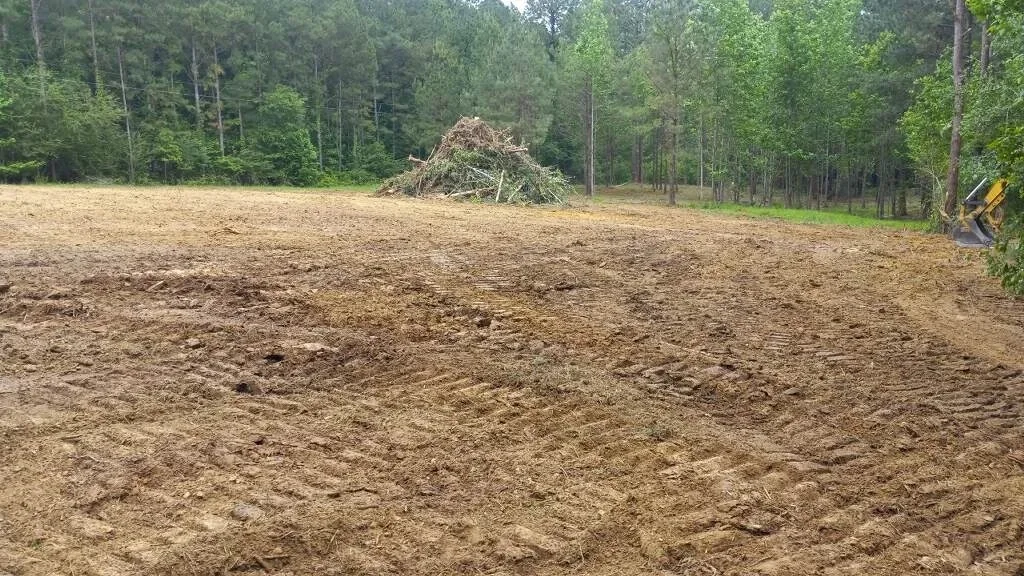
The practical consequence is that Marshall driveway quotes vary by scope, not by the price of stone. A job that only spreads gravel over existing ground is a different animal from one that strips clay, imports and compacts base, and re-shapes drainage away from the house and the slope.
Structural sections: base vs. surface, and why both are line items
A driveway that lasts in this terrain is a layered build, and each layer answers a specific problem. The base course (usually a crushed stone with fines) is what carries the load and sheds water; the surface course is the stone you see and drive on. On clay subgrade, skipping the base is the single most common reason a Marshall driveway turns into a spring mudhole within a year or two. On rock, the base has to be thick enough and fine enough to bridge the irregularities instead of nesting into them and leaving hollow spots.
Drainage is not a separate luxury on these lots; it is part of the engineering. Water that sheets off a cut bank or a neighbor's uphill pasture will find the driveway, and the driveway has to be shaped to move it off and away. That is why a proper scope includes grading and water management, not just a stone count. The NC Building Code Council and NCDOI Engineering Division treat site drainage as a real requirement in residential construction, and the same logic applies to the approach.
Scope and realistic price ranges
Use the table below as a planning band, not a bid. Every line moves with access, haul distance, and how much unsuitable material has to leave the site. A driveway that has to be rebuilt from the subgrade up will sit at the top of the range; a simple top-dress over sound existing base sits at the bottom.
| Scope of work | Typical installed range |
|---|---|
| Re-grade and top-dress existing gravel, minor shaping | $1,200–$3,000 |
| New gravel driveway, average length, clay subgrade with imported base | $4,200–$11,500 |
| Long or steep access with extensive cut/fill and drainage | $12,000–$25,000+ |
| Culvert or drainage crossing installed as part of the build | $900–$3,500 additional |
If you want the county-level picture across towns, the Madison County grading cost breakdown carries the working numbers; the driveway-specific scope lives on the driveway grading and gravel service page.
Water, weather, and the long haul on a slope
Madison County's federal disaster record is part of the driveway conversation: 21 declared events touch this county (1978-2026), and the overwhelming majority are storm and flood family. That pattern is not trivia — it is why a driveway graded flat and out to the road will eat itself in a heavy season, and why the National Weather Service's local outlook is worth checking before scheduling a build. Water has to be sent to a daylight point, and on a mountain lot that often means a culvert, a swale, or a shaped ditch, not just a crown.
The right sequence is water first, stone second. If the runoff path is not solved, the best gravel in the county will silt up from below, and the fix cost doubles because now the base has to come out. Contractors around Marshall who have worked these slopes will talk about drainage before they talk about stone type.
Hiring on these lots: the checks that matter here
Ask three questions before you sign anything. First, how much unsuitable material has to leave the site — on clay and old fill, this number separates a real bid from a topping. Second, what the drainage plan is, drawn or described, including where the water exits. Third, whether the job triggers general contractor licensing. North Carolina draws that line at project value, and the NC Licensing Board for General Contractors is the authority on where it sits for your scope.
For anything involving a crossing or a change to drainage that affects a septic area, plumbing-side rules can apply too, and the NC Board of Examiners of Plumbing, Heating and Fire Sprinkler Contractors is the reference there. A crew that knows those lines will tell you when your project crosses one. When you are ready to compare scopes, the Marshall grading contractors page is the starting point.