Read the drive before you spend on it
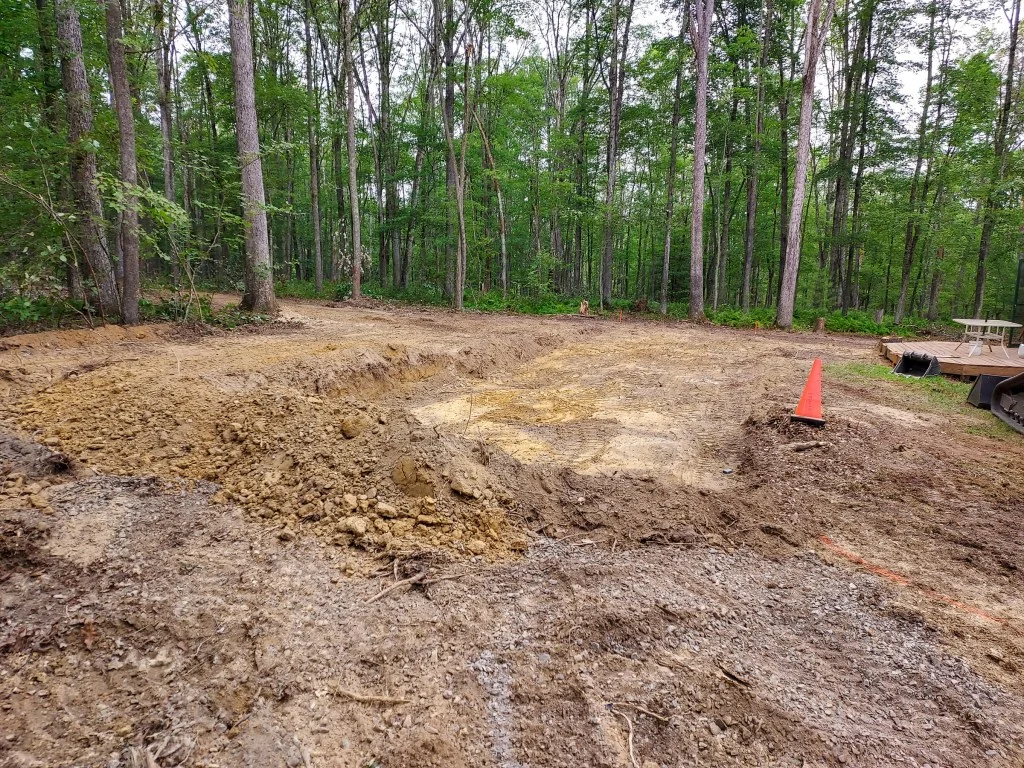
A Leicester gravel driveway almost never fails because the stone wore out. It fails because water got under it and left with the fines. Before anyone quotes you fresh gravel, the driveway has to be read like a site: where the high point sits, where runoff from the county road and the uphill woods crosses it, and where the existing crown and ditch — if there is one — actually send water. On the north-facing slopes that run up from Sandy Mush Road toward the Buncombe County line, the answer is usually that the drive sheds toward the house pad instead of away.
That matters because a pad that holds water quietly destroys itself: the same storm you shrug off re-routes a little more base material down the hill. If the existing drive is only rutted on one side, or if the washouts appear at the same culvert every spring, the fix is grading and drainage geometry first, stone second. Re-spreading gravel over a drainage problem is the single most common money-wasting move on Buncombe County hillside drives.
The read itself is cheap and fast. Walk the drive after a hard rain and note where water is still standing an hour later, where the gravel has fanned out into a delta at the bottom of the slope, and whether the uphill woods are draining onto your drive or away from it. Those three observations usually tell a contractor more than any measurement, and they tell you whether you are buying a regrade or a drainage rebuild.
What a Leicester driveway repair actually costs
Local pricing tracks slope first, footage second, and how fast a crew can get a machine to the worst part of the drive. A long pull-in off a Leicester Highway side road with a grade over 15 percent will sit toward the top of every band below regardless of age. See the Buncombe County grading cost table for how the same work prices on flat versus sloped lots.
| Scope | Typical range |
|---|---|
| Regrade existing gravel drive (blade, crown, compact) | $350–$1,200 |
| Washout repair — regrade plus fresh stone | $400–$1,500 |
| Washout repair with ditching and culvert | $800–$2,800 |
| Engineered drainage on a steep grade | $2,500–$6,500 |
Stone is the visible line item, but hauling and machine time are what move a quote. Ask for the scope split out by grading, drainage, and stone so you can see what you are really paying for. Pads and aprons are a separate job — the driveway grading and gravel guide covers those.
One pattern worth knowing: on a Leicester drive under about 250 feet with a moderate grade, the regrade band is usually the whole job, and a quote above it should come with a written explanation of why. On longer or steeper drives, the middle bands are the honest answer, because the ditch and culvert work is what keeps the new stone in place past the first spring.
Drainage rules that apply to a driveway in Buncombe County
Anything that redirects water off a Leicester drive has to end somewhere legal. The EPA treats stormwater runoff as a regulated concern for good reason: an uphill culvert that dumps onto a neighbor's property or into a creek without thinking through the outlet is a liability, not an improvement. In practice, that means sizing the culvert to the watershed above it, armoring the outlet, and checking with Buncombe County before any work near a stream or drainage easement.
When a driveway repair crosses into structural work — retaining walls, bridge decks over a ravine, anything a car drives on top of — the licensing question matters. The NC Licensing Board for General Contractors sets the threshold where a job requires a licensed general contractor, and a steep-lot wall is usually past it. Get the license number in writing before work starts.
Drainage easements are the other quiet issue on Buncombe County hillside lots. If a swale or ditch serving uphill parcels crosses your drive, altering it without checking can create a problem for a neighbor and a complaint for you. The county can tell you whether an easement is recorded before anyone cuts a new channel.
Storm history is the reason Leicester drives wash out
Buncombe County has recorded 19 federally declared disaster events over 1973-2026, and the pattern is overwhelmingly storm, flood, and landslide family. A Leicester driveway that survived one wet winter can lose its whole crown to a single multi-inch rain event on a steep grade, because the hillside above it is now delivering water faster than the original builder assumed. The National Weather Service tracks these events, and the local pattern is worth checking before you decide whether a washout is a one-off or a recurring drainage failure.
If the same culvert washes out most springs, the drive is telling you its capacity or outlet is wrong, not that the stone is bad. That is the moment to price drainage, not more gravel.
There is also a seasonal rhythm to it. The wettest systems here tend to arrive with tropical moisture in late summer and fall, while the freeze-thaw cycles of January and February loosen a crowned surface that was already marginal. A drive that looks fine in October can be rutted by March without any single dramatic storm, which is why spring is the busiest season for this kind of work.
Sequencing the work so it stays fixed
A repair that lasts gets done in order: clear and re-shape the ditch or swale, fix the culvert inlet and outlet, establish a crown so water runs off the driving surface, then place and compact stone in lifts. Skip a step and the drive returns to its rutted shape within a season or two. Crews with slope-lot experience in Leicester know this and will tell you which step your drive is currently failing at.
If you are not sure a repair is worth doing versus replacing the drive, the Leicester grading contractor guide covers how to tell the difference and what a fair bid looks like. Get at least two written scopes, and make both bids describe drainage — not just stone tonnage.