Why Woodfin excavation bids don't look like Asheville bids
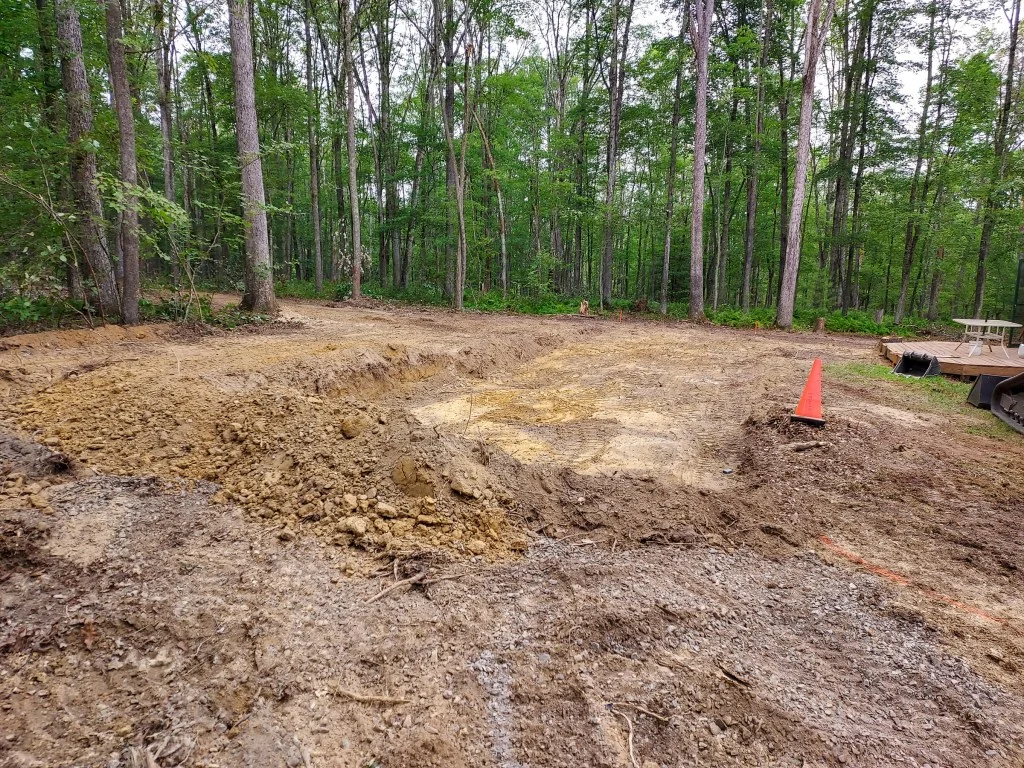
Woodfin runs along the French Broad River north of Asheville, and its residential ground tells that story — flat river-terrace lots on one side of the highway, steep wooded hillsides on the other, and very little in between. The flat lots look easy until you dig and find river-deposited sand and gravel sitting on top of whatever the last flood left. The hillside lots look impossible until you realize the whole job is really about access and spoil.
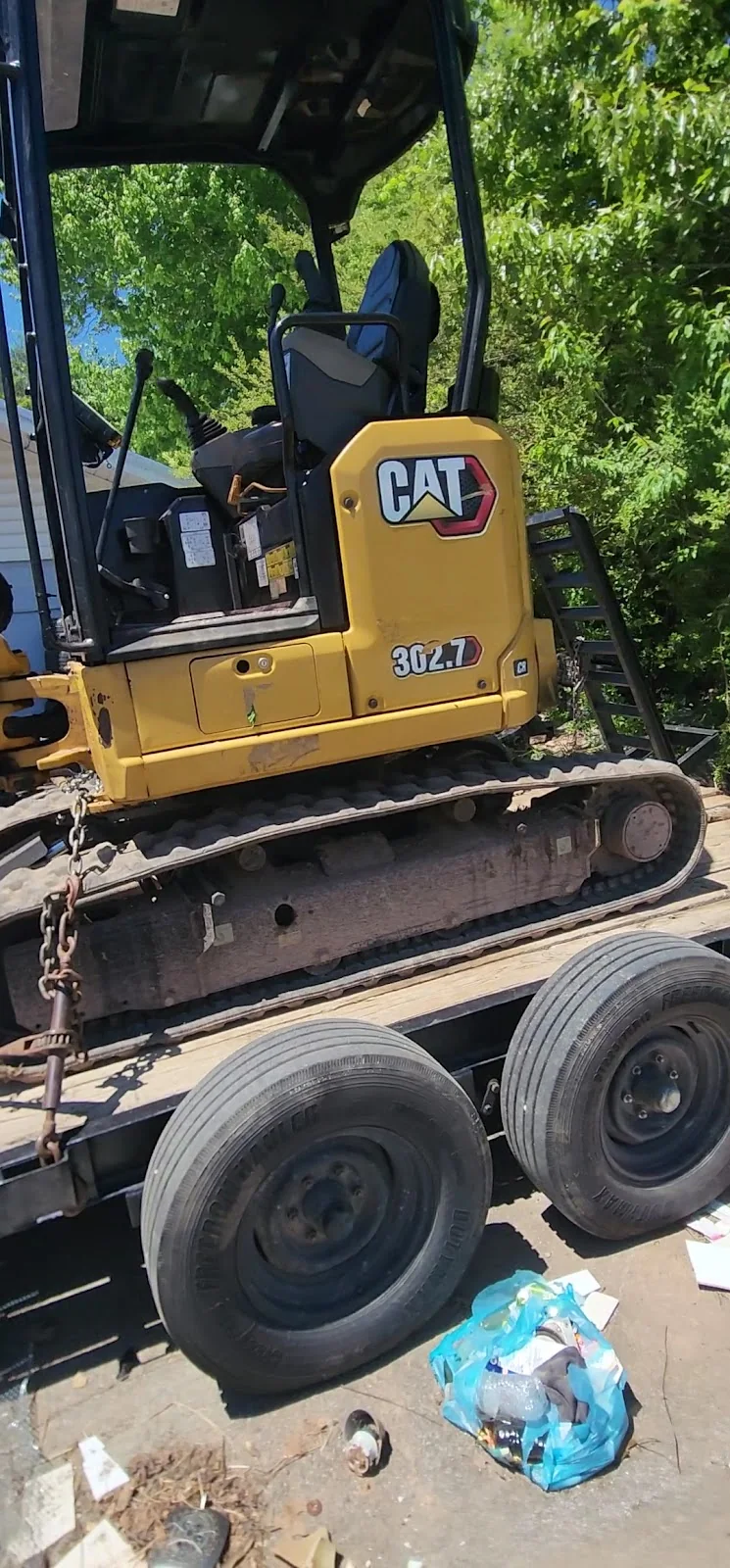
What makes this town its own market: Riverside Drive frontage is narrow, and most of these lots have a house, a power pole, and a driveway that was cut for a 1970s sedan, not a track hoe. On the ridge side, driveways climb at grades that require the machine to walk up in low gear, and every bucket of dirt that comes out has to either stay on site or go down the hill on a truck. Those two constraints shape almost every estimate we see quoted wrong by out-of-town crews.
What gets dug here, and what it costs
Woodfin excavation splits into three families of work: new-build footings and basement digs on the hillside lots, drainage and regrading on the river-terrace properties, and small utility or driveway work everywhere in between. Because access is tight, the line items that dominate here are haul-off and retaining rather than cubic yards moved. Full grading and site-prep pricing lives in the Buncombe County grading cost breakdown; the table below is the excavation-specific picture.
| Scope | Typical Range | What drives the number |
|---|---|---|
| Driveway cut or repair, easy access | $1,800–$4,500 | Length, culvert, whether the old base is reusable |
| Footing excavation, single-family | $3,200–$7,500 | Slope, rock, whether spoil stays on site |
| Basement or daylight dig | $9,000–$22,000 | Depth, shoring, haul-off distance |
| Drainage trenching, French drain | $2,400–$6,800 | Bedding stone, outlet, restoring the surface |
| Grading, small lot, cut-and-fill | $2,800–$9,000 | Volume moved, drainage corrections |
| Haul-off (per load, loose dirt) | $450–$850 | Distance, fill acceptance, load size |
Those haul-off numbers are why a Woodfin job can cost more than the same square footage in flat farmland — every load has to reach a receiving site, and on the hillside roads that's time.
Water, soil, and the slow cost of getting it wrong
This county has seen 19 federal disaster declarations over a 1973-2026 record, heavily weighted toward flood and storm events. In Woodfin, that history is not abstract — the French Broad has flooded its low lots repeatedly, and the ground on the river side carries the evidence in its layers. Before anyone digs, the soil and drainage question matters: sandy river deposits drain instantly and slump if you cut them steep, while hillside clay holds water and pushes against any new wall or foundation you put in it.
Federal guidance treats stormwater as more than an afterthought — the EPA's construction stormwater rules and the code's erosion-control requirements both apply to ground-disturbing work above relatively small thresholds. That's not paperwork theater. A silt fence placed wrong, or a slope left open through a rain event, is how a small dig becomes an expensive cleanup. The other rule worth knowing: once a project crosses the state's general-contracting threshold, the contractor has to carry the right license, which is why serious crews here pull permits in the owner's name correctly and don't cut corners on the paperwork.
Access, safety, and picking a crew that has worked these roads
Ask any excavator who has worked in Woodfin and they will talk about access before they talk about dirt. Riverside driveways that dead-end at a retaining wall. Hillside pads where the machine has to sit on one grade to dig another. Trees that are staying, owner's call, and give you a working envelope two feet narrower than you hoped. A bid that ignores this comes back as a change order, or a machine stuck in a yard with a crater where the flower bed used to be.
Practical hiring checks: the crew should walk the lot with you before quoting, tell you where the spoil will go and who is receiving it, and know which authority enforces erosion control on the site — in this county that runs through the state's code enforcement office and, on bigger sites, the stormwater rules cited earlier. On any structural digging, the North Carolina Licensing Board for General Contractors sets the threshold above which a licensed general contractor has to be involved — worth knowing before you hand a hillside basement to a crew operating on handshake terms. If you're comparing specialized crews, the excavation contractor overview covers what separates a site-work outfit from a one-machine operator, and the Woodfin-specific split between excavation and finish grading is covered in the Woodfin grading contractor page.
One more local reality: because these are mostly small lots with neighbors close by, working hours and vibration complaints are real constraints. Good crews stage machines to keep the noisy work in the middle of the day and plan haul routes that don't tear up a shared driveway.