The Leicester job starts at the driveway, not the yard
Most Leicester properties were not laid out with a skid steer in mind. Long gravel drives off New Leicester Highway, low power drops at the culvert, and a garage corner that pinches the only path to the back forty decide whether a machine reaches your yard at all. If it can't, the work is done by hand and wheelbarrow, and that difference shows up in the bid before a single bucket of dirt moves. A crew that quotes before walking the access is quoting a different property than the one you own.
The access question gets sharper the further you go up the side roads. Lots off Alexander Road and the winding lanes toward Sandy Mush tend to sit on grade that falls away from the house, which sounds convenient until you realize the cut has to go somewhere and the machine has to fit between the fence and the well head. On the flatter stretches near the Leicester school community, the problem flips: the yard is generous but the drive is a single gravel lane with soft shoulders, and a loaded tandem will rut it in a wet week. Crews who work here know to lay down matting or wait for a dry window rather than tear up a driveway they will not be paid to repair.
The second access problem is the dirt itself. Leveling a yard means either bringing fill in or taking spoil out, and in Leicester you are almost always doing both. The quarry and gravel pits that serve this side of Buncombe sit a real drive away, so every tandem load carries a haul charge that flatland jobs never see. That haul is why two neighbors on the same road can get numbers hundreds of dollars apart: same yard, different cut-to-fill balance, different truck count. A yard that cuts high on one side and fills low on the other can sometimes balance on site and skip trucking almost entirely, which is the single cheapest outcome available and worth asking about directly.
What Leicester's ground does when you cut it
This is clay country with a habit of staying wet. The hills above the French Broad valley shed water into yards that were graded decades ago to a different standard, and a low corner that pools every March is usually a grading problem, not a drainage-pipe problem. Before anyone sells you a French drain, the honest question is where the water should have gone in the first place. The International Code Council treats surface drainage away from the structure as a baseline expectation, and for good reason — regrading the swale is often cheaper and more permanent than burying pipe.
Springs are the other local wrinkle. A wet spot that never dries in August is not rain; it is groundwater, and no amount of topsoil will fix it. Those yards need the grade reshaped to carry water around the house rather than through it, and occasionally a curtain drain before the finish grade goes down. Getting that sequence backwards is how homeowners end up paying twice. The tell is timing: rain-fed wet spots fade a few days after a storm, while a spring stays soft through a dry August and often shows a little seep line where the water surfaces.
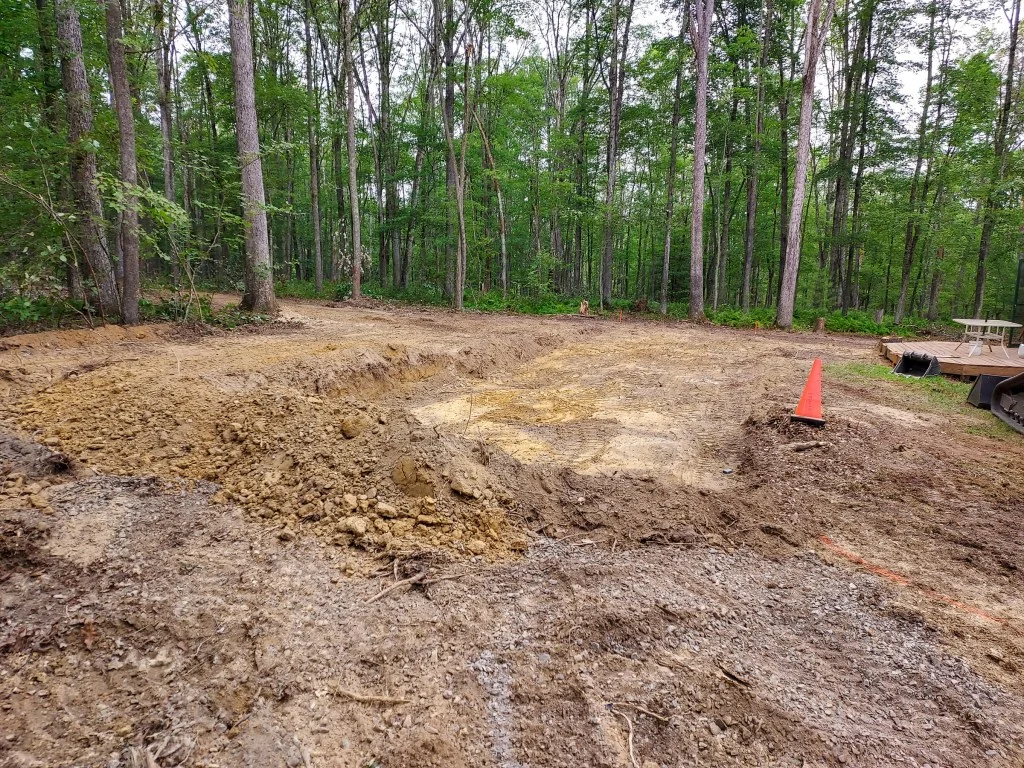
Clay also punishes the wrong season. Worked wet, it smears into a slick pan that sheds almost nothing, and the compaction you paid for turns into a hard, poorly draining crust. Worked at the right moisture, it holds grade for years. That is why the same yard can be a two-day job in September and a frustrating mess in April. Topsoil depth here is usually thin over the clay, so the finish layer is often brought in rather than screened on site, and that is another small haul charge most homeowners do not anticipate until the bid arrives.
Access, haul, and grade: the price picture
Line-item context lives in the Buncombe County grading cost breakdown. The working table below reflects what this side of the county actually sees, once machine access and truck count are accounted for.
| Scope | Typical range | What drives it |
|---|---|---|
| Touch-up leveling, machine reachable, minimal fill | $1,800–$2,800 | Small yard, short machine path, one or two loads |
| Full yard regrade, positive slope away from house | $2,500–$6,000 | Most Leicester jobs; laser work, grading, compaction |
| Steep or terraced yard with retaining needs | $6,000–$9,500 | Cut-and-fill balance, wall tie-ins, more trucking |
| Hand-work only (no machine access) | Toward top of band | Long carry, wheelbarrow work, slower days |
Two honest notes. First, the haul to and from the quarry is a per-load cost, so a yard that needs six loads out and four in will price very differently from one that needs two and two. Second, engineered fill for a building pad is a different trade with a different price; the yard leveling guide draws that line clearly so you are comparing the right scope.
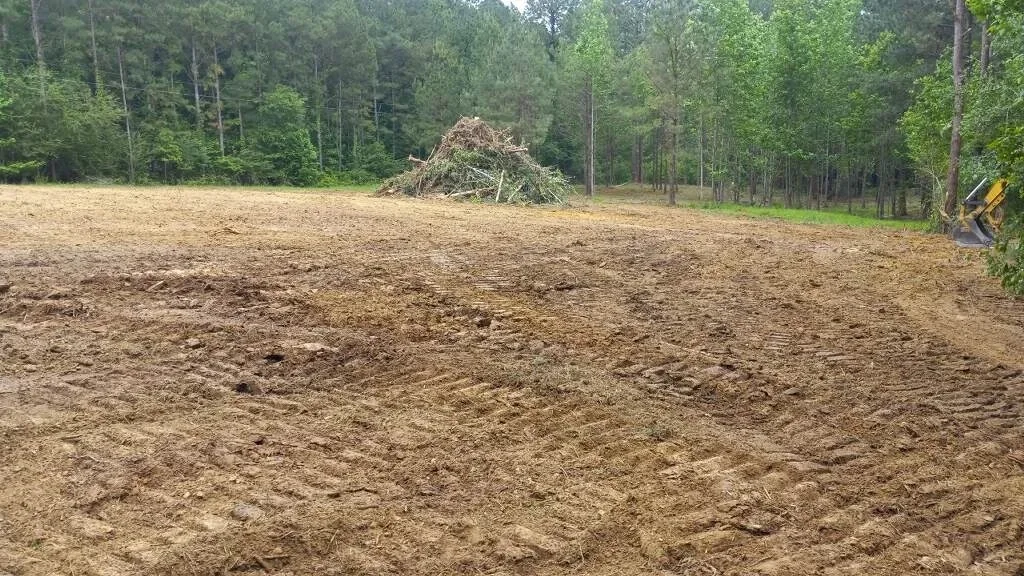
It helps to think in truck counts rather than square feet. A tandem load of fill covers a surprising amount of ground until you remember it has to be spread, watered, and compacted in lifts, and a yard that looks level to the eye can still be holding water because the grade is a half inch off across thirty feet. Laser or transit work is what catches that, and it is the part of the bid worth paying for. When a quote is dramatically cheaper than the others, the missing line is almost always either the compaction or the haul, and both come due later.
Water history makes this more than cosmetic
Federal disaster records for this county run to 19 declared events across 1973-2026, and the pattern is storm and flood. Every one of those events tested yards that were already shedding water the wrong way. That is why regrading here is often the cheapest flood-mitigation a homeowner can buy: it costs a fraction of a foundation repair, and it works every storm instead of once. The National Weather Service is the place to watch for the next round, but the grade is what decides where the water goes when it arrives.
The terrain amplifies it. Leicester sits in the folds between the Newfound Mountains and the French Broad valley, so a yard can be draining onto a slope that dumps straight into a neighbor's problem, or into a low spot that has no outlet at all. Where a yard has nowhere to send its water, the honest fix is sometimes a swale to a daylight point or a dry well, not just a reshaped slope. A crew that asks where the water goes after it leaves your property is thinking about the whole hill, not just your parcel line.
Timing matters too. Grading clay in a wet spring is a losing game; it smears and compacts instead of draining. Late summer and early fall are when Leicester yards take grade best, and a crew that says so is telling you something about how they work.
Picking a crew that knows the road
Three local questions worth asking. Does the crew know whether a machine can actually get to your yard, or are they pricing from a satellite image? Do they handle both the cut and the haul, or will you be coordinating a dump truck yourself? And do they understand that gravel price here is set partly by quarry distance, not just by the ton? When jobs cross the threshold that triggers state general contractor licensing, the NC Licensing Board is the place to verify a contractor's standing. If you would rather compare local operators first, the Leicester grading contractor list is a reasonable starting point, and the honest answer to the access question is the one that keeps your bid from growing after the machines arrive.
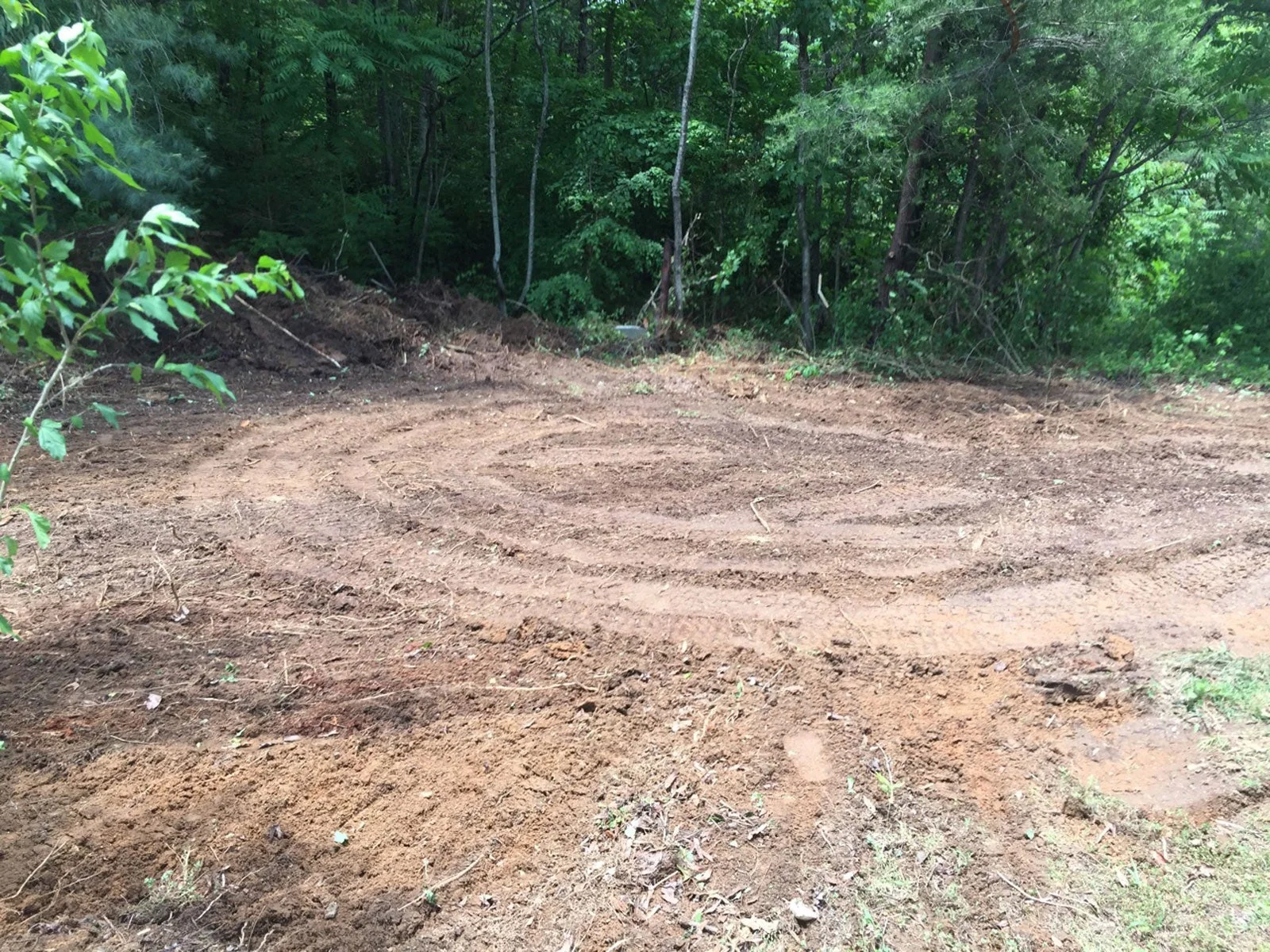
One more thing worth watching: how a crew handles the finish. Yard leveling that stops at bare clay looks fine until the first hard rain, when it crusts and sheds. A finished job has the grade set, the soil prepped, and a plan for seed or sod so the surface holds. In Leicester, where summer thunderstorms arrive fast and hard, bare clay is a short-term look and a long-term erosion problem. Ask what happens after the machine leaves, and whether stabilization is part of the number or a separate line you will be shopping for on your own.