Woodfin ground is not one material, and that sets the price
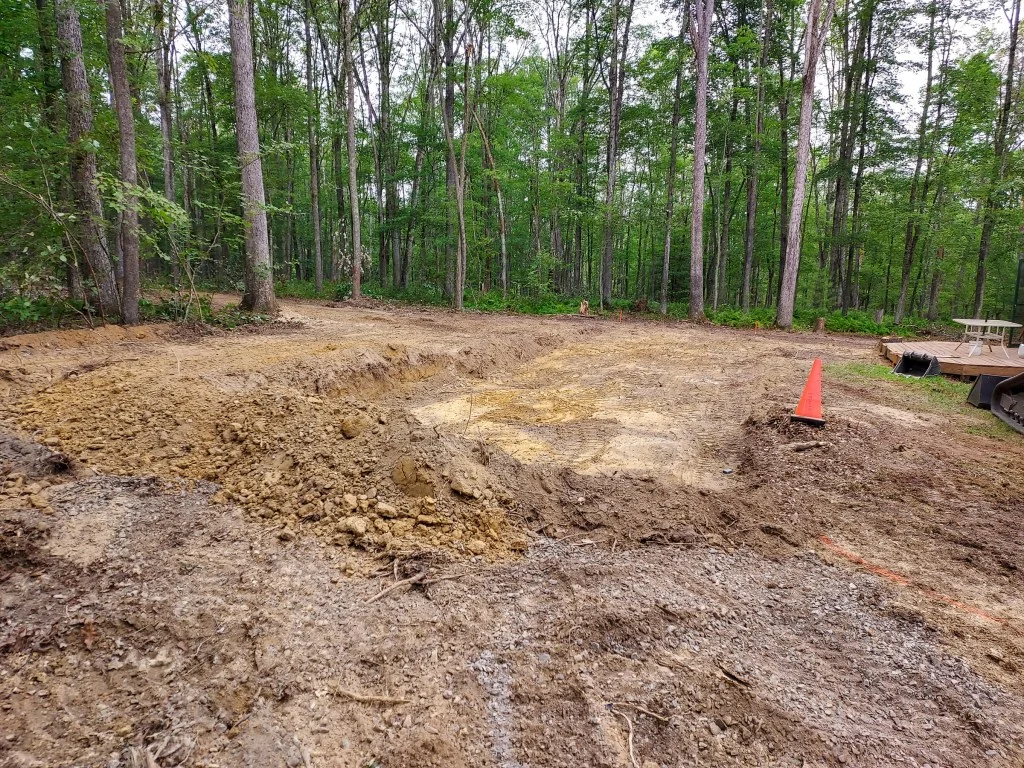
A Woodfin back yard can hit three different grounds in one pass: greasy red clay near the river bottoms and older terraces, weathered rock and saprolite climbing toward the ridges off Elk Mountain Road, and loose fill that was pushed in decades ago on lots that were never properly compacted. Each one changes the job. Clay has to be cut, dried, worked, and compacted in lifts or it will heave again after the first wet winter. Rock has to be ripped or blasted before you can achieve any grade at all. Old fill has to be tested with a shovel and often over-excavated, because you cannot compact what was dumped.
That is why two Woodfin yards the same size can price $2,000 apart. One is shaping existing soil; the other is rebuilding a foundation for the lawn. The scope, not the square footage, is the number.
Drive the town and the pattern is right there. The flat lots along the French Broad and the lower ends of the feeder creeks sit on ground the river built, layer by layer of silt and clay, and the old river terraces above them hold some of the tightest soil in the county. Climb toward the ridges and the yards narrow, the slope steepens, and the shovel starts ringing on weathered rock within a few inches. Those are the town's terrain facts, not marketing. They are why a flatland grader from somewhere else underbids and then stalls out — the machine time here is spent fighting soil, not moving it.
Woodfin also has a housing mix that keeps the work varied: older mill-era homes on small in-town lots, mid-century houses on terraces, and newer builds cut into slopes above the valley. An older lot usually means established grade that has settled and shifted for decades, topsoil long since worn thin, and a yard that drains toward whichever neighbor added on first. A newer lot on a cut slope usually means fill placed during construction, which may or may not have been compacted in lifts, and a rear yard that wants to migrate downhill. The fix is different for each. On the older lot you are often re-establishing a lost grade and re-directing water. On the newer cut lot you are frequently correcting someone else's fill.
What actually gets built when a Woodfin yard is leveled
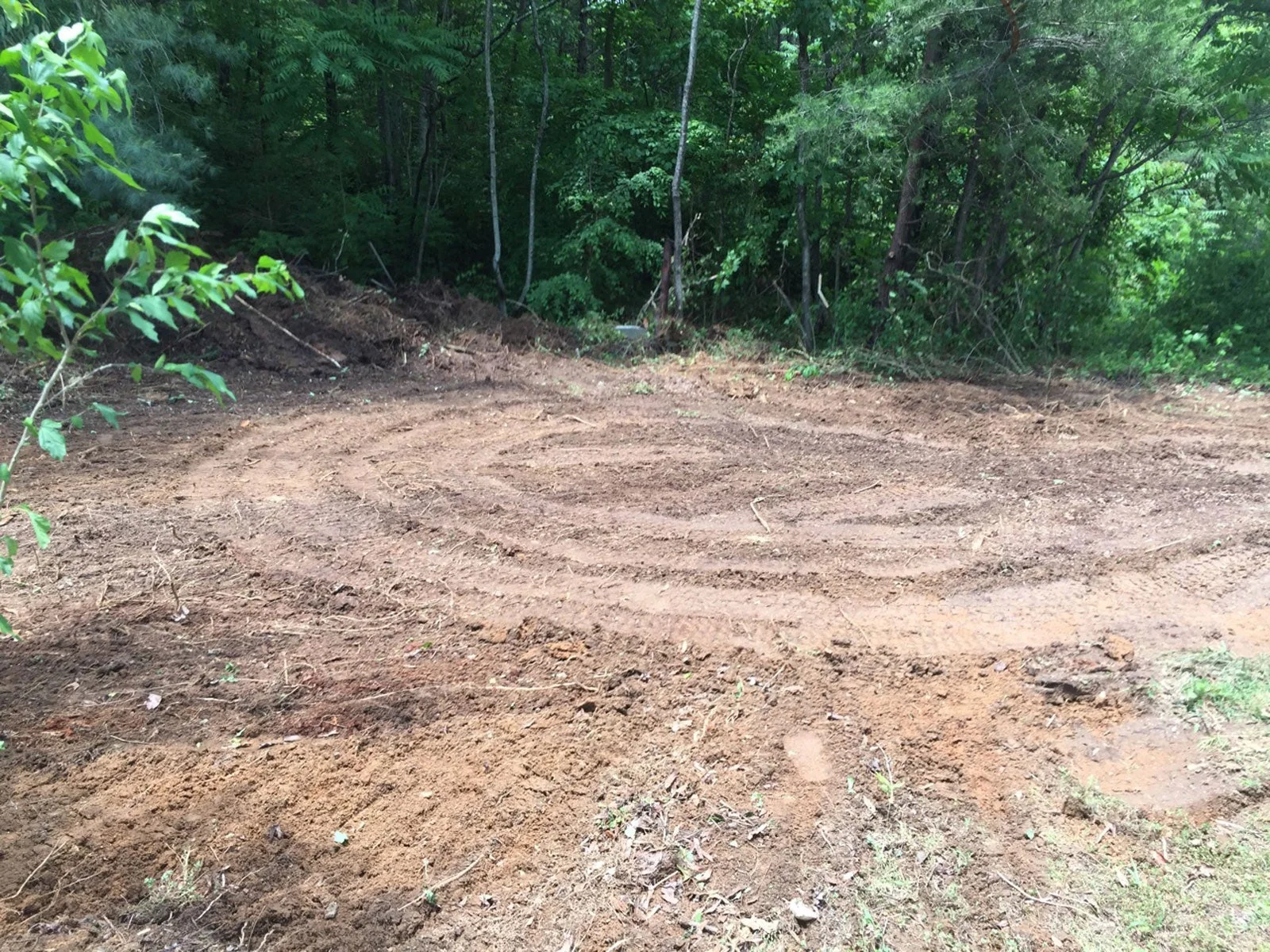
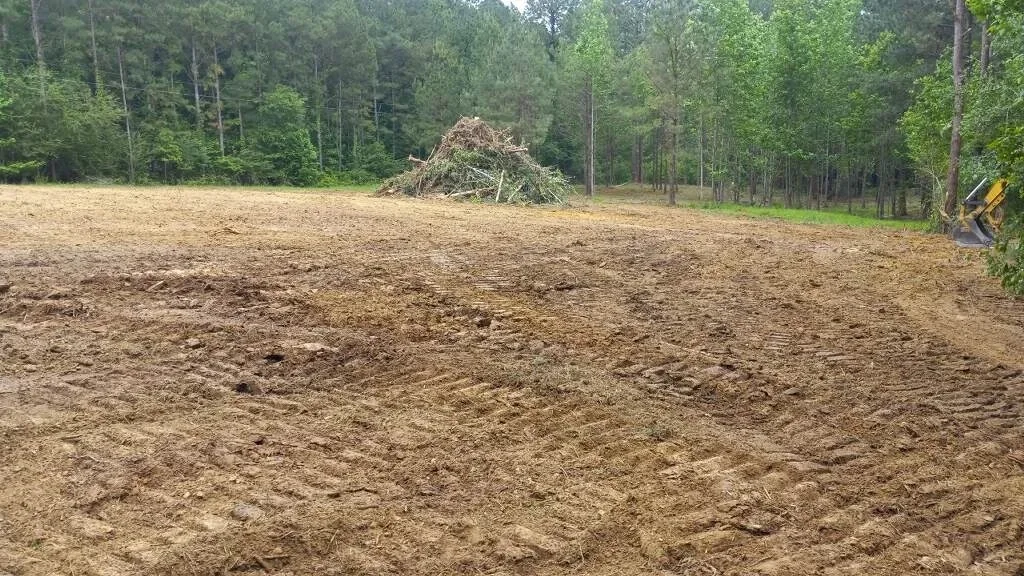
A real leveling or regrading scope in this town usually includes: a site walk to identify where the water is meant to go, stripping and stockpiling topsoil, cutting high spots and filling low ones in compacted lifts, rough and fine grading to a slope that sheds water away from the house, and re-spreading topsoil for seed or sod. On sloped lots above the river, that also means a swale or berm to interrupt the uphill neighbor's runoff — Woodfin sits in a bowl that drains toward the French Broad, and water that leaves a ridge lot has to be given a path.
The lift-and-compact language matters more here than almost anywhere. Red clay compacted in thick layers traps air and water and turns into a shelf that sheds the topsoil you just spread. Done right, it goes down in thin lifts and gets worked with a sheepsfoot or vibratory roller while it is at the right moisture, which is the part homeowners never see in the final price. It is also the part that decides whether the yard still holds grade after two wet winters or whether you are calling somebody again in three years.
The water plan is the other invisible half. In Woodfin a lot rarely gets water only from the sky. It gets it from the roofline, the driveway, the neighbor above, and the ground itself where a wet-weather spring or a shallow water table sits close to the surface after a soggy stretch. A grade that ignores those sources just moves the ponding a few feet. A grade with a shallow swale along the uphill edge, a defined outfall toward the street or an approved drainage path, and a positive slope away from the foundation all the way around is what actually keeps a crawlspace dry.
If the job crosses the threshold where the NC Licensing Board for General Contractors requires a licensed general contractor, a legit crew will say so up front. That board's rules exist because grading done wrong is a structural problem, not a cosmetic one. The ICC's model code resources are the other half of that picture, since retained fill, slope stability, and drainage against a structure fall under code that local inspectors enforce.
The cost picture for Buncombe County yards
Site-wide, yard leveling and regrading runs $1,800 to $9,500, with most jobs at $2,500 to $6,000. Woodfin tends to sit at the upper-middle of that band because clay handling, rock, and old fill all add machine time. The full table lives on the Buncombe County grading cost page; the working version for local scopes:
| Scope | Typical range |
|---|---|
| Small touch-up leveling (under 1,000 sq ft, easy soil) | $1,800 – $2,500 |
| Standard yard regrade, clay soil, seed or sod ready | $2,500 – $4,500 |
| Sloped lot with swale/berm for runoff control | $4,000 – $6,500 |
| Old fill rebuild, over-excavation, or rock ripping | $6,000 – $9,500 |
Treat any Woodfin bid that omits soil handling as incomplete, not cheap. The common thread in the low bids is a number for pushing dirt around with no line for compaction, no line for topsoil, and no plan for water. The common thread in the high bids is often a slope that has to be terraced, imported fill hauled in because the existing material will not compact, or rock that has to be worked out with a hammer rather than a bucket.
Two things move the number fastest for local homeowners. First, whether the lot can be graded with what is already there. If the existing soil can be reworked, the job stays in the middle of the band; if material has to be hauled off and clean fill brought in, it climbs. Second, access. Narrow driveways, steep approaches, and fence lines that leave no room for a full-size machine force smaller equipment and more hours, and that shows up in every line of the quote, especially on the tighter in-town lots.
Water history shapes what Woodfin yards need
The federal record tells the story: 19 declared disaster events have touched this county across 1973-2026, overwhelmingly flood and storm family. Woodfin's position along the French Broad means river-terrace lots sit in that history directly, and the ridges above them feed water downhill fast after a heavy cell. That is why a regrade here is rarely just about a flat lawn. It is about getting roof runoff, driveway runoff, and uphill neighbor runoff off the lot without ponding against a foundation or saturating the same clay that is already holding water like a sponge. The National Weather Service's local forecast and flood resources are worth checking before scheduling a job in a wet stretch — grading wet clay is wasted money.
The practical consequence is that Woodfin regrades get designed for the storm, not the average day. That means a slope that still sheds water when the ground is already saturated, an outfall that is not blocked by the first big runoff event, and a grade that does not create a low spot the homeowner has to bail out with a pump. The EPA's stormwater and runoff resources are useful background for anyone who wants to understand why moving water off a property is a design problem and not just a shovel problem.
Storm history also shapes the permitting side in a subtle way. Lots near the river or in mapped flood areas can fall under rules that flat, dry lots never touch, and drainage that leaves the property may need review before it can be built. A local grader who has worked Woodfin's flood-adjacent lots will know to ask about it during the site walk rather than after the machines are already on the ground.
Picking a grading crew in this town
Three questions specific to Woodfin: how will they handle the clay (lifts and compaction, or just push it around), what is the plan for water leaving the lot, and do they know the local soil enough to tell you before quoting whether rock ripping is likely. A crew that has worked the river terraces and the ridge lots will answer all three without hedging. The Woodfin grading contractor page walks through how to vet them, and the yard leveling guide covers what a proper scope includes from first walk to final grade.
There is a fourth question worth asking here: what does the yard look like the spring after the job. In Woodfin that is the real test. A grade that was rushed, soil that was spread on top of uncompacted clay, or a swale that was never connected to an outfall can look perfect in October and be a soggy mess by April. A crew that talks about how it will survive the wet season is a crew that understands the ground here.
Ask, too, about scheduling around the weather. Grading in a wet stretch is the fastest way to burn money on a job that has to be redone. Local crews watch the forecast and will pull off a soaked yard rather than fight it, because the clay gives you one good window and then turns to grease.