Why Mills River parcels clear differently than Asheville lots
Drive out Route 191 or along the French Broad bottoms and the pattern is obvious: Mills River is still agricultural Henderson County, and most properties were never carved into the tight in-town lots you see inside Asheville's city limits. The average parcel here is wider, deeper, and more likely to run back into woodland, a pasture edge, or a sloped ridge line. That changes the whole job. Instead of squeezing a machine through a gate between two houses, crews here are usually opening a long driveway corridor, pushing fence line, and clearing a build pad or a homesite out of standing timber.
The terrain is the second half of the story. Mills River mixes gentle river-bottom ground with steeper shoulders rising toward the Pisgah foothills, so two lots the same acreage can need very different equipment. Flat pasture clears fast; a graded cut into a hillside means the same acreage takes more machine time, more haul-off, and a real erosion plan. A local crew reads that before quoting.
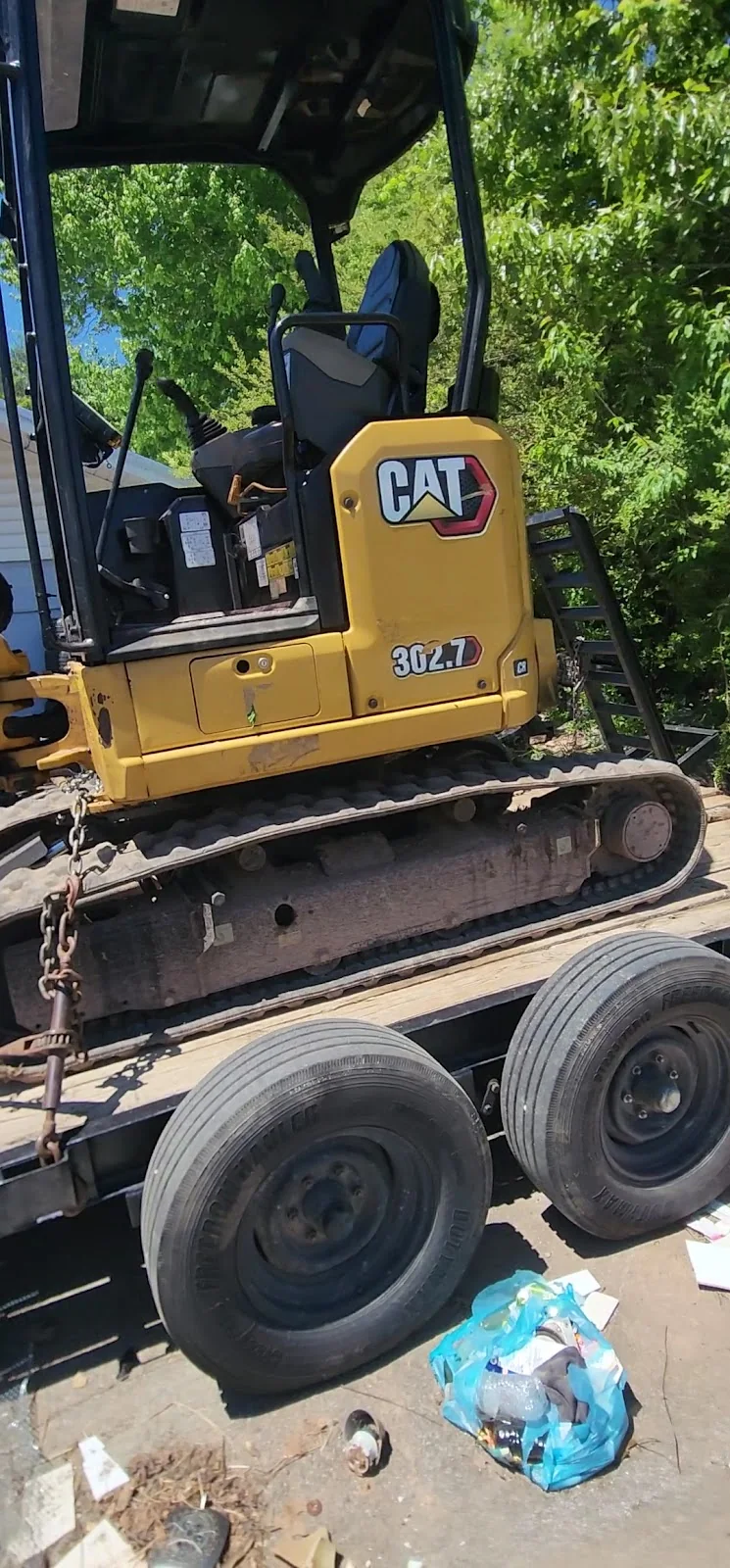
Look at the road frontage itself. A lot off a two-lane stretch of old highway may have a narrow culvert entrance and a fence line running straight back, while a parcel on a newer rural road might have a wide gravel apron already in place. That entrance is often the first thing a machine has to fix, because a lowboy trailer and a track loader need a safe pull-off before any tree comes down. A lot with a blind curve at the driveway is a different job than one with a long, open approach, and a bidder who has never stood on the shoulder will miss it.
What a Mills River clearing scope actually contains
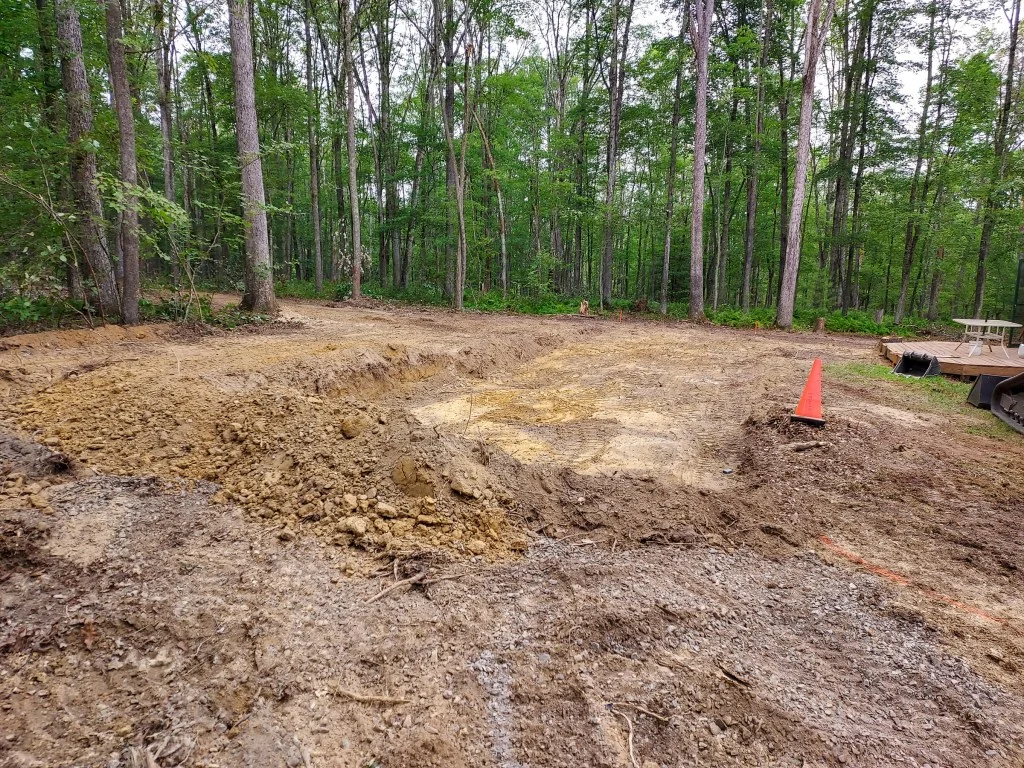
Most jobs here break into the same handful of line items: felling and removing trees, grubbing stumps, hauling off or chipping the debris, then rough grading the cleared ground so it is usable. On larger wooded tracts the stumps and root balls, not the trees, are what drive cost, because grinding and burial have to be handled on-site or trucked out. Safety matters on any job near a structure or a power line, and tree felling close to buildings is the part where hiring a properly insured contractor stops being a formality; the NC Licensing Board for General Contractors sets the thresholds that decide when a project needs a licensed general contractor rather than a handshake.
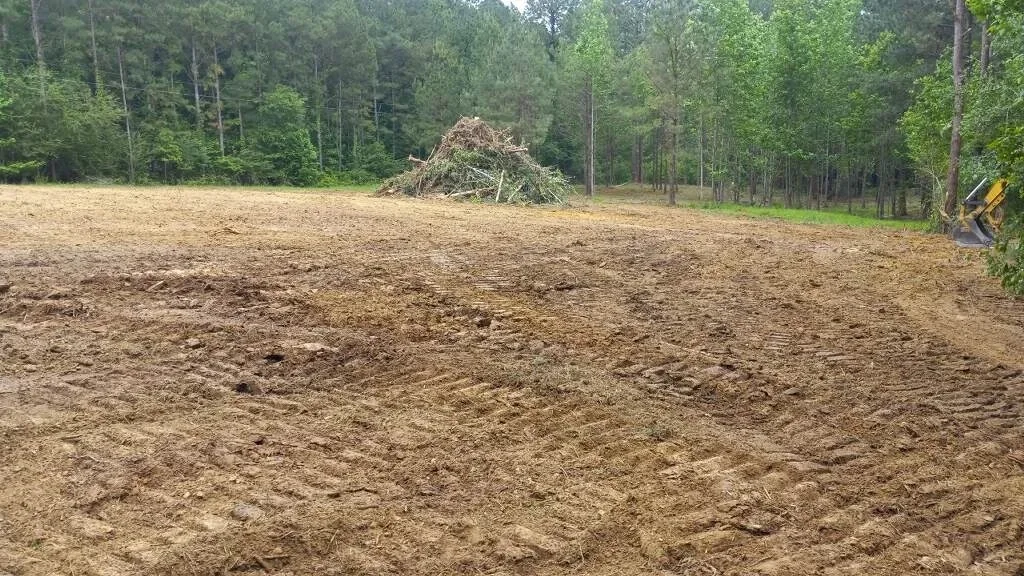
The land clearing overview walks through the standard phases, but the Mills River-specific piece is staging. With long driveways and few neighbors, there is usually room to stockpile and burn or grind on-site, which can hold the total down versus a cramped city lot where every log leaves on a truck. Ask any bidder whether debris stays on the property or gets hauled, because that one decision moves the number by thousands.
Underbrush is its own line. Mills River lots that have sat fallow for years grow up in dense young pine, briar, and privet that a small machine can push but not mulch efficiently, so crews often cut and pile the brush first, then bring in the heavier equipment for the stumps and grading. Lots that were recently grazed are the opposite: open ground with a few shade trees, quick to clear and easy to grade. Walking the property before you bid tells you which kind of job you actually have.
The price picture for Henderson County ground
Clearing prices track scope, not slogans. The Henderson County grading cost breakdown carries the working table; the short version is below. Because Mills River lots tend to be larger and more wooded than the county average, most jobs here land in the middle to upper part of each band, and steep, heavy-timber acreage is the only thing that pushes a project past $10,000.
| Scope | Typical range |
|---|---|
| Light clearing, brush and small trees, flat lot | $750–$2,000 |
| Residential lot clearing, trees felled and debris handled | $2,000–$5,000 |
| Clearing with stump removal and rough grading | $1,500–$8,000 |
| Steep, heavily wooded acreage (above the standard band) | $10,000+ |
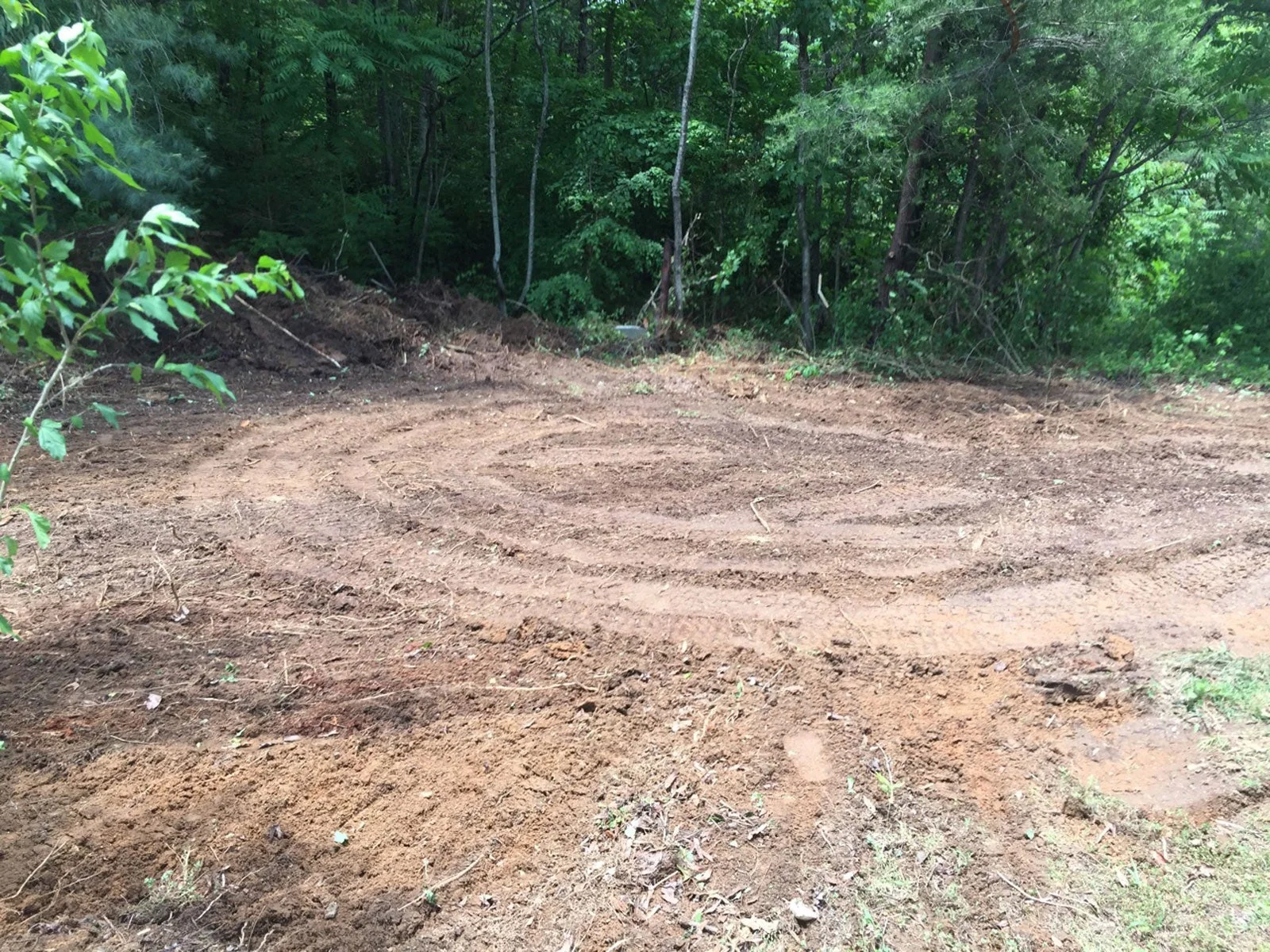
Two line items move a Mills River quote more than anything else: whether stumps are ground and whether the ground gets graded to a usable pad. A bare clear can be surprisingly affordable; the moment you add root removal and a flat build site, you are buying machine hours, not just labor.
Access changes the math too. A lot with a wide, graveled entrance and room to turn a trailer lets a machine go straight to work. A parcel with a narrow gate, a soft shoulder, or a creek crossing means the crew builds a stable entrance first, and that mobilization cost lands in the quote. Ask whether the bid includes any entrance work, because it is easy to leave out and expensive to discover later.
Water, erosion, and why the county watches the dirt
Mills River drains toward the French Broad, and the federal record backs up how much water this corner of the mountains deals with: 16 declared disaster events touch this county across 1978-2026, mostly storm and flood family. Cleared ground with no stabilization is exactly what sends topsoil into a creek after a heavy rain, which is why grading and drainage are treated as part of clearing here, not an afterthought. Bare slopes need silt control and a plan for where the water goes; the EPA frames the sediment and runoff problem well for anyone who wants the why behind the rule.
The practical takeaway: budget for stabilization at the same time you budget for clearing. A quick grassing or mulch cover on exposed ground and rock check dams along a new driveway are cheap insurance against a washout that undoes the whole job. See how local crews sequence that work on the Mills River grading contractors page.
Mills River's bottom ground near the river is the part to watch closest. Those soils hold moisture longer, and a summer thunderstorm can turn a freshly cleared flat into a muddy mess if the drainage has nowhere to go. Crews working near the river bottoms typically plan the grade so water sheds away from the build pad and toward a stable outlet instead of pooling at the edge of the clearing. On a slope, the concern flips to speed: water running off a bare cut picks up soil fast, so a swale or a silt fence at the toe is standard practice, not an upgrade.
Choosing a crew that knows this ground
Ask three questions. Does the bid say plainly what happens to stumps and slash, on site or off? Is the machine sized for your slope, or will a small machine chew for days on a hillside that a bigger one flattens in an afternoon? And who handles the grading and stabilization once the trees are gone? The crews that answer all three without hedging are the ones that finish clean. Anything involving utility work near a cleared corridor should route through the appropriate licensed trade, and the NC State Board of Examiners of Plumbing, Heating and Fire Sprinkler Contractors is the reference if a job crosses into that territory.
Timing matters here more than it does in town. Henderson County summers are wet, and a heavy rain shuts down a hillside job for days while the crew waits for the ground to firm up. A crew that lives and works in the Mills River area knows that rhythm and builds slack into the schedule. A bidder from out of the county may not, and that difference shows up as a stalled job, a muddy pad, and a change order you did not plan for.
Finally, look at how the crew leaves the site at the end of each day. A clean contractor keeps the entrance passable, keeps silt control in place, and does not leave a pile of slash blocking the driveway. If you see a job in your neighborhood where the debris is still sitting in the road weeks later, that tells you something about how the next job will go. On larger Mills River tracts, ask for a simple written sequence: what gets cleared first, where debris goes, and when grading starts. A crew that can explain it in plain language is a crew that has done it before.