The Etowah job is an access problem before it is a dirt problem
Most Etowah addresses sit off a state road, up a private gravel drive, behind a gate that was sized for a pickup. That single fact drives the estimate more than any soil condition. A machine that fits the drive, a dump truck that can turn around, and a landing spot for spoils all have to be solved before a bucket touches ground — and if they cannot be solved, the job gets hand work and mini equipment, which is slower and priced accordingly.
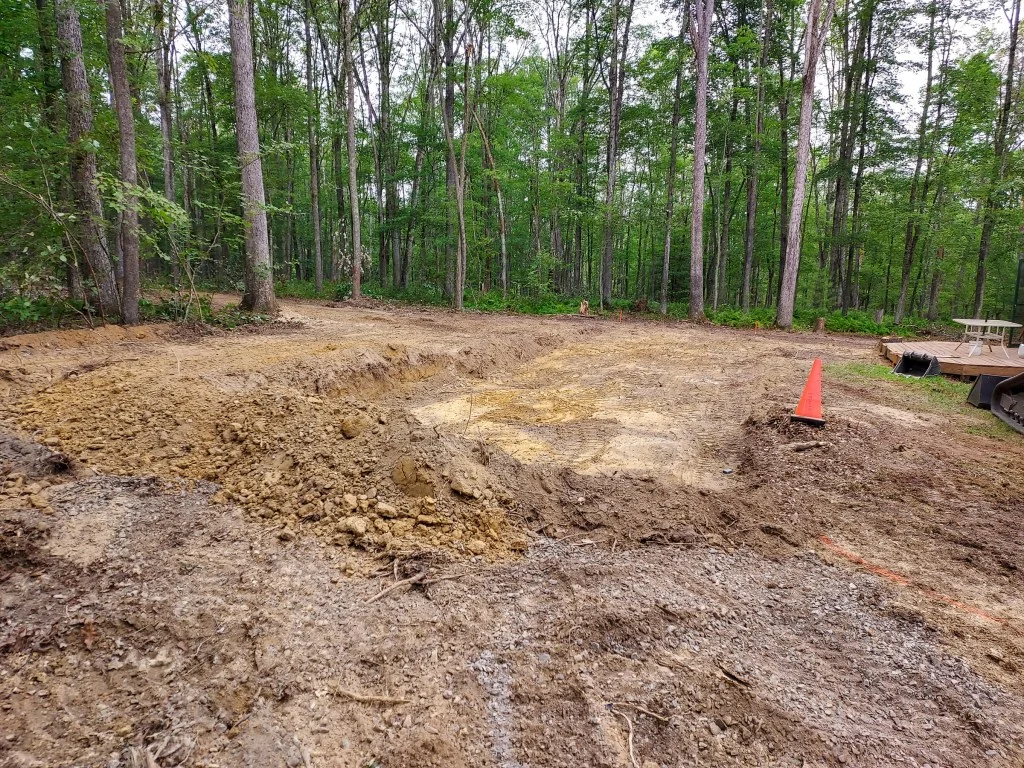
The terrain follows Henderson County's pattern: rolling valley ground near the French Broad bottoms, then quick elevation gain as you push toward the ridgelines. Lots are frequently wooded, sloped, and cut in years after the driveway was built. Excavation contractors in Etowah quote defensible access first and depth second, because a 4-foot footing on a 20-degree slope is a different machine, a different sequencing, and a different truck count than the same footing on flat pasture.
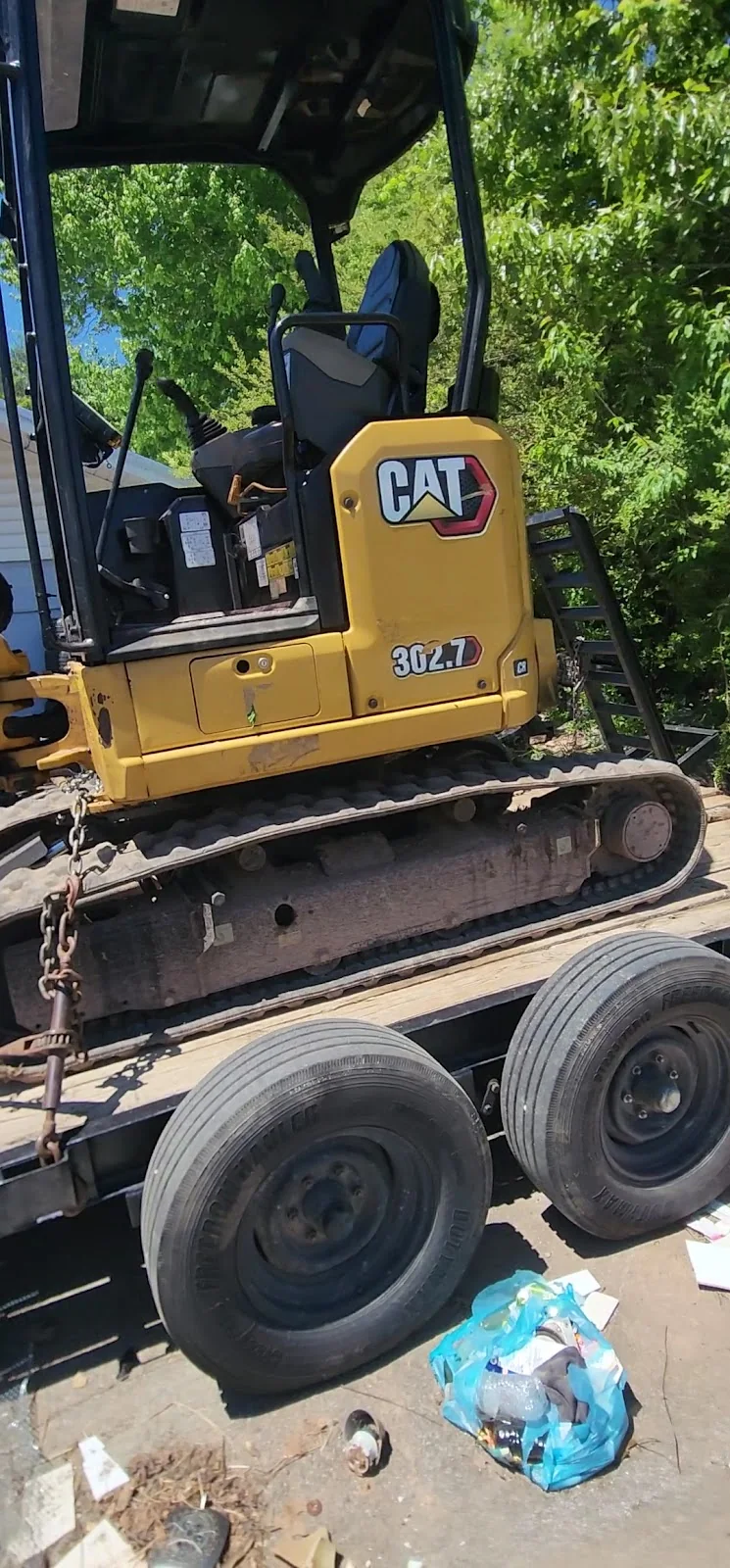
Drive width is the make-or-break number. A standard full-size excavator needs roughly ten feet of travel width and a firm, well-drained surface; many Etowah drives are eight feet of gravel with a soft shoulder and a culvert pipe at the bottom that will not take forty thousand pounds. When that is the reality, the answer is not to force it. The answer is a smaller machine, or matting laid down over the culvert, or staging at the road and running the material up in a dump trailer. Every one of those solutions carries a cost, and the honest estimate names it up front rather than discovering it on day one.
Overhead lines are the second surprise. A low service drop across a driveway stops a high-boom machine cold, and the utility will not move a line on a homeowner's timeline. Ask the contractor to look at line height before they bid, not after.
Get the access questions onto the first phone call: drive width and grade, gate clearance, overhead lines, turnaround room, and where the spoils can legally sit. Every one of those answers moves the number before anyone discusses square footage.
What moving dirt costs here, by scope
The table below reflects Henderson County conditions: mixed clay and saprolite soils, rock that shows up without warning, and haul routes that are never short. The Henderson County grading cost breakdown carries the companion line items for finish work, and the broader excavation contractor page covers what a full scope includes.
| Scope | Typical range | What moves it in Etowah |
|---|---|---|
| Single footing or pier dig | $1,800–$2,800 | Machine size required by drive access |
| Utility or drainage trench run | $1,800–$3,500 | Rock, depth, and whether spoils stay on site |
| Small pad (shed, addition, garage) | $2,500–$4,500 | Cut/fill balance and retaining needs on slope |
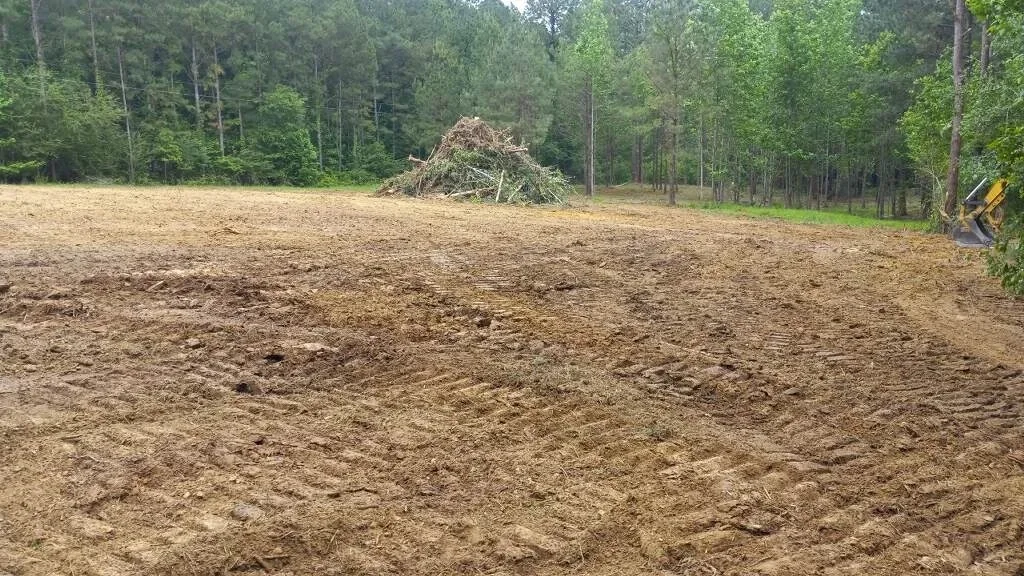
| Full site excavation, new build | $6,000–$15,000 | Tree clearing, haul volume, quarry distance for stone |
| Rock encountered mid-dig | Added line item | Whether it breaks, rips, or has to be blasted |
Rock is the wild card across this part of the county. Saprolite digs clean; blue rock does not, and the honest contractors here price a rock clause rather than pretend they can see underground.
A footing dig is the most common small job on the mountain, and it is the one most likely to be underestimated. A spread-footer trench for a modest house is measured in cubic yards, not acres, but if the trench runs along a slope, the uphill wall needs to be cut clean and the downhill wall may need forming. That is more time in the seat and a second machine for dirt handling. A flat-lot footing on the valley floor is a half-day job; the same footing two hundred feet of elevation higher is most of a day.
Trench runs are priced very differently from footing digs because the variables are different. Depth is the obvious one, but the route matters more. A trench crossing a gravel drive needs the drive restored afterward. A trench that hits a field of small boulders turns a smooth cut into a slow one. And a trench that has to leave the site as spoil rather than backfill adds a truck count that nobody sees until the bid arrives.
Gravel is a delivery cost, and Etowah pays for distance
Almost every Etowah excavation ends with stone: driveway base, drainage bedding, backfill. Stone is heavy, and heavy material is priced by the mile. Etowah's position relative to the quarry belt means aggregate arrives with a delivery premium that flatland quotes routinely omit — a bid that looks ten percent light is often just a bid that forgot the trucks.
Ask for stone as a separate line with a tonnage estimate and a source. It makes the bids comparable and it tells you whether the contractor is planning the haul or guessing at it. The same logic applies in reverse to spoil removal: exporting dirt off a narrow Etowah drive costs more than spreading it on site, so ask which one is in the number.
A typical Etowah driveway job uses two or three distinct stone products. The base course is the heavy one, often a crushed granite or a pit-run material, and it is bought by the ton. The finish course is a smaller, cleaner stone that sits on top and knits together under tires. Drainage stone is a washed, single-size product that lets water move instead of pooling. Each one comes from a different pile and possibly a different pit, and each one carries its own delivery charge.
The other quiet cost is the turnaround. A tandem dump truck cannot back up a narrow, curving Etowah drive for a quarter mile. That means the truck has to pull in, dump, and pull out, which works only if there is a wide spot or a switchback to turn in. If there is not, the stone has to be offloaded at the road and moved up in a smaller machine — a two-step process that adds labor to every ton. Ask the contractor how they plan to place the stone, not just how much they will order.
Water, storms, and why drainage gets dug first
Henderson County's federal disaster record is dominated by storm and flood events: 16 declared events across 1978-2026. Mountain runoff does not need a named storm to wreck a cut slope — one hard afternoon on a bare grade will do it. That is why the sequencing on any Etowah site should put drainage in before finish grading, and why the National Weather Service forecast belongs in the scheduling conversation for exposed earth.
Sediment is the other half of it. Disturbed ground above a creek or a neighbor's property line carries real liability, and the EPA publishes the stormwater guidance that local erosion rules are built on. A contractor who raises silt fence and stabilization before the first rain is not being cautious, they are being professional.
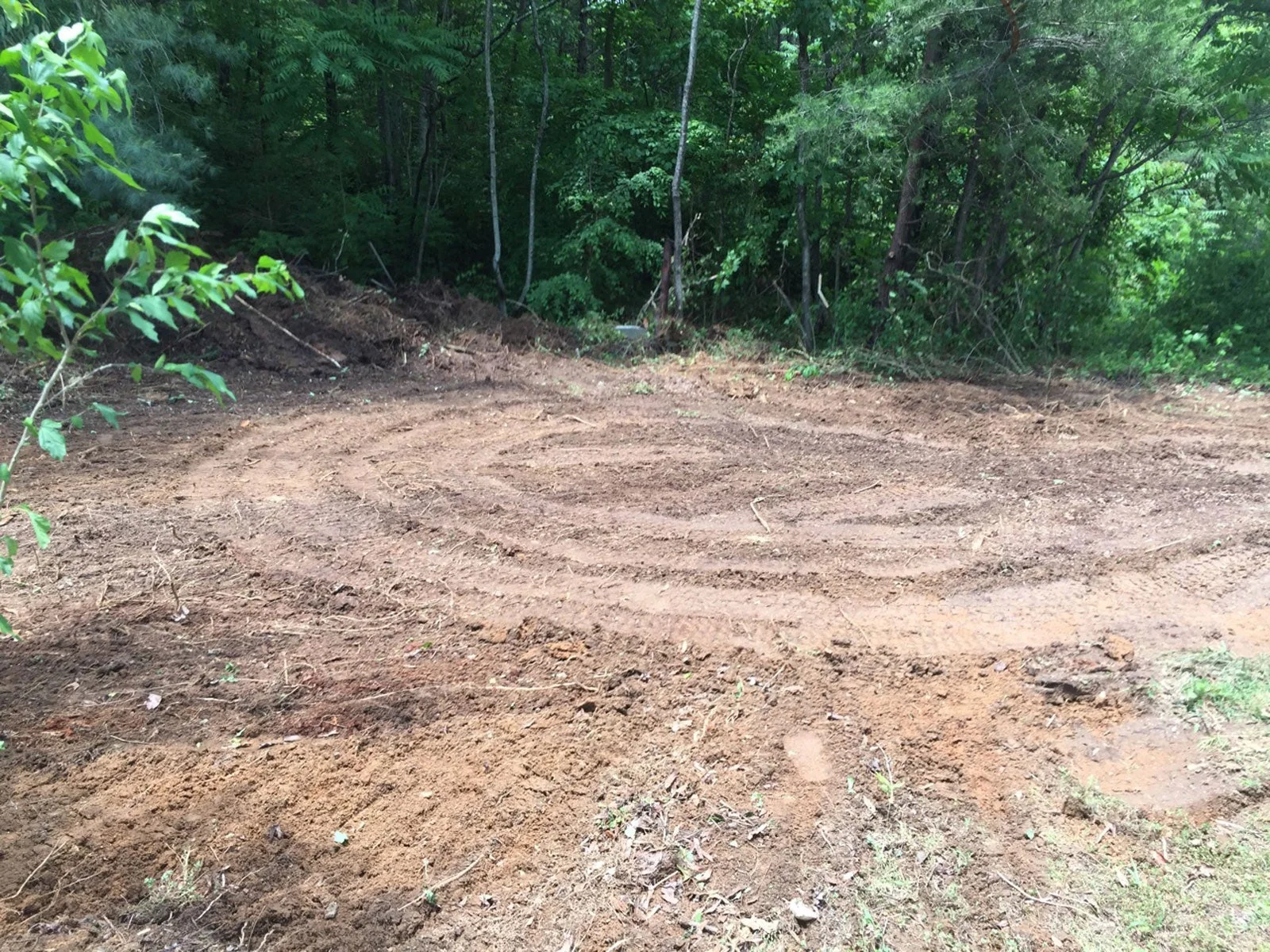
On a wooded Etowah lot, the drainage plan starts with where the water used to go. Before the trees came down and the grade changed, rainfall moved across the lot in a pattern it had followed for decades. Cut into that pattern without a plan, and the first big rain will find the new low spot and start cutting a gully. The fix is not more stone; the fix is a graded swale, a stone-lined channel, or a dry well placed where the water wants to be. That is design work, and it belongs in the estimate.
Septic and well work intersect excavation on almost every Etowah build, because mountain lots are usually on private systems. A perc test and a septic layout determine where the house can sit, which determines the driveway, which determines the access. If the contractor has not seen the septic plan before quoting the site work, the quote is a guess. Henderson County lot conditions vary enough that a system that works on one parcel may be denied on the next, and the excavation sequence has to respect that.
Vetting a crew that can actually get up the drive
Start with licensing. North Carolina sets a dollar threshold above which a general contractor's license is required, and the NC Licensing Board for General Contractors is where you verify it — excavation tied to a building project frequently crosses that line even when the dirt work alone would not.
Then ask three things. What machine are you bringing, and does it fit my drive? Where does the dirt go? Who is responsible for calling 811 before the first cut? The answers separate the crews that have worked wooded Henderson County lots from the ones that have only worked open ground. When you are ready to compare bids, the grading contractors in Etowah page covers the finish-work side that follows excavation.
Insurance is the fourth question a homeowner forgets. General liability and workers' compensation are both part of a legitimate operation, and asking for a certificate is normal, not rude. On a mountain job where a machine is working near a house, a well line, or a neighbor's fence, uncovered damage becomes the homeowner's problem. A contractor who carries coverage will send the certificate without hesitation.
Ask how they handle the unexpected. Every experienced Etowah excavator has a story about a buried tank, a spring, or a vein of rock that stopped the job. What matters is what happens next: does the crew stop, document, and quote the change, or do they push through and hand you a bill? The better answer is a written change-order process, decided before work starts.
Finally, ask what the finish of the job looks like. A good excavation leaves the site drained, the spoil placed, the driveway usable, and the disturbed ground raked and seeded or otherwise stabilized. That is the standard, and a bid that treats it as extra is not really the lower bid.