The one-acre line that decides your permit path
In Arden, the single biggest hidden cost question isn't the tree count — it's how much ground you plan to disturb, measured in acres. North Carolina's erosion and sedimentation rules attach a state permit once a project disturbs an acre or more, and that threshold comes with a plan, inspections, and a paper trail that a smaller job never sees. Plenty of Arden parcels sit close to that line: a half-acre lot on a wooded slope can be cleared with a phone call, while the lot next door at 1.1 acres triggers a different process entirely. Ask any bidder to state plainly which side of that line your project falls on, in writing. NC Licensing Board thresholds matter here too — clearing itself is often done under a contractor whose license requirements change with the contract size and scope.
This is not paperwork for its own sake. Arden's hillsides drain toward the French Broad and its tributaries, and the state treats bare ground on those slopes as a downstream problem waiting to happen. The honest framing: a job under the threshold can be permitted lightly; a job over it gets engineered, and that engineering line item is why two similar-sized Arden lots can quote a few thousand dollars apart.
What the state permit adds on a qualifying Arden job is concrete. An erosion and sedimentation control plan has to be prepared and approved before the first blade touches soil. Temporary measures — silt fence, rock check dams, stabilized construction entrances — go in first, and the site carries an inspection schedule while it stays bare. The plan and its drawings are a real line item, and on a sloped Arden lot the design work gets more involved because concentrated flow has somewhere to go and velocity to burn off. That is why the same tree count on a level river-bottom parcel and on a ridge parcel can carry very different engineering overhead. If a bidder lumps the permit into a vague 'allowances' line, ask for it broken out.
There's a practical timing consequence too. Permitted jobs wait on plan review before crews mobilize, so a project that crosses the line doesn't just cost more, it schedules later. Homeowners planning a spring build in Arden should count backward from their grading date and find out early whether their disturbance acreage triggers review, because a late discovery compresses the whole sitework calendar. A quick call to Buncombe County's erosion control office with your acreage and slope before you collect bids tells you the answer, and every honest quote will align with it. Below the threshold, clearing still has to be done responsibly — nobody wants their newly bare ground eroding into a creek during a July thunderstorm — but the review burden is lighter and the schedule shorter.
What Arden ground actually looks like when the crew arrives
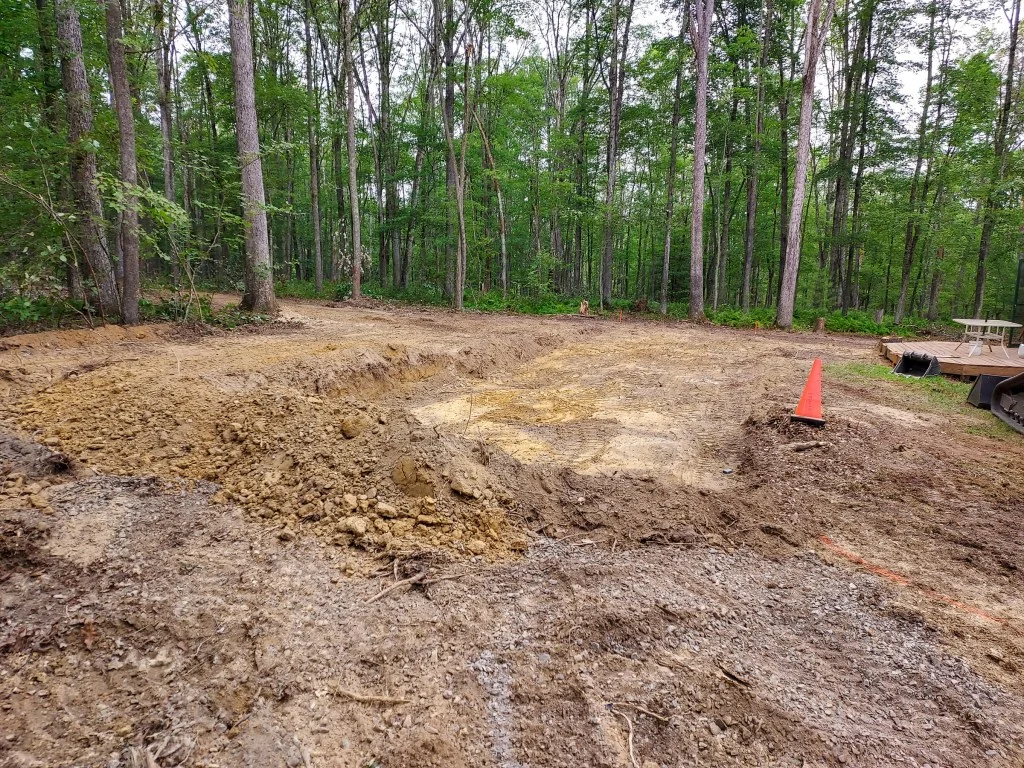
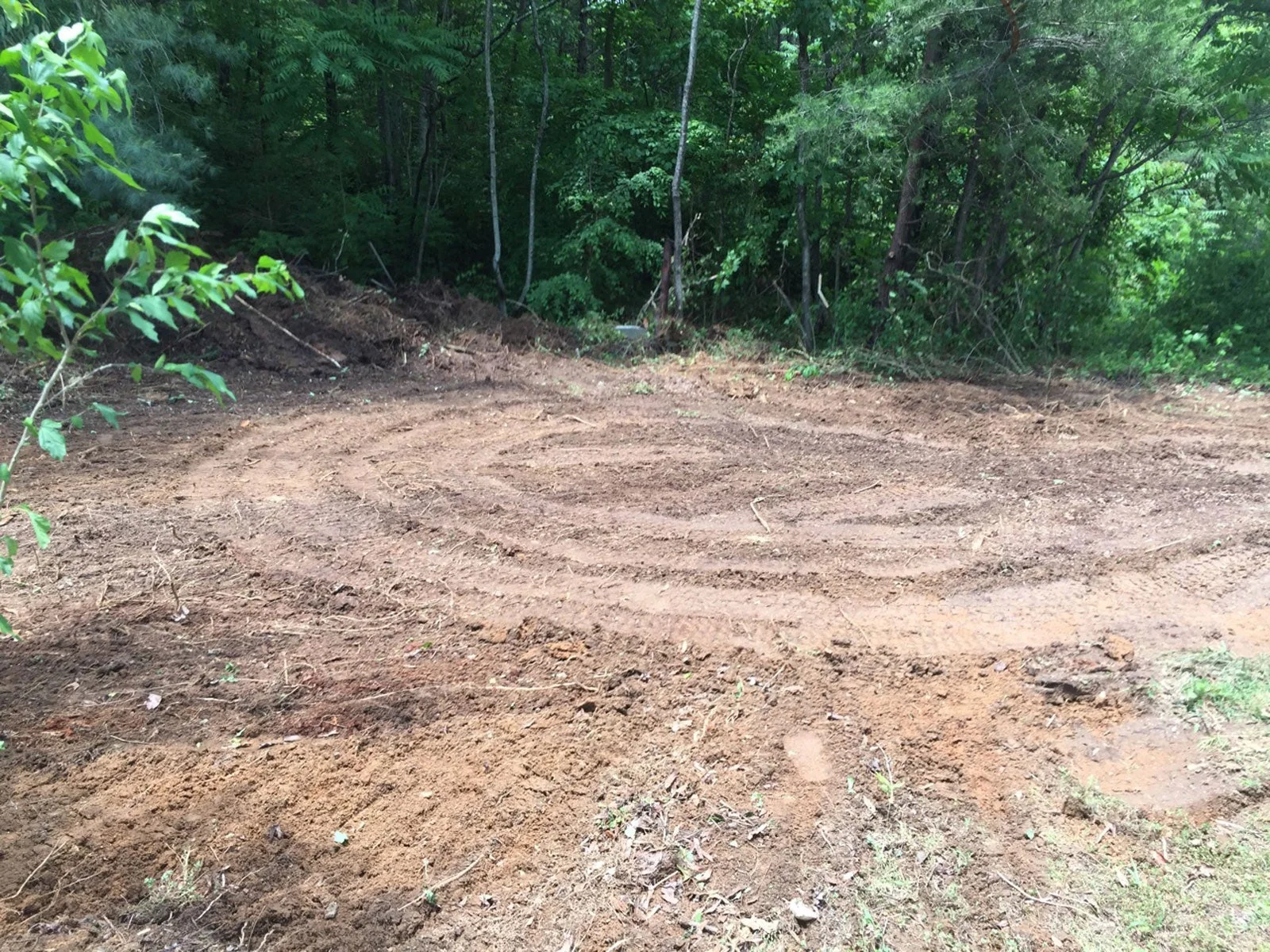
Arden is not one terrain. Along the river bottoms, you find level, sometimes soft, sometimes flood-prone acreage that clears easily but needs thought about water. Up off the valley, lots climb the ridge, heavily wooded with hardwood canopy, steeper cut banks, and the kind of grade where a machine has to work carefully just to keep its footing. In between sit the small parcels — quarter-acre, half-acre — usually clearing for a homesite driveway or a building pad, where the work is narrow and the waste hauling is the real budget item.
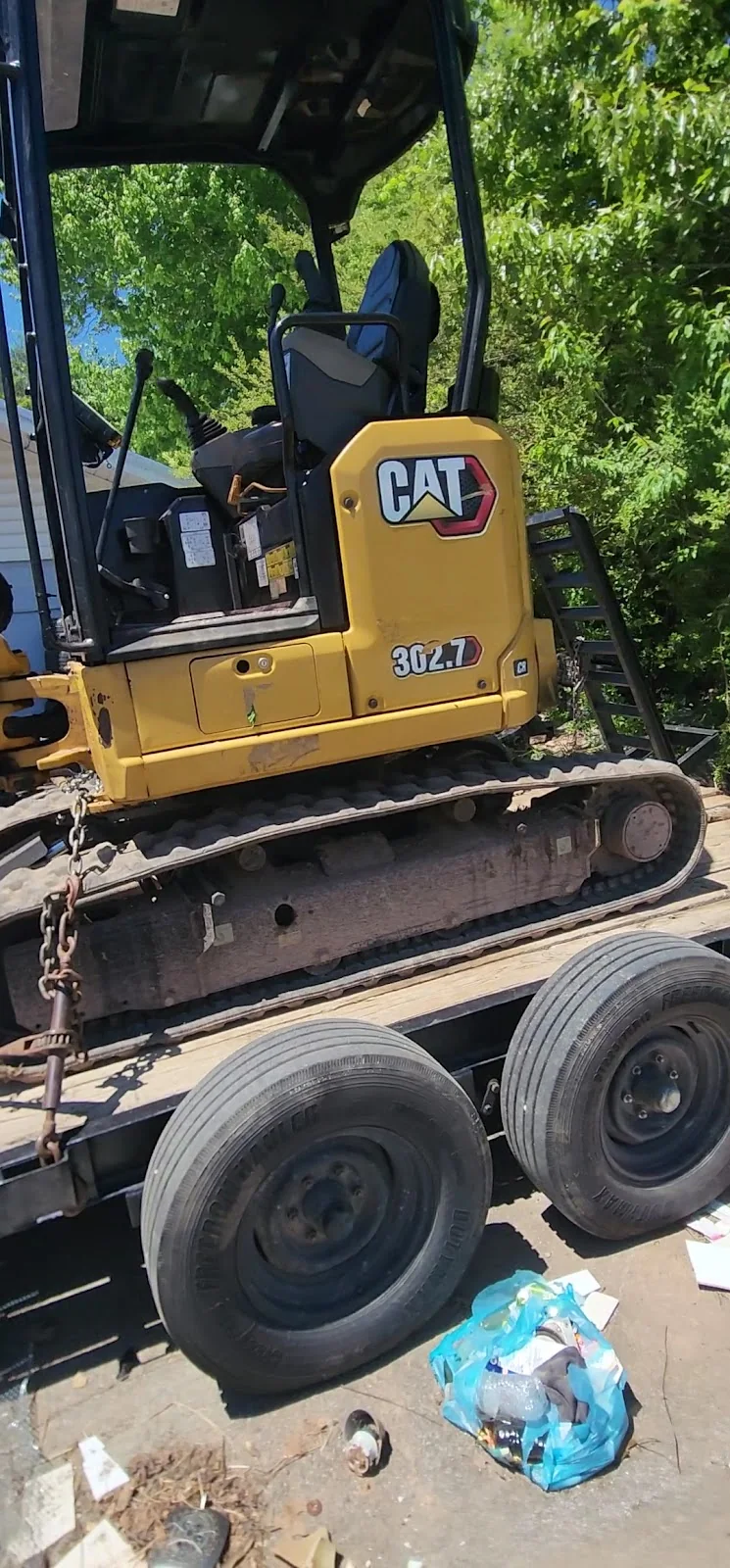
The tells that change your quote: how many mature trees are coming out (diameter drives machine hours), how much stump grinding is needed versus leaving stumps in place, whether the slope will let a dozer or excavator work efficiently, and where the debris goes. On tight Arden access roads, getting the brush out costs as much as cutting it. For the wider cost picture on grading items, the Buncombe County grading cost breakdown is the useful companion page.
Species and soil matter more here than newcomers expect. The hardwood canopy that shades Arden ridge lots — oaks, hickories, poplars, and the occasional walnut — means big crowns and big root systems, and a mature tree's stump can be far wider than the trunk above the flare. That's machine time, and stump grinding is priced in inches, not minutes. In the bottom ground, you often hit the deep, workable river-bottom soil early, which clears fast, but it also means mud in a wet season and a real chance your machine ruts the lot worse than any tree ever did. Soft ground work often moves to dry stretches of the calendar for that reason alone.
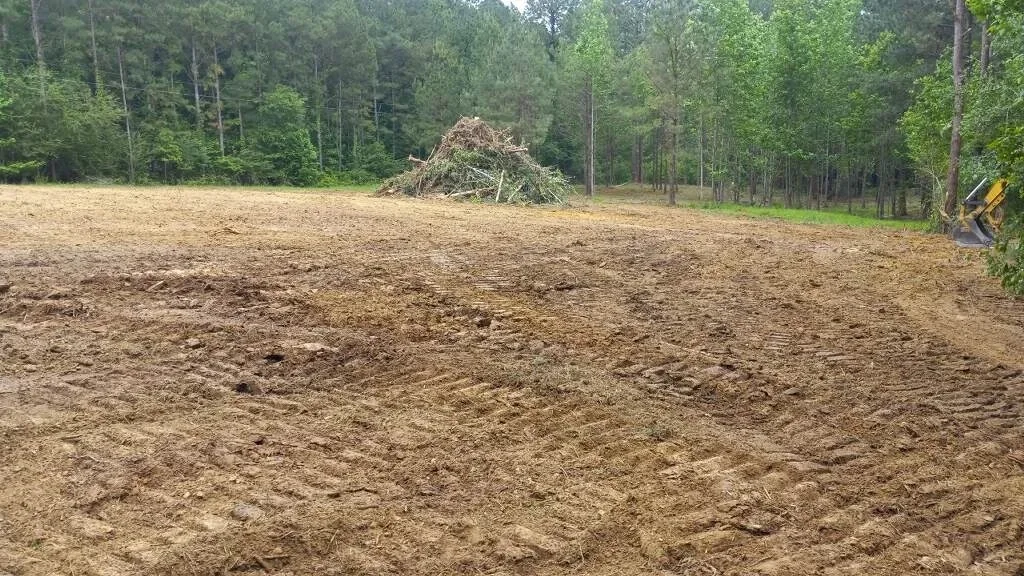
Access is the quieter cost driver on the older Arden parcels. Some lots off the valley roads were subdivided when frontages were narrower and driveways were steeper, and a machine plus a chip truck may not fit the same pull-through. When it doesn't, debris gets hand-fed or staged on the road for later load-out, and that adds labor to a job that looked simple on paper. Walk the access first, think about the largest truck that will need to reach the far corner, and note whether utilities hang low over the drive. Those observations, brought to a bidder, produce a quote that holds together — and help you compare bids that are actually for the same scope. Clearing a lot with nowhere clean to stack material is a different job than clearing one with an open field behind it, and the pile location should be on the plan, not discovered on day two.
The Arden price picture
Residential land clearing here prices by the work, not the acre count alone. The working table:
| Scope | Typical residential range | When it moves |
|---|---|---|
| Light clearing — brush, saplings, small lots | $750 – $2,000 | Dense undergrowth or tight access adds hours |
| Clearing with stumps removed | $1,500 – $5,000 | Stump diameter and count |
| Clearing, stumps, and rough grading | $2,500 – $8,000 | Slope, drainage, hauling distance |
| Steep, heavily wooded acreage | $8,000 – $10,000+ | Machine footing, erosion controls, permits |
Those rows hold for most Arden parcels. A level half-acre behind an existing house lands near the bottom; a wooded ridge lot that requires a tracked machine and erosion fencing on a slope pushes toward the top. Anything quoted under $750 for residential work in this area is worth questioning — either the scope is tiny or something isn't included. The full service overview lives at land clearing.
Read a quote by asking what is not in it. Pile burning, off-site hauling, stump grinding, root raking, topsoil stripping and stockpiling, and rough grade to a pad elevation are all separate enough that two bids can differ mostly by inclusions. Root raking — pulling the root mass and stumps out of the top layer so you're not building over a mat of old wood — is easy to leave out and expensive to add later, because once a house or driveway sits on the lot there is no easy way back in. On bottom-ground Arden lots, ask specifically whether fill and topsoil will be separated during clearing; mixing them costs you later when you need clean soil to establish a lawn or garden bed on a hillside.
The right comparison is a like-for-like line item list: same tree count, same stump size, same hauling answer, same finish grade. That's the honest way two Arden neighbors can figure out why one got a $2,900 bid and the other $6,400, and which one fits their project. Don't treat the lower number as the deal until the scopes match.
Water, storms, and why bare ground in Arden needs a plan
The federal disaster record for this county explains why erosion control isn't optional here: 19 declared events touch Buncombe County across 1973-2026, predominantly storm and flood family. Every one of those events moved water across ground that was, or soon would be, bare. Clearing a slope without a sediment plan is an invitation for the next heavy rain to carry your topsoil — and your neighbor's driveway — downhill. The EPA covers the stormwater logic that underlies state and local erosion rules, and the National Weather Service is where you watch for the systems that turn a finished clearing job into a washout. Sequence matters: erosion fencing and stabilized entries go in before the machines cut, not after.
The Blue Ridge storm pattern that matters most isn't a named system landfall; it's the slow-moving, moisture-loaded front that parks over the mountains and drops rain for a day. Those are the events that overwhelm a small ditch and turn a graded slope into a gully. On Arden hillside lots, the standard practice is to keep bare ground short-lived — clear in a workable window, get the lot brought to its interim drainage pattern, and avoid leaving a large exposed cut through a wet season. A finished job that survives its first real storm was designed with that storm in mind.
Buffer rules also enter the picture near the river. Cherokee land along the French Broad and its tributaries can carry additional protection requirements, which is a conversation for the local planning office rather than a contractor's guess. Where a project touches a stream or its banks, expect the design and review effort to step up, and expect a bidder who knows that to say so upfront instead of discovering it after clearing starts.
Choosing a crew for wooded, sloped, or tight-access work
Three checks that separate real Arden clearing crews from the rest. First, ask how they'll handle the debris — burn, haul, or grind-and-leave — and get the answer priced. Second, ask who pulls the erosion permit if your project crosses the one-acre line and who's responsible for inspections; if the answer is vague, that's a red flag. Third, ask for references on ground like yours — a crew that clears flat pasture may never have worked a 30-degree wooded slope in this county. The local contractors page at grading contractors in Arden is the place to compare crews that know this terrain.
Insurance is the fourth thing, even though it feels tedious. Ask for a certificate of insurance that names general liability and, if anyone is doing tree work near a structure, make sure the coverage reflects that risk. A crew working on a wooded hillside above a neighbor's house is a real exposure, and the certificate is a quick, honest way to confirm you're not the one holding the bag. For bigger projects in the county, you can also verify a general contractor's standing and understand where licensing thresholds kick in through the NC Licensing Board; it's a five-minute check that separates a professional outfit from a weekend crew with a skid steer.
Scheduling is its own tell. Good crews in this area book out, especially in the drier stretches of spring and fall, and they will tell you honestly when they can start rather than promising a date they can't hold. Be skeptical of anyone who says yes to tomorrow in a busy month. And read the scope for what it says about who handles the surprise — the hidden rock, the buried debris, the wet week that stops progress. A quote with a fair change-order process and clear communication beats a low number with radio silence every time. The right fit on an Arden lot is a crew that walks the ground with you, names what they see, and puts the same list in writing.