Where the water comes from on a Black Mountain drive
Black Mountain lots don't shed water evenly. A drive cut into a hillside off a road like North Fork or Lakey Gap pulls runoff from the whole upslope acre above it, and the curb line concentrates it right where your driveway meets the pavement. A flatter lot near the valley floor gets the opposite problem: the water arrives slowly and then has nowhere to leave because the surrounding grade is nearly level. Both cases point to the same design rule. The driveway surface is the last place water should sit.
So the first decision on any gravel drive here isn't the stone color. It's where the crown pitches, where the shoulder ditch runs, and where the discharge point sits relative to the house footing and the neighbor's property line. A drive that sheds toward a daylighted ditch at the low end behaves differently than one that sheets across the road into a creek. Get the grade wrong and even a thick, well-compacted base will rut, pothole, and pump mud after a wet week. Storm events in this county are the usual trigger: 19 federal disaster declarations touch Buncombe County across 1973-2026, and the pattern is water, not wind.
What makes Black Mountain specific is the combination of slope and soil. The hillsides behind the town hold a lot of water in the saprolite clay that sits under a thin organic layer, and that clay does not drain. Water moves along the top of it instead of through it. When a driveway cut slices into that layer, the cut face becomes the path of least resistance and the water shows up at the apron, at the culvert, or under the gravel as a spring nobody planned for. A homeowner on a north-facing slope above the valley may see this in January; a lot on the south side near the golf course corridor may see it after a summer thunderstorm. Either way, the fix is a grade that directs water to a defined exit rather than relying on the subgrade to absorb it. That is why the site visit, not the quote sheet, is where the real numbers get decided.
What a Black Mountain scope actually contains
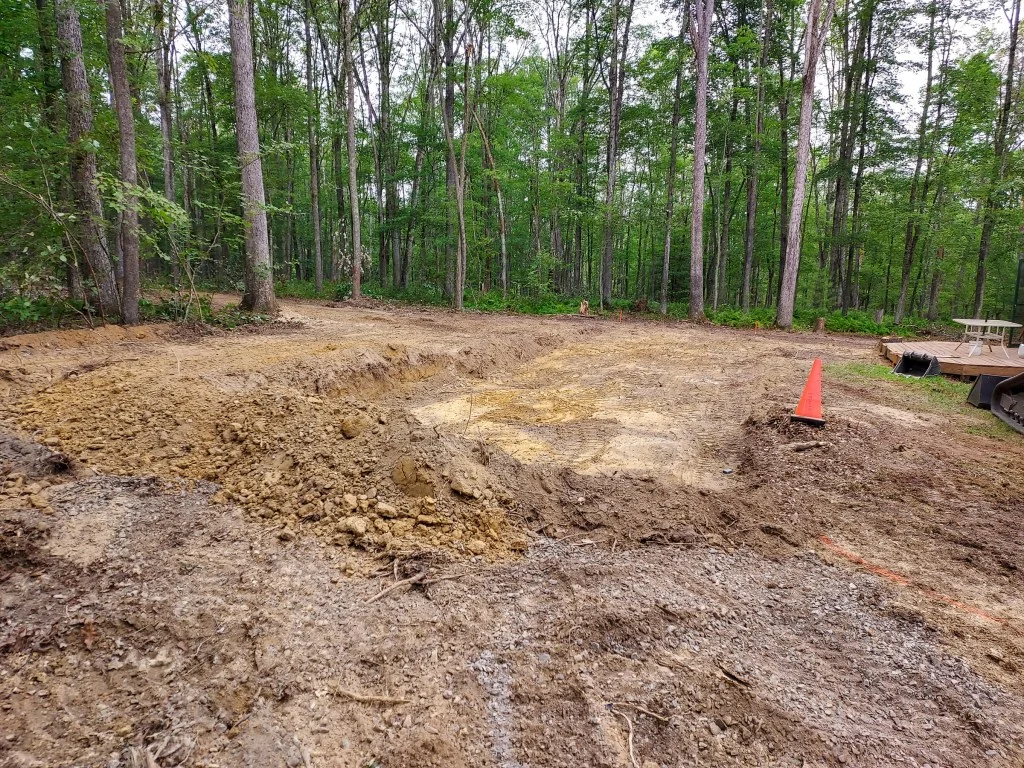
A real estimate for a mountain drive lists the work in order. Strip the organics. Cut and shape the subgrade to a crown. Compact the subgrade. Lay geotextile where the soil is soft or the slope is steep. Place and compact base stone in lifts. Top with surface gravel to a depth that matches the traffic. Cut the shoulder ditch and set the culvert pipe under the drive apron. Seed or riprap the bare slopes.
Skip a step and you'll know within one wet season. A drive with no fabric over clay will sink stone into the mud. A drive with no ditch will erode the shoulder back to the road. A drive with too thin a base will rut under a loaded truck. Excavation and grading contractors working on regulated sites and larger construction jobs should be licensed per the NC Licensing Board for General Contractors thresholds, so ask early whether your project falls under that rule. For the step-by-step version of the work, see driveway grading and gravel.
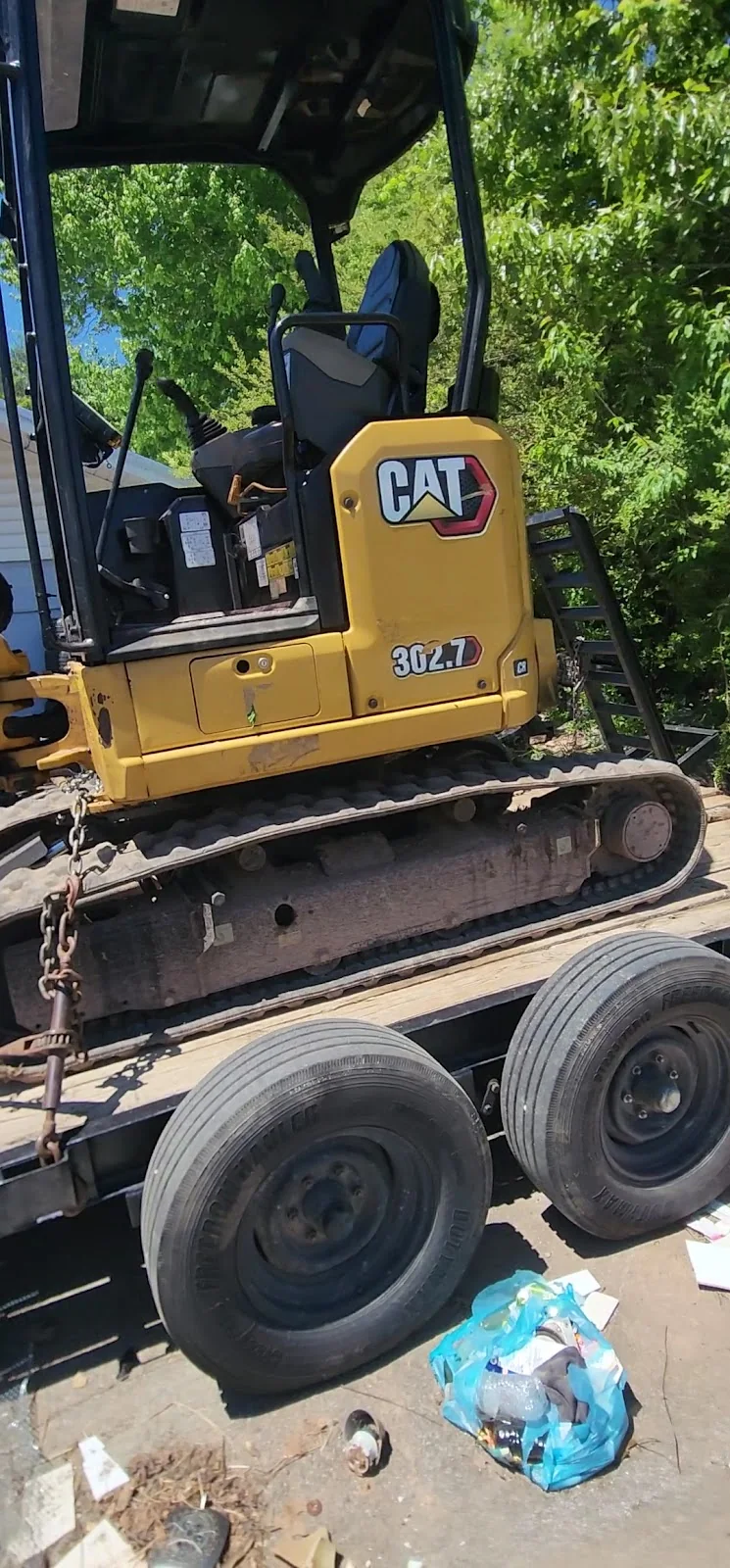
Access is the other thing that shows up on almost every Black Mountain job and almost nowhere on a flatland quote template. A steep, narrow drive often means the dump truck cannot back to the farthest point and the machine cannot turn around at the top. Stone gets walked in with a small machine or placed from the bottom up, which takes longer and costs more per yard. That is not padding. It is what the physical site requires. On some lots the drive is the only flat place on the property, which means it also serves as the parking area and the turnaround, and the design has to hold up to that loading pattern rather than just a daily car trip.
The cost picture for local drives
Numbers below are installed ranges for a typical single-family drive. Long runs, steep grades, and heavy drainage work push toward the top of the band; short, flat, easy-access drives sit near the bottom. Full line-item pricing for the county is in the Buncombe County grading cost table.
| Scope | Typical installed range |
|---|---|
| Short flat drive, regrade and top with new surface gravel | $1,800–$2,800 |
| New drive, moderate slope, fabric, base, surface stone | $2,800–$5,500 |
| Long or steep mountain drive, culvert, ditch, riprap | $8,000–$12,000 |
| Drainage add-ons (culvert, ditch, turnouts) | Priced inside the ranges above |
Two quotes on the same drive can differ by thousands because one includes fabric, ditch, and culvert while the other is stone over existing ground. Compare scopes, not bottom lines. Contaminated soil or unusual disposal needs different handling, and the EPA publishes guidance on what can and cannot be moved and where.
A short flat drive in a Black Mountain neighborhood on the valley side is genuinely a small job. A drive climbing off a switchback road toward a ridge lot is not, and the number comes from cubic yards of cut, linear feet of ditch, and pipe sizing rather than from a price per foot. Homeowners who have gotten a shockingly low bid and a shockingly high bid on the same lot usually find out that one contractor planned to lay stone on the existing ground and hope, while the other planned to fix the grade first. The second one is the number that lasts.
Choosing stone and depth for the slope you own
Mountain drives here usually want a larger base stone under a smaller surface stone. The base carries the load and drains; the surface locks together and sheds. On a steep pitch, a washed, angular surface gravel holds traction better than a rounded river rock, which rolls under tires and migrates downhill. On a flat drive near the valley, a crusher-run surface compacts into a firm, low-dust sheet.
Depth is where homeowners and crews argue. The honest answer depends on soil and traffic. Soft subgrade and occasional heavy vehicles want more base. Firm ground and passenger cars want less. Overbuilding is real money. Underbuilding is a redo next spring. A reputable installer will probe the subgrade before quoting, not guess from the street.
Slope also changes how the surface behaves over years, not just on day one. On a sustained grade, every rain event moves a little material downhill, and the bottom of the drive accumulates what the top loses. A drive designed with that in mind uses a slightly coarser surface on the steep pitch and a turnout or apron at the bottom where the migrating stone can be pulled back up with a box blade. A drive designed without it develops the familiar bare spots at the top and a soft, stone-filled puddle at the bottom of the hill within a couple of seasons. That is a maintenance cycle, not a failure, but the difference between a drive that needs a light top-dress every few years and one that needs rebuilding is decided at the grading stage.
Working with a local crew
Ask three questions before signing. Where does the water leave the drive when it's done? What's under the gravel — how thick is the base and is there fabric? And is the slope stable without a retaining structure?
The third question matters on Black Mountain hillsides where the upslope cut exposes soil that wants to creep. National Weather Service records for this region show the rainfall pattern that drives most of the slope failures locally, and the design should account for the wettest weeks, not the average. See weather.gov for the local climate record. Building codes set the baseline for retaining walls and site work through the International Code Council, and a good crew will already know those thresholds. To see what a proper site visit looks like before any quote, check the grading contractors serving Black Mountain.
Timing matters too. A drive that meets a public road is a point of connection with the road authority, and work in the road shoulder is usually scheduled rather than done on the crew's whim. Plenty of Black Mountain drive work happens in the drier stretches of the year for exactly this reason: better compaction, less mud tracking onto the road, and less chance the fresh grade gets washed out the week it is finished. A crew that tells you when not to build is usually a crew worth hiring.