Day one through day eight: the order a Laurel Park hillside job actually follows
Drive the wooded residential roads threading this town and one thing is obvious: almost nothing here is flat. Houses sit on benches carved into ridges above Hendersonville, and that geometry dictates the entire sequence of a grading job. Most homeowners picture one afternoon of a bulldozer pushing dirt. The real order of work is slower, and knowing it is how you tell a serious bid from a thin one. Day one on a typical Laurel Park lot goes to protection, not excavation — silt fence along the downslope edge, inlet protection at the nearest storm drain, and a marked limit of disturbance so a machine doesn't wander onto a neighbor's rhododendrons on a half-acre parcel. On lots this tight, that line isn't paperwork; it's the boundary between staying on your property and paying to replace someone else's landscaping.
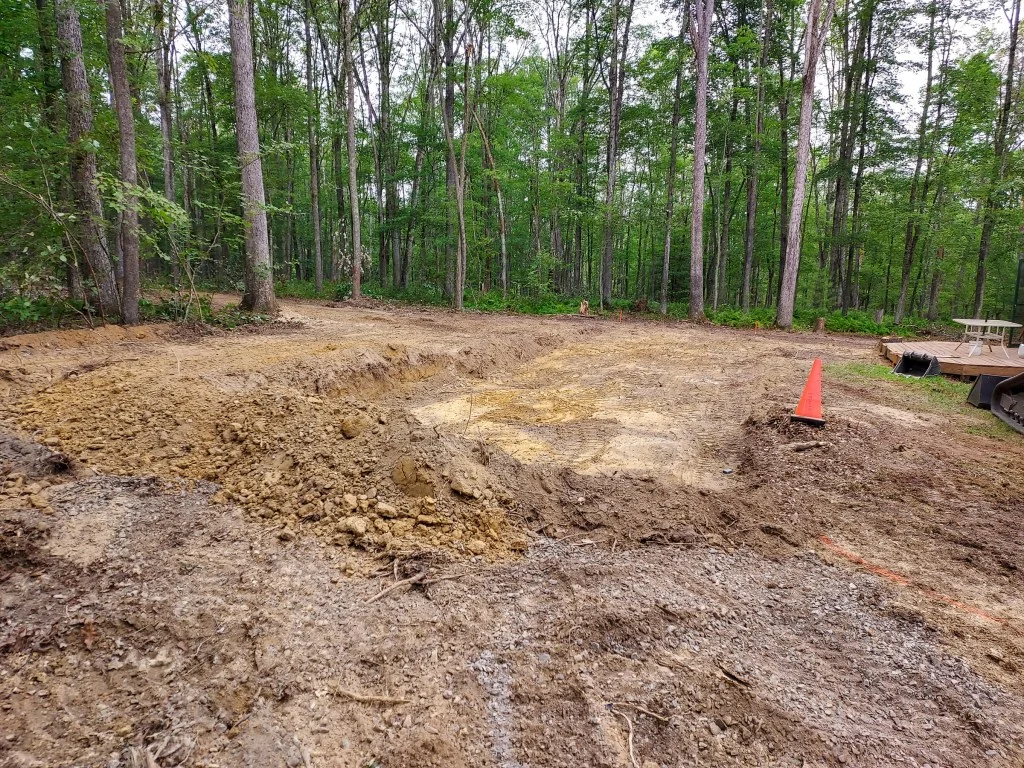
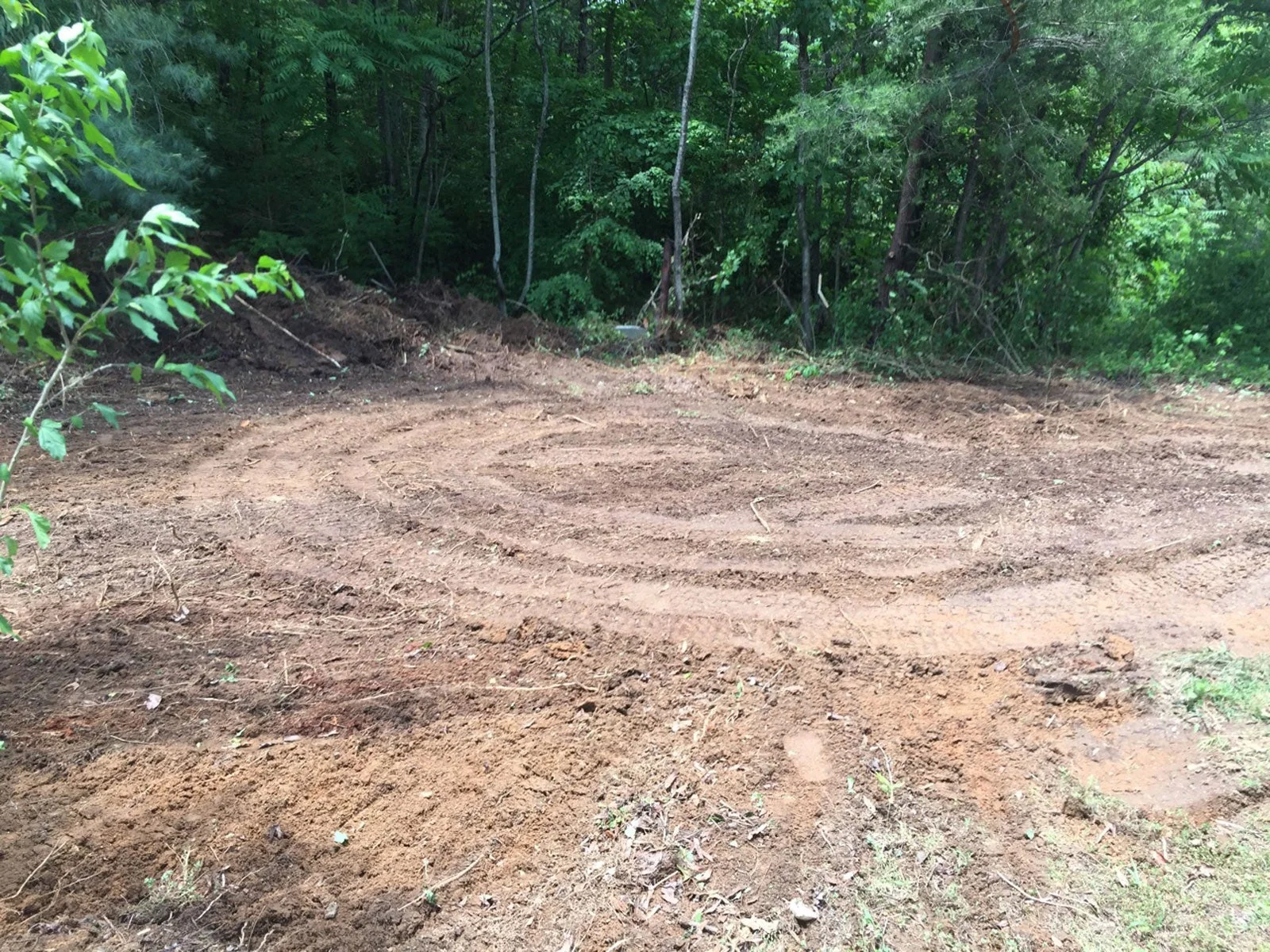
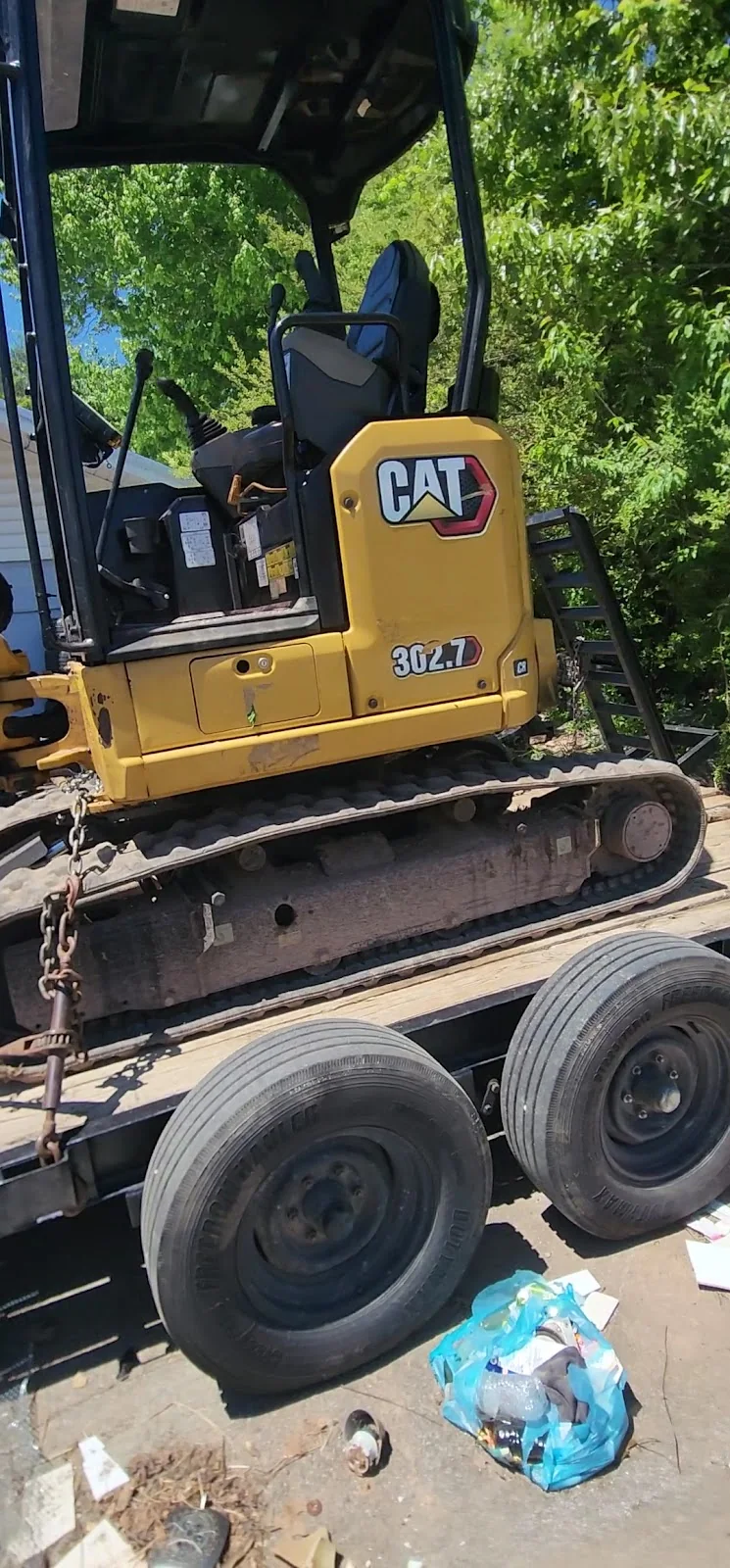
Day two brings utility locates and the first cut. Because so much of Laurel Park is carved into the lower slopes of the Blue Ridge, the excavator is usually benching into a hillside rather than flat-scraping a field. That's where schedules split: a gentle lot moves fast, while a 20-degree grade over shallow bedrock can turn a three-day cut into seven. Rough grading, drainage swales, and a final grade that actually sheds water come next, followed by a compaction pass before anyone talks grass or gravel. Our grading and excavation services page breaks down what each phase covers.
Two conditions specific to this town throw timing off most. First, many lots back onto steep ravines draining toward Mud Creek or one of its feeders, so the downslope edge needs heavier stabilization than a Piedmont job ever would. Second, the soil here is often thin loam over clay and weathered rock, which drains poorly once the top layer is gone. A crew that has graded in this county plans a wider stabilized buffer and a steeper swale pitch than one importing a plan from flat ground. If a bid has no line item for temporary stabilization, treat that as a warning sign.
Slope, rock, and runoff: the three things that move the number
Laurel Park is a small Henderson County town of wooded ridges and creekside lots, and its ground does not behave like flat Piedmont dirt. Slope and rock drive most of the cost. A site needing a retaining solution at the rear, or a cut that exposes weathered bedrock, adds machine hours, haul-off, and often an engineered detail. Water is the other mover — this corner of the mountains gets serious rainfall, and every plan has to answer where stormwater goes before it leaves the property. The NC Licensing Board for General Contractors sets the thresholds where a licensed general contractor must carry the project, and site drainage and grading are treated as code-level requirements rather than finishing touches, which is why a real scope itemizes them. For a working county price table, see our Henderson County grading cost breakdown.
Access is the third, quieter cost driver. Many Laurel Park properties reach the buildable area by a narrow private drive with a switchback, and a loaded dump truck or a full-size excavator may not navigate it. When equipment has to be sized down, or spoil shuttled out in smaller loads, hours climb. Ask any bidder to walk the access route with you before they quote; a phone estimate on a lot they have never seen is a number that will move.
Scope versus price, in regional bands
Figures below are regional ranges for this kind of work, not quotes. Final numbers depend on slope, rock, access, and how much dirt stays on site versus gets hauled away.
| Scope | Typical range | Usual duration |
|---|---|---|
| Small regrade / drainage fix | $1,200 - $3,500 | 2-4 days |
| Driveway cut and gravel base | $2,500 - $5,000 | 3-6 days |
| Full lot rough + final grade | $3,500 - $8,000 | 5-8 days |
| Slope cut with retaining detail | $6,500 - $8,000+ | 1-3 weeks |
| Rock encountered (add-on) | $1,500 - $4,000+ | varies |
Haul-off is the quiet budget killer. If your soil can't be reused on site for fill, trucking it out adds cost fast — ask every bidder whether disposal is included. On hillside lots the answer is often no, because reusing fill requires benching it into the slope correctly rather than dumping it. A bidder who says "we'll just push it to the back" without explaining compaction or a keyway is not building fill you can put a foundation or driveway on.
Storm history is why drainage leads the scope here
Henderson County has seen 16 federally declared disaster events across 1978-2026, and the pattern is overwhelmingly storm and flood related. That record is why a grading plan in this county starts with water rather than aesthetics. The National Weather Service issues frequent flash-flood watches for the southern Blue Ridge because storms stall against the terrain and drop heavy rain in a short window. If your lot has ever taken runoff from an uphill neighbor, say so on the first walkthrough — it changes the design.
Practically, that means a grading plan should show where water enters the property, where it crosses, and where it exits, all before the machine moves. A swale that dumps runoff onto a neighbor's drive is a problem you inherit for years. On the steepest lots, crews sometimes need a level spreader or a riprap outlet to slow water before it leaves the site. These are modest line items up front and expensive repairs later, which is why storm history belongs in the conversation on day one.
Clearing comes first, and it shapes the grade you can build
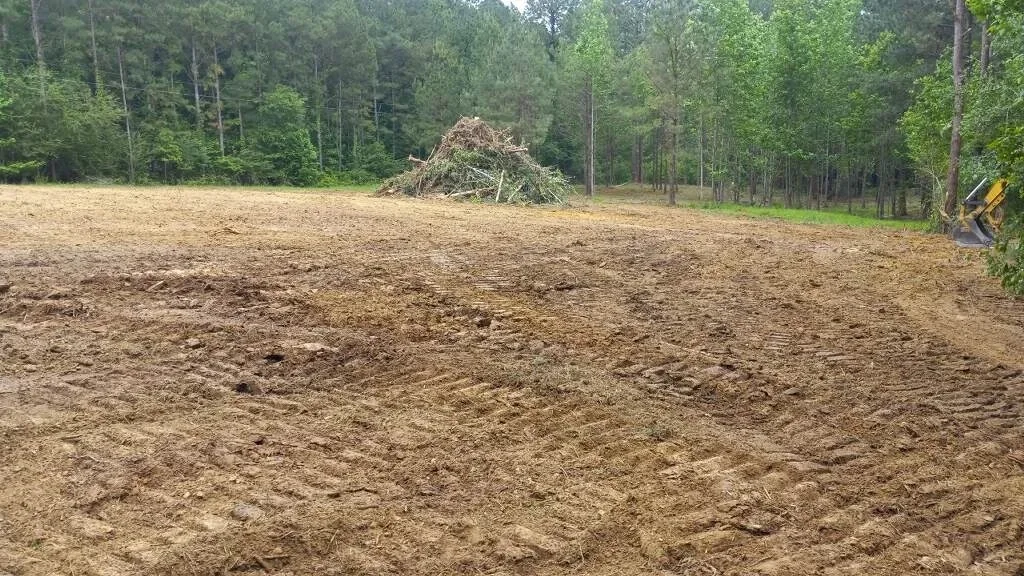
Grading and clearing are usually one project in two phases. Laurel Park lots are heavily wooded, and stumps, root mass, and understory have to come out before a machine can establish a real grade. Doing these as separate contracts rarely saves money; sequencing them together lets the same crew haul debris and reuse cleared material as fill or mulch. Our land clearing in Laurel Park page covers that first phase. One more check: once a job crosses the state's cost threshold, general contracting rules through the NC Licensing Board for General Contractors apply, so verify who is actually carrying the license.
Wooded lots also raise the question of what to keep. Mature hardwoods shade a home and hold a slope together with their roots, and removing them all at once can make a hillside less stable, not more. A thoughtful clearing plan marks the trees that stay, works around them with the machine, and grinds the stumps rather than burying them where a future foundation might go. Burying stumps is faster and cheaper and it always comes back to haunt the owner.
Reading a bid and a schedule before you sign
Three things separate a real proposal from a guess. First, a site sketch showing existing and proposed grades, not just a lump sum. Second, a stated erosion-control plan — silt fence, inlet protection, stabilization — because bare graded ground here will move in the next heavy rain. Third, a schedule with dependencies spelled out: locates, cut, drainage, compaction, stabilization. Ask what happens if rock is hit, since that contingency is where budgets quietly grow. The EPA's guidance on stormwater and construction site runoff is worth a skim if you want to understand what your contractor should be controlling on site.
Expect weather to interrupt any outdoor schedule in this county. Build a buffer into your plan rather than a hard deadline, especially in spring and fall when mountain rain is most unpredictable. A finished grade that drains correctly and holds through a heavy storm is the real measure of the job — not how fast the machine left.