What Asheville ground does to a drain trench
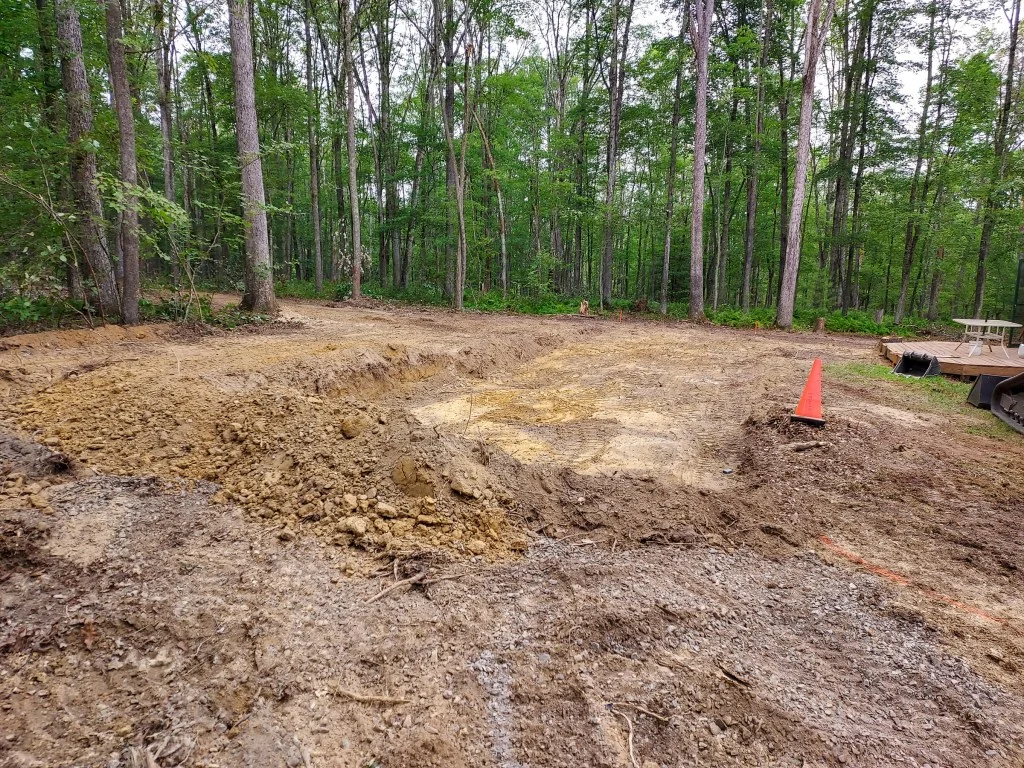
Dig a footer in a Weaverville subdivision and you'll cut red clay that holds water like a bowl. Dig one on a slope above the French Broad and you'll hit rock at 18 inches and fill someone pushed there in the 1970s. Both are typical Asheville-area drainage jobs, and they call for very different trenches. Clay drains so slowly that a perforated pipe laid in it will sit submerged for days after a storm; rock refuses the trench altogether and forces the line uphill, sideways, or through the footing of an old retaining wall. Old fill is its own problem: the material settles unevenly, so a drain that's dead-level when installed can belly and pond within two seasons. The honest version of this trade here is a drainage plan matched to the actual soil on your lot, not a one-size trench.
Before anyone sells you pipe, the real question is where the water is coming from. Standing water that reads as a foundation problem is often a grading or downspout problem first — worth a look at standing water in your yard before committing to excavation.
How the work actually goes in — and what each stage costs
A residential French drain in this region usually follows the same arc: walk the lot and identify the water source, mark the line and the outlet, cut the trench, lay filter fabric, set washed stone and perforated pipe, then daylight the outlet somewhere the water can actually leave. The outlet is the part most bids gloss over and the part that decides whether the drain works. If the only outlet is a curb that floods, or a slope that runs back to the house, the pipe is a decoration.
Cost in Buncombe County depends mostly on length, depth, and what's in the ground between you and the outlet. A useful way to think about it:
| Scope | Typical installed range | What moves the number |
|---|---|---|
| Short run, easy soil (interior or curb-line, 30-60 ft) | $3,000-$5,000 | Depth, outlet distance, whether the grade permits gravity flow |
| Standard residential perimeter or yard drain (60-120 ft) | $5,000-$9,000 | Rock encounters, tree roots, restoring lawn and hardscape |
| Long or difficult run (120 ft+, heavy rock or fill) | $9,000-$18,000+ | Rock excavation, imported stone, pump or drywell alternative |
| Crawl space or basement interior drain | $4,000-$10,000 | Access, slab cutting, sump and discharge route |
Those bands are regional, not quotes. The French drain cost page on this site walks through the same drivers in more detail, including why a rock-heavy lot can double a bid that looked comparable on paper.
Drainage, grading, and the water that has nowhere to go
A French drain is one tool in a set, and it only works if the water it collects has a legal and practical place to leave. In Asheville's older neighborhoods, and especially on lots that back into steep wooded slopes, the outlet problem is often the whole job. Grading that pushes water away from the structure, restoring the swale a previous owner filled in, and making sure roof water is discharged well clear of the foundation are all upstream of the pipe.
This is where the code and permitting picture matters. Any work that alters drainage across a property line, adds impervious surface, or touches a stream buffer can trigger local review; the state's building code framework sits at the NC Department of Insurance / Building Code Council, and drainage and erosion provisions in the residential code exist precisely because water is usually the first mover on a failing foundation. For broader context on how stormwater and erosion are regulated, the EPA's stormwater program is a reasonable plain-language starting point. The practical takeaway: ask about grading and erosion control as part of the drainage proposal, not as an afterthought — that's the essence of drainage and erosion control done properly around here.
Licensing, permits, and who should actually be doing this
In North Carolina, residential general contracting above a statutory threshold requires a license from the NC Licensing Board for General Contractors, and any work that ties into plumbing — sump discharge, connection to a municipal storm line, interior drain to a floor drain — can edge into territory overseen by the State Board of Examiners of Plumbing, Heating and Fire Sprinkler Contractors. Whether your specific job needs a permit depends on what's being disturbed: a shallow yard swale is usually not a permit item, while regrading a slope above a neighbor or tying into a storm structure often is.
What this means at the bid stage is simple. Ask who holds the license for the scope you're being quoted, ask whether a permit is required and who pulls it, and ask what happens to the water at the outlet. The answer to the third question separates a contractor who has done this in Asheville clay and rock from one who hasn't.
Why saturated seasons here expose weak drainage
This county has been through enough federal disaster declarations (19 on record across 1973-2026) that "wet season" isn't an abstraction. Saturated ground during and after heavy rain events is when marginal drainage announces itself: crawl spaces that were dry all spring suddenly hold water, downspouts discharge into soil that can't take any more, and slopes that looked stable start moving. The National Weather Service outlook is the tool for watching those windows, but the lesson is local and old: in Buncombe County, water that doesn't have an engineered path out will find a damaging one in. A French drain done right is a permanent path. A French drain done cheap is a pipe full of mud.