The access problem comes before the dirt problem
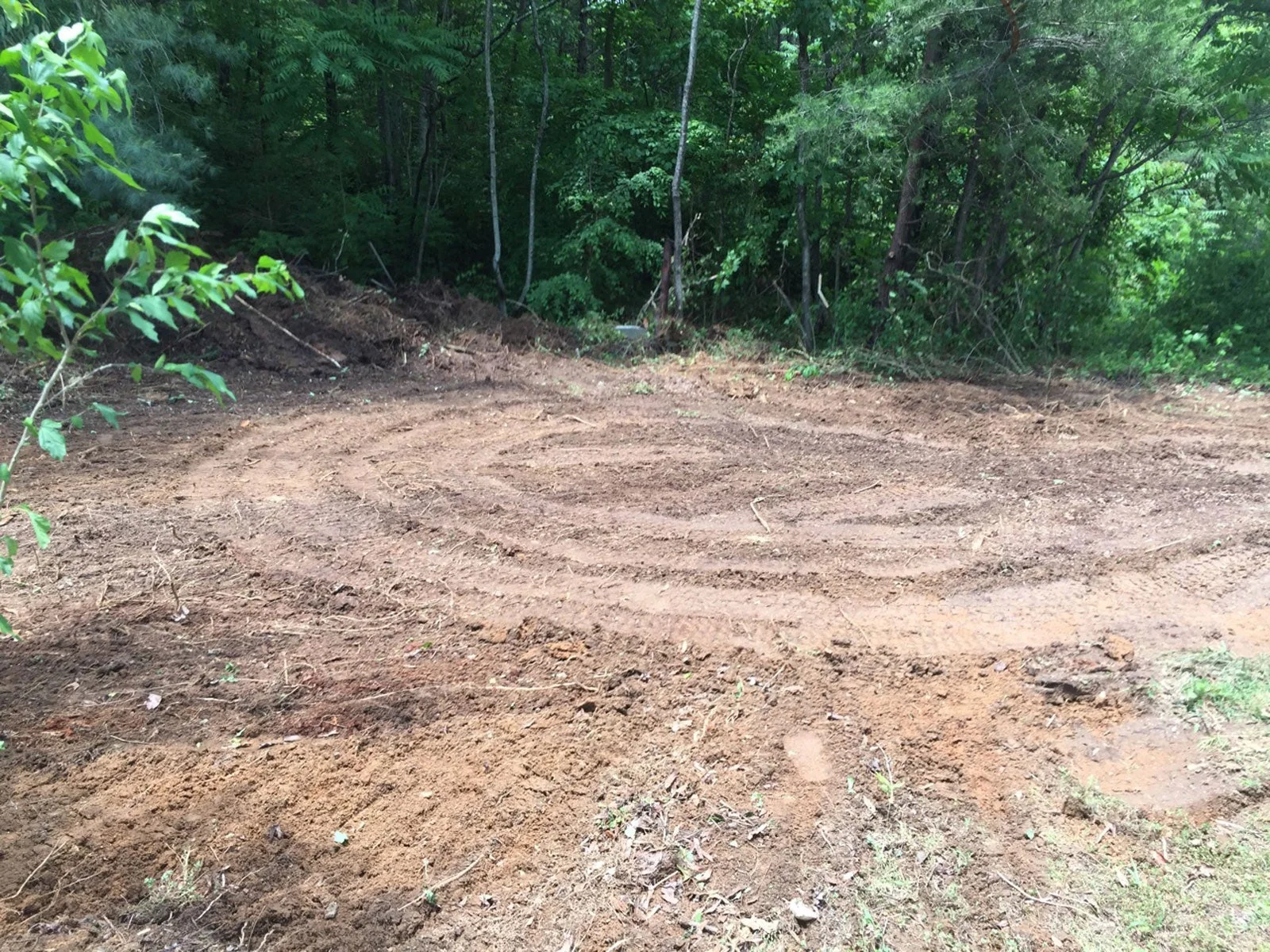
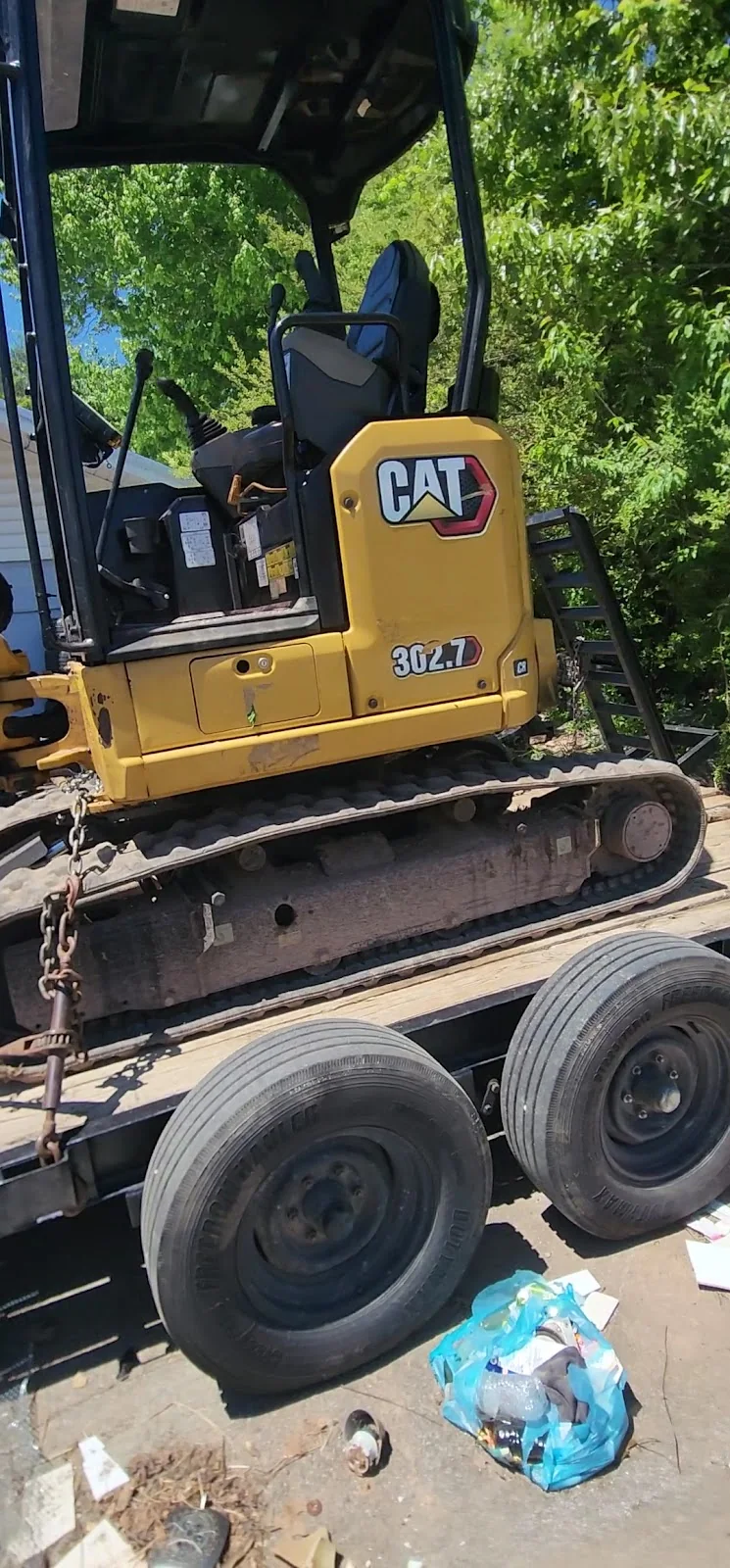
Lake Junaluska is a tight, hilly, largely built-out community pressed between the lake and the ridgelines above US-19, inside Haywood County and a short drive from the county seat in Waynesville. Most of the lots a builder actually wants to develop here were platted decades ago for smaller houses, which means a driveway cut for a 1970s sedan — narrow, steep, often turning hard off a shared lane with no shoulder. Before anyone quotes a pad, they should walk the route a loaded dump truck will take and the route a track machine will take, because those are two different answers.
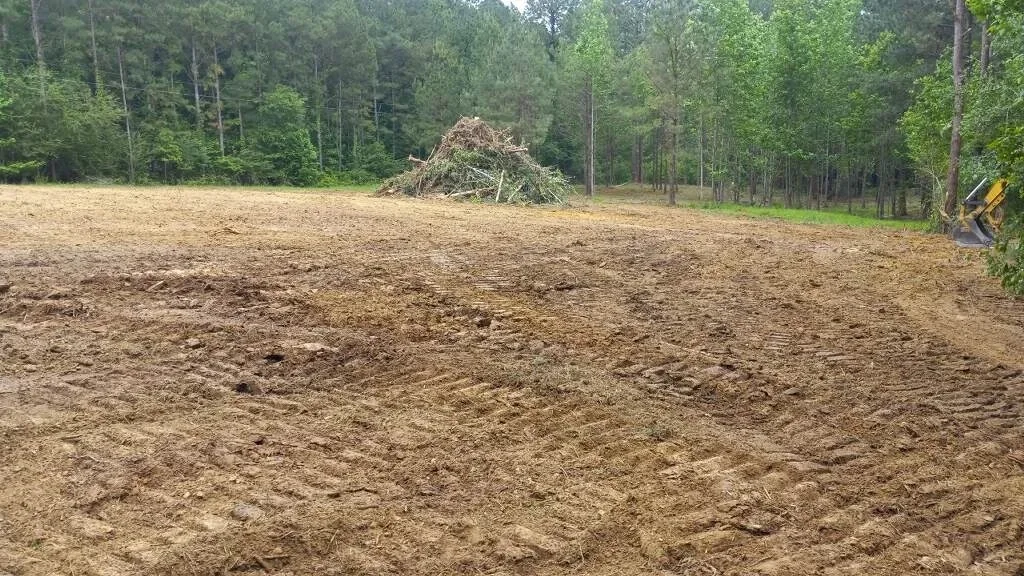
That reality is what drives the price spread more than soil type. Lake-edge lots tend to be flatter but soggy and hemmed in; ridge lots above the lake have views and a grade that can exceed a comfortable 3:1 in the backyard; in-between lots are wooded, which adds clearing and stump disposal. A pad that would be routine on open ground in the county becomes a sequence of decisions about where the fill spoils can go and whether a machine can get to it at all.
Haul-out, and why gravel costs more here
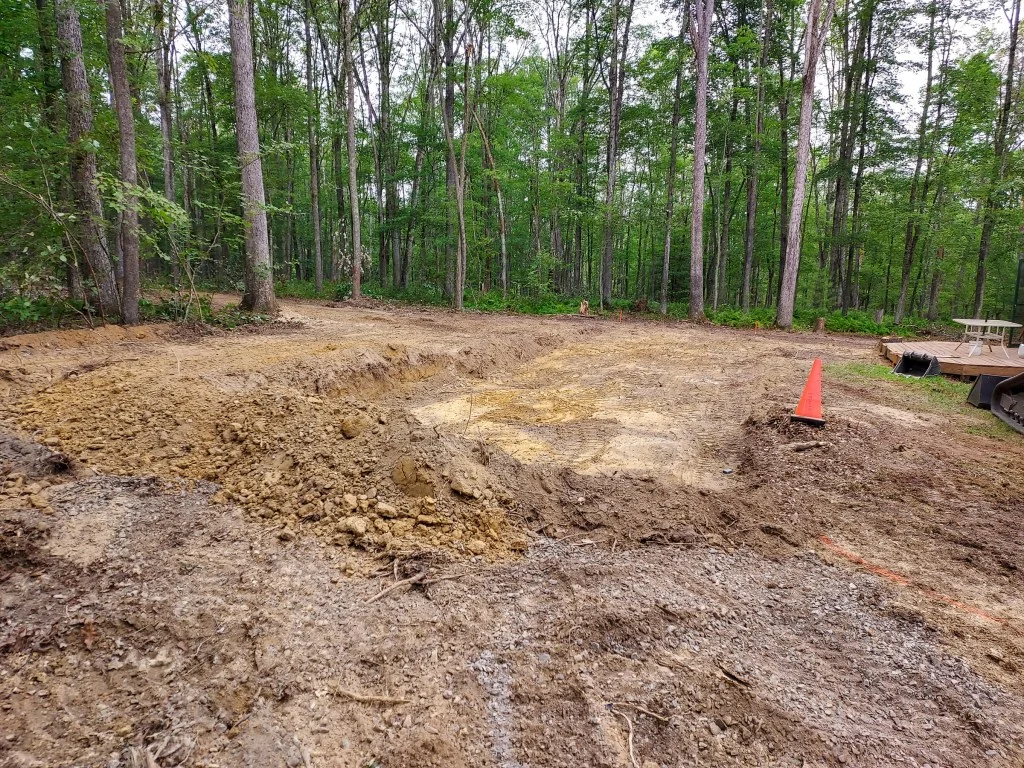
Cut-and-fill balancing is the goal on every pad: the dirt you excavate for the uphill side becomes the fill for the downhill side, and nothing leaves the site. That's the cheap version, and it only works when the lot has enough grade change to give you the material you need. When it doesn't, or when the excavated material is unsuitable, spoil has to go out over those same tight lake roads, and every load out is time, trucking, and a disposal destination.
Gravel is the other half. Aggregate for a Lake Junaluska pad is trucked in from off-site, and the haul distance is baked into every ton. That means base course, driveway stone, and drainage rock all carry a premium compared to jobs closer to a quarry. If you want to know how much of a given bid is material versus machine time, the Haywood County grading cost breakdown splits those line items out. For the broader scope of what a pad build actually includes, the site prep and building pads guide walks through stripping, subgrade prep, and compaction in order.
What the scope looks like, line by line
Prices below sit inside the residential building-pad band for this region. Steep, wooded, or rock-heavy Lake Junaluska lots land at the upper end of each row, and rock excavation on a ridge lot is the one line item that can be genuinely unpredictable until the machine is in the ground.
| Scope item | Typical range | What moves the number |
|---|---|---|
| Clearing and grubbing | $900 – $3,200 | Tree count and diameter, stump disposal on-site vs. hauled out |
| Pad excavation and cut/fill | $1,500 – $6,500 | Grade change across the footprint, whether spoil balances on-site |
| Rock excavation (if encountered) | $1,800 – $6,000+ | Rock type, depth, whether it can be ripped or must be hammered |
| Base gravel and compaction | $900 – $3,500 | Quarry haul distance, pad square footage, depth of base specified |
| Driveway cut and stone | $1,200 – $5,000 | Length, slope, culvert needs, tight-turn access for trucks |
| Spoil haul-out (when needed) | $600 – $3,000 | Volume leaving the site, truck cycles through restricted access |
A full pad with clearing, cut and fill, gravel, and a driveway generally totals $3,500 to $15,000. Add rock, add trees, add a haul-out that fights the access, and a difficult Lake Junaluska lot can reach $30,000.
Grading, drainage, and the downhill neighbor
Around a lake in the mountains, the water question is not optional. A pad has to be built so that surface flow leaves the footprint rather than pooling at the foundation or running onto the lot below — and on these grades, the lot below is usually close. Swales, a defined outlet, and a finished slope that sheds water are part of a competent pad, not an upsell.
The North Carolina residential code treats site drainage and foundation preparation as real requirements, and the state's code enforcement framework runs through the NC Department of Insurance, Office of State Fire Marshal. Storm patterns in this part of Haywood County are worth respecting on their own terms; the federal record shows 19 declared events touching this county across 1973-2026, and the recurring theme is water arriving faster than the ground can shed it. The National Weather Service outlook and warning products are the practical tool for timing a dirt-moving job around a wet week, since a saturated subgrade can't be compacted to spec and shouldn't be paved or poured on.
Who can legally take the job, and when a quote is too good
North Carolina draws a line between routine grading and work that requires a licensed general contractor, and the threshold matters more on a pad than homeowners expect, because a bad pad is discovered later by the foundation it was supposed to support. The NC Licensing Board for General Contractors publishes the current dollar threshold and the rules for who may contract for what. Ask any outfit where they sit relative to that line.
The second filter is a bid that arrives without an access plan or a spoils plan. On a Lake Junaluska lot, a number that looks cheap almost always means the bidder priced the dirt work and skipped the haul, the gravel distance, or the rock risk. Those costs don't vanish; they reappear as a change order once the machine is on the hill. The crews worth calling are the ones already working in this town, and the Lake Junaluska grading contractors listing is the place to start, with the caveat that you should still ask for references on a lot with comparable access.