How a trench job actually sequences, hour by hour
On a Buncombe County hillside lot, the day starts before any machine rolls: the crew calls 811, the free national locate line, and waits the required window for utility owners to mark buried gas, electric, fiber, and water. Skip or rush that step and the rest of the sequence is hypothetical. Once marks are painted, the operator walks the run, flags grade, and decides where spoils will be stacked so they don't wash into a neighbor's yard on the next hard rain.
Digging usually starts at the daylight point — the house, the meter, or the existing line — and works outward, so depth and slope stay consistent. On steep Asheville-area lots, the machine may cut in short pulls and track spoils uphill rather than sit on a slope it can't hold. In rock, the pace drops sharply and a rock hammer or breaker may be brought in; in the clay-and-mica soils common around the county, a well-run machine cut is fast but wall stability matters, and deeper trenches get shoring or benching per OSHA guidance at EPA and ICC-referenced standards. Pipe, conduit, or drainage tile goes in, bedding is placed, the run is tested or inspected where required, and backfill is compacted in lifts — then the excavation contractor restores grade so water still sheds away from the house.
Here is the sequence most crews actually follow, in the order it happens on a hillside job off a road like Town Mountain or up in the Fairview area: locate call first, then a walk of the route to flag grade and identify existing utilities, then equipment staging where the truck and trailer can sit without blocking a driveway that likely has one narrow lane. On a lot that slopes away from the road, the operator often digs from the low side and works uphill, because spoils naturally fall away from the trench edge instead of back in. If the run crosses a septic drainfield, a spring seep, or an old terracotta line that doesn't show on the locator, that gets flagged before the bucket touches soil. That kind of pre-dig walk is what keeps a job from turning into a repair.
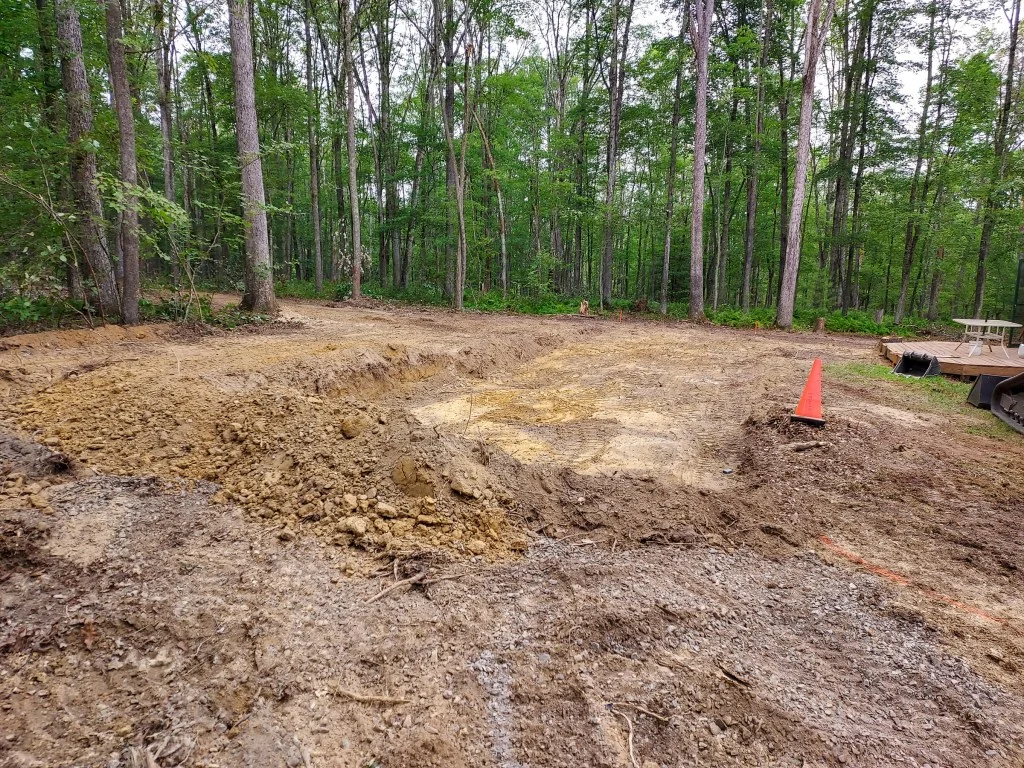
Spoil management is a real decision on these lots, not a detail. The clay-heavy soil that dominates much of the county does not compact back the same way it came out, so crews leave a slight crown over the trench, knowing it will settle. On a wooded slope, spoils are often stacked up-slope of the trench and dressed with straw or filter fabric so a summer thunderstorm doesn't send a mud plume down into a neighbor's culvert below. None of that shows up in a per-foot number, but it is the difference between a trench that disappears into the yard and one that leaves a permanent gully.
What a typical job timeline looks like
Scope drives duration more than square footage. A short electrical conduit run to a detached garage can be a half-day. A 100-foot water line from a meter to a new build, in soil with no surprises, is often one to two days including backfill and compaction. A sewer line replacement with a deep connection to a municipal main, or a long uphill run on a mountain lot, can stretch to three or four days before rock or groundwater gets involved.
Wet seasons in this valley are the schedule wildcard. Saturated ground slows trenching, complicates wall stability, and can halt the job until it drains. This is a county with a long federal disaster record (19 declared events over 1973-2026), a reminder that saturated-soil conditions are a recurring reality here, not a freak event. National Weather Service forecasts and local soil conditions should be part of the scheduling conversation, not an afterthought.
The spring green-up and the fall hurricane season both compress the calendar. From roughly March through May, the ground is often at its wettest after winter rain, and a trench that would take a day in August can take three while the crew pumps and waits. Late summer and early fall bring tropical moisture that can dump inches in hours on a slope that was firm the day before. Contractors who work this county learn to build weather days into the schedule and to keep a pump on the trailer. Ask any crew you talk to how they handle a run that fills with water overnight — the answer tells you whether they have done this in Buncombe County before.
Mobilization is its own slot in the timeline. If the job is up a long gravel drive off a switchback road in the Leicester or Weaverville area, the lowboy or dump trailer may take longer to position than the digging itself. That is why short runs in tight rural access sometimes price higher per foot than a longer run on flat ground near the city — the setup does not scale down.
What trenching costs, and which scopes price where
There is no single trench price. Depth, length, soil, access, and whether pipe, conduit, gravel, or drainage product is included all move the number. The table below reflects realistic regional bands for common residential scopes, not flat quotes. Longer runs generally price lower per foot because mobilization is spread over more distance; short runs in tight access price higher.
| Scope | Typical range | What drives it |
|---|---|---|
| Short conduit or low-voltage run (under 50 ft) | $8–$18 per linear foot | Access, depth, restoration |
| Water service line, meter to house (75–150 ft) | $12–$25 per linear foot | Depth, slope, rock, meter coordination |
| Sewer lateral replacement (connection to main) | $15–$30 per linear foot | Depth to main, slope, municipal inspection |
| Drainage trench with gravel and tile (see french drain installation) | $15–$28 per linear foot | Gravel volume, tile type, outlet design |
| Deep utility trench in rock or steep terrain | Quoted after site walk | Rock breaking, shoring, spoils handling |
For a broader picture of how grading and digging scopes come together, the excavation cost page breaks down what else typically shows up on a bid beyond the trench itself.
A few cost realities are specific to how work prices around Asheville. First, the depth to a municipal sewer main in older parts of town can be substantial, and depth drives both time and shoring cost on a per-foot basis. Second, rock is the wildcard everywhere in the county, but it shows up differently: schist and gneiss ledges on the south and west slopes, harder bands in the higher elevations toward the Blue Ridge escarpment, and pockets of soft saprolite that look like soil until the bucket hits a seam. Third, a trench that crosses an asphalt driveway or a concrete walk adds cutting and patching that a grass route does not. Fourth, if the run has to pass under a retaining wall or a mature oak root plate, hand work and root protection change the labor. Any quote that does not mention rock, access, and surface restoration is probably incomplete, not cheap.
Permits, locates, and the rules that apply here
North Carolina requires a licensed general contractor for projects above a statutory threshold, and trenching tied to a larger site or building project usually falls under that umbrella. Verify any contractor's license at the NC Licensing Board for General Contractors. Utility connection work may also require permits from Buncombe County or the City of Asheville depending on jurisdiction and scope — the responsible contractor should tell you which permit applies before digging, not after.
Two rules are non-negotiable on every job: call 811 before you dig, and provide cave-in protection for any trench deeper than the OSHA threshold. A trench that looks fine in dry clay can fail quietly after a rain. Both the locator call and shoring are the contractor's responsibility, and a bid that skips them is not a bargain — it's an unmanaged risk.
There is a practical wrinkle worth knowing about this county: jurisdiction lines do not always match what a homeowner assumes. A parcel with an Asheville mailing address may actually sit in unincorporated Buncombe County, and the reverse happens too. The permit office, the inspection sequence, and even the setback or erosion-control requirements can change at that boundary. When a trench is for a water or sewer connection, the water authority or municipal utility may have its own set of standards layered on top of the county rules. That is why the first serious question a contractor should ask is not about depth or price — it is which jurisdiction the work sits in and who inspects it.
Erosion control is the other local rule that catches people off guard. Because so much of the county drains steeply toward creeks and the French Broad watershed, disturbed ground on a slope often needs silt fence, a stabilized construction entrance, or other measures before digging starts. A trench left open overnight on the wrong slope after a storm can send sediment into a stream, and that is a regulatory problem, not just a messy yard. The crew that plans spoil placement and erosion control up front is the crew that finishes without a violation.
What separates a clean trench job from a callback
The visible part of trenching is a hole. The part that matters is what happens before and after. Good crews mark utilities and confirm them against plans, plan spoil placement, keep trench walls safe, bed pipe properly, compact backfill in lifts, and restore grade so runoff still moves away from the structure. Sloppy crews dig fast, backfill with native spoil, and leave a low spot that ponds against the foundation — which is how a trench job turns into a drainage problem a season later.
On the steep, wooded lots that define much of this county, access is often the biggest variable. A machine may not reach the work zone, and a job that looks simple on a plat can involve hand digging through roots and rock. That is worth clarifying on the walk-through, not on the invoice.
Bedding and compaction are the quiet quality markers. A water line sitting directly on jagged rock can develop a pinhole leak years later; proper bedding sand or select fill cushions it. A sewer line backfilled with un-compacted clay can settle and lose its slope, creating a low spot that clogs. Native mountain soil here is often too clay-rich to compact well, so good crews import select backfill for the pipe zone and compact it in lifts rather than dumping spoils back in one pass. If a contractor cannot explain how they bed the pipe and compact the backfill, that is your answer about the quality of the work.
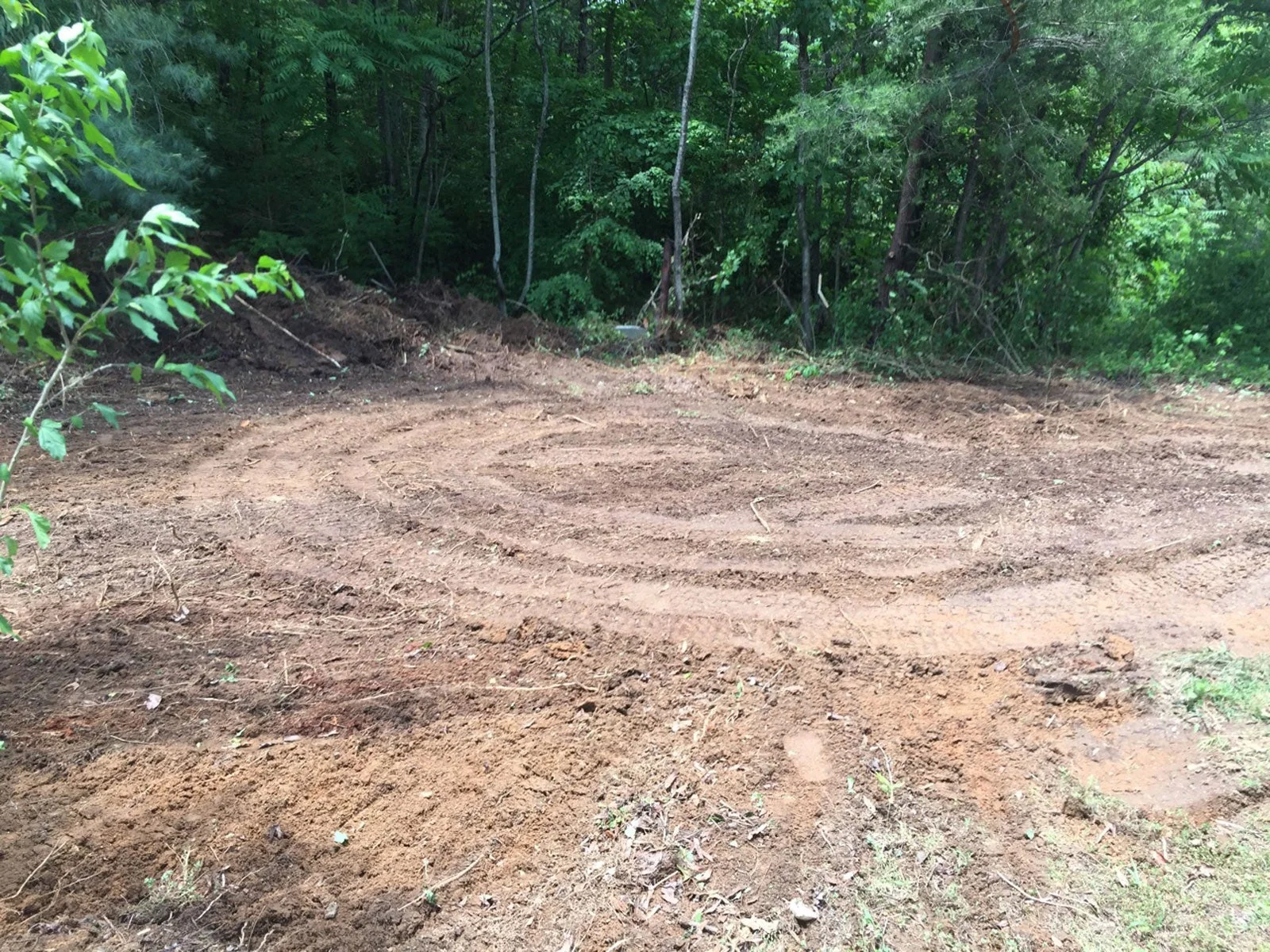
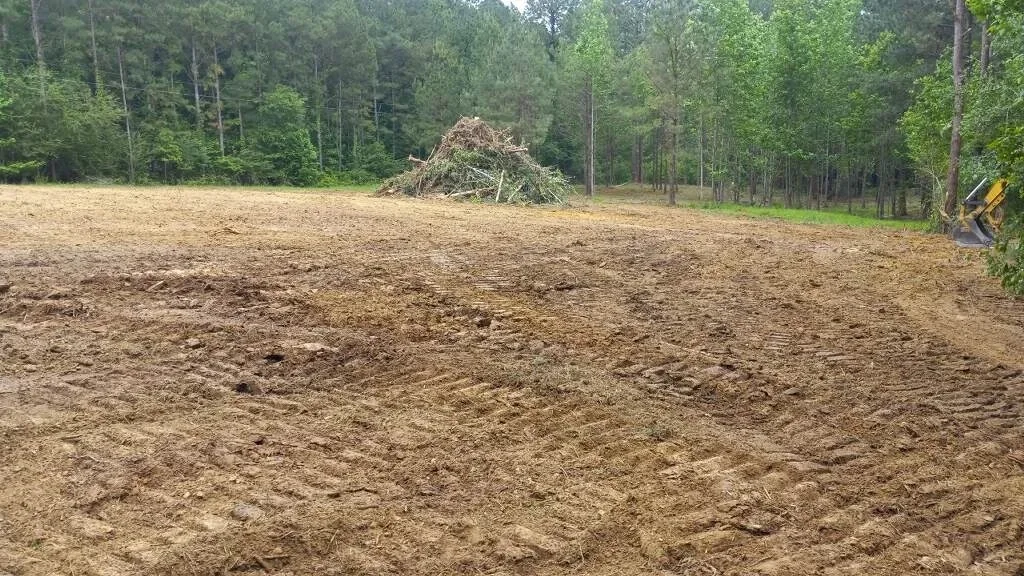
Restoration is where the job earns its reputation. On a graded lawn or a mulched bed, the crew should leave the surface, or at minimum a raked crown, so the trench line fades within a season. On a gravel drive, the trench gets re-graded and re-compacted so it does not rut. On a wooded slope, the surface is dressed so rain infiltrates instead of running. Ask to see the restored surface of a recent job, and you will learn more about a trenching contractor than any price sheet will tell you. When you compare bids, compare the whole sequence, from the locate call to the final rake, because that is what you are actually paying for.