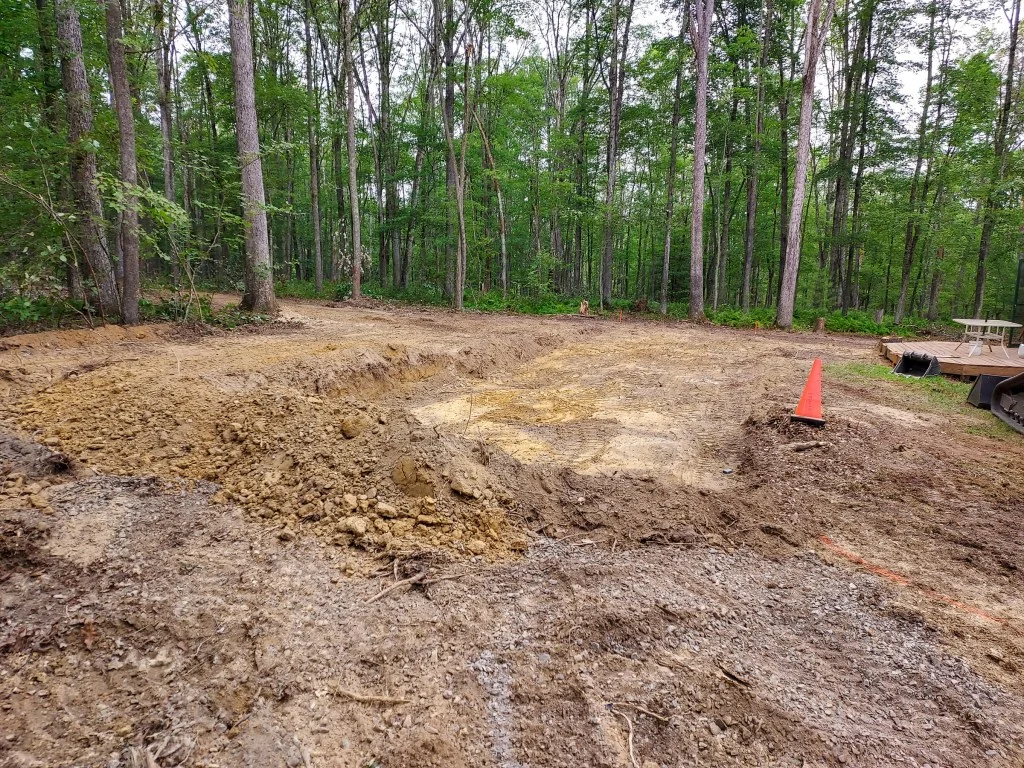
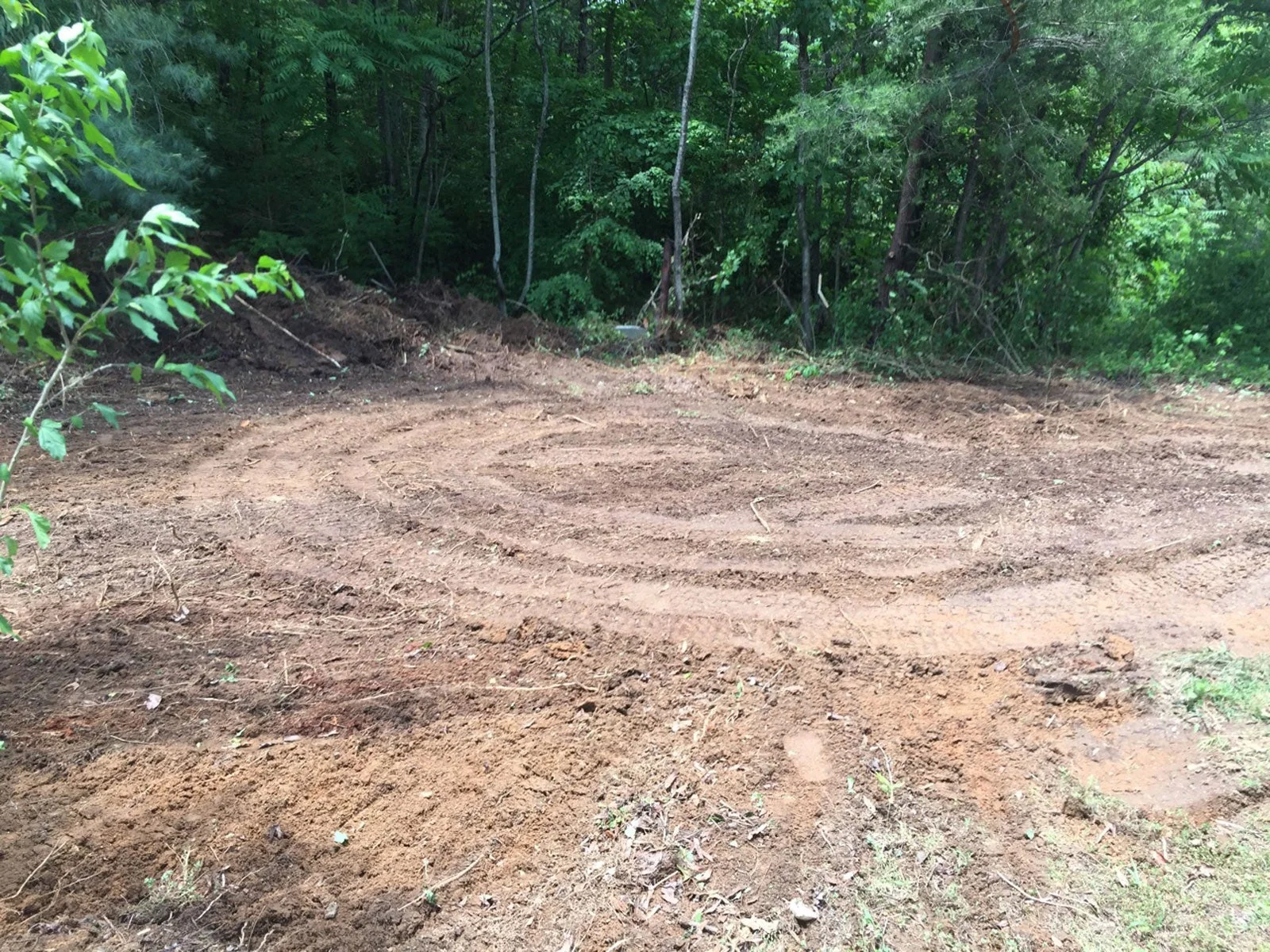
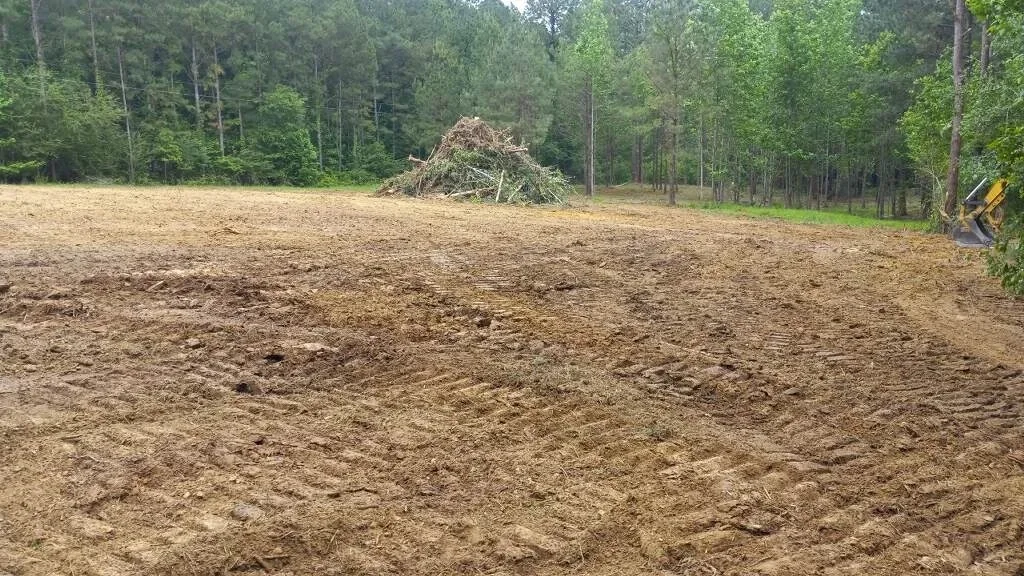
Read the ground you already have before you pay to change it
A lot of Fletcher yards that look "sunken" aren't low — they're misread. The grade falls away from the house, the fence line holds the low spot, and the neighbor's runoff crosses the property on a line nobody mapped. Regrading without that reading is how homeowners spend thousands moving dirt and still have a pond after the first hard rain.
Start with what's already on the lot: the driveway apron, any existing swale, the pad under that shed, the septic field if you're on one. On the rolling clay ground common around Fletcher, water tells you where the yard wants to drain. If it can't get out, no amount of topsoil will fix it. Read the ground first, then decide whether you're fixing a grade, a path, or both.
That order is also where the money is saved. A yard that just needs its existing swale cleaned and its low corner filled is a small job; a yard that needs the whole profile re-cut and a new daylight drain is a bigger one. Both are legitimate — they just aren't the same bid.
Fletcher sits in the French Broad and Cane Creek bottomlands, where the ground was farmed before it was subdivided. That history matters. Old field drainage tiles, filled-in low spots, and former fence rows can all sit just under the surface, and a machine that hits one of them turns a half-day job into a two-day one. A contractor who walks the lot first will usually spot the wet-line vegetation and the slightly different grass color that mark those buried features. A contractor who quotes from the truck won't.
It also helps to know what season you're reading the yard in. Henderson County clay behaves very differently in a wet spring than in a dry August, and a low spot that looks harmless in summer can be standing water by February. If you're getting bids in dry weather, point out where the water actually sat after the last big rain, and if you can, show a photo of it at its worst.
What actually shows up on Fletcher slope lots
Henderson County's terrain does most of the explaining. On the grade near the river bottoms, the water table is high and the soil holds moisture; a few minutes uphill, the land pitches at the kind of angle that sends every drop toward somebody's foundation. Both conditions show up inside the same subdivision.
The tells worth pricing on sight: a dead patch that stays dead no matter what you seed, a French drain that was added but never led anywhere, a pad sitting a couple inches low at the back corner, or a driveway that routed its runoff straight at the garage slab instead of away from it. Each one is a grade problem wearing a landscaping costume. Fix the water path or the same spot will flood again no matter how pretty the sod looks.
Driveway aprons deserve their own mention here. In Fletcher's older subdivisions, the apron was often poured years before anyone thought about how the lot would shed water, and a slightly high apron turns the whole driveway into a dam. Water pools at the garage door, seeps under the slab, and shows up as a damp patch on the interior wall. Regrading the yard alone won't fix that — the apron may need to be cut or the drive re-pitched so runoff has somewhere to go. If a bid doesn't mention the apron at all, ask about it before you sign.
Another common one is the above-ground pool pad or the gravel equipment pad behind the shed. Both compact the clay underneath into a hard pan that sheds water sideways toward the house. Removing or re-pitching that pad is often a small line item that solves a problem the homeowner had blamed on the whole yard being low.
The Henderson County price picture
The county line range is broad because scope ranges from a few hundred dollars of clean fill and a rake to full re-profiling with drainage and haul-off. The working table is simple: match your job to the closest row, then add for anything the site reading turns up — a failing swale, a buried old drain, or soakage that has already been tried and quit.
| Scope | Typical range | What moves it |
|---|---|---|
| Low-spot fill and rake | $1,800–$2,800 | Access, whether existing grade can be reused |
| Full re-grade of a normal lot | $2,500–$6,000 | Slope, distance, whether haul-off is needed |
| Re-grade plus drainage correction | $4,500–$9,500 | Swale or daylight drain length, soil type |
The Henderson County cost breakdown carries the line-item detail. Treat any quote that ignores drainage as incomplete, not cheap.
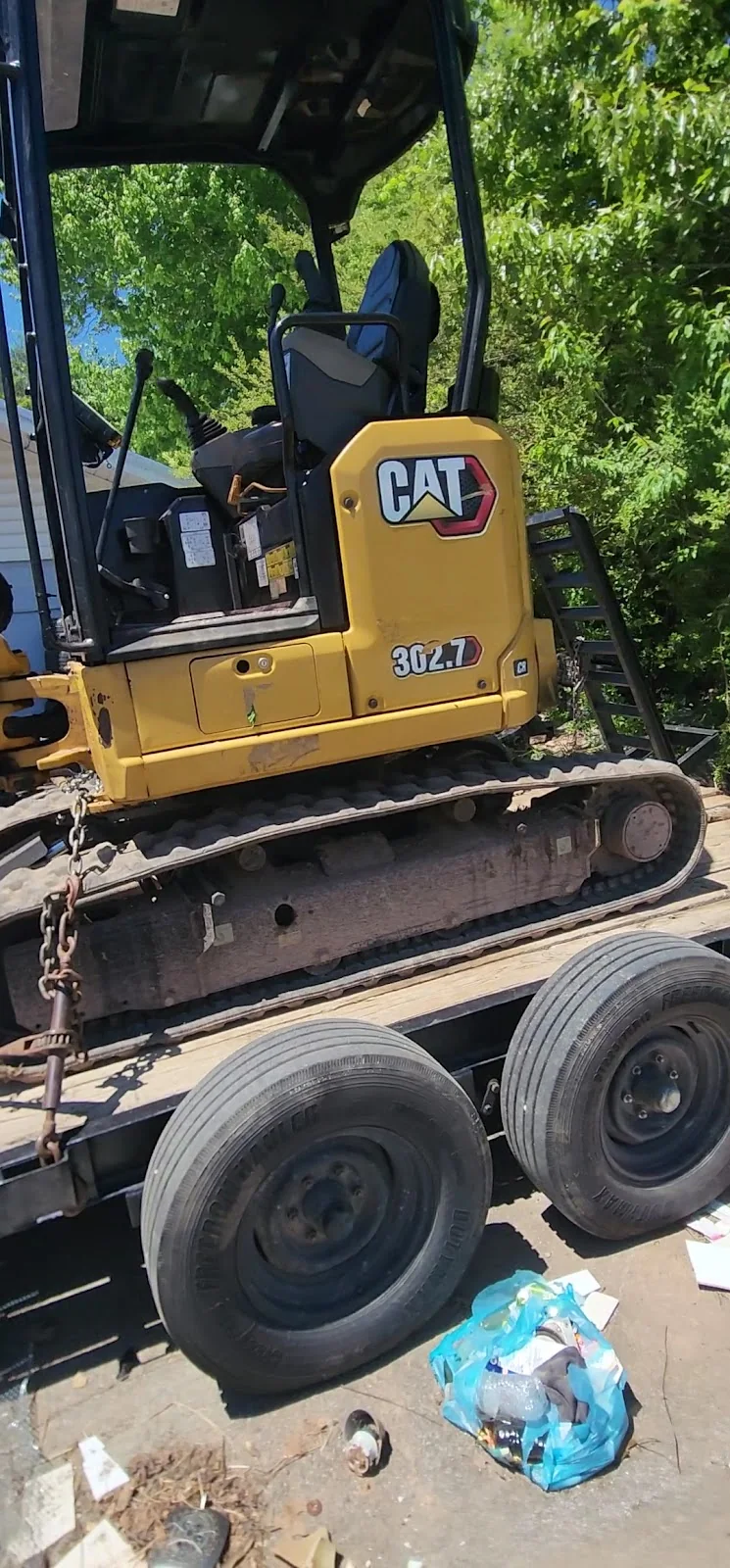
A few things separate a Fletcher bid from a bid just over the Buncombe County line. The clay here is heavy and slow-draining, so imported topsoil and clean fill often have to come from outside the immediate area, which adds delivery. Lots in the river-bottom subdivisions can be tight, and a full-size machine may not fit through the gate, meaning smaller equipment and more hand work. Uphill lots with a long driveway may need a track machine rather than a wheeled one, and that changes the day rate. None of these are hidden costs exactly, but they're the reasons two yards that look the same size can come back thousands apart.
Drainage correction is the line item most often underestimated. A daylight drain that has to run a hundred feet across a slope, cross a driveway, and daylight in a safe spot takes more time than most people expect. It's also the line item that prevents the call-back, so it's worth doing properly the first time rather than patching it later.
Rules that shape a grading job here
Two regulatory facts change how a Fletcher job is scoped. First, storm water can't simply be sent to the neighbor — graded runoff has to move to an approved outfall or be handled on site, and the NC Licensing Board for General Contractors thresholds decide when the work stops being handyman-scale and starts needing a licensed contractor. Second, any excavation near utilities or near a septic field must respect set-backs and locates; the EPA's storm water guidance is the right read on where runoff may and may not go. Get the locates before the first bucket is turned.
On the permitting side, most yard regrading on already-developed residential ground is minor work, though full re-grades and any excavation near slopes or drainage features can pull in local review. Ask before you dig and you'll never regret it; ask after and you might be putting the dirt back.
There's a storm-history piece too. Henderson County has seen its share of heavy rain events, and FEMA has recorded 16 federal disaster declarations here across a 1978-2026 span. That's not a scare line — it's a plain reason the lot's drainage has to be designed for the wet years, not just the average ones. Check the National Weather Service outlook before scheduling a big grade, since wet clay is slow to work and a saturated subgrade won't compact properly. If you're also touching anything structural while the machine is on site, the U.S. Department of Housing and Urban Development has general guidance on residential site and flood considerations worth a look.
Choosing a crew, and where to start
Three checks before you sign: ask them to walk the lot with you and show you where the water goes at the worst spot; ask whether the bid includes drainage or only dirt; and ask who inspects the finished grade. A crew that can't tell you what their finish grade is measured against is selling volume, not water management. Our yard leveling guide covers the full scope of what proper work includes, and grading contractors in Fletcher shows how the local crews are organized.
When you're ready to get a number, flag the low spot and the worst water condition — that single detail is what separates a useful quote from a guess.
One more practical note for this area: ask how the crew will handle the soil they remove. On a Fletcher lot, the spoil has to go somewhere, and hauling clay off-site is a real cost. Some jobs can reuse the excavated material on-site to build up a low corner, which saves both delivery and disposal. If a bid doesn't say what happens to the dirt, ask. Good crews will tell you whether it can be reused or has to leave, and the answer often changes the number you're looking at by more than the grading itself. If the low spot is small and the drainage is already fine, a modest fill-and-rake job is likely all you need — and that's the cheapest row in the table above.