How Fletcher's lot geometry sets the price before anyone digs
Stand on almost any side street off Naples Road or Cane Creek Road and the constraint is obvious before you ever talk numbers: the house sits tight to one property line, the driveway climbs, and a mature oak canopy closes over the pad. Fletcher grew up around two landforms that still dictate every excavation here — the deep alluvium of the French Broad River bottom and the narrow, steep Blue Ridge foothill lots cutting in along Howard Gap Road. A half-acre pad in Fletcher is not the same job as a half-acre pad in Arden or Mills River, and it has nothing to do with square footage.
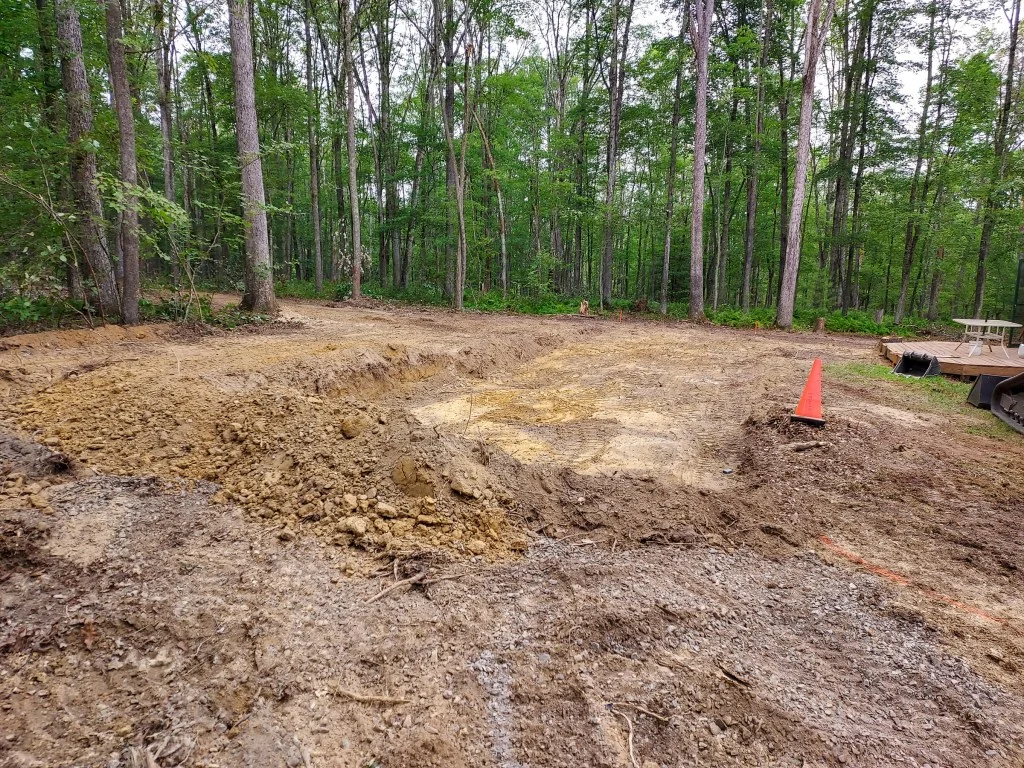
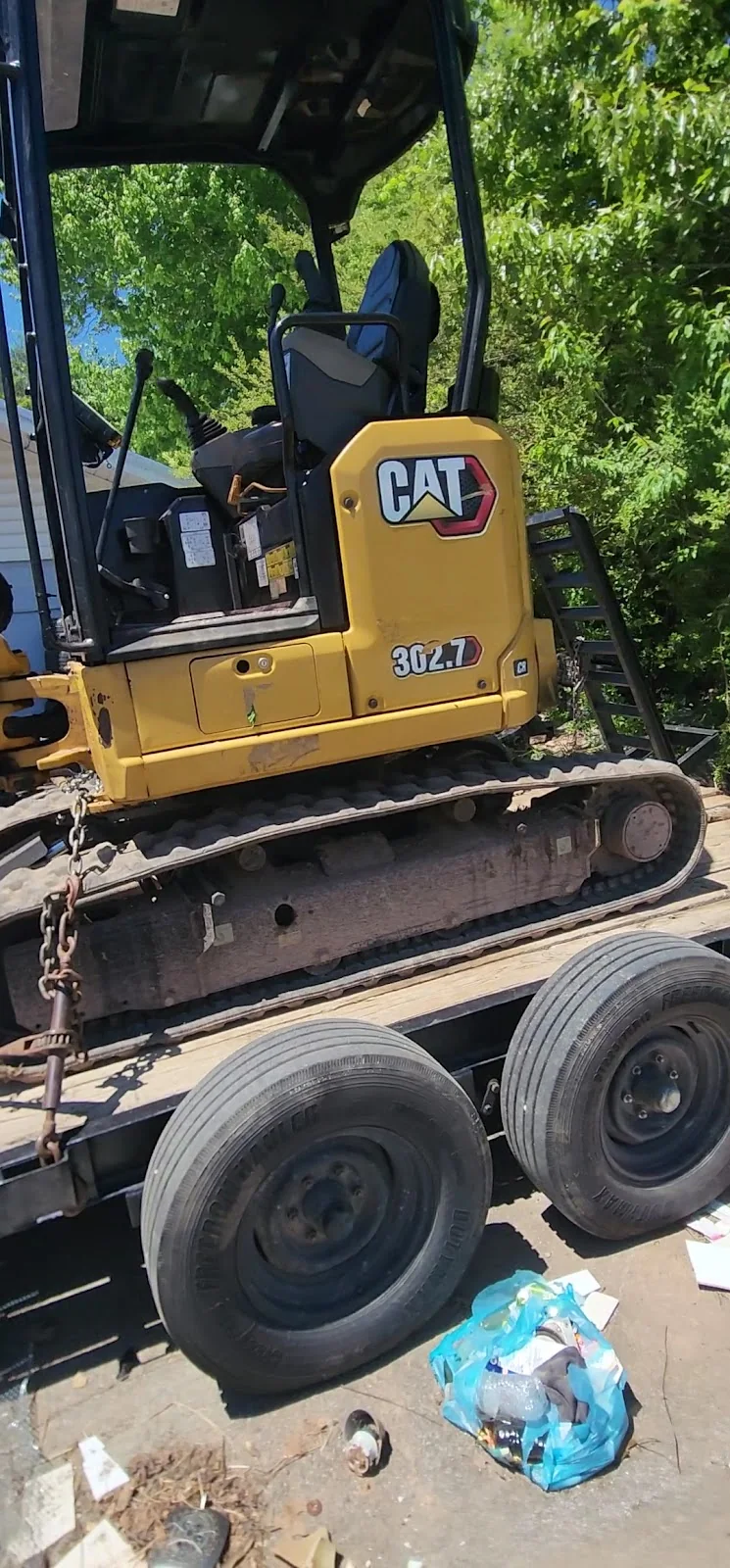
That geometry decides the job before the first bucket hits dirt. Machine access and spoil logistics are the number-one line items, not dig volume. A clear flat pad may take a full-size excavator a single day. A sidehill lot in the same zip code may need a mini-excavator, hand work around roots, and spoils hauled across the driveway to a stockpile because there is no room to cast on the uphill side.
What Fletcher foundation excavation actually costs
Local pricing sits inside the same band homeowners see county-wide, and Fletcher usually prices toward the middle unless the lot is on the river or up the hill. These are real numbers, not teasers.
| Scope | Typical range | What moves the number in Fletcher |
|---|---|---|
| Crawl-space or slab foundation dig, flat lot | $3,500–$7,500 | Depth, dumpster placement, spoil haul distance |
| Slope or sidehill foundation dig | $7,000–$13,000 | Machine size, retaining or shoring, uphill stockpile logistics |
| Full basement dig with engineered walls | $12,000–$18,000 | Depth past eight feet, dewatering, haul-off volume |
| Footings only, hand-dug or trenched | $1,200–$4,500 | Linear feet, frost depth, bell footings, rebar schedule |
| Rock encountered or unsuitable soils | Quoted separately | Blasting-adjacent removal, undercut and re-compaction |
The Henderson County grading cost breakdown carries the same line items from the grading side of the same job, useful if you're pricing excavation and site prep together.
Reading Fletcher's two ground types before the machine arrives
This town sits on a mix of river-deposited sand and gravel near the French Broad and residual clay over weathered bedrock on the hillside lots. Neither is bad ground, but they behave differently in an open trench. Alluvium near the river can cave during a rain event and needs shoring or benching; hillside clay holds a vertical cut for a week, then slumps after a wet weekend. The North Carolina residential code and ICC references treat soil classification and protective systems as engineering decisions, not crew preferences, and a Fletcher footing inspection needs the trench to look the same at inspection time as it did the day it was dug.
The other ground reality here is water. Henderson County has seen 16 federal disaster declarations across 1978-2026, and the storm and flood family dominates that record. Any Fletcher excavation near the river bottom or below a paved uphill neighbor should plan for where water goes when it arrives, before the first form board is set. The foundation excavation overview covers the standard sequence: strip, bench or shore, cut footings, pour, then backfill and compact in lifts.
Access, spoils, and the Henderson County paper trail
Spoils are the quiet cost of a Fletcher foundation dig. Most in-town lots have no place to put 40 yards of clay, and hauling it off-site to a permitted location costs by the load, not by the hour. A crew that quotes a flat number without asking where the dirt goes is usually planning to leave it in your front yard, which is not a plan. Ask up front: where does the spoil go, is it stockpiled on-site or hauled, and who pays disposal?
Permitting runs through Henderson County, and any excavation meeting the state's threshold for a general contractor pulls licensing rules into play — see the NC Licensing Board for General Contractors for what requires a licensed GC versus what a grading subcontractor can handle alone. For sites touching waterways or wetlands, the EPA and the Army Corps of Engineers both have a say, and a Fletcher lot backing up to the French Broad is a different permitting picture than a ridge lot off Howard Gap Road. Confirm scope in writing before the machine arrives. The Fletcher grading contractors guide walks through how to vet a crew on local jobs.
Sequencing the dig with the rest of the build
On a Fletcher job, excavation is never a standalone line item. It feeds directly into footing inspection, wall forming, waterproofing, drain tile, and backfill, and any gap between those steps costs money through weather exposure or re-work. A foundation dug Monday and poured three weeks later on a river-bottom lot has already taken on water. Tight sequencing, same crew or coordinated subs, is how the budget stays where the quote started. National Weather Service outlooks at weather.gov are worth checking the week before a scheduled dig; a two-day rain delay on clay ground can double the shoring cost.