What the ground under a Hot Springs driveway actually is
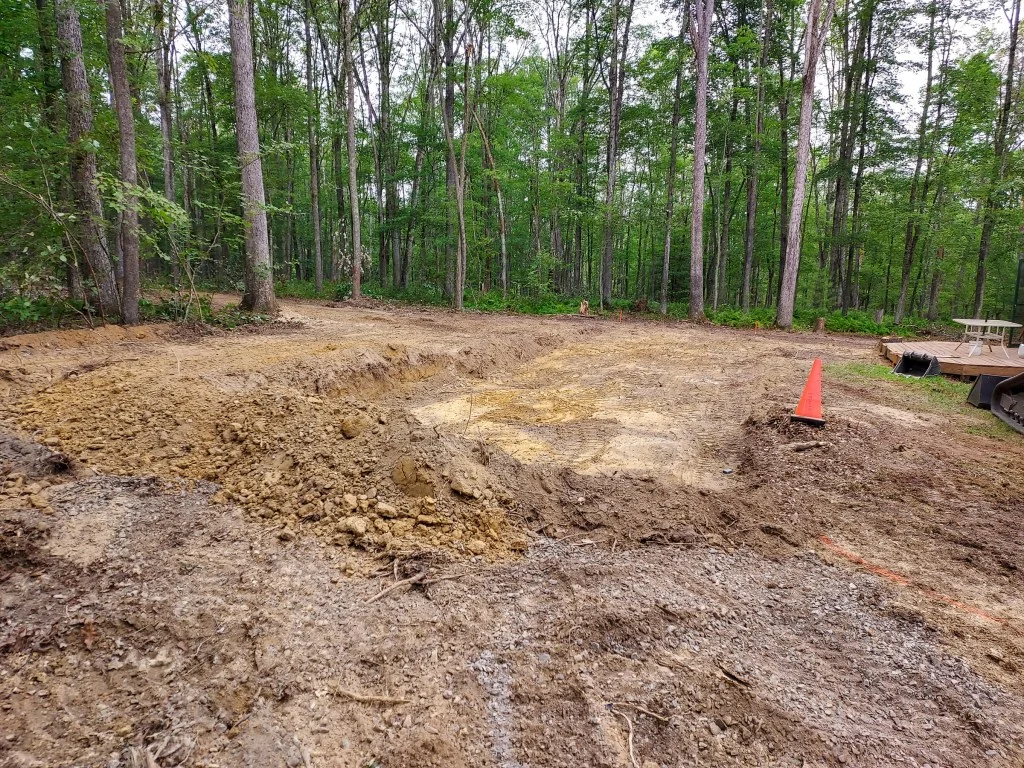
The first thing any installer learns on lots around town is that the soil profile changes every few hundred feet. Dig on one hillside above the river and you are fighting red clay that swells, seals, and sheds almost nothing. Dig two ridges over and you are in broken rock and old fill someone pushed there decades ago. Each one changes the job: clay needs a wider trench and washed stone bedding so the pipe is not sitting on a moving surface, rock needs different equipment and often a different pipe choice, and fill needs to be compacted in lifts before any pipe goes in. Treat a Hot Springs quote as a real one only when it says which of those three it found.
The second fact is water volume. This town sits in a river valley with steep side drainages, so a driveway culvert is not managing a soft trickle. It is managing whatever the whole upslope above the house sends down in one afternoon, which is why sizing gets argued about more here than in flat counties.
Pipe choices and what each is worth on a Madison County slope
Corrugated high-density polyethylene is the common answer for residential driveways: light to handle, resistant to the acid soils in this region, and easy to cut and join. Concrete pipe costs more up front and tolerates heavier cover, which matters where a loaded truck or a steep fill will cross it. Galvanized metal still shows up on older drives and is usually replaced rather than repaired. The decision is less about brand than about diameter, slope, and the load above it, and the sizing question is the one worth a second opinion. The International Code Council publishes the storm-drainage and site-grading standards that county reviewers work from, and the National Weather Service rainfall records for this part of the mountains are what a competent installer uses to sanity-check the diameter.
A scope-and-price table, not a single guess
Ranges below reflect what driveways around Hot Springs and the wider county typically run. Final numbers move with access, rock, and how deep the trench must go to reach an outlet that does not back up.
| Scope | Typical range | What drives it |
|---|---|---|
| Replace a short failed pipe (single 15 in–18 in, under 20 ft) | $1,800–$3,200 | Dig-out, existing fill stability, outlet condition |
| New driveway culvert, 15 in–24 in, 20–40 ft run | $2,800–$5,500 | Diameter, trench depth, rock, stone bedding |
| Longer or larger run (24 in–36 in, 40–60 ft) | $5,000–$7,500+ | Pipe cost, equipment access, headwall work |
| End treatments (flared end sections, riprap, headwalls) | $400–$1,800 | Erosion risk at outlet, slope angle |
| Ditch and driveway regrading around the new pipe | $900–$3,500 | How much of the drive has to be reshaped |
The full county picture, including grading line items, is on the Madison County grading cost page.
Clogged today, undermined next spring
A culvert that clogs does not just flood the drive. It pushes water sideways into the fill, and fill that stays saturated long enough will slump. That slump is what cracks a driveway slab, drops a gate post, or swallows a car tire after a long wet winter. On old-fill lots around town, this failure chain runs fast because the fill was never engineered to begin with. Cleaning an inlet or reshaping a ditch above it is cheap; re-excavating and repacking a collapsed drive is not. If the pipe is undersized for the upslope it drains, cleaning buys you one season, not a fix.
Permits, licensing, and who should be doing the work
Work in or near a stream, or anything that changes drainage onto a road or a neighbor's property, usually needs review before the first shovel. The NC Office of State Fire Marshal code-enforcement side carries the state's building and residential code resources, and the local permitting office is the authority on whether your pipe triggers a floodplain or stream-buffer review. On the contractor side, the North Carolina Licensing Board for General Contractors sets the dollar threshold where a project requires a licensed general contractor and publishes the rules for who can legally take your job. Ask for the license and the permit plan before scheduling; a crew that resists either is telling you something. For site work beyond the pipe itself, our Hot Springs grading contractors page covers how we sequence ditch, drive, and drainage, and the culvert and driveway pipe guide walks through sizing and materials in more detail.
Storm history is why sizing gets argued about here
The federal record for this county shows 21 declared events across 1978-2026, and the pattern is heavy on storm and flood families. That matters for a culvert because the design storm is not a theoretical number in a table; it is the afternoon that already showed up and took out the last pipe. Anyone quoting a diameter without asking about the drainage above the drive, the outlet elevation, and what the ground did in the last big rain is guessing. The EPA also maintains guidance on stormwater and erosion controls for the disturbance a trench creates, which is worth reading if your outlet discharges anywhere near a stream.