The driveway decides the job before the pad does
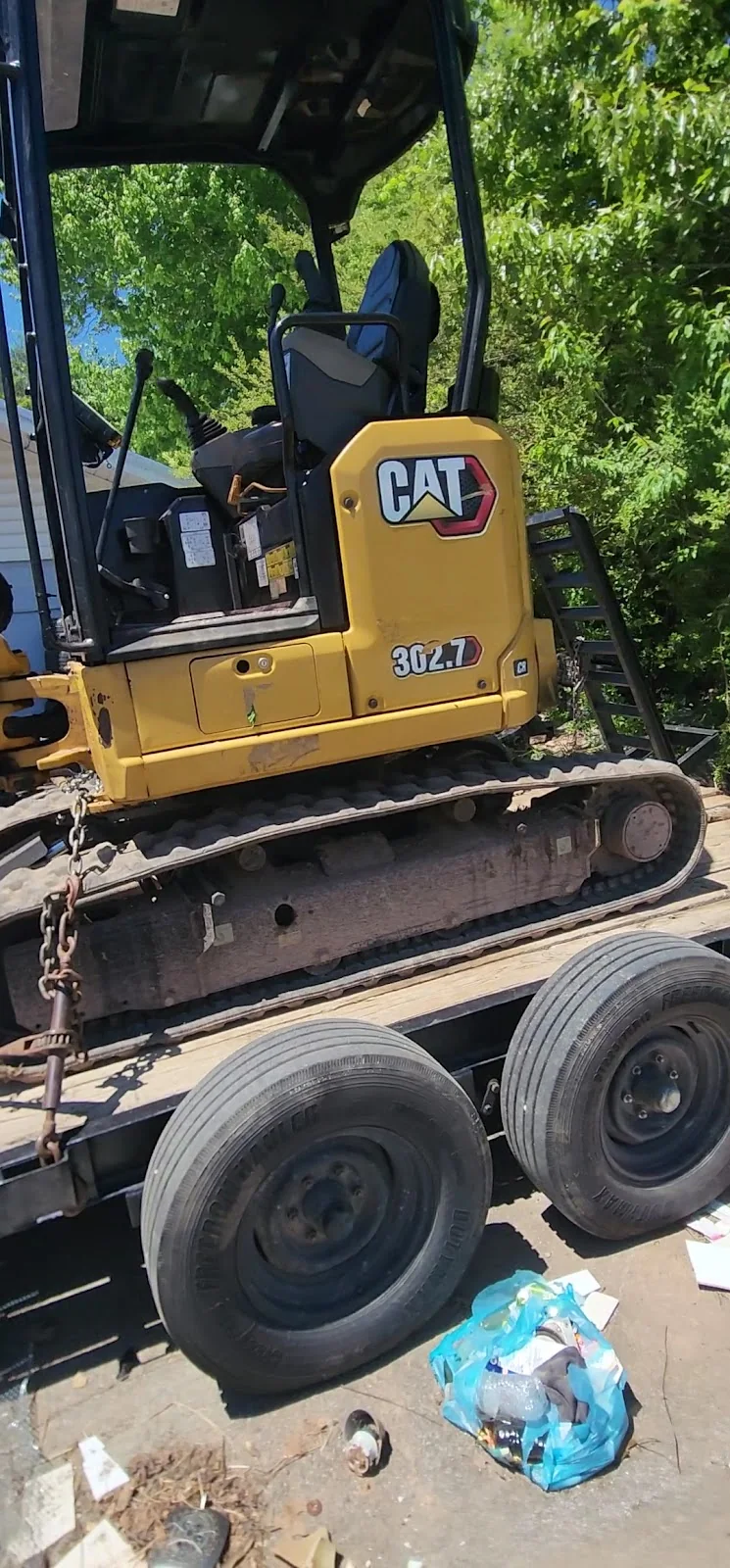
In Leicester, most site prep bids are won or lost on the way in. A lot off Old Newfound Road with a gentle approach can take a full-size excavator and a tri-axle without a second thought. A ridge parcel up a narrow gravel climb off Sandy Mush can strand the same machine at the culvert, or force a smaller track hoe with a long reach and twice the cycle time. That access question is what actually sizes the job: how wide the truck can get, how much weight the drive takes, whether a machine can turn around or has to back the whole way down loaded.
Haul is the other half. Besides moving topsoil and unsuitable subgrade off site, the clean structural fill and gravel have to come in. In Buncombe County that means the quarry run near Asheville sets the delivered price, not the spec sheet. A load that's cheap at the gate gets expensive after 20-plus mountain-road miles on a truck that can't haul full weight up a grade. On the pad work we scope, gravel is usually the single biggest line, and it's the one homeowners most often forget when they budget from a flatland number.
What the ground in Leicester actually gives you
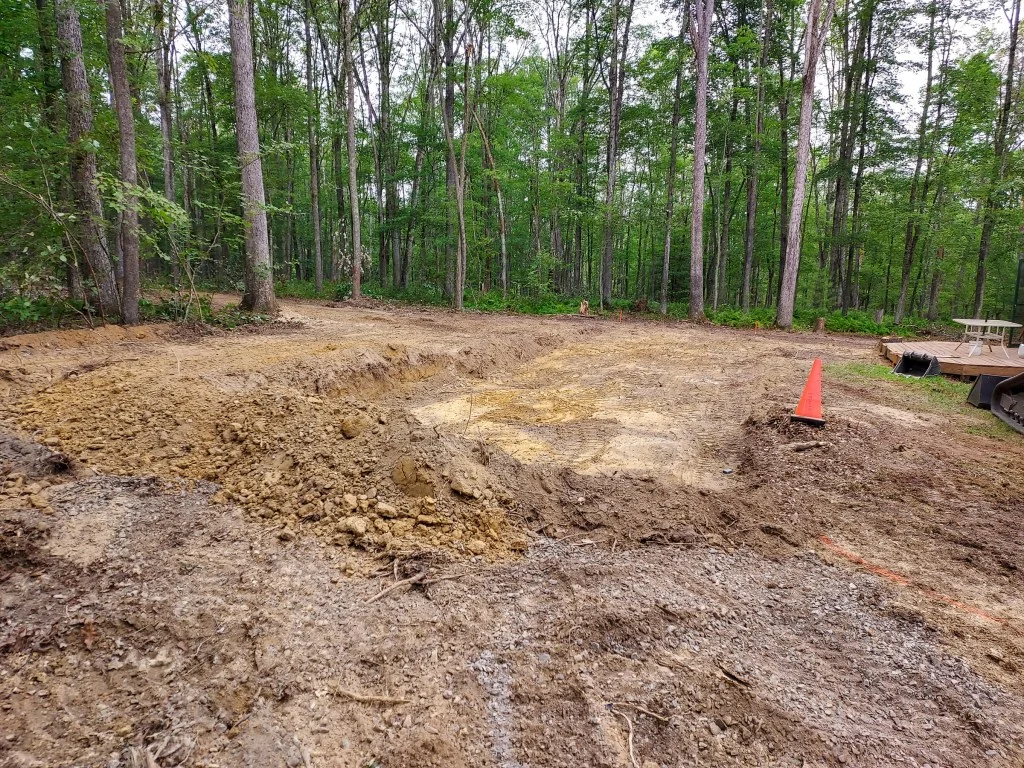
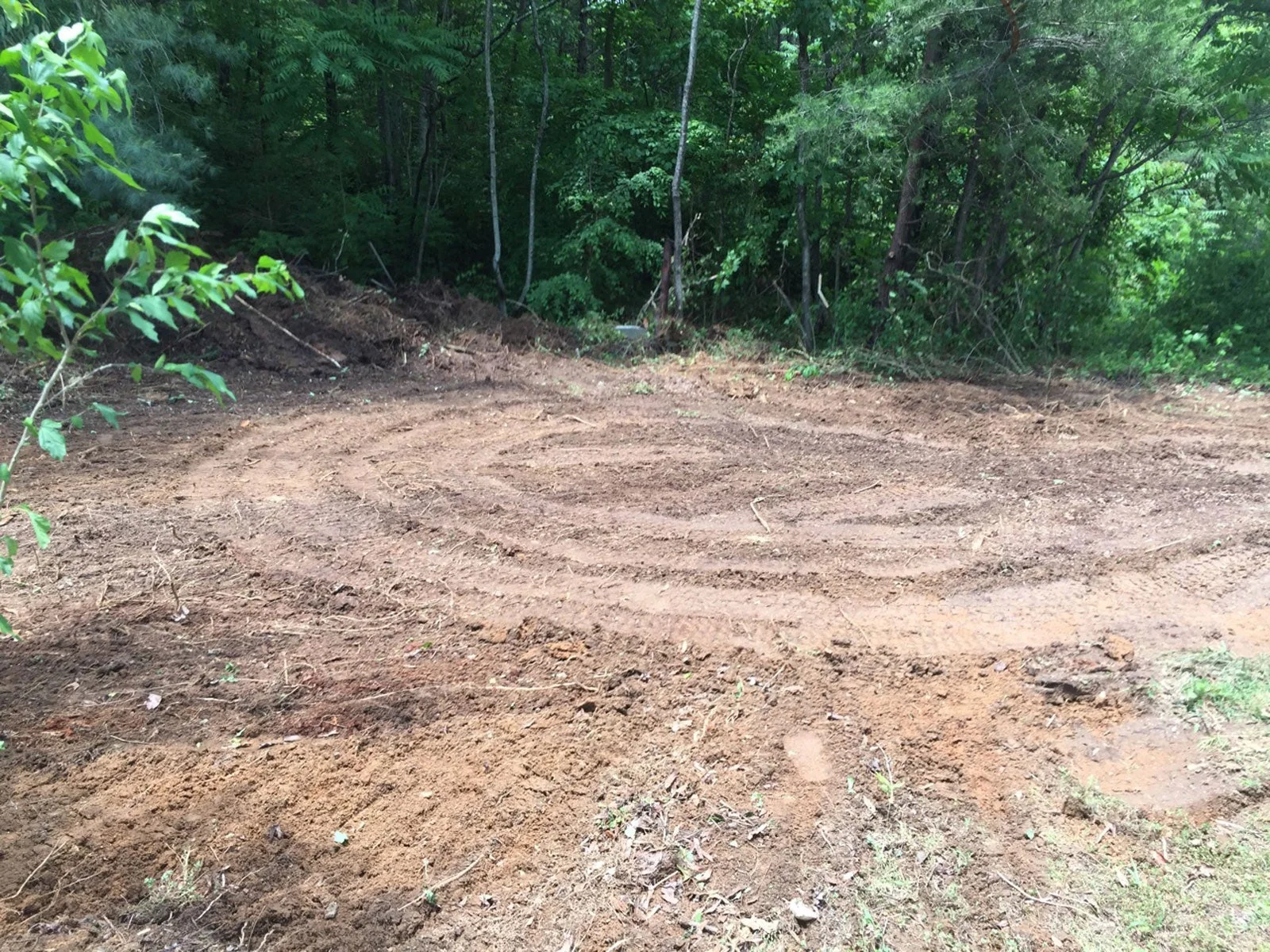
Leicester sits west of Asheville in the Newfound and Sandy Mush valleys, shallow-soil ridges over clay and rock. That combination produces the two conditions that govern pad cost. First, topsoil depth varies within a single lot, sometimes within a hundred feet. You don't know how much muck has to come off until the first cuts expose it. Second, the wet-weather springs. A cut that looks dry in August weeps in February, and a pad built over a spring fails no matter how well it's compacted. The fix is drainage first, structure second.
That's why the honest conversation starts with the water. Under the NC residential code enforced through the state fire marshal's code office, a pad has to shed surface and subsurface water away from the building, and it needs a positive slope for a reason. In Leicester's clay, that means the cut/fill balance is a design decision, not an afterthought. A cut that produces enough fill to raise the pad often costs less than importing, but the fill has to be placed and compacted in lifts, not dumped and shaped once. Contractors who do that correctly are the ones you want, and it's the same standard the state's general contractor licensing board applies once a job's scope crosses their threshold, which you can check at nclbgc.org.
Scope, and what each piece runs in this county
Pads get bid by scope, not by the acre. The table below is the working picture for Leicester and the rest of Buncombe; the same numbers are broken out line by line in our Buncombe County grading cost table.
| Scope item | Typical range |
|---|---|
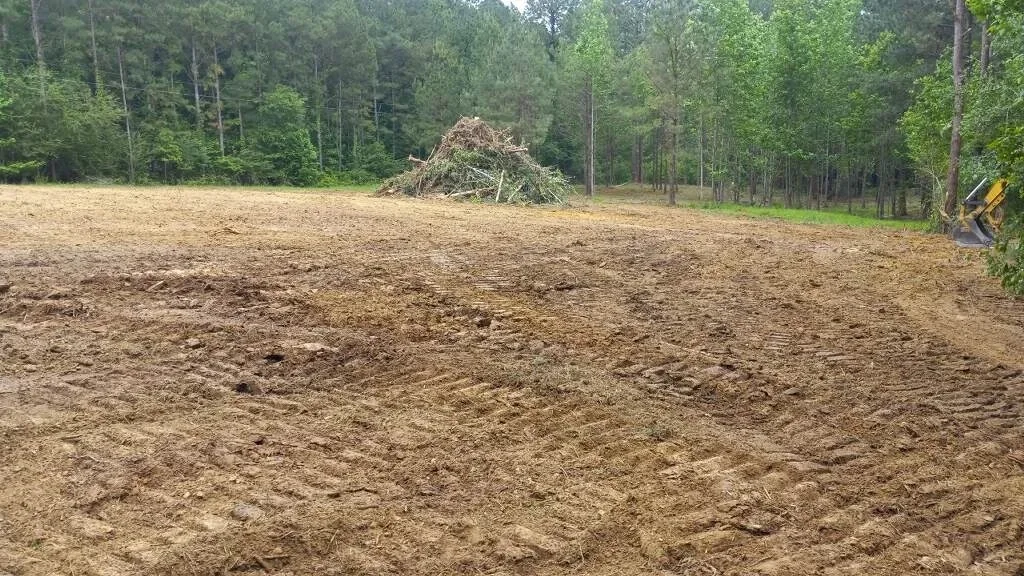
| Light clearing and grubbing (brush, small trees) | $900–$2,600 |
| Heavy clearing (mature timber, stumps out) | $2,500–$7,500 |
| Pad cut and grade, gentle lot | $2,800–$5,500 |
| Pad cut and grade, steep or benched lot | $5,500–$14,500 |
| Driveway grading (600–900 ft, native surface) | $2,400–$6,800 |
| Culvert and turnout (each) | $700–$2,200 |
| Gravel, delivered 3/4-in crusher run (per load) | $450–$800 |
| Topsoil screening and respread | $1,200–$3,400 |
| Haul-off of unsuitable material (per load) | $375–$650 |
Two honest cautions. First, pad area and depth are what you're buying, and a deep cut on a ridge lot turns a small footprint into a large earthwork job. Second, if a bid doesn't separate offhaul and gravel, you don't know what you're paying for. Ask for those as line items. The wider context, including how to compare a custom home pad to a simple building-pad scope, is in our site prep and building pads guide.
Erosion, weather, and why approval shows up in your number
Leicester's rainfall pattern is not Asheville's, and the difference shows up in the schedule and in the grading plan. This county has seen 19 federally declared events over 1973-2026, and the family is overwhelmingly storm and flood. That history is not abstract here: it's why a bare pad on a slope that drains toward a neighbor or a creek needs a stabilization plan, silt fence, and a stabilized construction entrance before the first excavator arrives. If the lot touches a stream buffer, the state and county review get layered on top, and the clock that matters is the one between grading and those slopes being seeded and covered. Get caught with an unprotected cut through a June thunderstorm and you're repairing the pad and the relationship with the neighbor.
Wet-season work in Leicester also carries its own tax. A job graded in a dry stretch and left open into winter will need reworking in the spring, and soft subgrade means haul trucks get stuck and grown men get grouchy. The good crews either finish a pad before the weather turns or stabilize it and come back. On steep, exposed sites, the National Weather Service forecast for the higher ridge country is worth watching weekly, not daily, and locally observed rainfall on the mountain tends to run higher than the valley gauge. That's not alarmism, it's what makes a summer pad job finish in good shape.
Finding a crew that works at this scale
Full site packages, and any project involving structural work on a building, generally fall under the state's general contractor threshold. Smaller clearing, driveway grading, and pad shaping jobs often come from independent operators, many of whom have lived on these roads for a generation and know the grades the way a postal carrier does. Ask two questions: which machine fits your drive, and where the gravel comes from. Anyone who answers both without hedging has done this job in Leicester before.
Our Leicester grading contractors page covers how we vet and match trades to lots like yours. If you want the broader picture on scope, sequence, and permits, start with site prep and building pads, and the cost line items above are the ones worth comparing across bids.