Access and haul set the price before the trench does
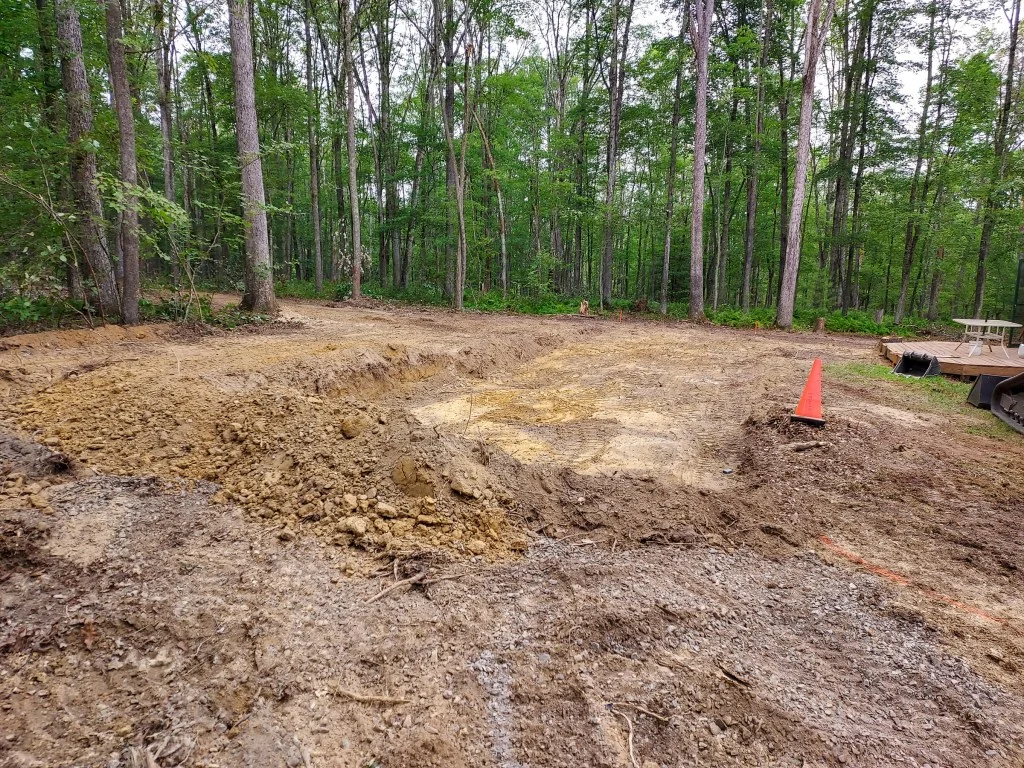
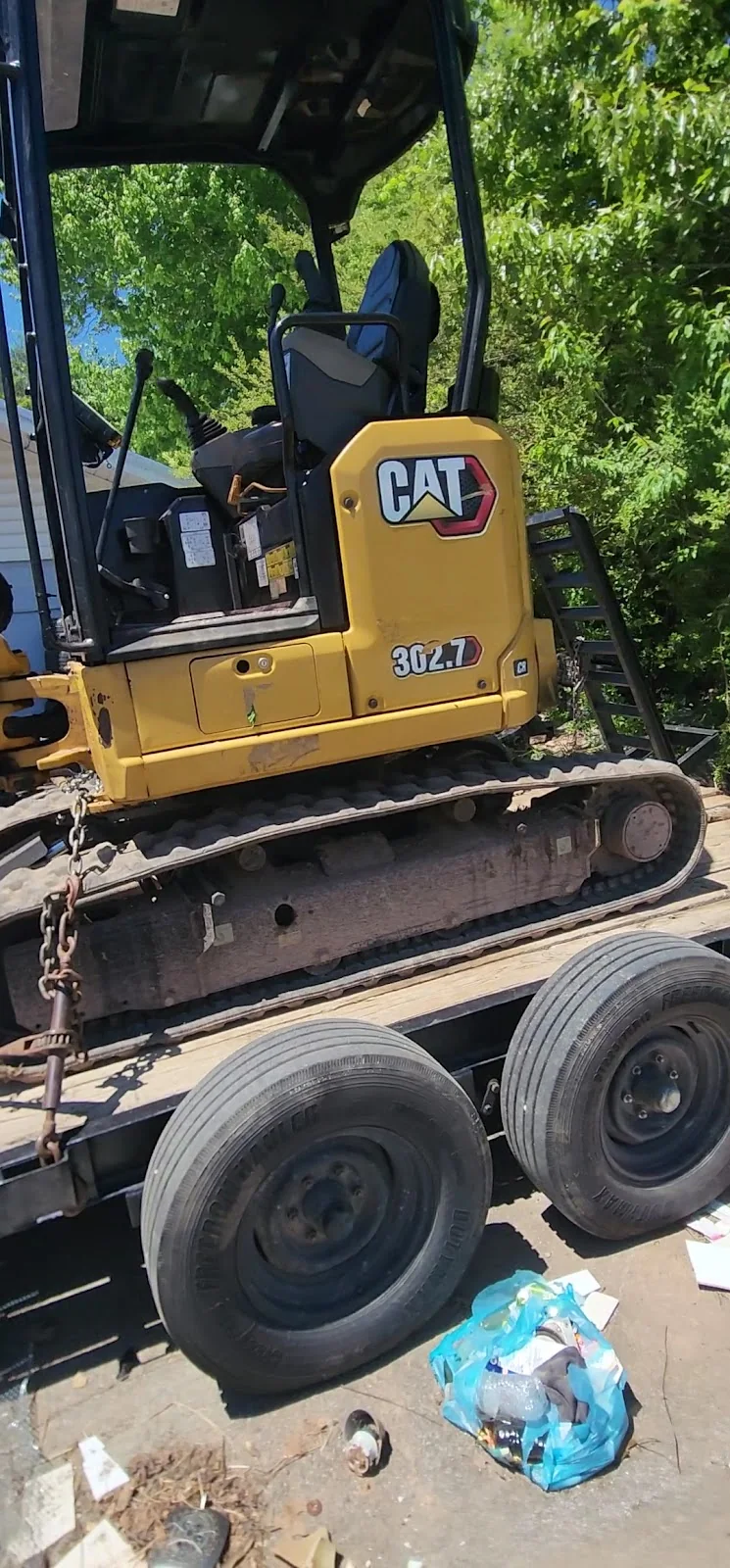
Mills River is one of the harder places in Henderson County to get equipment into. Lots along the river bottoms often run long and narrow, with a septic field on one side, a wellhead on the other, and a single gravel drive that a mini-excavator can barely turn around on. Up on the benches off the ridge roads, the grade itself is the obstacle: a 20 percent slope with a switchback drive means every yard of spoil has to come out the way the machine went in. That is the part of a drainage bid nobody sees, and it is usually the difference between two quotes that look identical on paper.
Gravel is the second half of the story. Stone for a French drain has to be delivered, and in this part of the county that means hauling from a quarry outside the immediate area. Distance plus load size is why a 4-inch perforated run in a tight backyard can price noticeably above the same run on a flat, open lot where a full-size truck and a dump trailer can back right up to the trench line. When you see a written scope from a good drainage contractor in Mills River NC, the access line item and the stone quantity should both be visible, not buried in a lump sum.
What this ground actually does with rain
The federal record tells the story better than any sales pitch: 16 declared events touch Henderson County across 1978-2026, and the overwhelming majority are storm and flood family. The National Weather Service keeps the local climatology, but residents here already know it — Mills River sits at the foot of the Blue Ridge and takes the runoff from a lot of uphill ground that isn't theirs. Blue clay holds water for days. Hardwood leaf litter plugs gutters and French drain fabric alike every fall. Springs show up in backyards that were dry all summer.
That combination means the drainage question here is less "do I need a drain" and more "where does the water leave the property, and is that legal." Moving water onto a neighbor's yard or into a creek without the right measures is a real problem, which is why grading and erosion control plans are a first-class part of the work, not an afterthought. The drainage and erosion control guide covers what a compliant plan includes on sloped Henderson County lots.
Scope by scope: what the money buys in Mills River
Prices below sit inside the site-wide residential band and reflect the access and haul reality described above. Tight-lot and steep-drive jobs push toward the top of each row rather than past it.
| Scope | Typical Range | What drives it here |
|---|---|---|
| Single French drain run (perimeter or one problem side) | $3,000–$9,000 | Run length, stone quantity, how close a truck can get to the trench line |
| Catch basins and downspout tie-ins | $500–$2,500 | Number of inlets, outlet location, whether a trench already exists |
| Swale and surface grading to redirect flow | $2,500–$8,000 | Grade change required, spoils removal, seed and matting |
| Whole-yard regrading with drainage integrated | $15,000 and up | Machine access, cubic yards of cut and fill, retaining if the slope demands it |
| Full package: drains plus regrade plus erosion control | $8,000–$12,000+ | How much of the yard drains to one low corner and how steep the bench is |
For line-item detail on the earthwork side, the Henderson County grading cost breakdown is the companion page to this one.
The licensing line you should ask about
North Carolina draws a clear line: once a project crosses the threshold, the contractor pulling the work needs to be licensed through the NC Licensing Board for General Contractors. Whole-yard regrading with structural elements, retaining walls over a certain height, and anything touching a stormwater system can tip a job over that line. Ask for the license number in writing and check it. A drainage contractor who hesitates on that question is telling you something.
Second question worth asking: whether the design needs an engineered plan. On steep Mills River benches, a swale that looks simple on a flat sketch can concentrate flow into a point load that undermines a foundation. The International Code Council publishes the model code provisions that most local stormwater ordinances are built from, and they treat concentrated discharge as a design problem rather than a pipe-sizing problem.
Sequencing the work on a Mills River lot
The order matters more than most homeowners expect. Surface grading comes first only if it's already the fix — otherwise you're paying to move dirt twice. On a lot with a wet basement corner, a spring-fed back slope, and a driveway that sheets water toward the house, the sequence is usually: intercept the uphill water with a swale or curtain drain, capture the concentrated flow with basins, then regrade the affected area and re-establish ground cover. Skipping the interception step is the most common reason a French drain underperforms within two seasons.
If you're not sure which problem you have, the first visit should answer it. The grading contractors in Mills River NC page covers what that initial walkthrough looks like, and it's a fair preview of what any crew should bring to your yard before quoting.